
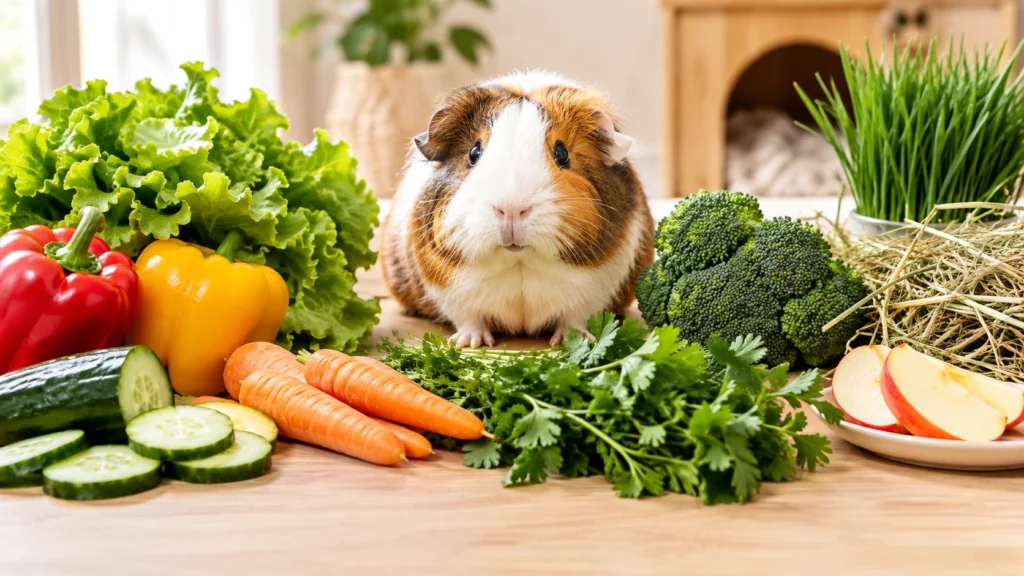
Feeding your guinea pig a healthy, balanced diet is the single most important thing you can do to ensure they live a long, happy, and disease-free life. Unlike many other small household pets, guinea pigs have highly sensitive digestive systems and cannot manufacture their own Vitamin C. Without the proper daily nutrients, they are prone to severe health issues like scurvy, painful bladder stones, and dangerous dental overgrowth.
So, what can guinea pigs eat?
A healthy daily guinea pig diet follows a strict breakdown to keep their gut moving and teeth worn down:
- 80% Timothy Hay: Unlimited access to high-fiber hay for continuous digestion and dental health.
- 15% Fresh Vegetables: Daily leafy greens and Vitamin C-rich veggies like bell peppers.
- 5% Plain Pellets: Vitamin C-fortified pellets without added seeds, nuts, or colored bits.
- Unlimited Fresh Water: Clean, fresh water available 24/7 via a bottle or heavy bowl.
In this ultimate guinea pig feeding guide, we break down the exact safe food list, daily portions, fruit treats, and toxic foods you must strictly avoid.
The Daily Guinea Pig Diet Breakdown (The 80/15/5 Rule)
Unlimited Hay (80% of Diet)
Hay is the foundation of every guinea pig’s diet. Because a guinea pig’s teeth grow continuously throughout their life, chewing long-stemmed grass hay provides the necessary friction to wear down their molars. Additionally, the high fiber content keeps their gastrointestinal tract running smoothly.
- Best Daily Choice: High-quality Timothy Hay (1st or 2nd cut) or Orchard Grass.
- Special Cases: Alfalfa hay should only be fed to baby guinea pigs (under 6 months), pregnant, or nursing mothers due to its high calcium and protein levels.
Fresh Vegetables & Leafy Greens (15% of Diet)
Vegetables supply vital micronutrients—especially Vitamin C. A good rule of thumb is to offer roughly 1 cup of fresh vegetables per guinea pig each day, primarily focusing on safe leafy greens.
- Mix 3 to 4 different types of veggies daily for variety.
- Wash all produce thoroughly to remove pesticides and harmful chemicals.
- Introduce new vegetables slowly to prevent stomach upsets or diarrhoea.
Fortified Guinea Pig Pellets (5% of Diet)
Pellets serve as a dietary supplement to fill in any nutritional gaps. Offer roughly 1/8 cup (2 tablespoons) of high-quality pellets per day for an adult guinea pig.
- Choose plain, uniform, high-fiber, Timothy-based pellets fortified with stabilized Vitamin C.
- Avoid muesli-style mix feeds that contain seeds, nuts, dried fruits, or colorful corn flakes, as guinea pigs will selectively eat the unhealthy parts and risk choking.
Fresh, Clean Water
Guinea pigs need constant access to clean, fresh water. Water helps digest their high-fiber diet and flushes out excesses like calcium. Use a glass or BPA-free plastic drip bottle, change the water daily, and clean the nozzle regularly to prevent bacterial growth.
What Can Guinea Pigs Eat? Complete Safe Food List
To keep feeding straightforward, here is a breakdown of safe vegetables, fruits, and herbs categorized by how frequently you should offer them.
Safe Daily & Weekly Vegetables
| Food Item | Recommended Frequency | Key Nutritional Benefit & Feeding Tip |
|---|---|---|
| Bell Peppers (Red, Green, Yellow) | Daily | Top source of essential Vitamin C. Remove stem and seeds. |
| Romaine & Green Leaf Lettuce | Daily | Great hydration and fiber base. Avoid Iceberg lettuce. |
| Cilantro (Coriander) | 3-4 times a week | Low-calcium herb rich in vitamins. |
| Cucumber | 2-3 times a week | Highly hydrating; remove seeds if feeding frequently. |
| Zucchini | 2-3 times a week | Low calcium, great alternative green veggie. |
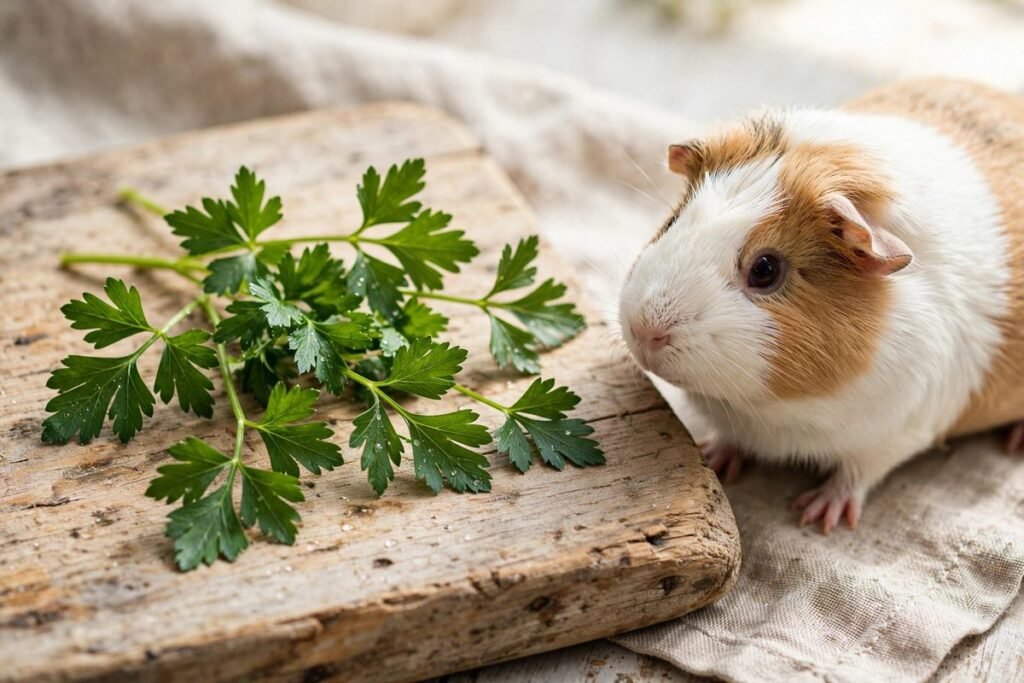
| Parsley | 1-2 times a week | High Vitamin C, but limit due to high calcium levels. |
| Carrots | 1-2 times a week | High in sugar and Vitamin A; feed small slices only. |
Safe Fruit Treats (Feed 1-2 Times a Week Max)
Fruits should only be treated as small rewards (1 small cube size) due to high sugar content which can cause obesity and diarrhea.
- Apples: Core and seeds removed (seeds contain trace cyanide).
- Blueberries & Strawberries: High in antioxidants and Vitamin C.
- Watermelon: Great summer treat for hydration; feed in small amounts.
- Bananas: Small slice only; high potassium but can cause constipation.
Toxic Foods: What Guinea Pigs Must NEVER Eat
Never feed your guinea pig any of the following foods, as they can cause severe toxicity, severe digestive blockage, or rapid death:
- Iceberg Lettuce: Contains mostly water and a chemical compound that causes severe diarrhea.
- Potatoes, Tomato Leaves, & Rhubarb: Highly toxic; contain solanine or oxalates.
- Onions, Garlic, & Chives: Cause hemolytic anemia by destroying red blood cells.
- Dairy, Meat, & Eggs: Guinea pigs are strict herbivores; their guts cannot process animal proteins or lactose.
- Nuts, Seeds, & Popcorn: Major choking hazards and high in unhealthy fats.
- Chocolate, Caffeine, & Sugary Snacks: Toxic to heart and nervous system functions.
Age Specific Feeding Guides
As guinea pigs grow, their nutritional requirements change:
- Baby Guinea Pigs (0–6 Months): Require higher protein and calcium for bone growth. Offer unlimited Alfalfa hay alongside Timothy hay and alfalfa-based pellets.
- Adult Guinea Pigs (6 Months–5 Years): Switch entirely to Timothy hay and lower-calcium pellets to prevent bladder stone formation.
- Senior Guinea Pigs (5+ Years): May need softer hay (like 2nd or 3rd cut Timothy) and adjustments if they suffer from weight loss or arthritis.
Common Diet-Related Health Issues
An improper diet is the leading cause of veterinary visits for guinea pigs. Watch out for these common issues:
- Scurvy (Vitamin C Deficiency): Symptoms include lethargy, swollen joints, rough coat, and loss of appetite. To ensure your pet gets the exact amount they need to prevent this, check out our guide on guinea pig Vitamin C requirements. Ensure daily Vitamin C through bell peppers and fresh pellets.
- Bladder Stones (Urolithiasis): Caused by excess calcium in adult diets. Limit high-calcium foods like parsley, spinach, and alfalfa hay. If you suspect your cavy is in pain or showing unusual symptoms, learn how to tell if your guinea pig is sick.
- Gastrointestinal Stasis (GI Stasis): A life-threatening condition where the digestive tract slows down or stops. Usually caused by a lack of fiber/hay.
Frequently Asked Questions
How long can a guinea pig go without food?
A guinea pig should never go more than 10 to 12 hours without eating. Their digestive system must stay in constant motion. If your guinea pig stops eating, seek emergency veterinary care immediately.
Can guinea pigs eat celery?
Yes, guinea pigs can eat celery, but it should be chopped into small, bite-sized pieces to prevent the long, stringy fibers from becoming a choking hazard or causing intestinal blockages.
Can guinea pigs eat bananas?
Guinea pigs can eat bananas, but only as an occasional treat (a thin slice once a week). Bananas are high in sugar and sticky, which can cause constipation or weight gain.




71 Comments