Can Guinea Pigs Eat Bell Peppers? Yes — Here Is the Full Guide
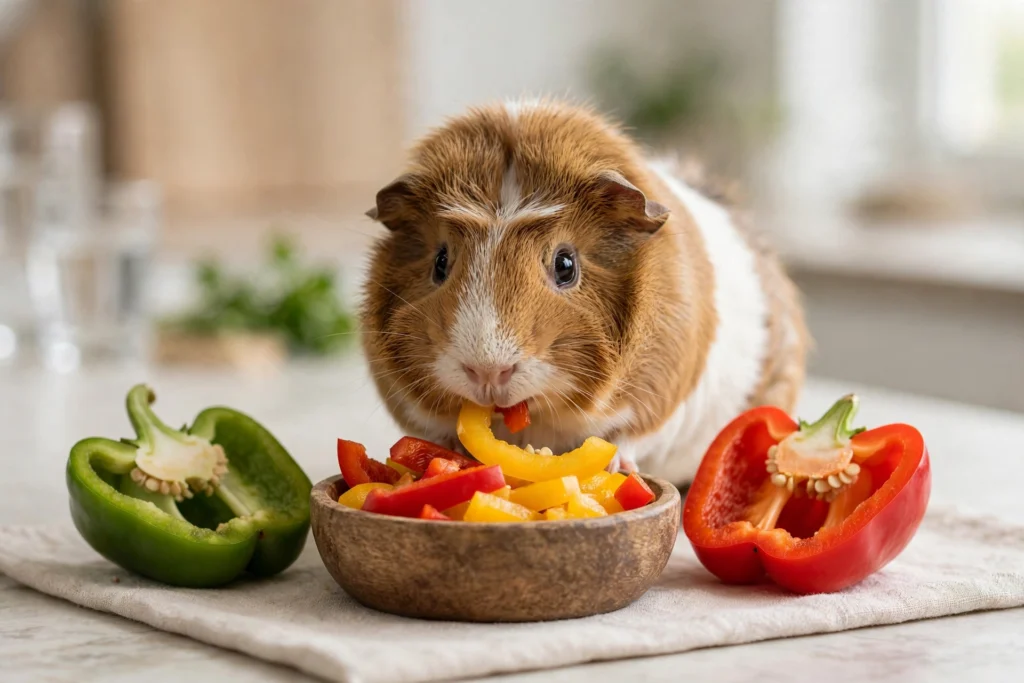
Short answer first: yes, guinea pigs can eat bell peppers — and they should. Bell peppers are one of the very best vegetables you can offer your piggies: crunchy, hydrating, loved by most pigs, and absolutely loaded with vitamin C, the one vitamin guinea pigs cannot make themselves. In this guide we cover which colours are safe, how much to feed, the truth about seeds and stems, and how to serve peppers for maximum benefit.
Why Bell Peppers Are a Superfood for Guinea Pigs
Here is the single most important fact in guinea pig nutrition: like humans (and unlike most animals), guinea pigs cannot synthesise their own vitamin C. Without a daily dietary supply, they develop scurvy — a painful, potentially fatal condition causing swollen joints, lethargy, rough coat and bleeding gums. An adult guinea pig needs roughly 10–30 mg of vitamin C per day, every day.
Bell peppers are one of the richest common sources. Per 100 g, red bell peppers contain around 120–140 mg of vitamin C — more than oranges — while green peppers offer roughly 80 mg. A single daily strip of pepper goes a long way toward covering your piggy’s needs. That is why peppers sit at the top of our safe food list and appear in the daily column of our diet chart.
Beyond vitamin C, bell peppers provide:
- Vitamin A (especially red peppers) — supports eyes, skin and immunity.
- Vitamin B6 — helps metabolism and nervous system health.
- Fibre — supports healthy digestion alongside unlimited hay.
- Water content (~92%) — great for hydration, especially in warm weather.
- Low sugar, low calcium — gentler than fruit and safer than calcium-heavy greens for pigs prone to bladder stones.
Which Colours Are Safe? Green, Yellow, Orange and Red
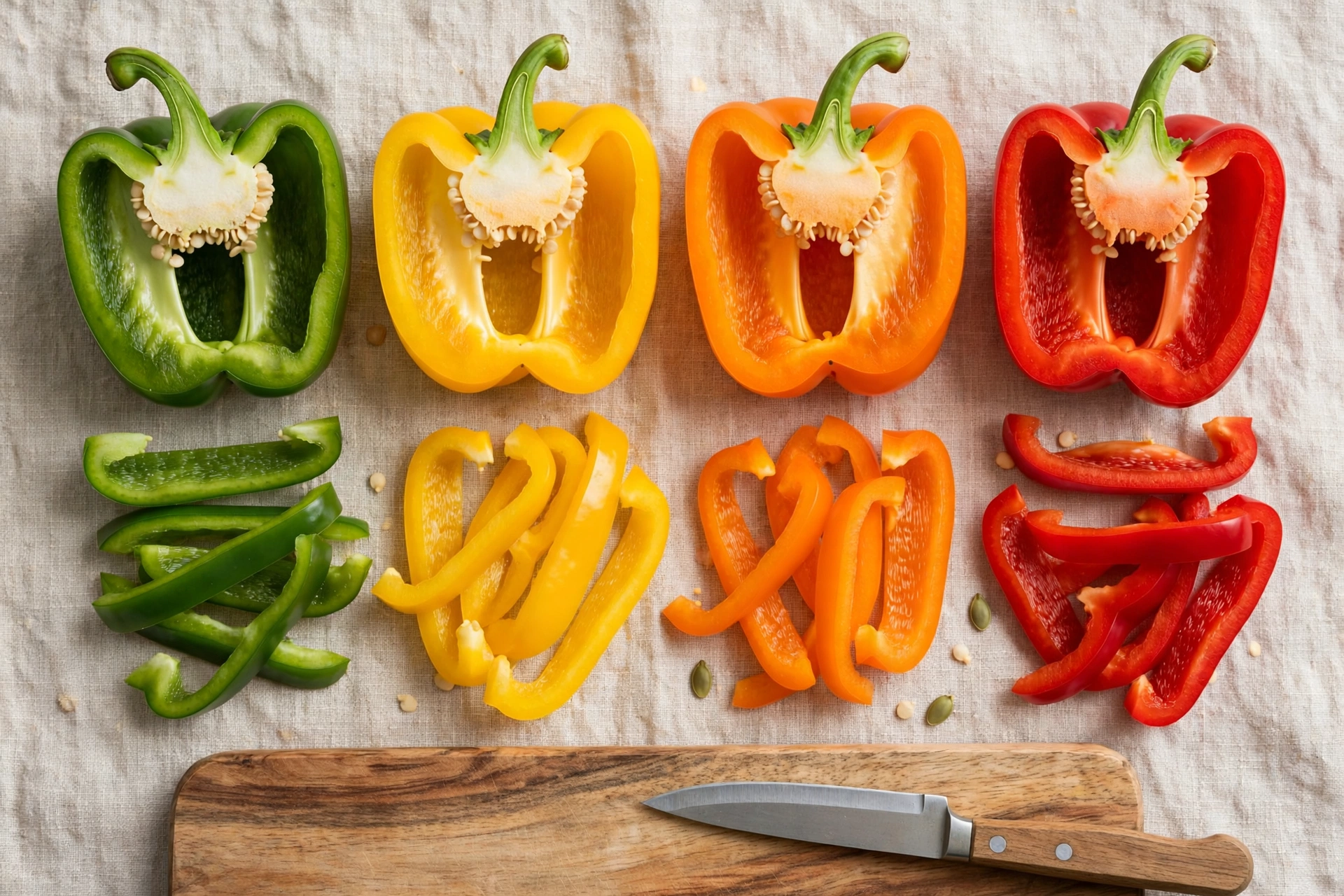
All common bell pepper colours are safe — they are simply the same fruit at different stages of ripeness. But they are not identical nutritionally:
| Colour | Vitamin C (per 100 g) | Taste | Notes |
|---|---|---|---|
| Green | ~80 mg | Slightly bitter, crunchy | Lowest sugar; great everyday choice |
| Yellow | ~120 mg | Sweet, mild | High vitamin C; most pigs love these |
| Orange | ~130 mg | Sweet | Rich in vitamin A precursors too |
| Red | ~128 mg | Sweetest | Vitamin C champion; slightly more sugar, so rotate colours |
Best practice: rotate through the colours across the week rather than feeding only red. Green peppers are the leanest daily driver; yellow, orange and red add variety and extra vitamin C. Variety also keeps picky eaters interested — a pig bored of green will often dive into yellow.
One warning: hot peppers are not bell peppers. Chilli peppers, jalapeños and other spicy varieties contain capsaicin, which will burn your piggy’s mouth and gut. Only feed sweet bell peppers (Capsicum annuum, the mild blocky kind).
Seeds, Stems and Leaves: What Is Safe?
This is where owners get confused, so here is the clear breakdown:
- Seeds: technically non-toxic, but they are a choking hazard and offer zero nutrition. Always scoop the seeds out before serving. It takes five seconds and removes the only real risk in the pepper.
- The white pith (membrane): safe to eat, though slightly bitter. Most pigs eat around it or nibble it without issue. You can leave it or trim it — either is fine.
- Stems: the tough green stalk is not toxic, but it is woody and unappealing. Pigs will ignore it; just cut it off when you prep.
- Leaves of the pepper plant: do not feed. Like tomato and potato leaves, pepper plant foliage belongs to the nightshade family and contains solanine, which is toxic to guinea pigs. Only the fruit is safe — never the plant.
So the rule is simple: fruit yes, everything green and leafy from the plant no, seeds removed.
How Much Bell Pepper Can Guinea Pigs Eat? Portion Guide
Bell peppers are a daily vegetable, but “daily” does not mean “unlimited”. Follow these portions:
- Per pig, per day: roughly 1/8 to 1/4 of a medium bell pepper — about a strip the size of your thumb, or 2–3 bite-sized chunks.
- As part of the mix: peppers should be one component of a daily veggie portion totalling about one cup of mixed vegetables per pig. Think: a strip of pepper + a leaf of romaine + a sprig of coriander + a small chunk of cucumber.
- Introduce gradually: if your pig has never had pepper, start with a tiny piece for 2–3 days and watch droppings. Any soft stools mean slow down. Most pigs take to peppers instantly, but every gut is different.
- Babies and seniors: pups under 6 months and elderly pigs can eat peppers too — vitamin C matters even more for growing and ageing bodies. Keep pieces small for little mouths.
- Pregnant sows: safe and beneficial — the extra vitamin C supports pregnancy. Keep portions normal, not doubled.
Too much of even a good thing causes problems: excess pepper means excess sugar (in reds) and can lead to soft droppings or selective eating, where the pig fills up on pepper and ignores its hay. And hay must always remain the main event — unlimited timothy hay is non-negotiable. See the full daily breakdown in our diet chart.
How to Serve Bell Peppers: Wash, Cut, Serve
Preparation is quick, but doing it right matters:
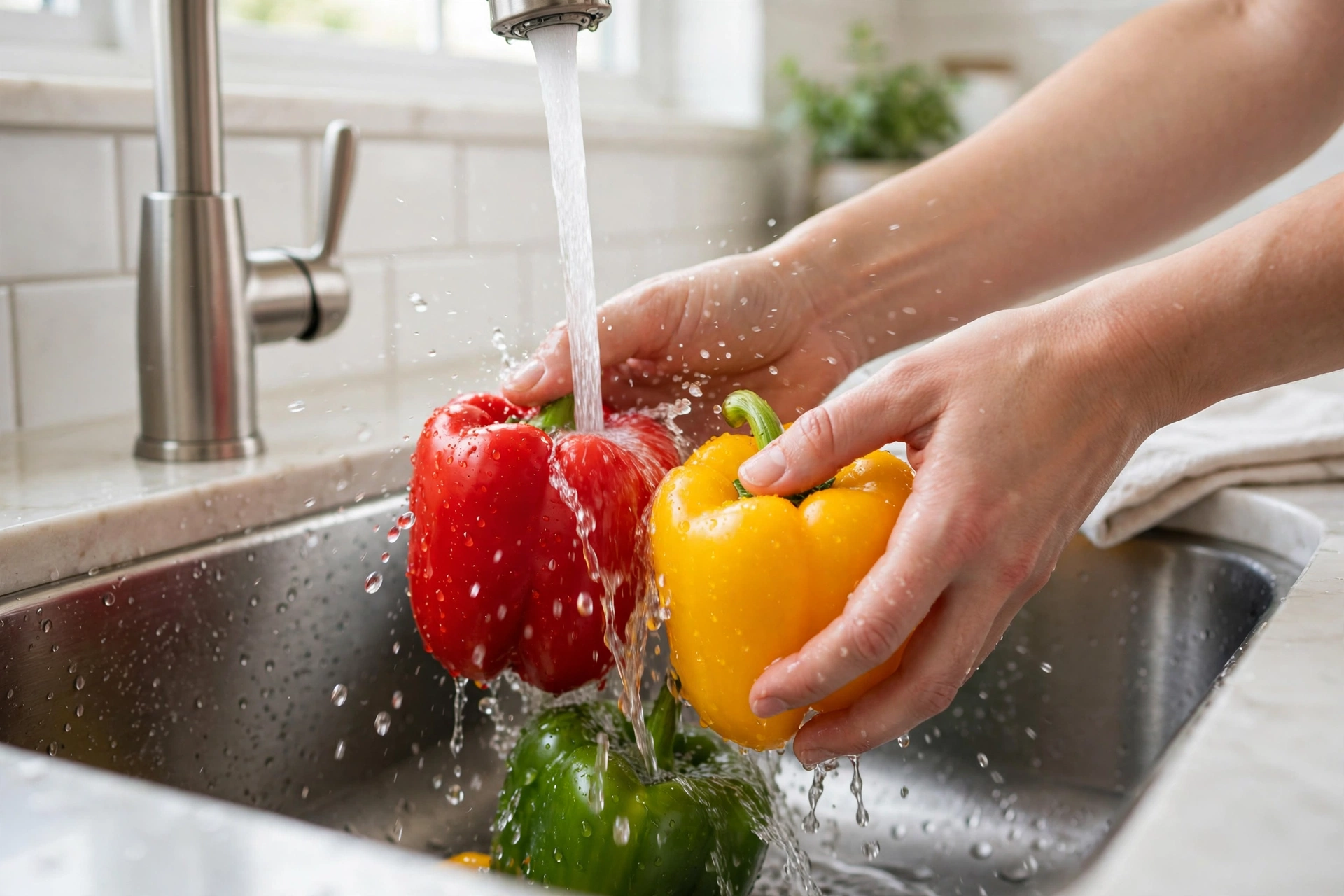
1. Wash thoroughly. Rinse under running water and rub the skin — peppers are on the high-pesticide lists in many countries. Organic is ideal; if not, a good wash plus peeling the outer skin removes most residue.
2. Remove seeds and stem. Cut the pepper open, scoop out the seed cluster with a spoon, and cut away the stem. Trim the white pith if your pig is fussy (most are not).
3. Cut into pig-sized strips. Long thin strips are perfect — easy to grip with little paws and fun to pull. Avoid tiny diced cubes (boring, get lost in bedding) and avoid whole-pepper feeding (too much at once).
4. Serve at room temperature. Cold peppers straight from the fridge can cause tummy upset. Take the portion out 20–30 minutes before serving.
5. Remove uneaten pieces within a few hours. Wilted, dried-out pepper left in the cage grows bacteria. Fresh in, old out — same rule as all fresh food.
Can guinea pigs eat cooked bell peppers? No — serve raw only. Cooking destroys most of the vitamin C (the whole point) and softens the pepper into a texture pigs do not enjoy. Raw, crunchy, fresh: that is the way.
Vitamin C: Why It Matters So Much
Because this is the core reason peppers earn their place, it deserves emphasis. Guinea pigs share the vitamin C problem with humans and primates: a broken gene means no internal production. Consequences of deficiency (scurvy) include:
- Lethargy and reluctance to move
- Swollen, painful joints and limping
- Rough, thinning coat
- Loss of appetite and weight loss
- Bleeding gums and delayed wound healing
- Weakened immunity — more infections, slower recovery
Fresh vegetables are the best delivery system because vitamin C degrades fast: it breaks down in light, heat and air, which is why pellets lose their vitamin C within weeks of the bag being opened and why vitamin C drops in water bottles are unreliable (the vitamin degrades in hours, and the taste can put pigs off drinking). A daily strip of bell pepper sidesteps all of that — fresh, intact, eagerly eaten.
That said, peppers alone are not a complete diet. Unlimited hay, a tablespoon of quality pellets daily, and a varied veggie mix complete the picture. If your pig shows any scurvy symptoms, see a vet promptly — and keep our vet emergency checklist handy so you know what counts as urgent.
Can Guinea Pigs Eat Bell Peppers? — FAQs
Can guinea pigs eat bell peppers every day?
Yes — bell peppers are one of the few vegetables suitable for daily feeding. Stick to 1/8 to 1/4 of a pepper per pig per day as part of a mixed veggie portion, and rotate colours through the week.
Are green bell peppers safe for guinea pigs?
Completely safe, and the lowest-sugar option, making them ideal for everyday feeding. They have slightly less vitamin C than ripe colours, so mix in yellow, orange or red a few times a week.
Can guinea pigs eat bell pepper seeds?
Do not feed them — while not poisonous, seeds are a choking hazard with no nutritional value. Always scoop them out during prep. The white pith inside is safe, though.
Can baby guinea pigs eat bell peppers?
Yes. Pups can eat bell peppers from the age they start nibbling solid food (around a few days old, alongside mum). Offer tiny pieces and make sure hay remains their primary food as they grow.
Are red bell peppers better than green for guinea pigs?
Red peppers have more vitamin C and vitamin A, but also more natural sugar. Neither is “better” outright — rotation is the winning strategy. Use green as the everyday base and reds/yellows/oranges for variety.
Can guinea pigs eat cooked or roasted bell peppers?
No. Cooking destroys the vitamin C that makes peppers valuable and creates a mushy texture pigs dislike. Always serve bell peppers raw, washed, and at room temperature.
My guinea pig will not eat bell peppers — what now?
Try a different colour (many pepper-refusers love yellow), cut thinner strips, or offer it during floor time when excitement is high. Keep offering a small piece daily for a week or two — pigs often need several exposures. If they truly refuse, other vitamin C stars include broccoli, kale and fresh grass from our safe food list.
Bottom line: can guinea pigs eat bell peppers? Yes — daily, all colours, seeds removed. They are the easiest vitamin C insurance you can buy, most pigs adore them, and a thumb-sized strip a day keeps scurvy away. Wash them, cut them into strips, serve at room temperature, and watch your piggies wheek.