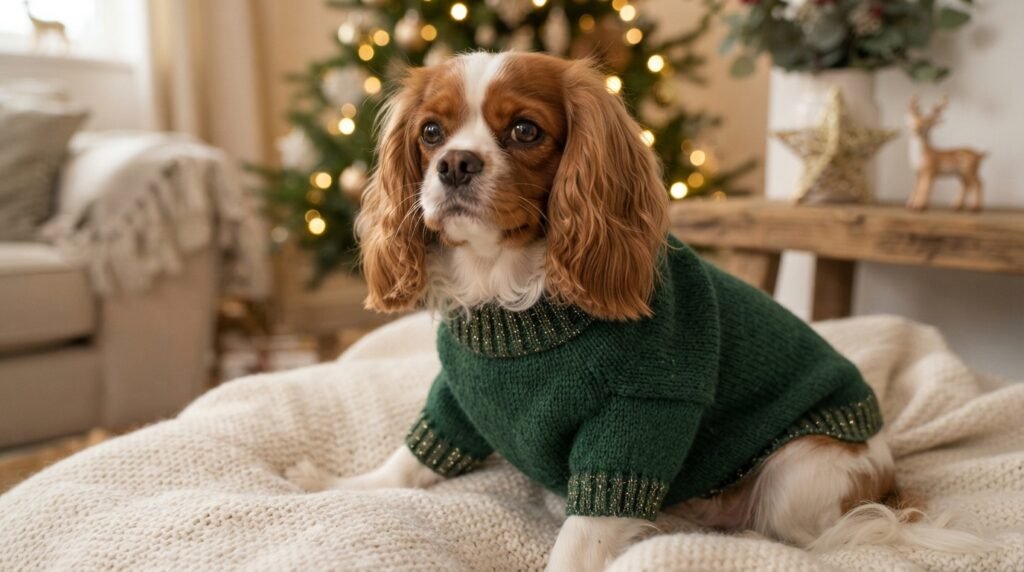
A Christmas dog sweater pattern is a knit or crochet garment built to a dog’s specific chest and length measurements, using washable, non-irritating yarn and simple stitch repeats so it’s realistic to finish before the holidays actually arrive. This article gives you 16 specific, makeable patterns for a festive dog sweater worth photographing. There’s a particular joy in a handmade holiday dog sweater: a stitch pattern that actually fits a wriggly body, a color palette that photographs beautifully against snow or a tree, a sweater sturdy enough to survive being worn for the whole card-photo session. It borrows from both traditional Fair Isle and cable knitting techniques scaled down for a dog’s proportions and the current wave of pet-focused handmade making, which is exactly why these patterns work for anything from a chihuahua to a golden retriever. Here are 16 ideas worth saving — and stealing.
Why Handmade Christmas Dog Sweaters Work So Well
Dog sweater pattern-making draws from two traditions: classic human sweater knitting techniques, Fair Isle, cabling, ribbing, scaled down and reshaped for a four-legged body, and the modern pet-fashion movement that treats dogs as genuine subjects of seasonal styling rather than an afterthought. What makes a dog sweater pattern distinct from a human one is fit logic — the neck opening, leg holes, and belly coverage all have to account for a dog’s different proportions and range of motion, so every pattern here is built around a chest-and-length measurement system rather than generic sizing.
The material and color language favors washable wool blends and acrylic yarn in deep green, warm red, and cream, with simple motifs, snowflakes, trees, stripes, that read clearly even at a small knitted gauge. Necklines stay wide and stretchy, and leg openings stay simple, since a dog’s comfort and mobility always take priority over a more elaborate silhouette.
This style is trending now because pet holiday photos have become their own genre of content, and search interest in “dog Christmas sweater pattern” and “knit dog sweater” spikes every year heading into the holiday season as more people want a handmade version rather than a mass-produced one. Improved access to dog-specific sizing charts and beginner-friendly video tutorials has also made these patterns achievable even for newer knitters and crocheters.
A tight timeline before the holidays doesn’t rule out a handmade sweater, since the smaller scale of a dog garment knits up dramatically faster than anything sized for a person. Prioritize taking accurate measurements before choosing a pattern, since fit affects both comfort and how good the finished sweater looks in photos far more than any single stitch choice.
Style at a Glance
| Element | Classic Sweater Technique | Pet Fashion Movement |
|---|---|---|
| Philosophy | Structured, fitted | Playful, photo-ready |
| Materials | Washable wool, acrylic blend | Bright motif yarn, ribbing |
| Color palette | Deep green, warm red, cream | Red, white, sage |
16 Christmas Dog Sweater Patterns for Festive Photos
1. Classic Fair Isle Snowflake Pullover
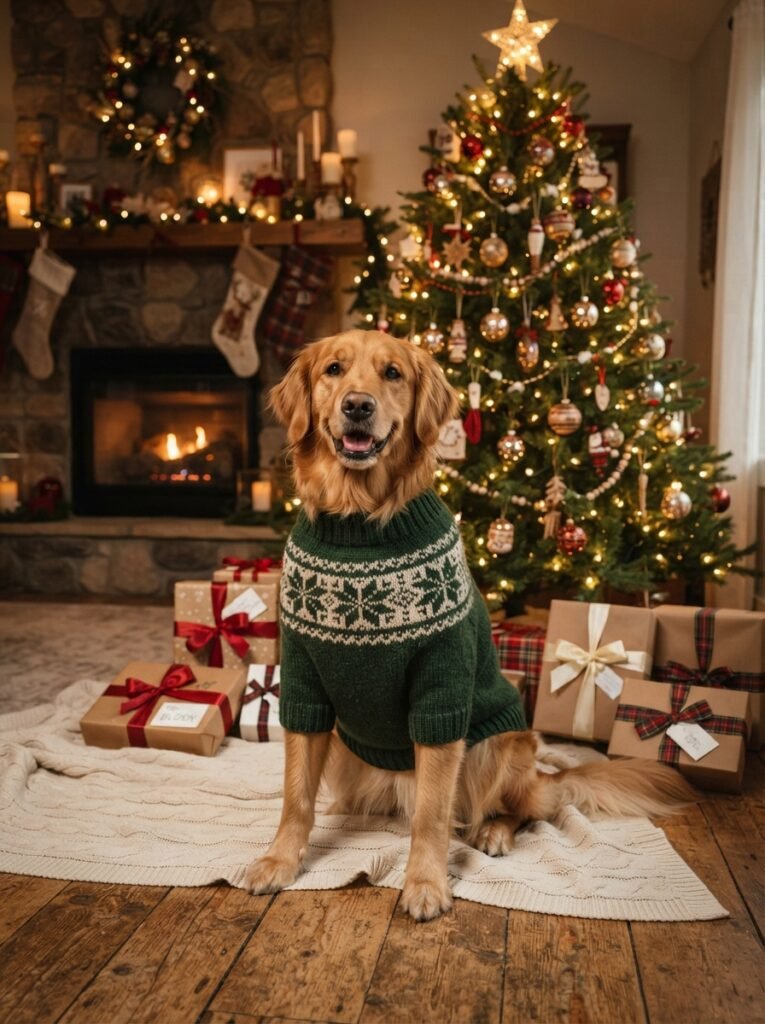
Vibe: Timeless, like a proper Christmas jumper shrunk down to dog size.
Why it works: A small repeating snowflake motif worked in stranded colorwork reads clearly even at a small gauge, a technique principle where simple geometric shapes stay legible on a garment this size when a more detailed picture wouldn’t.
How to get it: Knit a basic tube body in the round from the neck down, working a single row of small snowflake motifs in cream against a deep green background around the chest, then divide for the leg openings and finish with ribbed cuffs.
Materials needed: Worsted weight wool blend yarn in deep green and cream, circular knitting needles, stitch markers, tapestry needle.
2. Cabled Cream Turtleneck Sweater
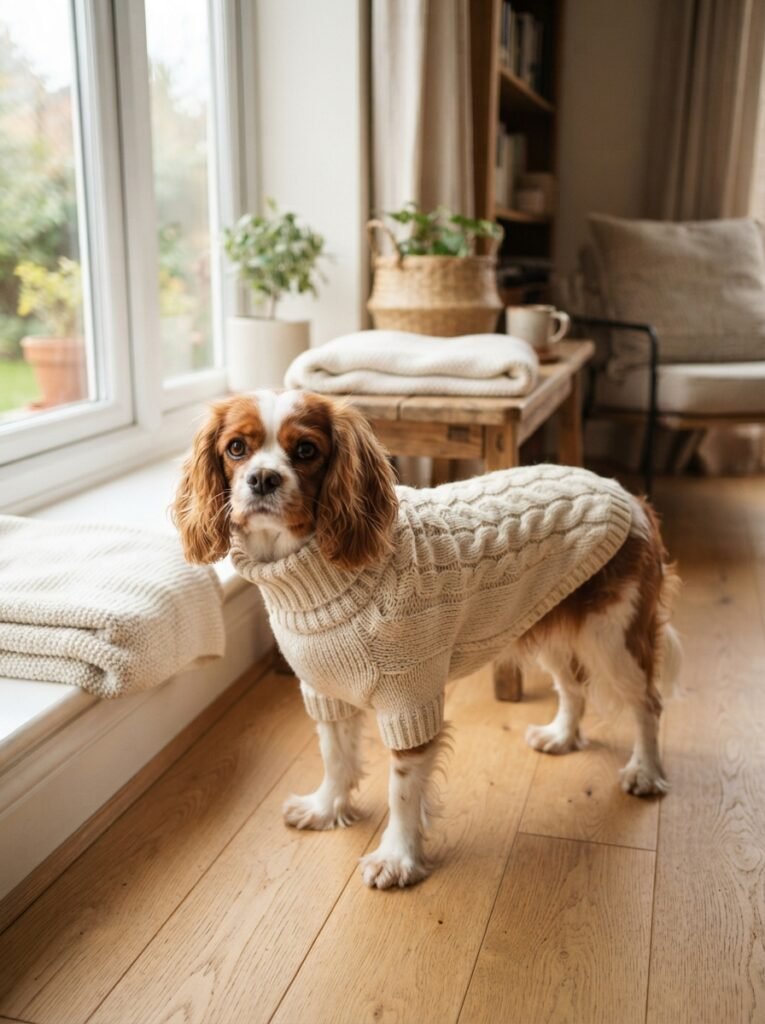
Vibe: Cozy, like the dog equivalent of a chunky fisherman’s sweater.
Why it works: A simple two-strand cable worked up the back panel adds visual texture without needing any colorwork skill, making this a good pattern for a confident beginner who wants something more textured than plain stockinette.
How to get it: Knit the body in cream worsted yarn with a single cable panel running down the center back, working a ribbed turtleneck collar tall enough to fold over, and finishing the belly in plain stockinette for comfort against the skin.
Materials needed: Cream worsted weight yarn, cable needle, circular knitting needles, stitch markers.
Also view: 12 Small Dog Sweater Patterns for Cute Outfits
3. Red and White Candy Cane Stripe Sweater
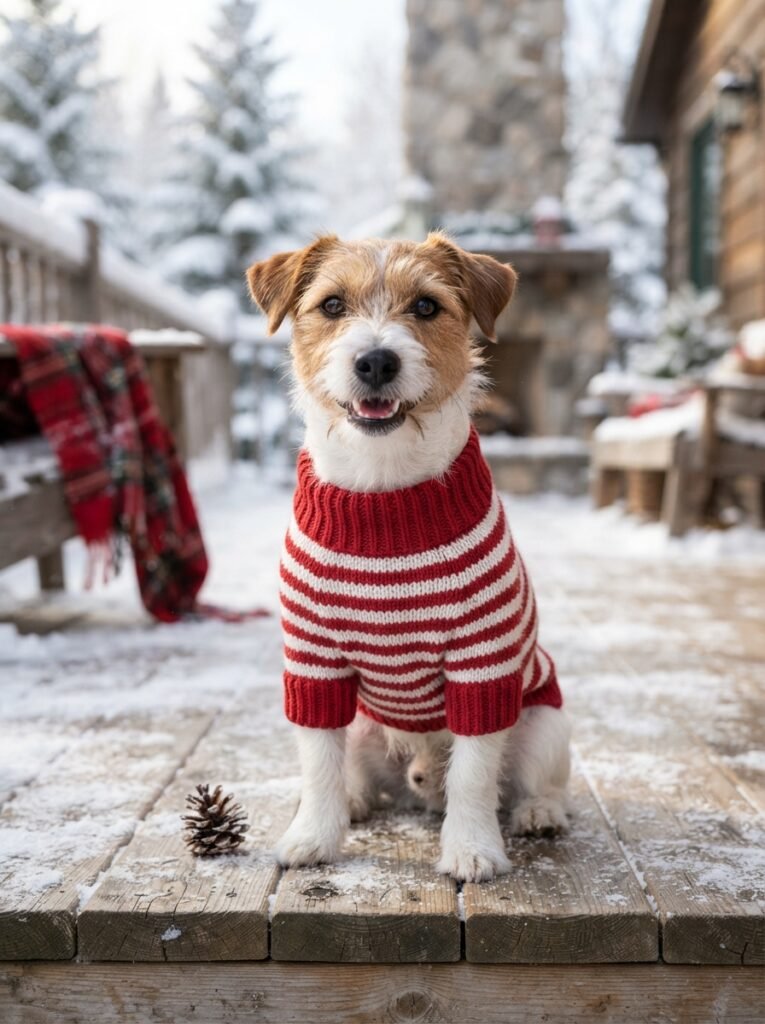
Vibe: Cheerful, like a candy cane came to life and grew four legs.
Why it works: Alternating stripe rows require no charting or colorwork technique beyond changing yarn color every few rows, a beginner-friendly approach that still delivers a bold, unmistakably festive look.
How to get it: Knit the body tube alternating four rows of warm red with four rows of warm white, carrying the unused color loosely up the inside of the work, and finish with a solid red ribbed neckline and cuffs.
Materials needed: Worsted weight yarn in warm red and warm white, circular knitting needles, yarn bobbins optional.
4. Crochet Reindeer Motif Sweater
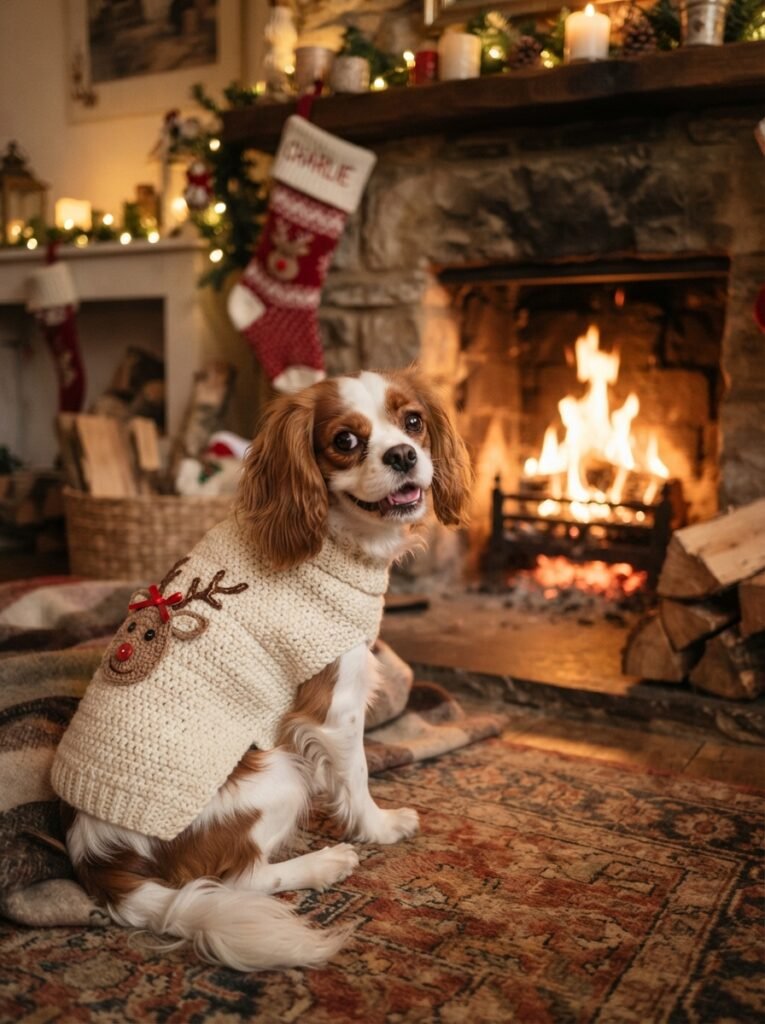
Vibe: Playful, like the dog is dressed as its own tiny reindeer mascot.
Why it works: A single crocheted reindeer applique sewn onto a plain sweater body isolates the hardest part of the design into one small, separately worked piece, so a mistake in the motif doesn’t require unraveling the whole garment.
How to get it: Crochet a simple tube body in cream, separately crochet a small brown reindeer silhouette using single crochet shaping, and sew the finished motif onto the chest panel once both pieces are complete.
Materials needed: Worsted weight yarn in cream and brown, crochet hook, tapestry needle, small button for a red nose accent.
5. Small Space Chihuahua-Sized Mini Sweater
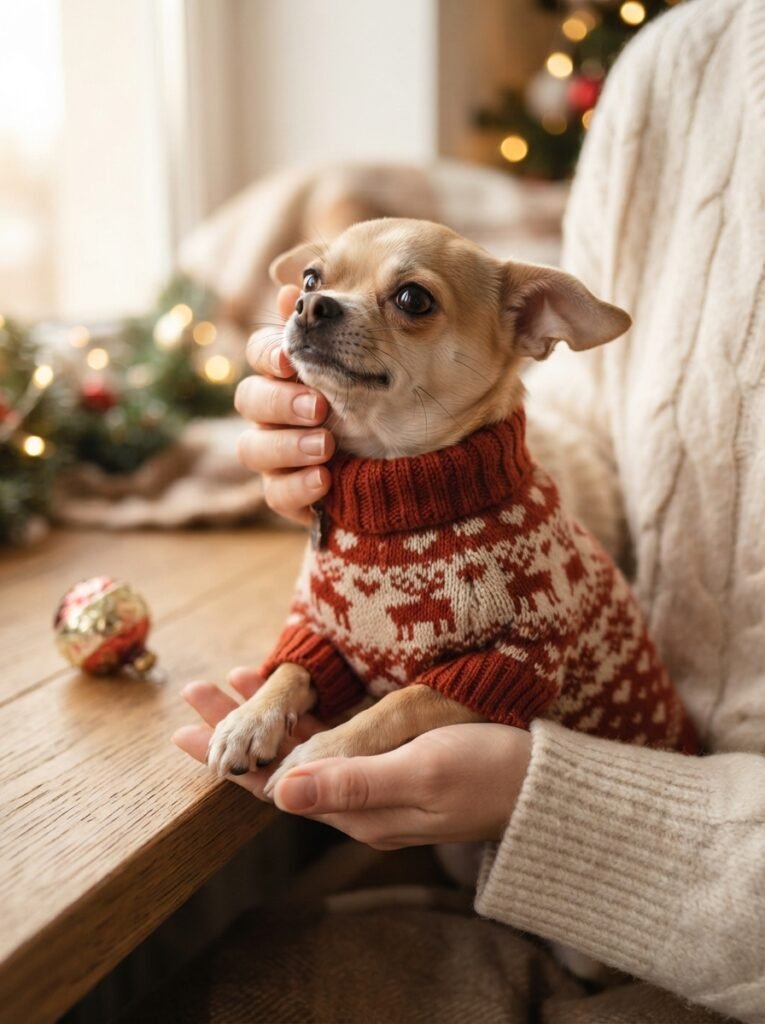
Vibe: Efficient, like the smallest dog got the tiniest, most detailed sweater.
Why it works: Scaling any of the patterns above down to a very small chest measurement uses proportionally less yarn and knits up faster, a small-scale technique that suits toy and teacup breeds whose bodies are too short for a standard-length pattern.
How to get it: Knit a short body tube, no more than 8 to 10 inches long, keeping leg openings closer together than a standard pattern calls for, and finish with a simple ribbed neck and hem for a snug, proportional fit.
Materials needed: Fingering or sport weight yarn, smaller gauge circular needles, stitch markers.
6. Sage and Cream Nordic Star Sweater
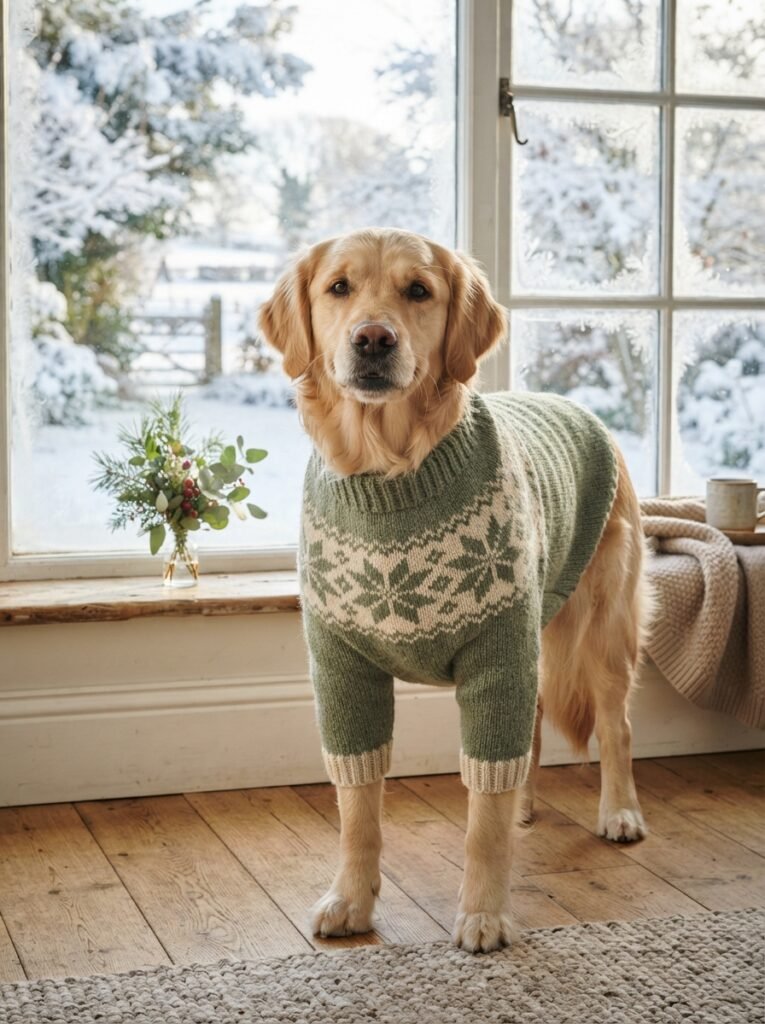
Vibe: Fresh, like a quieter, more modern take on traditional holiday knitwear.
Why it works: Swapping the classic red-and-green palette for sage and cream keeps the motif recognizably Nordic and wintery while photographing more softly against most home interiors and outdoor snow scenes alike.
How to get it: Chart a simple eight-point star motif in cream against a sage green background, working it as a single repeating band around the chest using the stranded colorwork technique, then finish the rest of the body in solid sage.
Materials needed: Worsted weight yarn in sage green and cream, circular knitting needles, stitch markers, colorwork chart.
7. Warm Red Ribbed Turtleneck for Layering
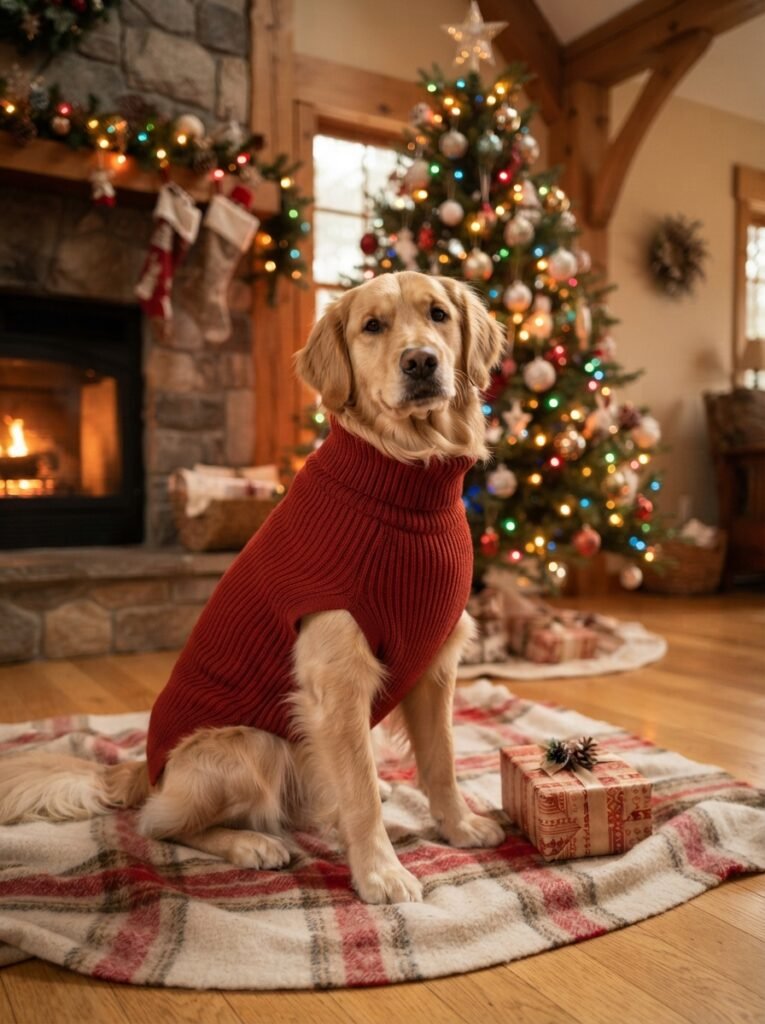
Vibe: Practical, like a base layer that still photographs beautifully on its own.
Why it works: An all-ribbed construction stretches to fit a slightly wider range of dog sizes than a fixed-gauge stockinette body, a practical technique for anyone making a gift sweater without exact measurements for the recipient’s dog.
How to get it: Knit the entire body in a simple two-by-two rib pattern from neck to hem, which naturally stretches for a closer, more adaptable fit, finishing with a tall ribbed turtleneck collar.
Materials needed: Worsted weight yarn in warm red, circular knitting needles, stitch markers.
8. Layout: Matching Owner-and-Dog Fair Isle Set
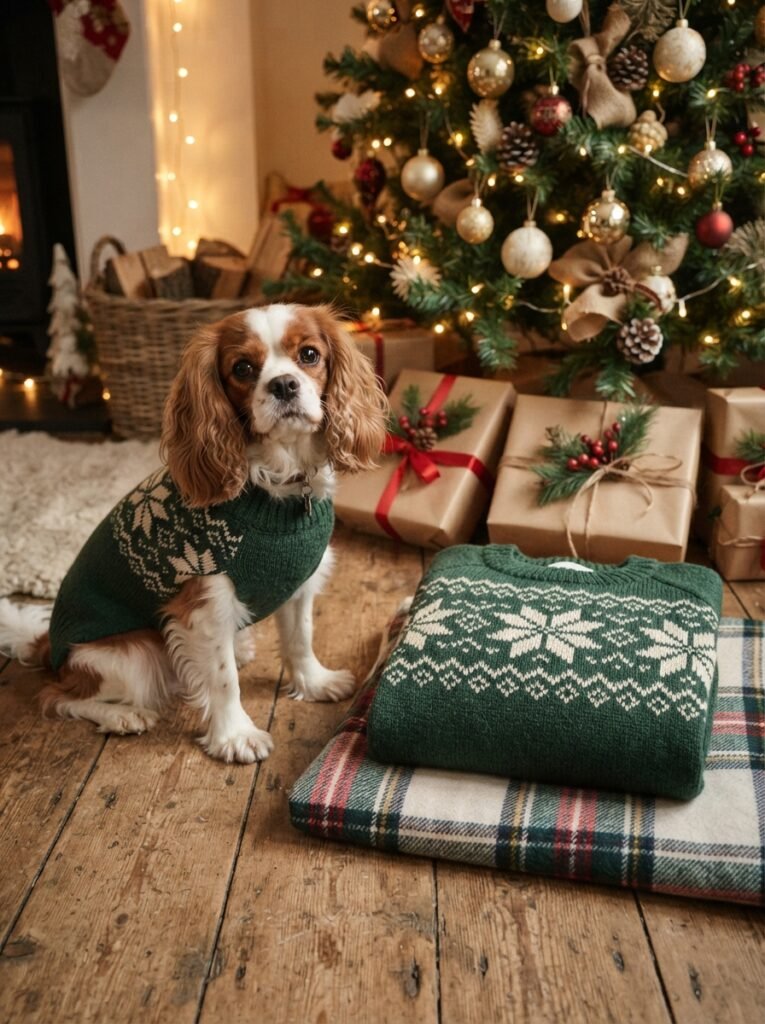
Vibe: Coordinated, like the whole holiday card photo was planned around matching knitwear.
Why it works: Using the same snowflake or star motif chart at two different scales, a full human sweater and a small dog version, uses the layout principle of visual repetition to tie a whole family’s photo together intentionally.
How to get it: Knit the full-size Fair Isle sweater pattern for the human first, then knit the same chart at a smaller repeat count for the dog version, keeping the yarn colors identical across both pieces.
Materials needed: Worsted weight yarn in matching colorway, two needle sizes for the different scales, stitch markers, colorwork chart.
9. Small Nook Bulldog and Barrel-Chest Adapted Sweater
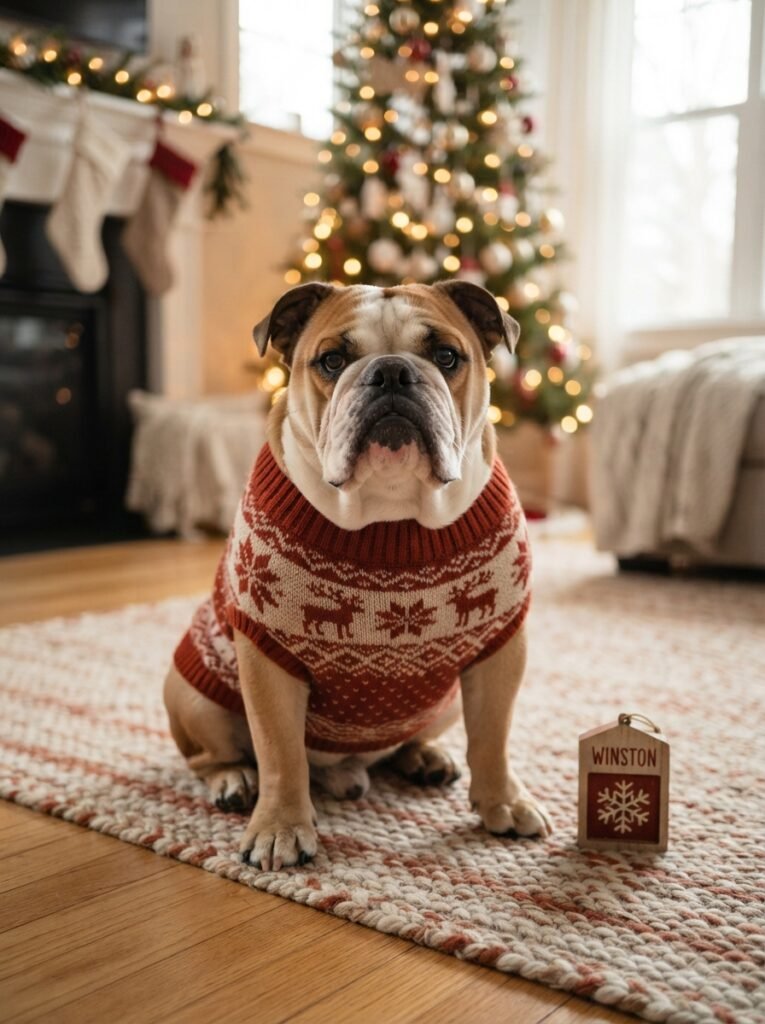
Vibe: Considered, like the pattern actually accounts for a stockier body shape.
Why it works: Breeds with a wide, barrel-shaped chest and short torso need extra width through the belly and a shorter overall body length than a standard pattern provides, so adjusting these two measurements specifically prevents the common problem of a too-tight or too-long fit.
How to get it: Cast on extra stitches for the chest circumference measurement taken at the widest point, and knit the body length short, stopping well before the natural waist, checking fit against the dog periodically as you go.
Materials needed: Worsted weight yarn, circular knitting needles, stitch markers, flexible measuring tape.
10. Warm Cream and Brass-Button Toggle Sweater
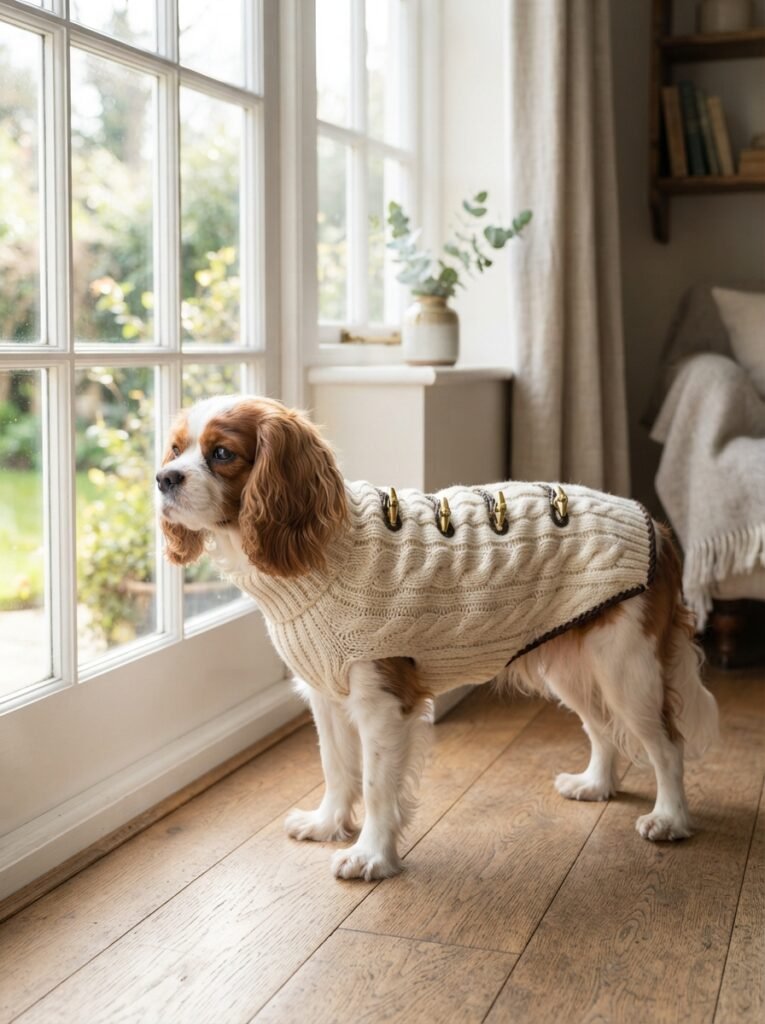
Vibe: Elevated, like a simple knit sweater got genuine outerwear detailing.
Why it works: Adding brass toggle buttons down the back opening mixes a soft knit material with a reflective metal accent, a texture contrast principle that gives a simple garment a more finished, tailored look for photos.
How to get it: Knit the body with a back opening rather than a full tube, working buttonholes down one edge and sewing brass toggle buttons to the opposite edge so the sweater can be easily put on and removed.
Materials needed: Worsted weight yarn in cream, circular or straight knitting needles, brass toggle buttons, tapestry needle.
11. Small Space Greyhound and Whippet Long-Body Sweater
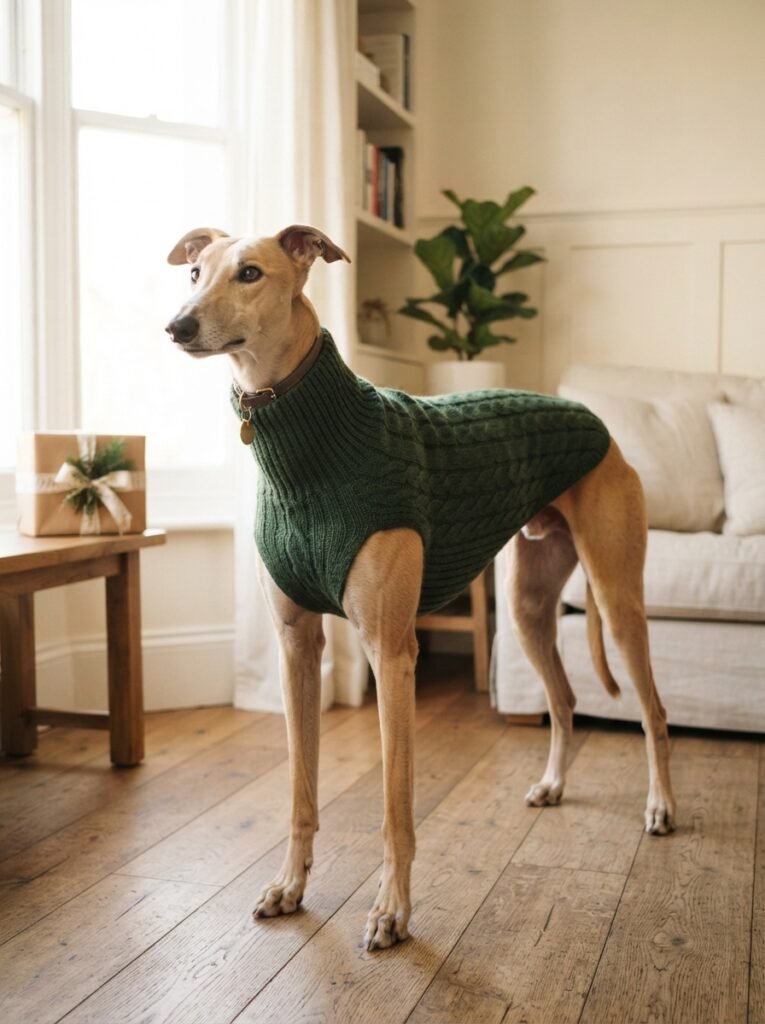
Vibe: Sleek, like the pattern respects an actually different body proportion.
Why it works: Sighthound breeds have a notably longer, narrower torso than most dogs, so a pattern with extra length and a narrower chest measurement prevents the common problem of a standard sweater riding up or leaving the belly exposed.
How to get it: Knit the body tube significantly longer than a standard pattern calls for while keeping the chest circumference narrower, checking the fit against the dog’s actual proportions rather than a generic size chart.
Materials needed: Worsted weight yarn, circular knitting needles, stitch markers, flexible measuring tape.
12. Sage and Kraft Crochet Granny Square Patchwork Sweater
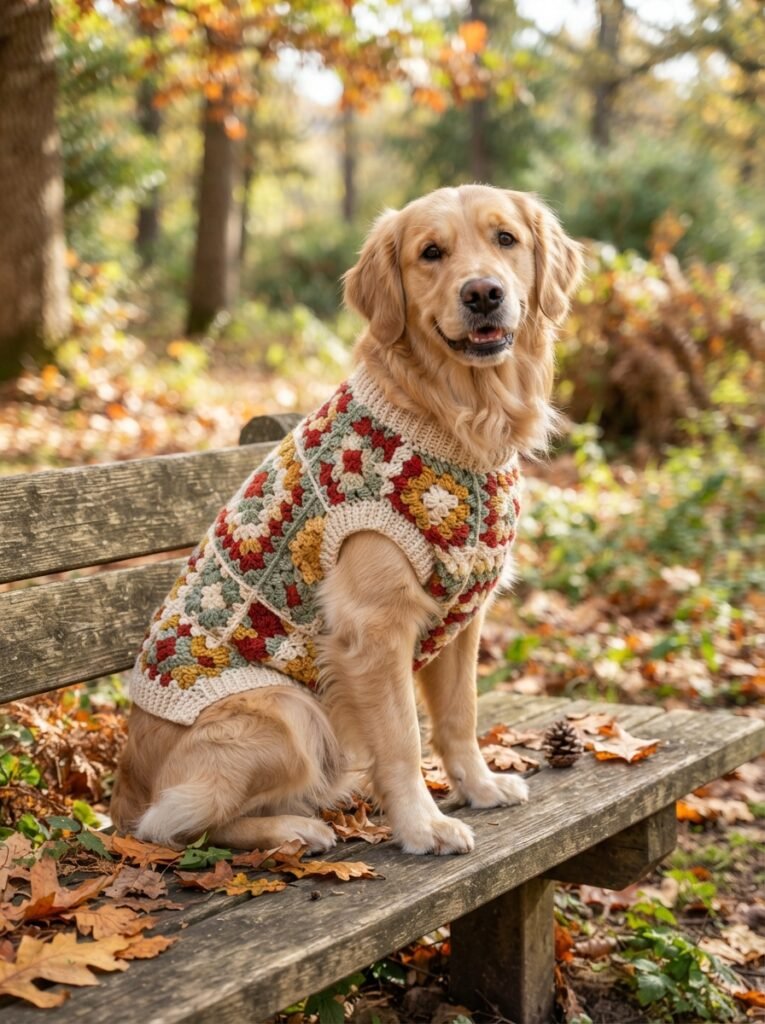
Vibe: Charming, like a favorite blanket technique got miniaturized into a wearable piece.
Why it works: Assembling the body from small granny squares rather than working it in one continuous piece lets you use up partial skeins of leftover holiday-colored yarn, a material efficiency principle that turns craft-room scraps into a genuinely stylish finished garment.
How to get it: Crochet a series of small granny squares in warm red, sage, and cream, joining them into a rectangle sized to the dog’s body measurements, then seam into a tube shape and add ribbed trim around the openings.
Materials needed: Worsted weight yarn scraps in coordinating colors, crochet hook, tapestry needle.
13. Small Nook Poinsettia Motif Vest for Short-Haired Dogs
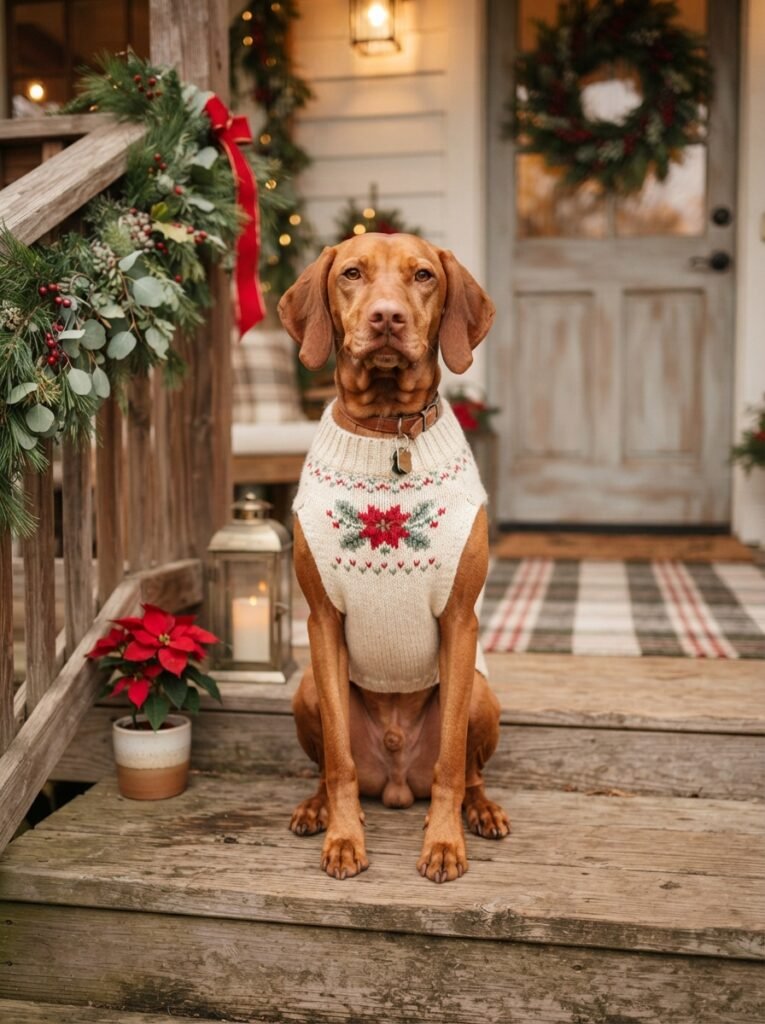
Vibe: Festive, like a small floral accent said everything without needing a full sleeve.
Why it works: A sleeveless vest style skips leg openings entirely, a construction shortcut that both knits up faster and suits short-haired dogs who need warmth across the body without the bulk of a full sweater.
How to get it: Knit a simple rectangle sized to wrap around the dog’s torso, work a small poinsettia motif in warm red and sage onto the chest panel using intarsia, and finish the edges with a strap and buckle or hook-and-loop closure underneath.
Materials needed: Worsted weight yarn in warm red, sage, and cream, knitting needles, hook-and-loop closure tape, tapestry needle.
14. Layout Flow: Adjustable Growing-Puppy Sweater
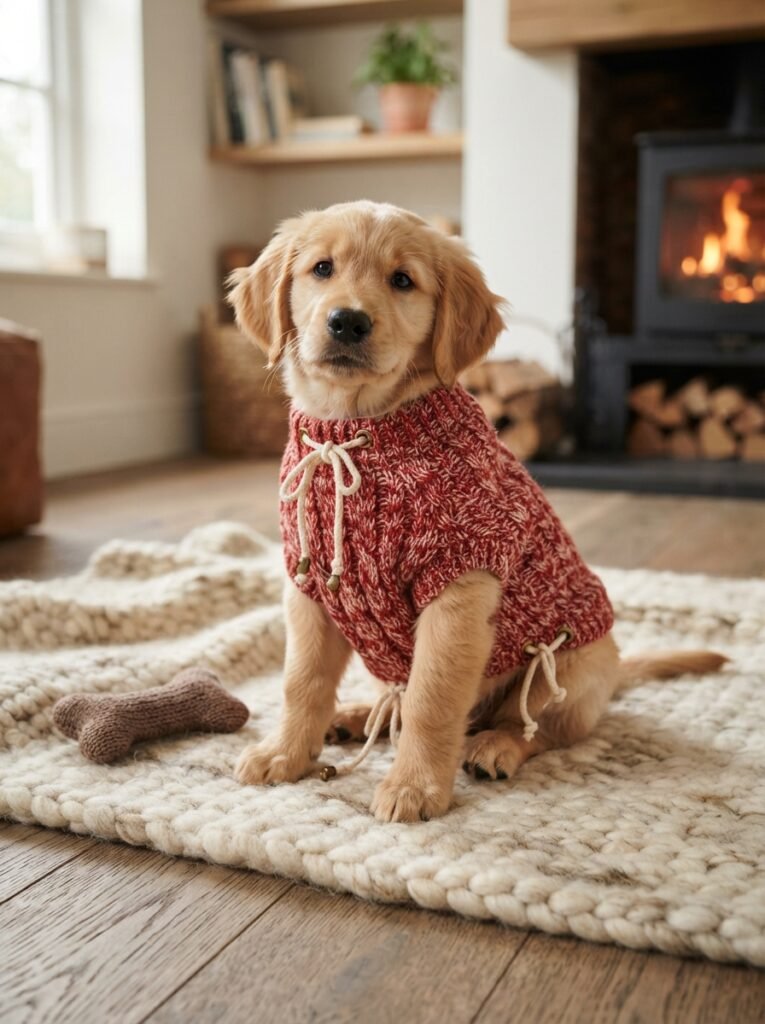
Vibe: Practical, like the sweater actually keeps up with a puppy’s growth spurt.
Why it works: Building in an adjustable drawstring hem and collar respects the layout reality of a puppy’s rapidly changing measurements, letting one sweater fit comfortably across a wider window of growth than a fixed pattern would allow.
How to get it: Knit the body slightly longer and looser than the puppy’s current measurements, threading a drawstring cord through eyelets at the hem and collar so both can be cinched smaller now and loosened later as the puppy grows.
Materials needed: Worsted weight yarn, circular knitting needles, cotton drawstring cord, tapestry needle.
15. Small Nook Metallic Thread Accent Holiday Sweater
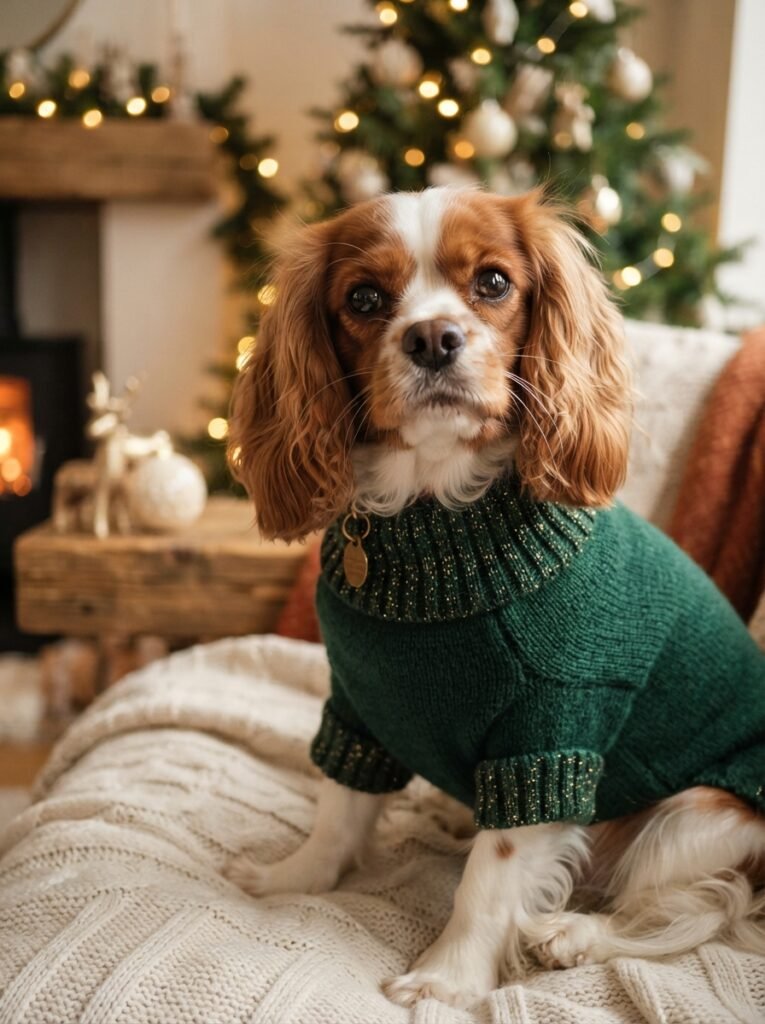
Vibe: Sparkling, like the sweater catches a little extra light in every photo.
Why it works: Carrying a fine strand of metallic thread alongside the main yarn for just the ribbed trim adds subtle sparkle exactly where it catches the most light in photos, without making the whole garment scratchy or overly shiny.
How to get it: Knit the main body in a solid warm red or deep green, then work the neckline, cuffs, and hem ribbing holding one strand of fine gold or silver metallic thread together with the main yarn.
Materials needed: Worsted weight yarn in warm red or deep green, fine metallic thread, circular knitting needles.
16. Small Space Illusion Two-Tone Colorblock Sweater for Photo Contrast
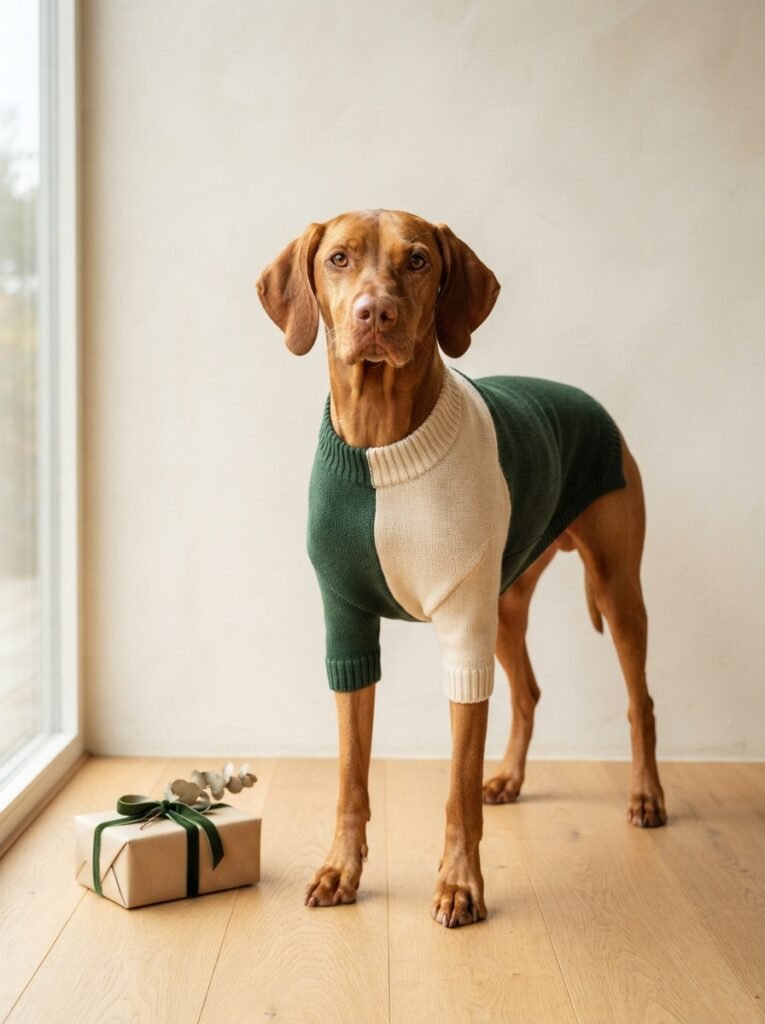
Vibe: Bold, like a clean color-block design that reads clearly from across a room in photos.
Why it works: A simple two-color split, dark on the back half and light on the front, or vice versa, uses value contrast to make the sweater read clearly and graphically in photos, an illusion technique that photographs better from a distance than a busier, more detailed motif would.
How to get it: Knit the back half of the body in deep green and the front half in warm cream, joining the two colors at a clean vertical seam down each side, and finish with ribbing in whichever color reads better against the dog’s own coat.
Materials needed: Worsted weight yarn in deep green and warm cream, circular or straight knitting needles, tapestry needle.
How to Start Your Christmas Dog Sweater
Start with accurate measurements, not the pattern. Measuring the dog’s neck circumference, chest circumference at the widest point, and body length from neck to base of tail first determines which pattern and size adjustments will actually fit, rather than choosing a pattern and hoping the dog matches a generic size chart.
The most common mistake is sizing the sweater based on the dog’s breed name alone rather than its actual measurements, since two dogs of the same breed can vary significantly in size and proportion. Always measure the specific dog being knitted for, and size up slightly at the chest if the dog is between two standard sizes, since a sweater that’s too tight restricts movement far more than one that’s slightly loose.
Three items under $30 that make an immediate difference: a set of stitch markers for tracking colorwork repeats, a flexible measuring tape for accurate sizing, and a few small skeins of a contrast color for trim or motif accents.
A basic version — a simple striped or ribbed sweater for a small to medium dog — is a weekend project taking 4 to 8 hours of knitting time depending on experience. A more elaborate colorwork or cabled pattern typically takes 10 to 15 hours spread across a week or two, since stranded colorwork and cable crossing both slow down the knitting pace compared to plain stockinette.
Frequently Asked Questions About Christmas Dog Sweater Patterns
How do I measure my dog correctly for a sweater pattern?
Measure the neck circumference where a collar normally sits, the chest circumference around the widest point just behind the front legs, and the body length from the base of the neck to just before the tail, adding a half inch of ease to each measurement for comfortable movement. Taking these measurements with the dog standing naturally, rather than sitting or lying down, gives the most accurate results.
What yarn is safest and most comfortable for a dog to wear?
A soft, washable wool blend or acrylic yarn without any mohair, fuzzy novelty texture, or scratchy fibers works best, since dogs can’t communicate irritation the way a person would and rough yarn against the skin can cause real discomfort. Machine-washable yarn is also worth prioritizing given how often a dog sweater needs cleaning compared to human knitwear.
How long does it typically take to knit a dog sweater?
A simple striped or ribbed sweater for a small to medium dog takes about 4 to 8 hours of knitting time for someone with basic experience. A more detailed colorwork or cabled pattern typically takes 10 to 15 hours, since techniques like stranded knitting and cable crossing both slow the overall knitting pace.
Can I adapt a human sweater pattern for a dog instead of using a dog-specific one?
Not directly, since a dog’s proportions, a long torso relative to a short neck and no shoulders in the human sense, don’t map onto human sweater shaping at all. It’s better to use a dog-specific construction, a simple tube shape with leg openings, and apply the stitch patterns or colorwork motifs from a human pattern you like onto that dog-shaped base instead.
What’s the best pattern to start with if I’ve never knit a dog sweater before?
The candy cane stripe sweater and the ribbed turtleneck are both excellent starting points, since neither requires any colorwork charting or shaping skill beyond basic knitting in the round. Both also knit up quickly, which matters if the goal is finishing before a specific holiday photo occasion.
Ready to Knit a Christmas Sweater for Your Dog?
Between Fair Isle snowflakes, cabled turtlenecks, candy cane stripes, and matching owner-and-dog sets, these 16 patterns cover a full range of ways to dress a dog for festive holiday photos. Starting with accurate measurements, not the prettiest pattern photo, is not a small detail, it’s the decision that determines whether the finished sweater actually fits and photographs well, rather than looking tight, twisted, or ill-proportioned in every shot. Today, grab a flexible measuring tape and record the neck, chest, and body length measurements for the dog you’re knitting for, then choose the pattern on this list whose skill level and timeline actually match what you can realistically finish before the holidays. Once it’s off the needles and on the dog, you’ll have a genuinely one-of-a-kind piece for this year’s card photo, made by hand instead of pulled off a store rack. Save your favorite ideas now — especially the breed-adapted patterns, since getting the actual fit right is what makes the difference between a sweater that photographs beautifully and one that just looks uncomfortable.