
If you’re wondering what the best hay for guinea pigs is, here’s the short answer: timothy hay — specifically 2nd cutting — is the best all-round choice for healthy adult guinea pigs. It’s high in fibre, low in calcium, and wears down their continuously growing teeth. But it’s not the only good option: orchard grass, meadow hay, and oat hay all have their place, while alfalfa is strictly for babies and nursing mums. Here’s how to choose, what to avoid, and how to feed it right.
Why Hay Matters So Much
Hay isn’t a side dish for guinea pigs — it’s the main event. Around 80% of a guinea pig’s diet should be good-quality hay, available in unlimited amounts, day and night. It does three critical jobs:
- Wears down teeth. Guinea pig teeth grow continuously. The long chewing sessions hay demands keep molars ground down naturally; without enough hay, painful dental problems follow.
- Keeps the gut moving. The long-strand fibre in hay maintains healthy gut motility. A sluggish gut can turn into GI stasis, which is a genuine emergency.
- Prevents boredom. Foraging through a fresh pile of hay is enrichment — it keeps pigs busy, active, and behaving naturally.
Pellets and fresh vegetables matter too (our guinea pig diet chart shows the full balance), but hay is the foundation everything else sits on.
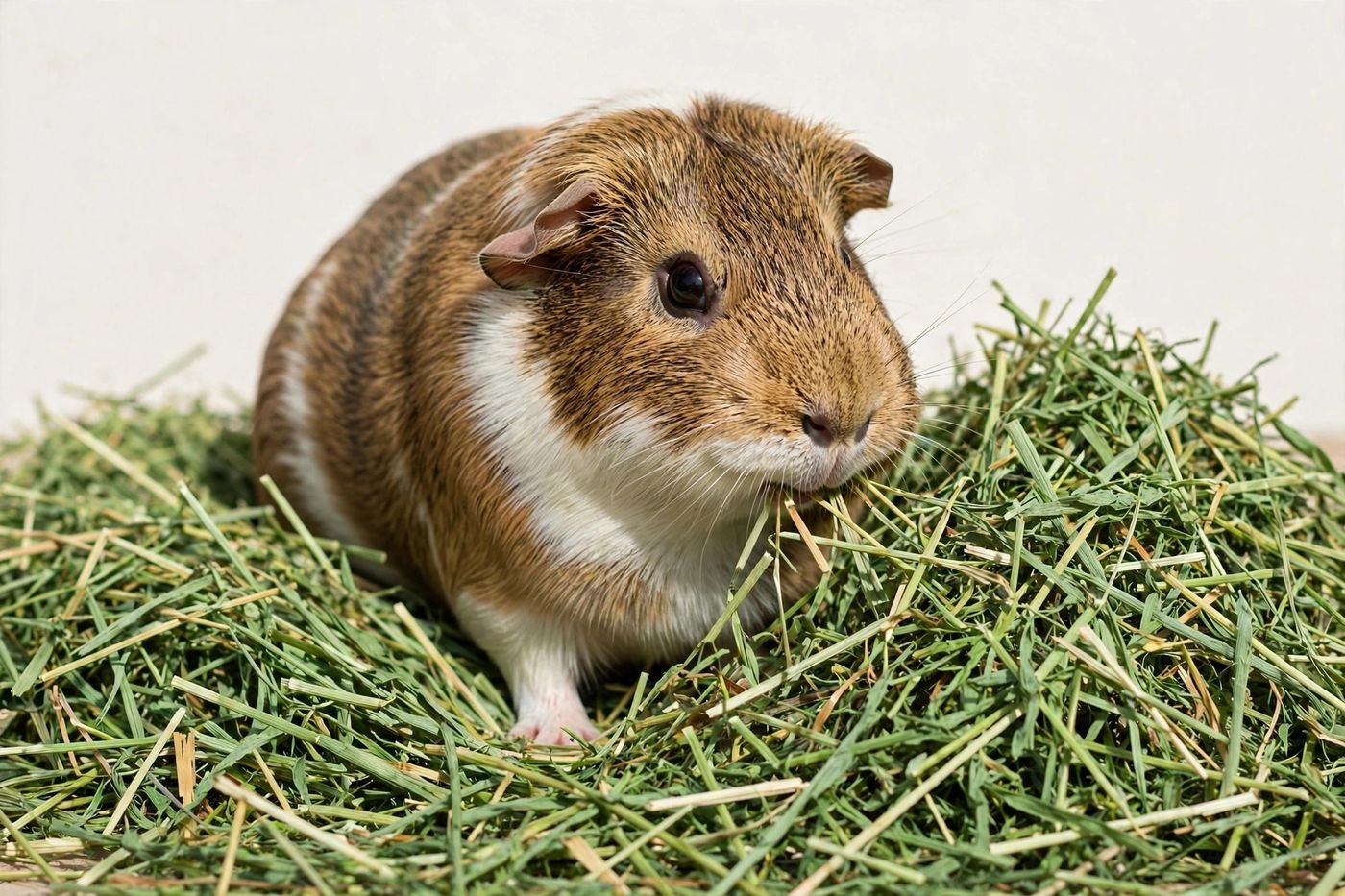
The 5 Main Hay Types, Ranked for Guinea Pigs
1. Timothy hay — the gold standard
Timothy is the hay most vets and rescues recommend for adult guinea pigs, and for good reason: it’s high in fibre, relatively low in calcium and protein, and widely available. It comes in three cuttings:
- 1st cutting: Coarse, stemmy, with seed heads. The toughest chew — excellent for dental wear, but pickier pigs may waste a lot of it.
- 2nd cutting (the sweet spot): A balanced mix of soft leaves and crunchy stems. Most pigs love it, and it’s the best all-rounder for daily feeding.
- 3rd cutting: Very soft, leafy, and fragrant. Pigs go mad for it, but it’s lower in the coarse fibre that grinds teeth — better as a treat hay than the staple.
Verdict: Buy 2nd-cutting timothy as your everyday hay. A bag of 1st cutting alongside it is great for dental health.
2. Orchard grass hay — best for allergy-prone households
Orchard grass is softer, slightly sweeter-smelling, and noticeably less dusty than timothy — which makes it the go-to for owners who sneeze their way through timothy. Nutritionally it’s very close to timothy: good fibre, low calcium, suitable as a full-time staple. Many pigs find it tastier than timothy, so it’s also a handy trick for fussy eaters.
Verdict: An equal-status alternative to timothy. If timothy makes you sneeze, switch to orchard grass guilt-free.
3. Meadow hay — good for variety
Meadow hay is a natural mix of grasses and occasional wildflowers, so every handful looks a bit different. That variety makes it brilliant enrichment — pigs love rummaging through it. Quality varies more than timothy (it depends on the meadow), so buy from a reputable brand and check it’s green and fresh-smelling.
Verdict: Lovely as a rotation hay a few days a week, alongside timothy or orchard as the staple.
4. Oat hay — fine in rotation
Oat hay is slightly higher in protein and fat than timothy, with tasty oat seed heads pigs enjoy. It’s perfectly safe, but because it’s a touch richer, it’s best as part of a rotation rather than the only hay in the rack.
Verdict: A nice change a couple of days a week; not the everyday staple.
5. Alfalfa hay — babies and nursing mums ONLY
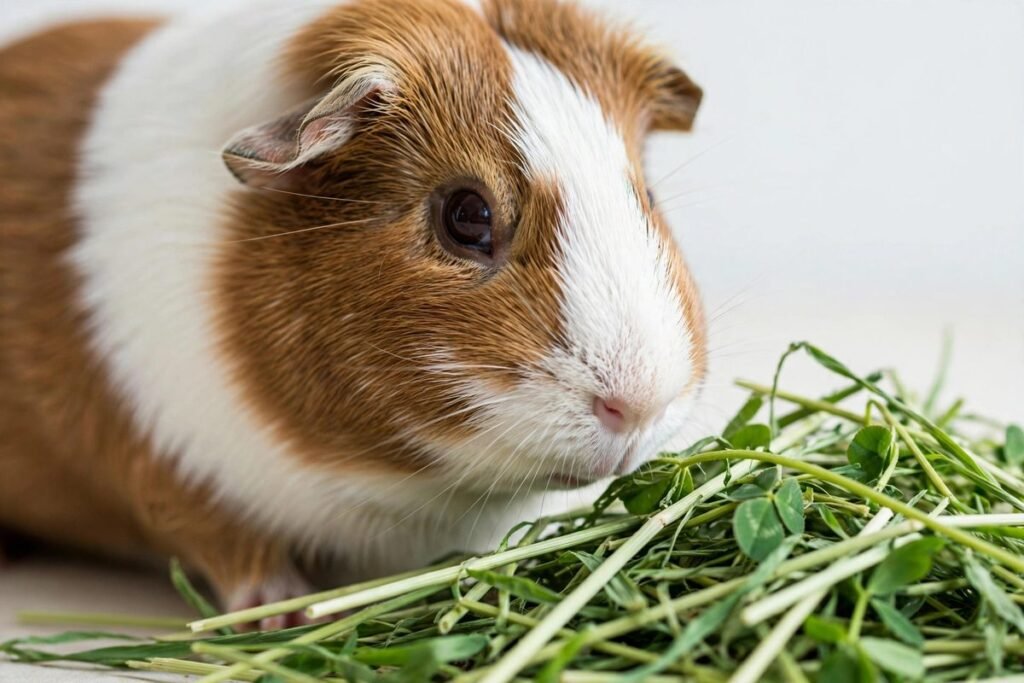
Alfalfa is a legume hay, not a grass hay — much higher in calcium and protein. That’s exactly what growing pups (under 6 months) and pregnant or nursing sows need, but for healthy adults the excess calcium raises the risk of bladder stones. Once a pup hits six months, transition gradually to timothy or orchard.
Verdict: Essential for the under-6-months crowd; keep it away from adults.
How to Spot Good-Quality Hay
Whatever type you buy, quality matters as much as variety. Look for:
- Colour: Green, not brown or yellow. Green means it was cut and dried properly with nutrients intact.
- Smell: Fresh, sweet, and grassy. A musty or sour smell means mould — throw it out.
- Texture: Long strands with a mix of leaves and stems. Avoid bags that are mostly dust and short chaff at the bottom.
- Cleanliness: No visible mould, no damp clumps, no strange debris.
Cheap, dusty, brown hay isn’t a bargain — pigs eat less of it, waste more, and dusty hay can irritate their respiratory systems. For more on building the whole diet around good hay, see our safe food list for guinea pigs.
How Much Hay and How to Serve It
- Unlimited, always. There is no such thing as too much hay for a guinea pig. Refresh the pile at least once a day; stale, trampled hay gets ignored.
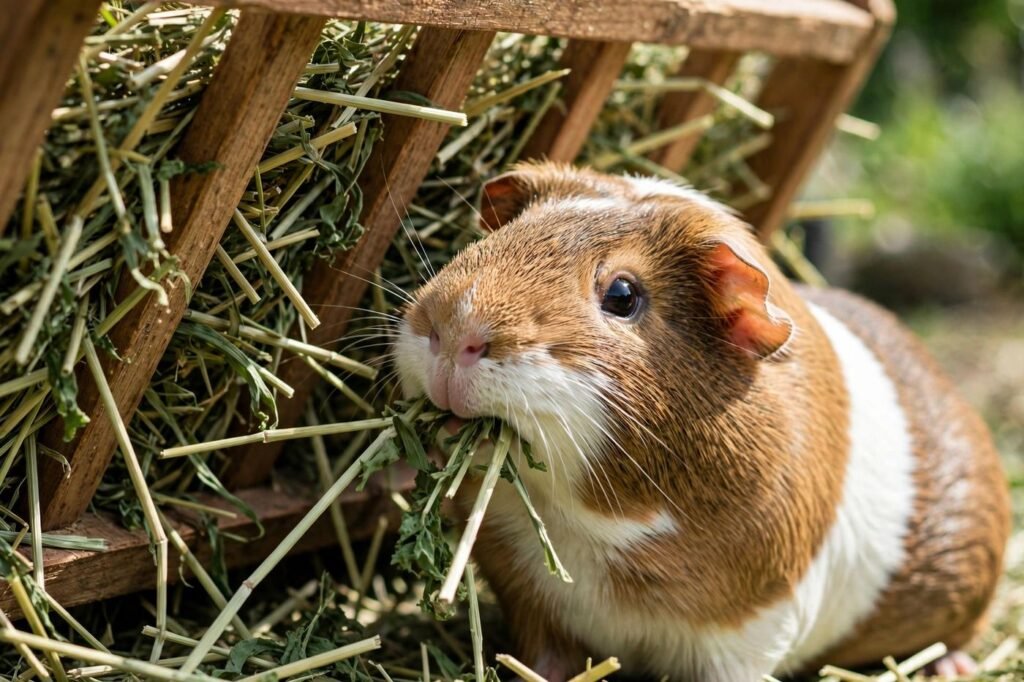
- Pile beats rack (mostly). A big loose pile encourages natural foraging. If you use a rack, choose one with safe bar spacing — pigs can get their heads stuck in badly designed racks.
- Mix it up. Offer the staple hay daily and rotate a second type a few days a week. Switching suddenly can put fussy pigs off, so blend new hay into the old over several days.
- Store it right. Keep hay in a cool, dry place in a breathable bag or box — never sealed damp in plastic, which grows mould fast.
Tip: Put the hay pile where your pigs hang out most. Hay near the hideout gets eaten; hay in a forgotten corner becomes bedding.
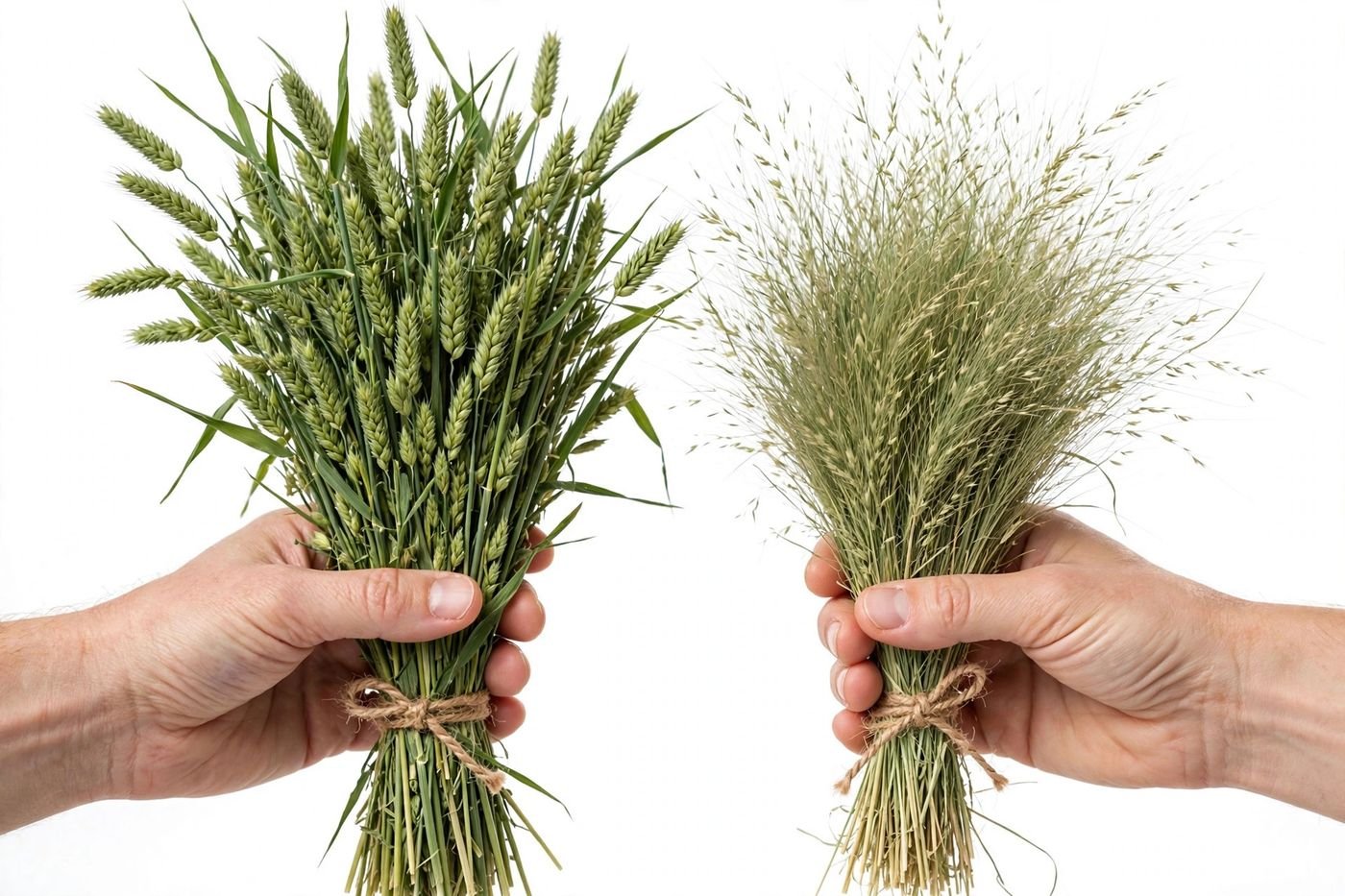
What NOT to Feed
- Straw is not hay. It’s bedding — nutritionally empty, and the sharp stalks can injure eyes. Never feed straw as food.
- Mouldy or dusty hay. If it smells musty or puffs dust when shaken, bin it. Respiratory infections in guinea pigs are serious.
- Alfalfa for adults. Worth repeating: the calcium load risks bladder stones in grown pigs.
- “Hay cookies” or compressed blocks as the only hay. Fine as a boredom-breaker, but they don’t replace the long-strand chewing of loose hay.
For the full picture of daily care beyond diet, our guinea pig care guide covers housing, health checks, and routine — and the RSPCA’s guinea pig diet advice is a solid vet-backed second opinion.
The Takeaway
The best hay for guinea pigs is 2nd-cutting timothy hay — unlimited, fresh, and green — with orchard grass as an equally good alternative (especially if timothy makes you sneeze). Rotate in meadow or oat hay for variety, save alfalfa strictly for pups under six months and nursing mums, and never let the rack run empty. Get the hay right and you’ve solved 80% of the diet puzzle in one move.
Frequently Asked Questions
What is the best hay for guinea pigs?
Timothy hay (2nd cutting) is the best all-round choice for healthy adult guinea pigs — high fibre, low calcium, great for teeth. Orchard grass hay is an equally good alternative, especially for allergy-prone owners.
Can guinea pigs eat orchard hay every day?
Yes. Orchard grass hay is nutritionally similar to timothy and perfectly safe as a daily staple hay for adult guinea pigs.
Is alfalfa hay bad for guinea pigs?
Not for babies — pups under 6 months and pregnant or nursing sows benefit from alfalfa’s extra calcium and protein. For healthy adults, though, the high calcium raises the risk of bladder stones, so stick to grass hays.
How much hay should a guinea pig eat per day?
Unlimited. Hay should make up around 80% of the diet and never run out. A guinea pig typically eats a pile roughly its own body size daily — refresh it at least once a day.
Why won’t my guinea pig eat hay?
Try a different type or cutting (many timothy refusers love orchard grass or soft 3rd-cutting timothy), check the hay is fresh and green rather than dusty and brown, and serve it as a loose pile rather than in a rack. If a pig suddenly stops eating hay altogether, see a vet — it can signal dental problems.
Is meadow hay as good as timothy hay?
Meadow hay is good for variety and enrichment, but quality varies more between batches. Use it as a rotation hay a few days a week, with timothy or orchard grass as the everyday staple.

One Response