Best Cage for Guinea Pigs: Size Requirements, Cage Types & Setup Guide
Choosing the best cage for guinea pigs is the single most important decision you will make as a new owner. Guinea pigs spend most of their lives in their enclosure, and a cage that is too small can lead to obesity, bumblefoot, boredom, and even shortened lifespans. The good news? Once you know the size rules, the cage types, and how to set one up properly, getting it right is simple. This guide covers minimum size requirements, the pros and cons of C&C, store-bought, and DIY cages, what features to look for, and the bedding and cleaning basics that keep your piggies healthy.
Why Cage Size Matters So Much
In the wild, guinea pigs roam grassy areas in small herds, grazing and exploring for hours each day. They are active, social animals — not the sedentary “cage pets” that pet shops sometimes imply. When they cannot move freely, several problems follow quickly:
- Weight gain: cramped pigs move less, and obesity shortens lives.
- Bumblefoot (pododermatitis): sore, swollen foot pads develop on hard, soiled, or wire surfaces — a leading cause of vet visits.
- Respiratory illness: small cages concentrate ammonia from urine faster.
- Stress and boredom: a bored guinea pig may bar-chew, squabble with cagemates, or sit still all day.
A generous cage also makes your life easier: it stays cleaner between full clean-outs, smells better, and lets you create distinct zones for eating, sleeping, and playing.
Minimum Guinea Pig Cage Size Requirements
Most small-pet cages sold in stores are marketed “for guinea pigs” but are far too small. Use these widely recommended minimums as your starting line, not your goal:
| Number of Guinea Pigs | Minimum Floor Space | Best-Practice Size |
|---|---|---|
| 1 | 7.5 sq ft (approx. 30″ x 36″) | 10.5 sq ft (a 2 x 3 C&C cage) |
| 2 | 10.5 sq ft (approx. 30″ x 50″) | 13.5 sq ft (a 2 x 4 C&C cage) |
| 3 | 13 sq ft | 16 sq ft (a 2 x 5 C&C cage) |
| 4 | 16 sq ft | 20+ sq ft (a 2 x 6 C&C cage) |
A few key rules of thumb:
- Bigger is always better. If you can fit a larger cage, do it. Extra space is never wasted.
- Levels do not count. Ramps and lofts are fun extras, but guinea pigs need flat, uninterrupted running space on one level.
- Two is the minimum number of pigs. Guinea pigs are herd animals and should live in pairs or groups — plan for two from the start.
- Males need more room than females. Boars are more territorial, so give a boar pair the largest cage you can manage.
Cage Types Compared: C&C, Store-Bought, DIY & Hutches
There are four main ways to house guinea pigs. Here is how they compare.
1. C&C Cages (Cubes and Coroplast) — The Gold Standard
C&C cages are built from wire storage-cube grids connected together, with a corrugated-plastic (coroplast) base tray. They are the most recommended option in the guinea pig community, and for good reason:
- Pros: cheap to build, fully customisable in size and shape, easy to expand, great ventilation, easy to clean.
- Cons: you build it yourself; grids need baby-proofing so heads cannot get stuck (9 x 9 holes or smaller).
- Best for: almost everyone — the classic 2 x 4 grid cage (about 28″ x 56″) is the go-to for a pair.
2. Store-Bought Cages
Commercial cages are convenient but vary wildly in quality. Many popular models are too small, and the “starter kit” cages with plastic bases and wire tops often fall well short of minimum size. If you go store-bought:
- Pros: ready to use immediately, often come with accessories.
- Cons: frequently undersized, expensive per square foot, hard to expand, and some have unsafe wire floors.
- Best for: owners who want a plug-and-play setup — look for extra-large models explicitly meeting the size table above, and avoid anything with a wire floor.
3. DIY / Homemade Cages
Handy owners sometimes build wooden or melamine enclosures with a waterproof lining:
- Pros: custom size, matches your home decor, sturdy.
- Cons: wood must be urine-proofed or it will rot and smell; heavier to move.
- Best for: owners who enjoy projects and want a furniture-grade enclosure.
4. Outdoor Wooden Hutches
Traditional outdoor hutches are the least ideal option. Guinea pigs are sensitive to heat, cold, damp, and predators, so most experts recommend keeping them indoors where temperature and safety are easy to control.
What to Look for When Choosing a Guinea Pig Cage
Whatever type you choose, run through this checklist before you buy or build:
- Solid flooring only. Never wire or mesh floors — they cause bumblefoot and trapped feet.
- Good ventilation. Open-top or barred-side designs beat enclosed boxes; ammonia buildup causes respiratory infections.
- Walls at least 10–12 inches high on the base tray (or a secure lid) so bedding stays in and piggies stay put.
- Safe bar spacing. If the cage has bars, spacing should be 1 inch or less, and grids should have 9 x 9 holes or smaller so heads cannot get stuck.
- Easy cleaning access. Large doors or an open top make daily spot-cleaning painless.
- No sharp edges. Check cut coroplast, zip ties, and grid connectors.
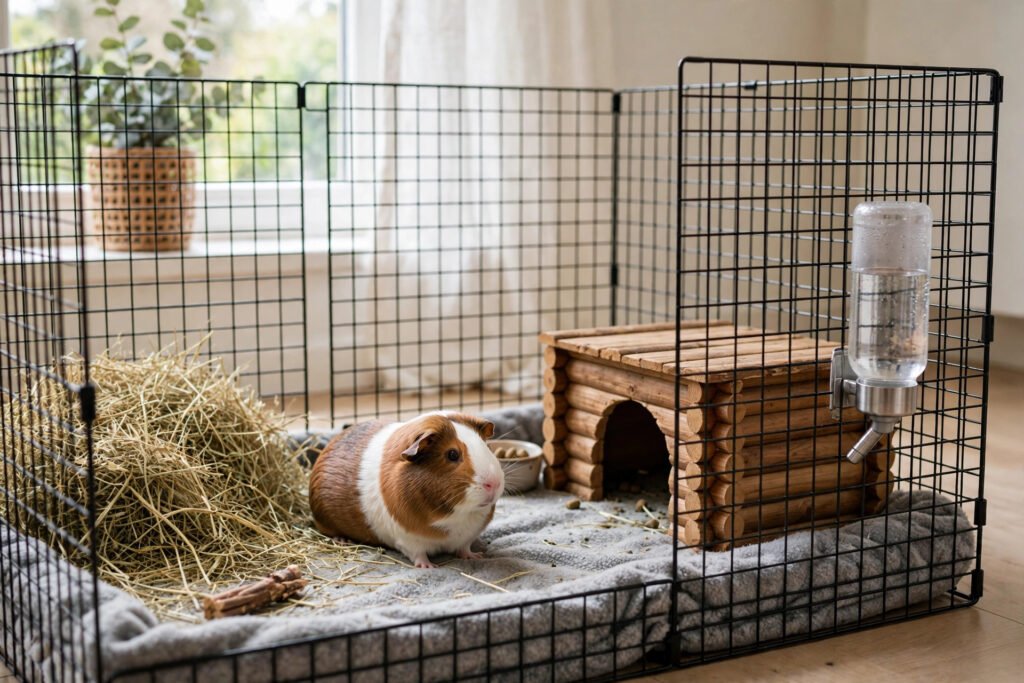
- Room for zones. The cage must fit a hay area, at least one hideout per pig, water, and open running space — all at once.
Setting Up the Perfect Guinea Pig Cage
How you set the cage up matters too. Aim for these zones:
The Hay Station
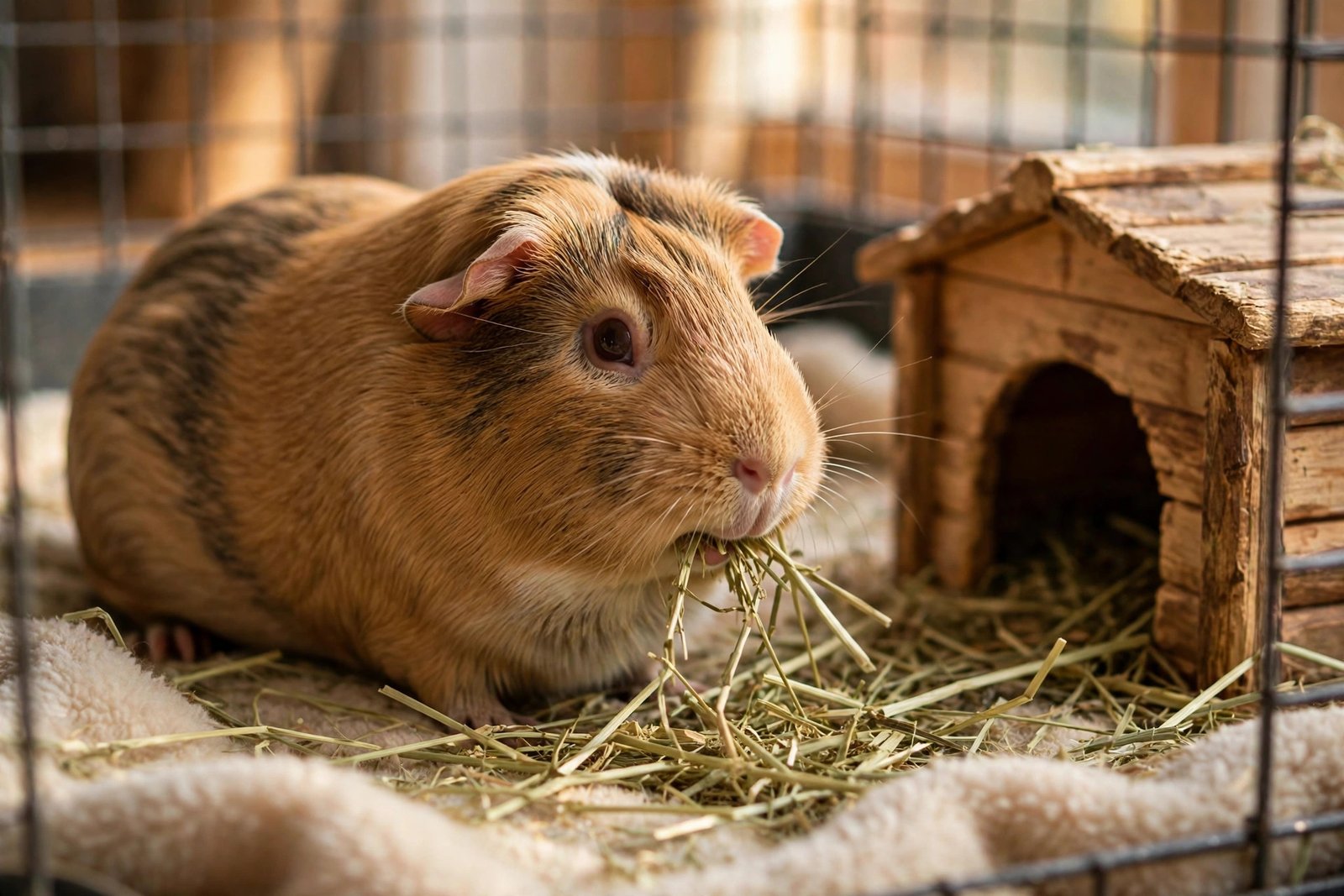
Hay should be available around the clock and make up roughly 80% of your guinea pig’s diet. Place a large hay rack or pile in one corner so your piggies can eat, burrow, and lounge in it. Refill it at least twice a day so it stays fresh.
Hideouts and Shelter
Guinea pigs are prey animals and need places to feel safe. Provide at least one hideout per pig — wooden houses, fleece tunnels, cardboard boxes, or ceramic huts all work. Scatter them so no pig can be cornered by a cagemate.
Water and Food Bowls
Attach a sipper bottle to the cage wall and check it daily — a clogged bottle can dehydrate a guinea pig fast. Many owners add a heavy ceramic water bowl too, since guinea pigs often drink more from bowls. Keep pellets in a small, heavy bowl that cannot tip over. For daily vegetable ideas and portion guidance, see our safe food list for guinea pigs.
The Kitchen Area (Optional but Smart)
Many owners set up a small “kitchen” corner with extra-absorbent bedding or a litter tray where hay, pellets, and water live. Guinea pigs do much of their business while eating, so a kitchen area concentrates the mess and makes daily cleaning much faster.
Open Running Space
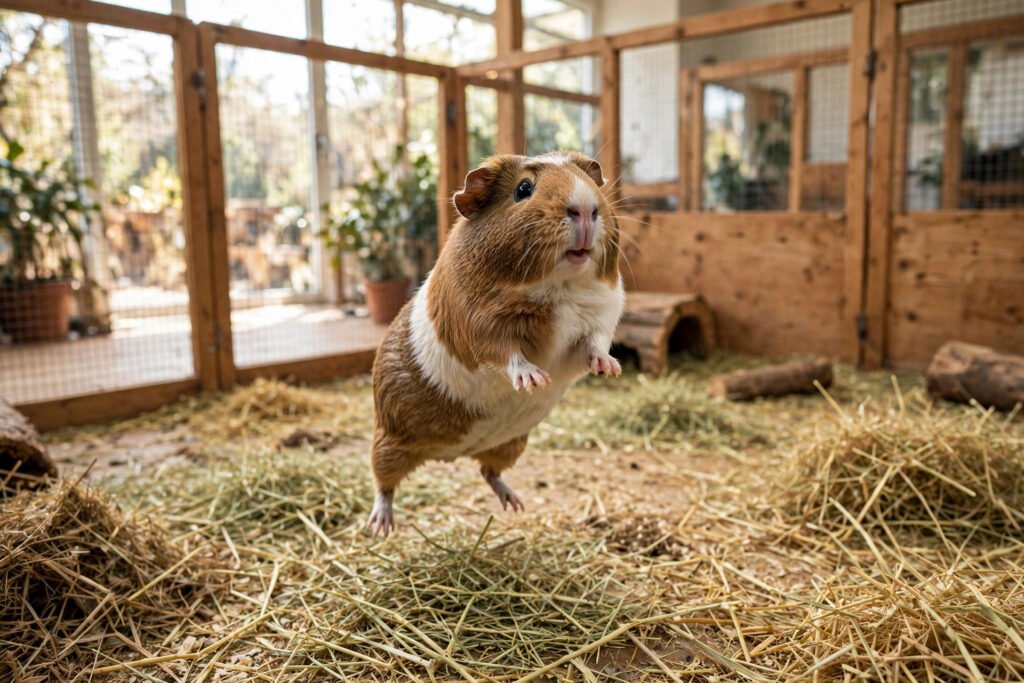
Leave a generous clear stretch of floor for zoomies and popcorning. Tunnels, paper bags, and fleece forests add enrichment without eating up floor space.
Guinea Pig Bedding Options: Pros and Cons
| Bedding Type | Pros | Cons |
|---|---|---|
| Fleece liners | Soft, reusable, economical long-term, low dust | Need washing every few days; need an absorbent layer underneath |
| Paper-based bedding | Very absorbent, low dust, good odour control | Ongoing cost; needs full replacement weekly |
| Aspen shavings | Cheap, absorbent, widely available | Dusty; avoid pine and cedar — their aromatic oils harm guinea pig lungs |
| Hemp bedding | Very absorbent, great odour control | Can be pricier and harder to find |
Bedding to avoid: pine and cedar shavings (toxic fumes), cat litter (dusty, can clog intestines if eaten), and newspaper alone (poor absorption, inky mess). Whatever you choose, bedding should be 2–3 inches deep and kept dry.
Cage Cleaning Routine
This cleaning routine takes only a few minutes a day:
- Daily: spot-clean droppings and wet patches, top up hay, refresh water, wipe the kitchen area.
- Every 2–3 days: shake out or swap fleece liners; replace heavily soiled bedding.
- Weekly: full clean-out — remove all bedding, wash the base tray with a pet-safe cleaner or a 50/50 water and white vinegar mix, rinse, and lay fresh bedding.
- Monthly: deep-clean hideouts, bottles, and bowls; check the cage for chewed edges or rust.
6 Common Cage Mistakes to Avoid
- Buying a too-small cage. The #1 mistake. Measure against the size table above, not the box label.
- Wire or mesh floors. They injure feet — solid flooring is non-negotiable.
- Pine or cedar bedding. The aromatic oils damage guinea pig respiratory systems. Use aspen, paper, hemp, or fleece instead.
- One hideout for two pigs. Each guinea pig needs its own retreat, or squabbles follow.
- Placing the cage in a bad spot. Keep the cage away from direct sunlight, draughts, and radiators. Keep anything dangerous well away from the cage — and double-check food scraps against our list of foods toxic to guinea pigs before they ever reach your pets.
- Skipping the lid in risky homes. If you have cats, dogs, or small children, a secure lid is essential — guinea pigs are prey animals and can be badly frightened (or worse) by a curious pet.
Frequently Asked Questions
What is the best cage for two guinea pigs?
A 2 x 4 C&C cage (about 28″ x 56″, or 13.5 sq ft) is the most recommended setup for a pair — affordable, easy to clean, and easy to expand. An extra-large store-bought cage with the same footprint works too, but check the actual floor dimensions before buying.
Can guinea pigs live in a small cage if they get floor time?
Daily floor time is great enrichment, but it does not replace a properly sized cage. Guinea pigs are most active at dawn and dusk and need space to move, eat, and rest on their own schedule — not just during supervised play sessions.
Do guinea pig cages need a lid?
Not always. In a home without cats, dogs, or small children, an open-top cage with 10–12 inch walls is fine — guinea pigs are not great climbers. Add a secure lid if other pets or toddlers can reach the cage.
What is the best bedding for a guinea pig cage?
Fleece liners with an absorbent layer underneath are the most popular choice — soft, low-dust, and economical since you wash and reuse them. Paper-based bedding and aspen shavings are good disposable alternatives. Avoid pine, cedar, and cat litter.
Where should I put my guinea pig’s cage?
Choose a quiet, draught-free room with a stable temperature (65–75°F / 18–24°C), away from direct sunlight and radiators. Guinea pigs love being near family activity — just not in the middle of chaos.
How often should I clean a guinea pig cage?
Spot-clean daily (droppings, wet patches, hay top-up), swap or shake out bedding every 2–3 days, and do a full bedding change with a tray wash weekly. A properly sized cage with good bedding makes this routine quick and easy.
The Bottom Line
The best cage for guinea pigs is simply a big one: at least 10.5 square feet for a pair, with solid flooring, good ventilation, one hideout per pig, unlimited hay, and clean bedding. A 2 x 4 C&C cage hits the sweet spot of size, price, and practicality for most owners. Set it up with clear zones, spot-clean daily, and do a full clean weekly — your guinea pigs will reward you with popcorning and wheeking for years to come. For the full picture of daily care beyond the cage, read our complete guinea pig care guide.