
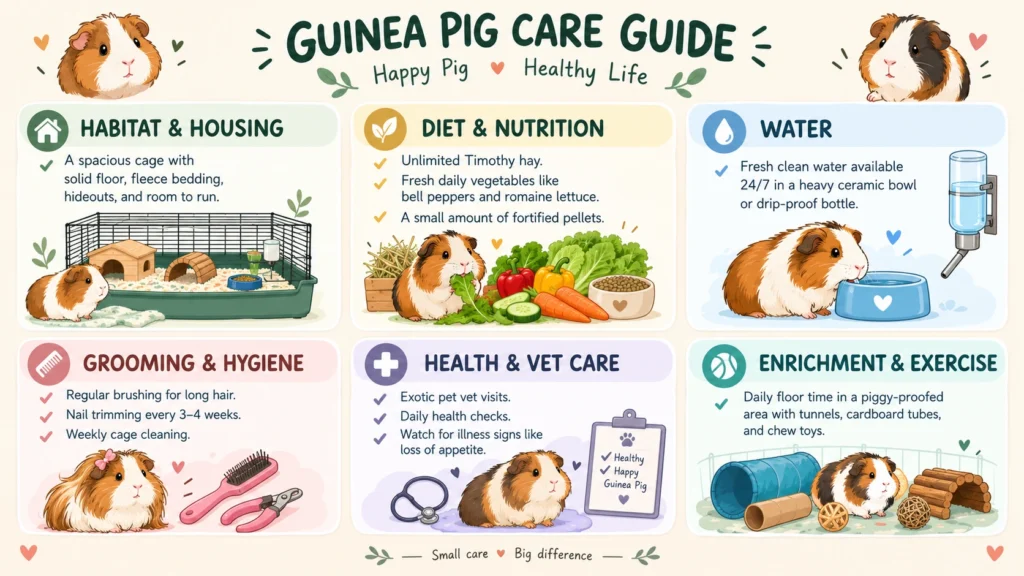
Welcome to the ultimate guinea pig care guide! Guinea pigs, also known as cavies, are gentle, social, vocal pets that can make wonderful companions for families and individuals. However, despite their small size, guinea pigs have specific needs when it comes to nutrition, housing, companionship, grooming, exercise, and daily care.
Whether you are bringing home your very first pair or looking to improve your existing setup, this complete guide will walk you through everything you need to know to help your guinea pigs stay healthy, comfortable, and happy throughout their lives. Guinea pigs commonly live around 5 to 8 years, although individual lifespan can vary.
1. Important First Step: Understanding Guinea Pig Social Needs
Before bringing guinea pigs home, there is one important consideration every owner should understand: guinea pigs are highly social animals and generally do best with a compatible guinea pig companion.
Why Pairs or Groups?
Guinea pigs naturally live in social groups, and companionship can be an important part of their welfare. A guinea pig kept alone may experience social deprivation, stress, or behavioral changes, even when it receives plenty of attention from people.
Whenever possible, consider adopting a compatible pair rather than planning to keep a guinea pig alone. If a guinea pig must live alone, speak with an experienced veterinarian or reputable guinea pig rescue about its social and welfare needs.
Common Pairings
- Two females (sows): Often a good combination when properly introduced.
- Two males (boars): Can live together successfully when they are compatible and have enough space and resources.
- One neutered male with one or more females: Can also be a suitable arrangement when properly managed.
Always make sure guinea pigs are correctly sexed to prevent accidental breeding. If you are introducing unfamiliar guinea pigs, use a gradual, supervised introduction process.
2. What You Need Before Bringing Them Home
To ensure a smooth transition, have your guinea pigs’ essential equipment and supplies ready before they arrive.
Essential Guinea Pig Supplies
- Spacious cage: Provide plenty of uninterrupted floor space. A minimum of around 7 square feet is recommended for one guinea pig, with additional space for each additional guinea pig. Bigger is generally better.
- Safe bedding: Paper-based bedding, fleece, or another appropriate low-dust material can work well when kept clean and dry.
- Unlimited grass hay: Timothy, orchard grass, or another suitable grass hay should be available at all times.
- Heavy food bowl: A sturdy ceramic bowl helps prevent tipping and spilling.
- Fresh water: Provide clean water 24 hours a day using a suitable bottle, heavy bowl, or both.
- Hideouts and shelters: Provide multiple hiding places so each guinea pig has somewhere safe to retreat.
- Guinea pig-specific pellets: Choose a high-fiber pellet formulated specifically for guinea pigs and containing stabilized vitamin C.
- Safe enrichment: Untreated, non-toxic chew items, tunnels, cardboard enrichment, and other guinea-pig-safe toys can provide exercise and stimulation.
3. Setting Up the Perfect Guinea Pig Cage
Minimum vs. Recommended Cage Sizes
Many commercial cages sold for small pets provide less floor space than guinea pigs need, particularly when housing more than one animal.
Guinea pigs benefit from large, uninterrupted horizontal floor space because they are not natural climbers. A larger enclosure allows them to move between sleeping, feeding, hiding, and exercise areas more comfortably.
| Number of Guinea Pigs | Starting Minimum | Better Target |
|---|---|---|
| 1 guinea pig | About 7 sq. ft. | Larger is better |
| 2 guinea pigs | About 9–11 sq. ft. | 10.5+ sq. ft. when possible |
| 3 guinea pigs | About 11–15 sq. ft. | Larger is better |
Exact housing recommendations vary by welfare organization and individual circumstances, so treat these numbers as practical targets rather than universal legal requirements. Providing more space is especially important when housing multiple guinea pigs.
Tip: C&C (Cube and Coroplast) cages are popular because they can provide a large, customizable floor area and can be adapted as your guinea pigs’ needs change.
Best Cage Location
Temperature: Keep the enclosure in a comfortable, temperature-controlled area. Merck Veterinary Manual lists approximately 65–79°F (18–26°C) as a comfortable range, while avoiding direct sunlight, overheating, and drafts.
Noise & Activity: Choose a room with moderate household activity so your guinea pigs become accustomed to normal sights and sounds. Avoid placing the cage directly beside loud speakers, televisions, or air vents.
Predator Safety: Make sure the enclosure is secure from household pets such as dogs and cats. Guinea pigs are prey animals and can become extremely stressed around predators.
Safe vs. Unsafe Bedding Options
Recommended – Fleece Liners: Reusable fleece liners can be comfortable and economical when paired with an absorbent layer underneath and cleaned regularly.
Recommended – Paper Bedding: High-quality paper bedding can provide a soft, absorbent option when it is kept clean and dry.
Avoid – Cedar and Raw Pine: Avoid cedar and raw or strongly aromatic wood shavings because aromatic oils and dusty materials can irritate the respiratory system. If you prefer wood-based bedding, choose a reputable product considered safe for guinea pigs, such as an appropriate kiln-dried product, and follow veterinary guidance.
4. Diet & Nutrition: What to Feed Your Guinea Pig
Guinea pigs are herbivores with a digestive system that depends heavily on fiber. They also cannot produce their own vitamin C, so their diet must provide a reliable source of this essential nutrient.
Daily Dietary Basics
Unlimited Grass Hay: Hay should be available at all times and should make up the majority of your guinea pig’s diet. Timothy hay, orchard grass, and other appropriate grass hays are good choices for most adult guinea pigs.
Fresh Vegetables: Offer a variety of fresh, well-washed leafy greens and vegetables every day, with an emphasis on foods that provide vitamin C.
Measured Pellets: Feed a small measured amount of high-fiber, guinea-pig-specific pellets. Merck Veterinary Manual recommends approximately 2 tablespoons (1/8 cup) per adult guinea pig per day.
Fresh Water: Clean drinking water should be available at all times.
Fruit: Fruit should be offered only occasionally and in small portions because it contains more sugar than vegetables.
Guinea Pig Food Guide
| Food Category | Good Regular Choices | Feed Less Often | Avoid |
|---|---|---|---|
| Vegetables | Romaine, green or red leaf lettuce, bell peppers, suitable leafy greens | Carrots, broccoli, spinach, kale and other higher-calcium or higher-oxalate foods | Iceberg lettuce, onions, garlic, potatoes, toxic plant parts |
| Fruit | — | Small portions of apple, berries, pear or other suitable fruit | Large amounts of sugary fruit, raisins and other sugary dried foods |
| Hay | Timothy hay, orchard grass, meadow hay | Alfalfa hay for appropriate young, pregnant, or lactating guinea pigs | Moldy, damp, dusty, or spoiled hay |
Always introduce new foods gradually because sudden dietary changes can cause digestive problems or refusal to eat.
The Critical Importance of Vitamin C
Guinea pigs cannot produce their own vitamin C, so they need a regular dietary source. Vitamin C is important for healthy skin, joints, gums, blood vessels, and wound healing. A prolonged deficiency can lead to scurvy and other serious health problems.
Best Sources: Bell peppers and other vitamin-C-rich vegetables can contribute significantly to a guinea pig’s daily vitamin C intake. Properly formulated guinea pig pellets also contain stabilized vitamin C.
Water Drops Warning: Adding vitamin C directly to drinking water is generally not recommended because vitamin C breaks down in water and may change the taste, potentially reducing water intake. If your guinea pig needs additional supplementation, ask your veterinarian about the most appropriate form and amount.
5. Daily & Weekly Care Routine
Establishing a consistent care routine helps keep your guinea pigs healthy and their enclosure clean.
Daily Tasks
- Provide unlimited fresh grass hay.
- Replace drinking water with fresh, clean water.
- Provide fresh vegetables and the appropriate measured amount of pellets.
- Spot-clean the enclosure by removing droppings and wet or soiled bedding.
- Check that your guinea pigs are eating, drinking, moving normally, and behaving as usual.
Weekly Tasks
- Perform a thorough cage clean and replace or wash bedding as appropriate.
- Wipe down washable cage surfaces with a pet-safe cleaning solution.
- Wash food bowls and water bottles thoroughly.
- Check water bottle spouts for blockages.
- Weigh your guinea pigs regularly using a digital kitchen scale. Consistent weight monitoring can help you notice changes before other signs become obvious.
Regular cage cleaning is important because guinea pigs produce a considerable amount of waste and can soil their sleeping and eating areas.
6. How to Handle Guinea Pigs Safely
Guinea pigs are prey animals and can be naturally cautious. Gentle, consistent handling can help them become more comfortable around people.
Safe Lifting Technique
- Talk softly before reaching into the cage so you do not startle your guinea pig.
- Place one hand underneath the chest and front portion of the body.
- Use your other hand to support the hindquarters.
- Lift slowly and keep the guinea pig securely supported.
- Hold your guinea pig close to your body while remaining gentle.
Never lift a guinea pig by its legs, limbs, or loose skin. Children should be supervised when handling guinea pigs because a frightened animal can jump or fall.
7. Exercise, Enrichment, & Behavior
Guinea pigs are curious animals that benefit from daily movement and mental stimulation. A well-designed enclosure should give them room to move between their food, water, hiding, and resting areas.
Floor Time & Playpens
Supervised out-of-cage exercise can provide additional enrichment.
Set up a secure playpen or guinea-pig-proofed room.
Proof the Area
- Cover or hide electrical cords.
- Remove unsafe houseplants.
- Block gaps beneath furniture.
- Keep dogs, cats, and other potential predators away.
- Remove objects that could be swallowed or chewed into dangerous pieces.
You can add fleece blankets, tunnels, hideouts, cardboard enrichment, and other safe items to encourage exploration.
Best Toys & Accessories
Cardboard Tubes: Fill appropriate cardboard tubes with hay for simple forage enrichment. If using a tube, make sure the opening is large enough to prevent your guinea pig from becoming stuck.
Untreated Wood & Wicker: Appropriate untreated, non-toxic items can provide opportunities for chewing and exploration.
Paper Bags: Plain, unprinted paper bags can be used as simple hiding or forage enrichment when supervised and free from handles or materials that could cause entanglement.
Avoid exercise wheels and running balls. These products are not appropriate for guinea pigs and can cause injury.
8. Grooming & Maintenance
Regular grooming helps keep your guinea pig comfortable and gives you an opportunity to check the skin, coat, feet, and body for unusual changes.
Short-Haired Breeds
Short-haired guinea pigs generally need light brushing about once a week, although individual needs vary.
Long-Haired Breeds
Long-haired breeds such as Peruvian and Silkie guinea pigs require more frequent brushing to prevent mats and tangles. Keeping the hair around the rear end clean and trimmed can also help prevent soiling.
Nail Trimming
Guinea pig nails should be trimmed regularly, often every few weeks, depending on how quickly they grow. Be careful not to cut the quick, the blood vessel inside the nail. If you are unsure how to trim the nails safely, ask a veterinarian or experienced groomer to demonstrate the technique.
Bathing
Guinea pigs generally keep themselves clean and do not need frequent baths. Bathe only when necessary, such as when the coat or rear end becomes dirty or matted. Use a guinea-pig-safe product if bathing is necessary, and ask a veterinarian if your guinea pig has persistent skin or coat problems.
9. Health & Wellness: Signs & Warnings
Guinea pigs can hide signs of illness, so daily observation is important.
Signs of a Healthy Guinea Pig
Look for:
- Bright, clear eyes.
- A clean nose, ears, and rear end.
- A healthy appetite.
- Stable body weight.
- Normal activity and movement.
- A clean, healthy-looking coat.
- Normal droppings.
- Normal behaviors such as wheeking and popcorning.
Emergency Warning Signs
Important: Guinea pigs can become seriously ill quickly. Contact an exotic-pet veterinarian promptly if you notice significant changes in eating, drinking, weight, behavior, breathing, or stool production.
Watch for:
- Lethargy or unusual hiding: Sitting hunched up, unusually inactive, or difficult to rouse.
- Loss of appetite: A significant reduction or complete refusal to eat should be treated as urgent.
- Breathing problems: Wheezing, labored breathing, nasal discharge, or other respiratory changes.
- Digestive changes: Diarrhea, abnormal stool, bloating, or a significant reduction in droppings.
- Unexpected weight loss: Any unexplained weight loss deserves veterinary attention, especially when accompanied by appetite or behavior changes.
- Pain or difficulty moving: Limping, reluctance to walk, swollen joints, or other signs of discomfort.
Do not wait for symptoms to become severe before seeking veterinary advice. Guinea pigs can develop serious problems when they stop eating, including gastrointestinal complications.
10. Common Beginner Mistakes to Avoid
To give your guinea pigs the best possible care, avoid these common husbandry mistakes:
Keeping a Guinea Pig Alone
Guinea pigs are social animals and generally benefit from compatible companionship. If your guinea pig must live alone, seek professional advice about its welfare needs.
Using Wire-Bottom Cages
Avoid wire flooring. Guinea pigs need a solid, comfortable floor because wire surfaces can injure their feet and contribute to painful foot problems.
Using Exercise Balls or Wheels
Do not use exercise wheels or enclosed running balls for guinea pigs. Their bodies are not designed for these products, and they can cause injury.
Feeding Seed Mixes or Inappropriate Treats
Avoid seed mixes, nuts, cereals, and other high-fat or high-carbohydrate foods that are not appropriate for guinea pigs. Choose a high-fiber guinea pig pellet formulated for their nutritional needs.
Ignoring Daily Hay Needs
Hay should always be available. Insufficient dietary fiber can contribute to digestive and dental problems because guinea pigs depend on high-fiber foods for healthy digestion and normal tooth wear.
Making Sudden Diet Changes
Introduce new vegetables, pellets, and other foods gradually. Guinea pigs can be reluctant to accept sudden changes, and abrupt dietary changes can contribute to digestive problems.
Conclusion
Guinea pigs are wonderful, vocal, and affectionate pets that can bring years of companionship to a household. Although their care requires attention to diet, housing, hygiene, exercise, and social needs, a consistent routine makes guinea pig care much easier.
Start with a spacious, safe enclosure, provide unlimited grass hay, fresh water, appropriate vegetables, measured guinea pig pellets, regular grooming, daily enrichment, and compatible companionship. Monitor your guinea pigs closely for changes in appetite, weight, behavior, or health, and contact an exotic-pet veterinarian whenever something seems unusual.
With the right environment and daily routine, you can give your guinea pigs a comfortable, enriched, and healthy life.
For more guidance on guinea pig care, see the RSPCA’s advice on guinea pig care. Learn about what guinea pigs can eat and best bedding for guinea pigs in our detailed guides.




8 Comments