Charming rustic dog shed ideas for happy pets use reclaimed timber, natural stone, aged cedar, corrugated metal, board-and-batten cladding, and the warm material palette of vernacular rural architecture to create dog shelters that read as genuine outbuildings belonging to their landscape — structures with the specific warmth, material honesty, and visual character of genuine rural craftsmanship rather than the institutional quality of commercially produced pet housing. This article gives you exactly 14 ideas spanning construction approaches, material combinations, interior comfort provisions, planted surrounds, and the specific architectural details that distinguish a charming rustic dog shed from one that is merely unpainted timber.
A charming rustic dog shed done well is a piece of small rural architecture — a structure that references the barn, the smokehouse, the root cellar, the potting shed, and the hundred other small outbuildings that constitute the material heritage of agricultural and domestic rural life, scaled to the dog’s requirements and constructed with the same material honesty that made those originals genuinely beautiful. Here are 14 ideas worth building.
Why Charming Rustic Dog Shed Ideas Work for Happy Pets
The rustic aesthetic in domestic architecture and garden design draws from a genuinely different relationship to materials than contemporary or traditional formal design: where contemporary design treats materials as surfaces to be specified for their visual and functional properties, and traditional formal design treats materials as carriers of cultural and historical reference, rustic design treats materials as honest expressions of their own nature — the timber that shows its grain and knot, the stone that shows its geological formation, the corrugated metal that shows its corrugation without apology or concealment. This material honesty is the specific quality that makes rustic architecture warm, approachable, and unpretentious — qualities that are specifically appropriate for the dog’s shelter because they communicate the same values that a dog’s presence in a home communicates: warmth, directness, genuine engagement with physical experience.
The welfare case for a well-designed rustic dog shed is the same as for any quality dog shelter: adequate insulation for the climate, sufficient ventilation to prevent condensation and humidity buildup, a raised floor to prevent cold ground contact and moisture ingress, a weather-protected entry that prevents rain and wind from entering the sleeping area directly, and dimensions appropriate to the specific dog’s body size. These functional requirements are fully compatible with — and in several cases specifically served by — rustic construction approaches: the thick walls of timber board-on-batten cladding provide better insulation than thin manufactured panel; the natural moisture management of cedar cladding provides better long-term performance than pressure-treated alternatives; the corrugated metal roof (with an adequate insulated roof deck beneath it) provides durable weatherproofing at low material cost.
Style at a Glance
| Element | Welfare Function | Rustic Design Edge |
|---|---|---|
| Philosophy | Material honesty, genuine warmth, agricultural reference | The shed should look like it grew from the landscape |
| Materials | Reclaimed timber, cedar, corrugated metal, natural stone | Board-and-batten, shiplap, rough-sawn, aged finish |
| Key Qualities | Insulation, ventilation, raised floor, weather-protected entry |
14 Charming Rustic Dog Shed Ideas for Happy Pets
1. Reclaimed Barn Wood Dog Shed — The Heritage Structure
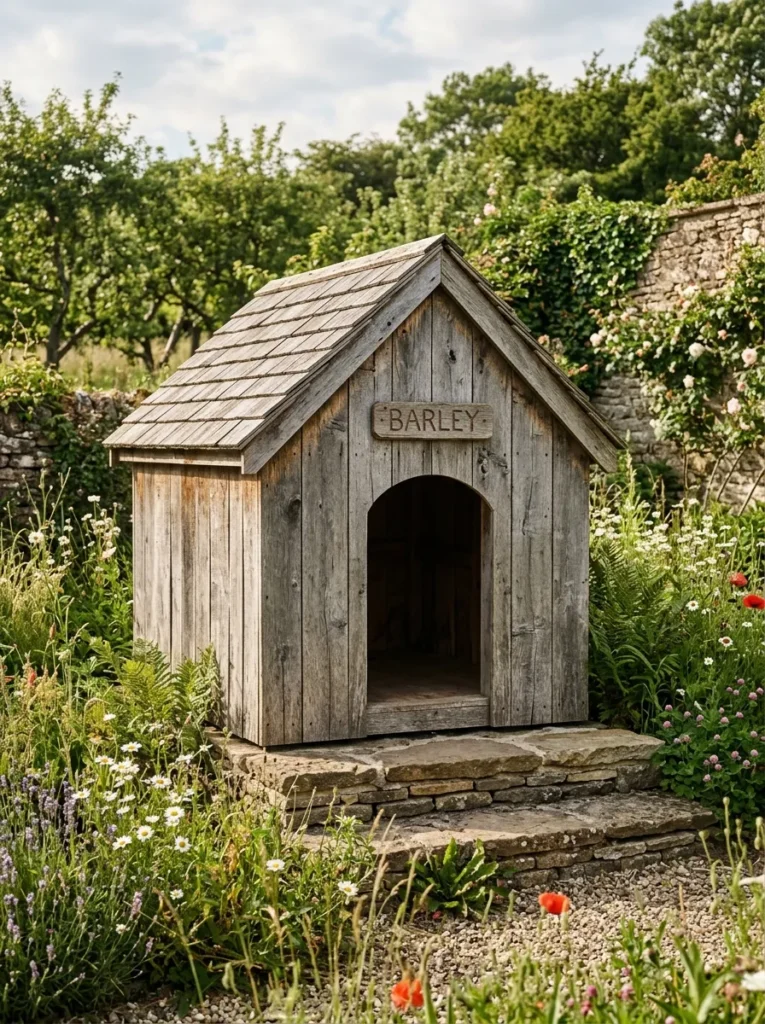
Vibe: The reclaimed barn wood shed feels like a piece of genuine rural history repurposed for a pet — the weathered gray-silver of the aged timber creating the specific material beauty that only time produces and no new material can replicate.
Why it works: A dog shed clad in reclaimed barn wood applies the authentic material aging principle — reclaimed barn wood has been shaped by decades of weathering (the specific bleaching effect of UV exposure turning pine and oak to silver-gray), by the physical history of its original agricultural use (the nail holes, the surface wear, the varied board widths that reflect hand-sawing rather than industrial milling), and by the specific environmental conditions of its original location (creating the varied grain exposure and surface texture that makes each board individually interesting). This accumulated material history creates a visual warmth and authenticity that no applied finish, artificial distressing, or decorative technique can replicate — the material is genuinely old, and that genuine age is the source of its specific visual quality.
Reclaimed barn wood sourcing: Reclaimed barn wood is available from salvage yards, architectural reclaim specialists, barn demolition contractors (many will sell the timber rather than sending it to landfill), and online marketplaces where rural properties clearing old structures offer the timber. Inspect for structural integrity before purchase — barn wood should be free of significant rot and insect damage while showing surface weathering only.
Budget: Reclaimed barn wood material for the described shed: $150–350. Total shed build with stone plinth: $400–900. Professional build: $900–2,000.
Quick Win: A single reclaimed barn wood board mounted above an existing dog shed’s entry as a nameboard (the dog’s name burned or routed into the weathered surface) adds the rustic heritage material quality at minimal cost and effort.
Shop The Look
| Product |
|---|
| Reclaimed barn wood board set |
| Cedar shingle pack weathered |
| Flat stone plinth material |
| Wood burning tool name board |
| Cedar name board blank |
Also view: 14 Stylish Backyard Dog Area Ideas for Every Home
2. Board-and-Batten with Corrugated Metal Roof — The Farmhouse Classic
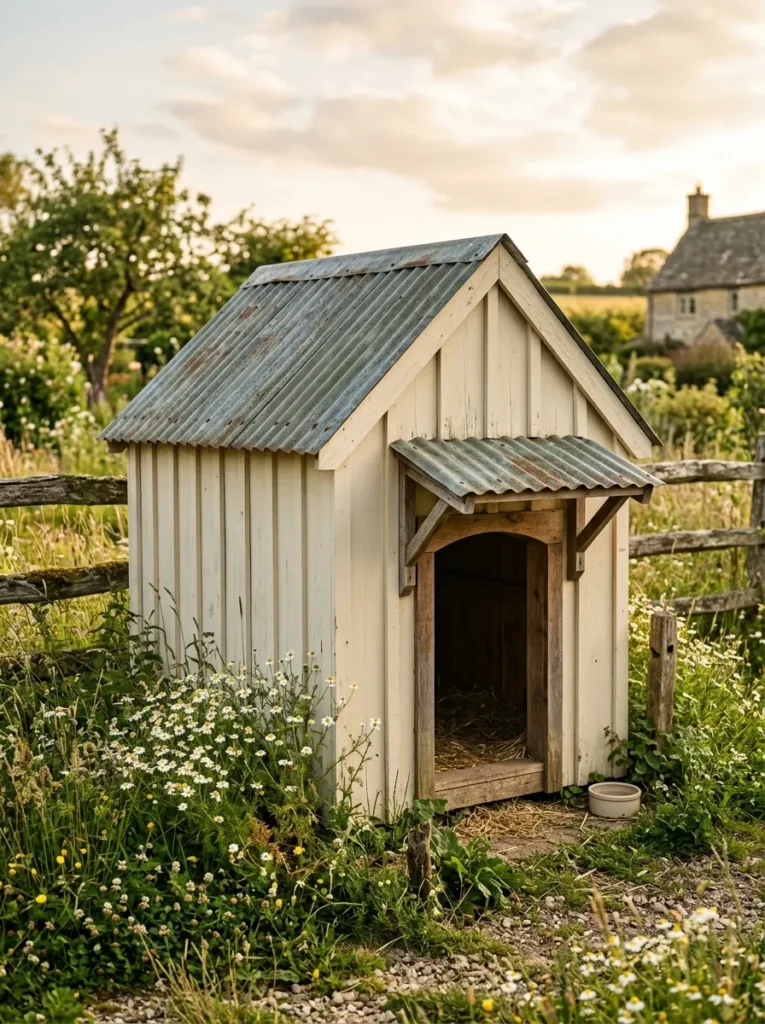
Vibe: The board-and-batten farmhouse shed feels like it has always been on this land — the vertical board cladding and the corrugated metal roof creating the specific material combination of American agricultural vernacular architecture that reads as established regardless of when it was built.
Why it works: Board-and-batten cladding with a corrugated metal roof applies the agricultural vernacular alignment principle — this specific material combination (vertical board-and-batten walls in white or cream paint, corrugated metal gabled roof) is the most directly legible reference to American barn and farmhouse architecture available in a small structure. As discussed in the kennel article, the board-and-batten technique (wide boards at 25mm spacing, narrow battens covering each joint) is both a structural and an aesthetic decision — the battens create the strong vertical visual rhythm that characterizes the farmhouse aesthetic while providing the weatherproofing of the board joints that is essential for an outdoor structure.
Entry overhang: The 30cm deep entry overhang above the shed’s entry aperture is the specific detail that most functionally improves the rustic dog shed — it prevents rain from entering the sleeping area directly (a dog can enter and settle without bringing significant rain water in), protects the entry aperture’s timber from the weather-driven deterioration that unprotected entry edges develop, and creates the visual depth that distinguishes a well-considered shed from a plain box with a hole in it.
Budget: Board-and-batten shed materials: $200–450. Professional build: $500–1,200.
Shop The Look
| Product |
|---|
| Timber board cladding wide 150mm |
| Timber batten narrow 50mm |
| Corrugated metal sheet roofing |
| Cream exterior wood paint |
| Entry overhang rafter set |
3. Log-Cabin Style Dog Shed — The Stacked Timber Wall
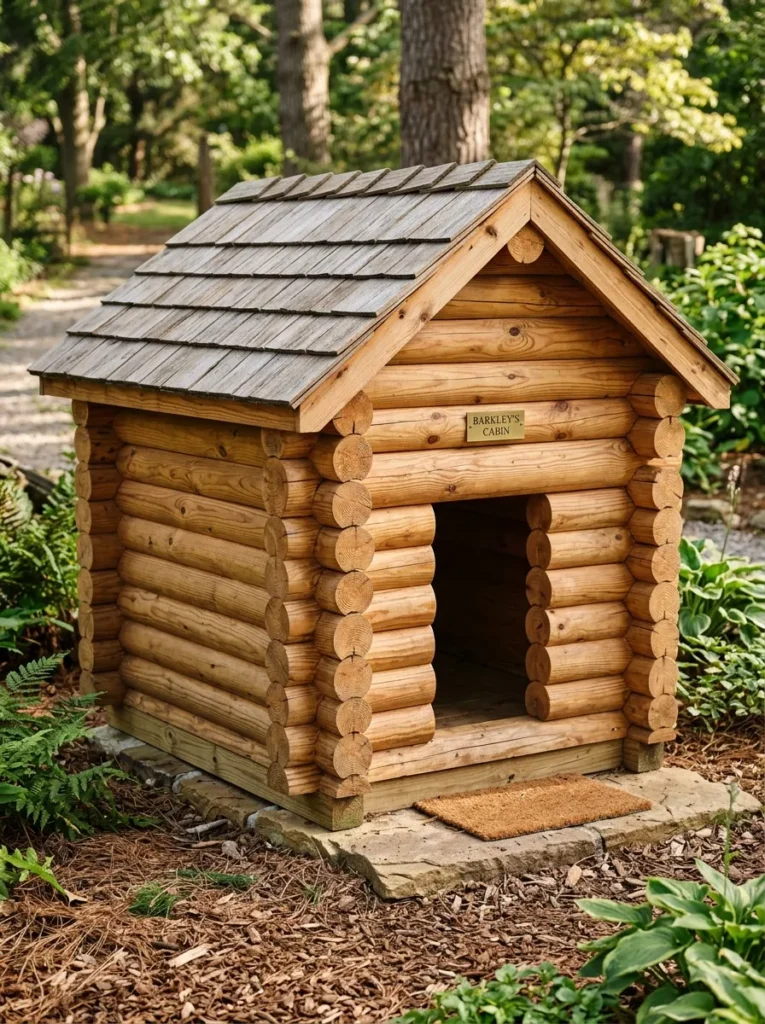
Vibe: The log-cabin dog shed feels like a woodland cabin scaled to its smallest possible expression — the horizontal log construction and the corner notching creating the specific structural aesthetic that references North American and Scandinavian cabin-building traditions.
Why it works: A miniature log-cabin style dog shed applies the structural aesthetic honesty principle — in a log cabin construction, the wall’s structural system (the stacked horizontal logs) and the wall’s aesthetic character (the horizontal log coursing, the corner notching, the visible log ends) are the same thing. There is no cladding applied over a separate structural frame — the logs are simultaneously the structure, the insulation, the weather barrier, and the finish. This structural-and-aesthetic unity is the specific quality of log construction that makes it one of the most materially honest building traditions available, and a dog shed in this tradition carries this honesty in miniature form.
Construction approach: For a miniature log-cabin dog shed, use 8–10cm diameter peeled pine poles (available from garden post suppliers in 2.4m lengths at $5–10 per pole) cut to the required wall length and notched at the corners using a chainsaw or handsaw. Four to five log courses produces the required wall height for most medium dogs. The alternative (and simpler) approach uses round-profile cedar log-look cladding boards (a profiled timber product that creates the visual appearance of log coursing without the structural complexity of genuine log notching) over a standard stud frame.
Budget: Miniature log-cabin dog shed (genuine log): $250–550 in materials. Log-look cladding alternative: $150–300.
Shop The Look
| Product |
|---|
| Peeled pine pole 8–10cm diameter |
| Cedar shingle pack roof |
| Log-look round cladding alternative |
| Corner notch jig log cutting |
| Natural stone skid base material |
4. Pallet Wood Dog Shed — The Zero-Cost Material
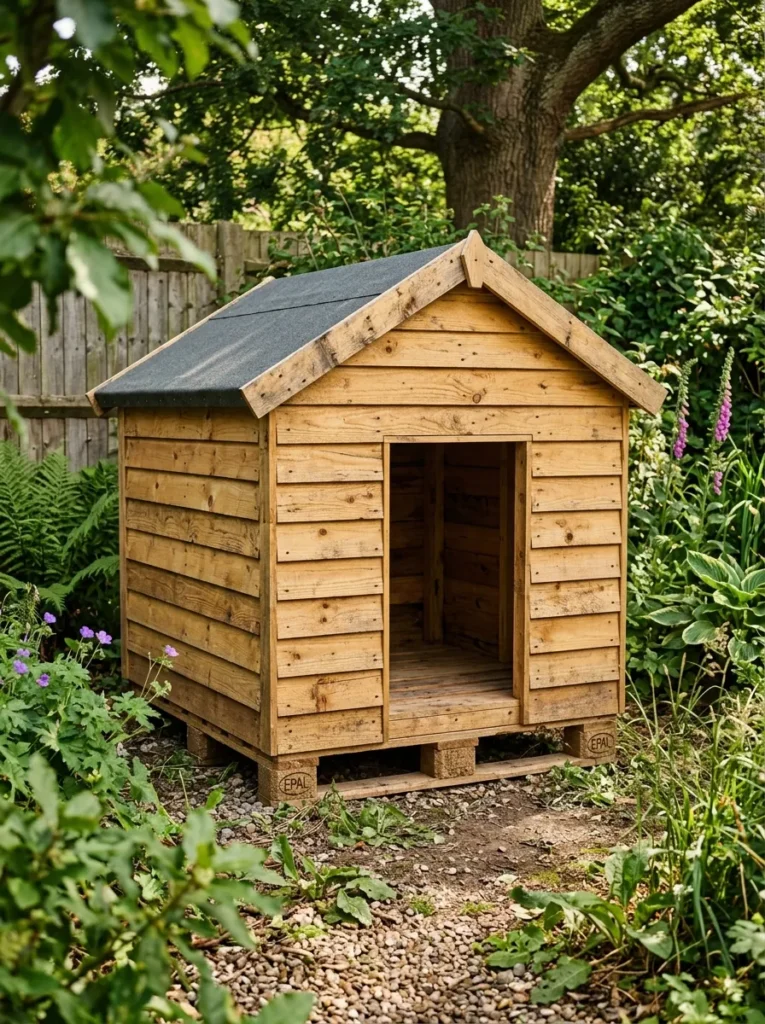
Vibe: The pallet wood dog shed feels like the most honest possible answer to the question of what to build a dog house from — the material that was otherwise waste, carefully reassembled into a warm and character-rich structure.
Why it works: A dog shed constructed from reclaimed pallet wood applies the zero-cost material premium aesthetic principle — as discussed in the cat shelf article, EPAL heat-treated pallets provide an unlimited supply of solid timber boards at essentially zero material cost. For a dog shed, the pallet’s structural members (the thick bearer boards beneath the pallet deck) serve as the floor joists and skid foundation, while the deck boards provide the wall cladding, roof boarding, and interior floor surface. The specific visual warmth of new pallet wood (honey-golden, with visible grain and knot, slightly rough-surfaced) creates the rustic aesthetic without requiring any applied finishing or artificial distressing.
Material quality and safety: Use only EPAL heat-treated pallets (marked HT on the pallet stringer — this indicates heat treatment rather than chemical treatment). Chemical-treated pallets (marked MB for methyl bromide) must never be used for dog shelters as the chemical residue is toxic. Sand all pallet boards to remove splinters before assembly (80-grit sandpaper, working with the grain on all interior-facing surfaces and the floor surface).
Budget: Pallet wood essentially free (collection only). Roof waterproofing membrane: $20–40. Fastenings and hardware: $20–40. Total shed: $40–80 in materials.
Shop The Look
| Product |
|---|
| EPAL pallet free heat treated source |
| EPDM rubber roof membrane |
| Sandpaper 80-grit pallet preparation |
| Decking screw stainless 50mm |
| Pallet buster tool disassembly |
5. Cedar Shingle Dog Shed — The Cape Cod Cottage
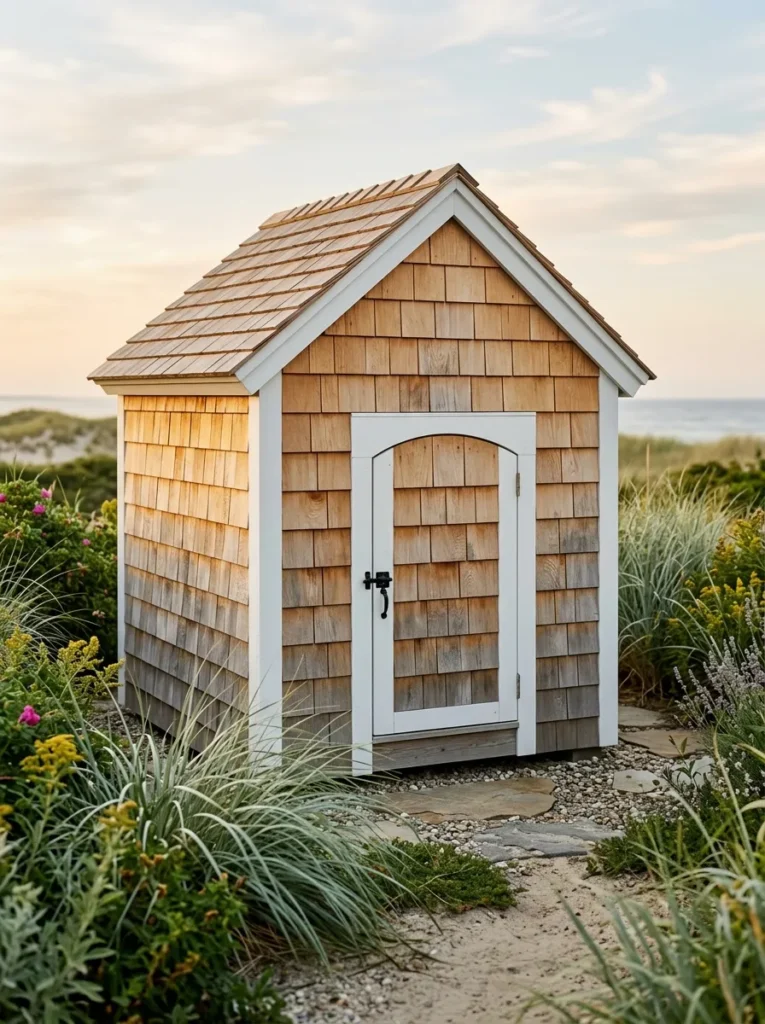
Vibe: The cedar shingle dog shed feels like a small Cape Cod cottage that was built for the dog rather than found and repurposed — the all-shingle exterior and the white trim creating a complete architectural identity at the smallest possible scale.
Why it works: All-cedar shingle cladding on a dog shed applies the natural material single-system beauty principle — when a single natural material (cedar shingle) covers both the walls and the roof of a small structure, the visual unity creates a specific quality of completeness that mixed-material structures lack. The cedar shingle is specifically appropriate for dog sheds in humid or rainy climates because of cedar’s natural oils (which resist moisture, insect damage, and fungal growth without chemical treatment) and its behavior when exposed to weather (it gradually weathers to the silver-gray of the sea-worn cedar that characterizes New England coastal architecture — an aging process that improves rather than deteriorates the material’s appearance).
Shingle application: Cedar shingles are applied from the bottom course upward, each course overlapping the course below by approximately 60% of the shingle length. Fasten each shingle through its upper section (the area that will be covered by the next course) using stainless steel nails — galvanized nails will stain the cedar with rust within two to three years. Maintain a 3–5mm gap between adjacent shingles to allow for thermal expansion.
Budget: Cedar shingle material for the described shed: $200–450. Professional build: $700–1,500.
Shop The Look
| Product |
|---|
| Cedar shingle hand-split natural |
| Stainless steel shingle nail set |
| White exterior trim paint |
| Cedar shingle starter strip |
| Beach grass coastal planting |
6. Stone and Timber Dog Shed — The Permanent Feature
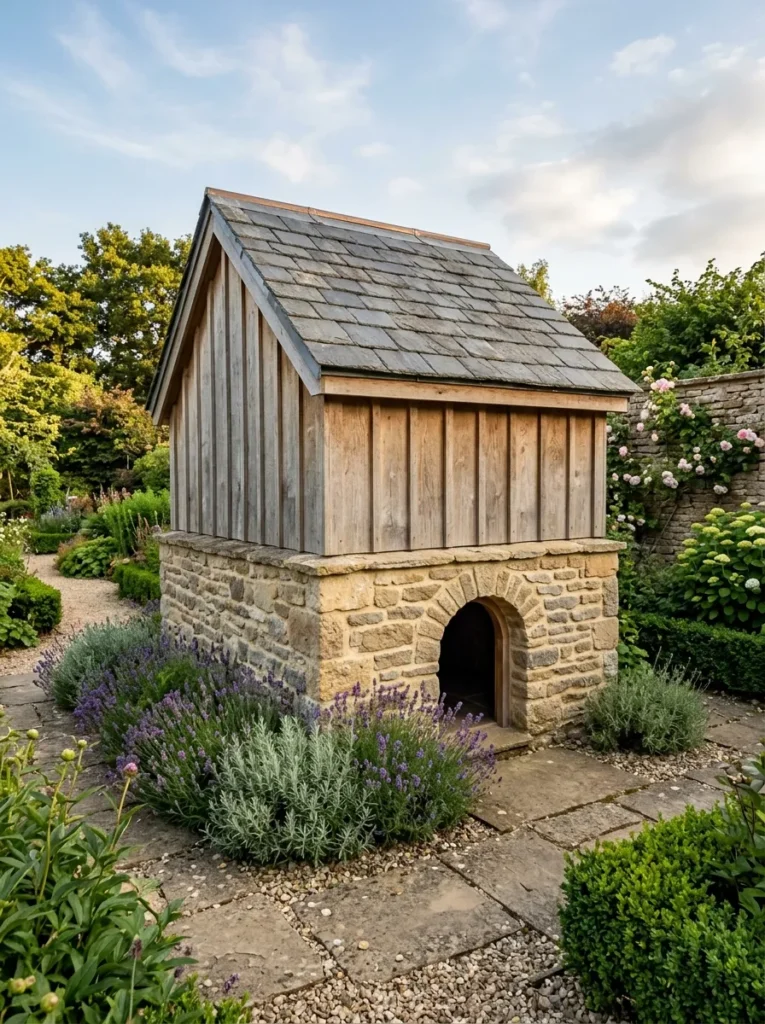
Vibe: The stone and timber dog shed feels like it was constructed when the garden walls were first built — the matching stone material creating the immediate impression that the shed belongs to the garden’s permanent architecture.
Why it works: A dog shed with a natural stone lower section and timber upper applies the hybrid permanence principle — the stone base (using the same stone as the garden’s existing walls or paths) creates the visual permanence and landscape integration of a structural garden feature, while the timber upper section provides the practical wall construction (insulation, the specific dimensions of a habitable shelter space, easy modification for size or fitting changes) that the dog’s comfort requires. As detailed in the kennel design article, the stone material creates the visual connection to the garden’s existing permanent features that makes any structure appear established and belonging regardless of how recently it was constructed.
Stone base construction: The stone lower section can be genuine dry-stack or mortared fieldstone (appropriate where structural robustness and genuine permanence are required) or a stone-clad timber frame (stone veneer over a standard stud frame, which is lighter, faster to build, and requires no specialist masonry skill). The stone veneer approach uses natural stone slabs or split-face stone tiles adhered to the exterior face of the timber frame with stone-compatible adhesive.
Budget: Stone and timber shed (genuine stone): $600–1,500. Stone veneer alternative: $300–700. Professional build: $1,200–3,500.
Shop The Look
| Product |
|---|
| Natural fieldstone matching garden |
| Cedar board-and-batten upper |
| Slate tile small roof pack |
| Lavender exterior base planting |
| Rosemary exterior base planting |
7. Hobbit-Hole Round Door Dog Shed — The Whimsical Feature
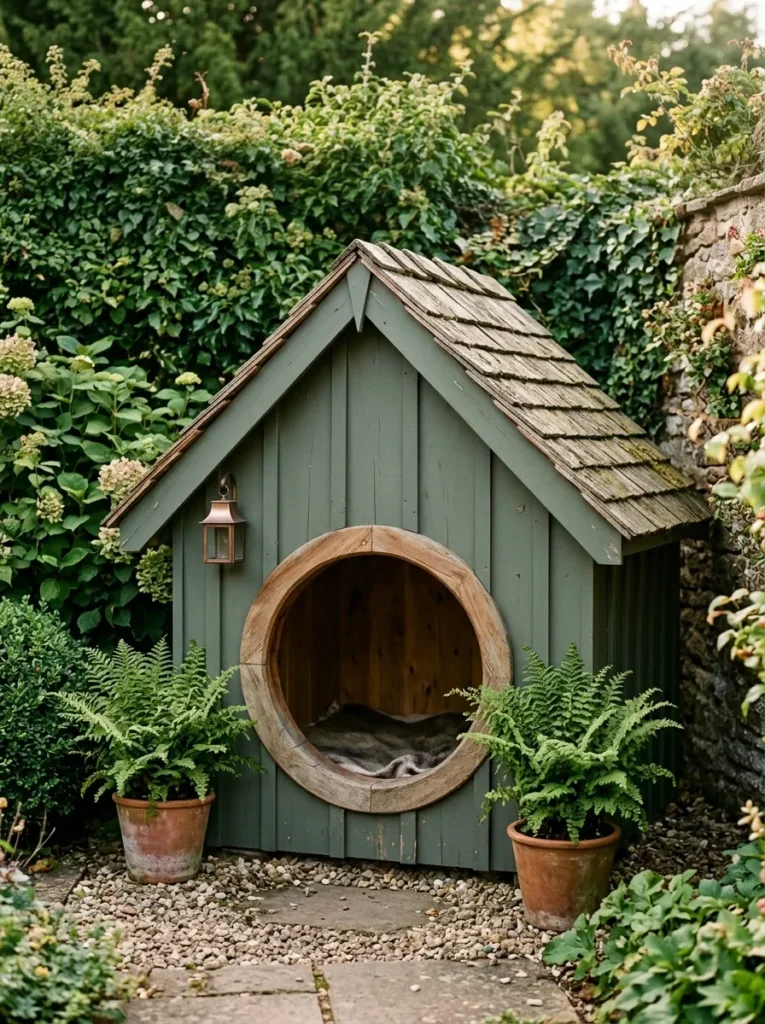
Vibe: The round-door dog shed feels like a story book illustration that was built rather than drawn — the circular entry creating the specific architectural charm that no rectangular aperture can replicate at any scale.
Why it works: A circular entry aperture on a dog shed applies the whimsical detail as identity principle — the round entry hole (rather than the conventional rectangular or arched aperture of most dog sheds) is the single detail that most dramatically changes the character of a dog shed from utilitarian to narrative, from functional to charming, from background garden structure to foreground garden feature. The circle references simultaneously the hobbit hole of Tolkien’s mythology, the circular windows of Arts and Crafts architecture, and the moon gate of Chinese garden design — all cultural references that carry warmth, invitation, and character. Cutting a circular entry aperture requires only a jigsaw and a compass or a circular cutting template — it is no more structurally demanding than a rectangular or arched aperture.
Budget: Circular entry modification cost to a standard shed: $0 (the circular cut is made during construction at no additional cost). Total shed build: $250–600.
Shop The Look
| Product |
|---|
| Jigsaw circular entry cut tool |
| Cedar circular frame molding |
| Sage green exterior paint wood |
| Cedar shingle pack roof |
| Potted fern pair entry |
8. Painted Folk Art Dog Shed — The Decorated Structure
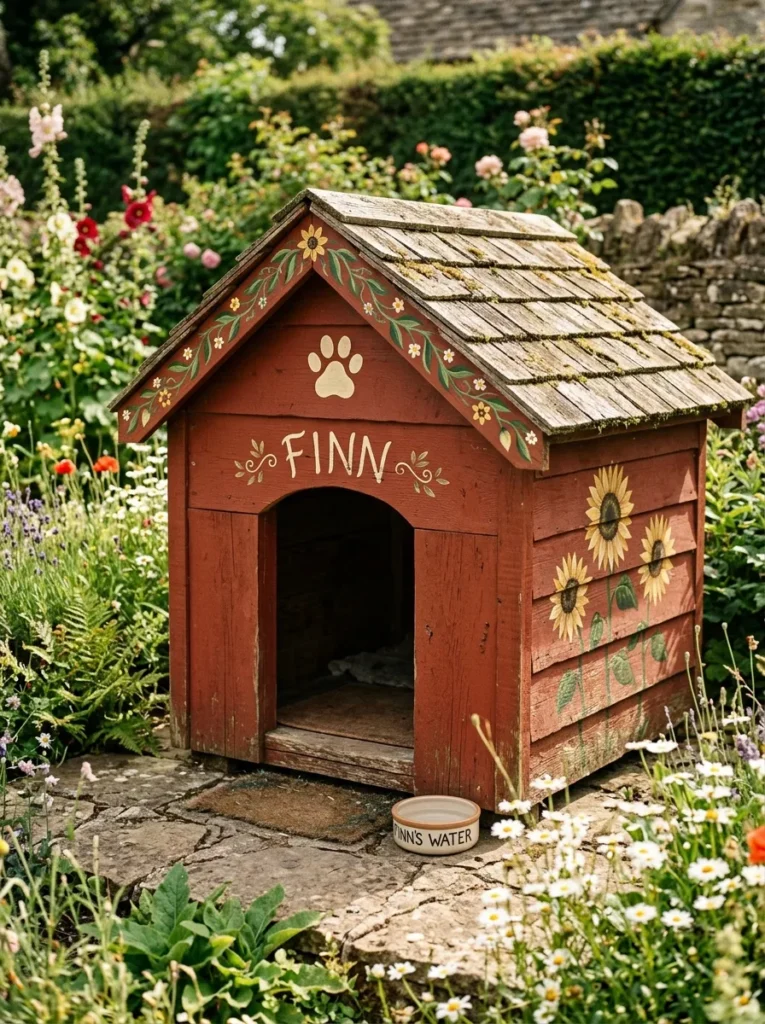
Vibe: The folk art dog shed feels like a structure that was made genuinely personal by genuine hand-work — the painted decoration communicating the same warmth and individual care that folk art has always communicated in its domestic architectural applications.
Why it works: Hand-painted folk art decoration on a dog shed applies the personal mark-making principle — folk art decoration (the painted barn star, the hex signs of Pennsylvania Dutch barns, the decorative painting of Scandinavian rosemaling, the simple painted motifs of English canal boat decoration) shares the specific quality of being made by human hands for a specific structure in a specific place, rather than manufactured for mass distribution. The slight imprecision of hand-painting — the brush texture visible in the paint, the slight variation in line width, the specific character of the individual painter’s mark — creates the warmth of authentic handwork that stencils, transfers, and decals cannot replicate. A dog shed painted with the dog’s name and a few personal botanical or paw motifs is, in the most direct possible sense, a structure made for this specific dog by this specific household.
Painting materials: Use exterior-grade acrylic or oil-based paint for the decoration, applied over a primed and base-coated surface. Seal the completed decoration with a clear exterior varnish or paint sealer to protect against weathering. The folk art motifs do not require artistic expertise — simple sunflowers (oval petals radiating from a central circle), paw prints (four oval toe pads above a larger oval pad), and leaf borders are achievable by any careful painter.
Budget: Painting materials: $20–50. Standard timber shed base: $150–400.
Shop The Look
| Product |
|---|
| Barn red exterior paint shed base |
| Deep sage exterior paint alternative |
| Exterior acrylic paint set motifs |
| Exterior varnish decoration seal |
| Exterior paint brush fine set |
9. Trellis-Clad Dog Shed with Climbing Roses — The Garden Room
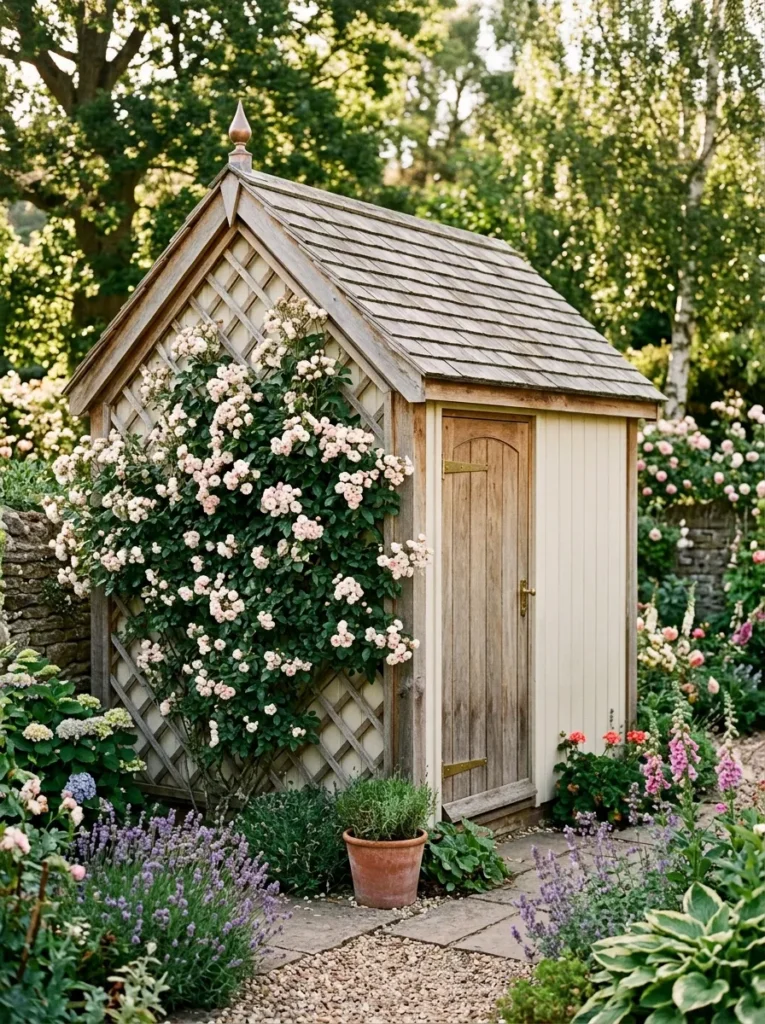
Vibe: The rose-covered trellis shed feels like a garden structure that the garden decided to adopt — the climbing rose bringing the shed into the garden’s botanical vocabulary in a way that no paint color or design choice can achieve.
Why it works: A trellis-wrapped dog shed with climbing roses applies the botanical transformation principle — as noted in the outdoor kennel article, a trellis panel attached to a shed’s exterior walls and planted with climbing roses transforms the shed’s visual character from manufactured structure to planted garden feature within one growing season. The climbing rose specifically (as opposed to other climbing plants) is the botanical element most consistently associated with cottage garden charm — its bloom form (small, clustered, slightly informal), its fragrance, and its seasonal display (profuse early summer bloom followed by autumn hips on some varieties) create a three-season botanical interest that supports the shed’s garden integration throughout the year.
Plant safety for dogs: Position climbing rose growth deliberately on the side and rear walls rather than the entry wall — rose thorns at nose and face level create a risk of eye injury for a dog entering and exiting the shed. Non-thorned or minimally thorned rose varieties (Rosa ‘The Fairy,’ Rosa ‘Ballerina’) are more appropriate near the entry zone than fully thorned climbers.
Budget: Trellis panels and climbing rose: $80–200. Integration with existing shed: no additional structural cost.
Shop The Look
| Product |
|---|
| Diamond pattern timber trellis |
| Climbing rose non-thorned small flower |
| Trellis wall attachment clip |
| Rose growing guide support wire |
| Cedar shingle pack alternative |
10. Scandinavian Red Dog Shed — The Nordic Color
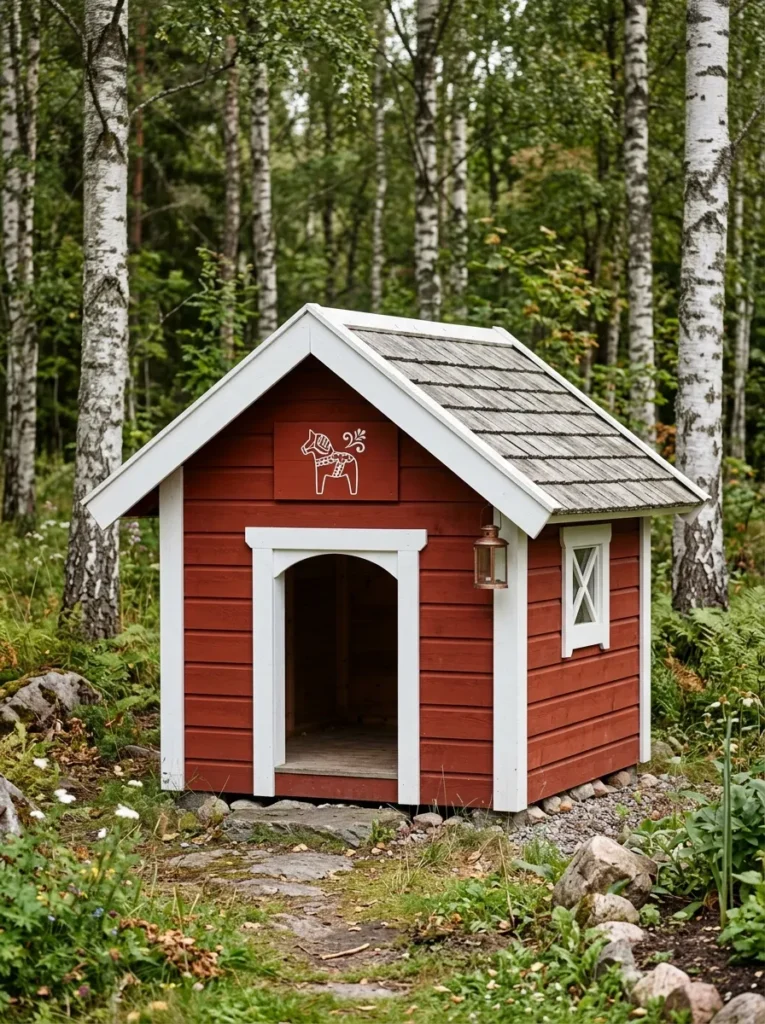
Vibe: The Scandinavian red dog shed feels like a small Swedish farm building that crossed the North Sea and settled comfortably in any northern garden — the Falun red and the white trim creating one of the most immediately recognizable and most enduringly beautiful vernacular color combinations in European rural architecture.
Why it works: A dog shed painted in Falun red applies the Scandinavian vernacular color principle — Falun red (Falurödfärg in Swedish, a paint made from the iron oxide, copper, and zinc byproducts of the Falun copper mine) has been the primary exterior color of Swedish rural buildings since the 17th century, creating the specific warm deep red that distinguishes Swedish farm architecture globally. The paint’s composition gives it the specific matte, slightly rustic surface quality of a traditional mineral pigment paint rather than the uniform sheen of a commercial paint — it absorbs light rather than reflecting it, creating a warmth and depth that commercial red exterior paints cannot replicate. Authentic Falun red paint is available from specialist Scandinavian paint suppliers and online retailers.
Budget: Falun red paint for described shed: $30–60. Total shed build: $250–550.
Shop The Look
| Product |
|---|
| Falun red exterior paint authentic |
| Horizontal shiplap timber boards |
| White exterior trim paint |
| Gray cedar shingle alternative |
| Dala horse stencil motif white |
11. Wildflower Roof Dog Shed — The Ecological Feature
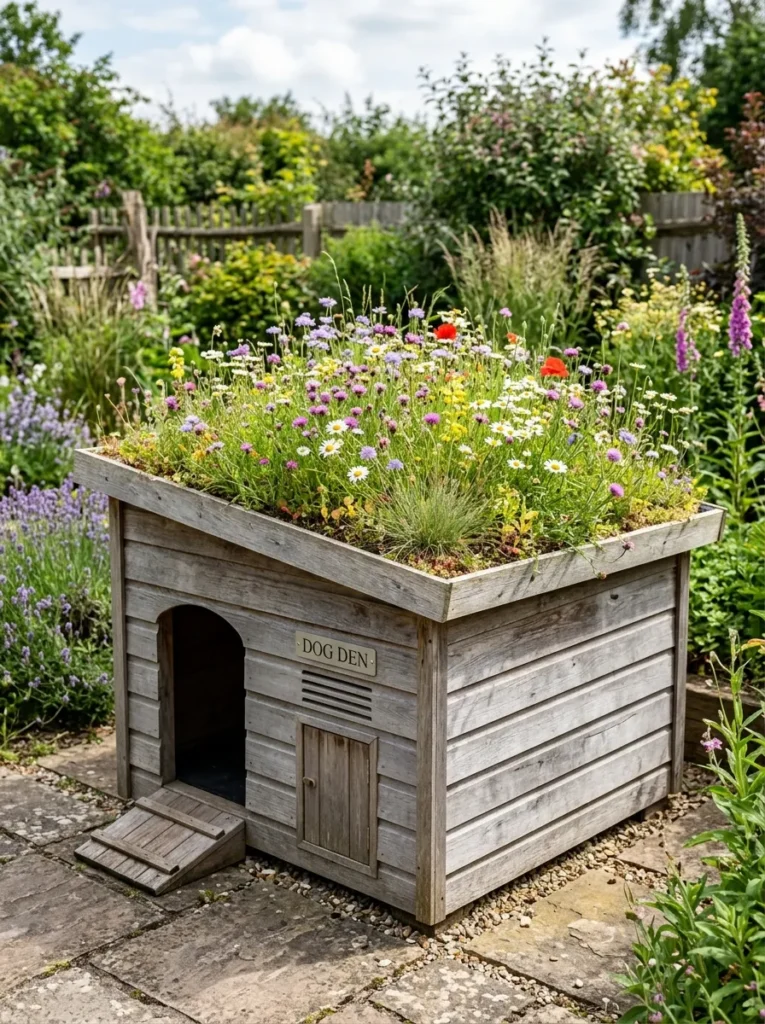
Vibe: The wildflower roof dog shed feels like a meadow grew a small shelter beneath it — the native wildflowers in bloom creating a roof of extraordinary beauty while providing significant ecological benefit.
Why it works: A native wildflower meadow living roof on a dog shed applies the ecological feature principle at small scale — a wildflower meadow roof on a 1×1m dog shed footprint provides significant pollinator habitat (a single square metre of wildflower meadow in full bloom provides foraging for hundreds of bees, butterflies, and hoverflies per day in peak summer), insulates the roof more effectively than any manufactured material (the growing medium’s thermal mass moderates temperature extremes inside the shed), and creates a visual feature of extraordinary beauty at a material cost accessible to any DIY builder. As discussed in the cedar kennel living roof article, the low-pitch roof specification (15 degrees maximum) prevents the substrate from sliding and allows the wildflower meadow to establish without erosion.
Wildflower roof establishment: Use a commercially available wildflower roof mat (pre-seeded coir or felt mat with wildflower seed incorporated) or a wildflower plug plant mix (individual plug plants set at 7–10 plants per square metre) in a purpose-formulated green roof growing medium. The native wildflower species (ox-eye daisy, knapweed, field scabious, yellow rattle) are the most appropriate for a dog shed wildflower roof because they are perennial (returning each year), genuinely native (providing maximum ecological value), and low-growing (not requiring mowing management in the first two years).
Budget: Wildflower roof materials: $80–180 for the described shed area. Total shed with wildflower roof: $350–750.
Shop The Look
| Product |
|---|
| Wildflower meadow roof mat native |
| Green roof growing medium |
| Wildflower plug plant set native |
| Waterproof membrane low pitch |
| Drainage board green roof layer |
12. Upcycled Garden Gate Dog Shed — The Decorative Entry
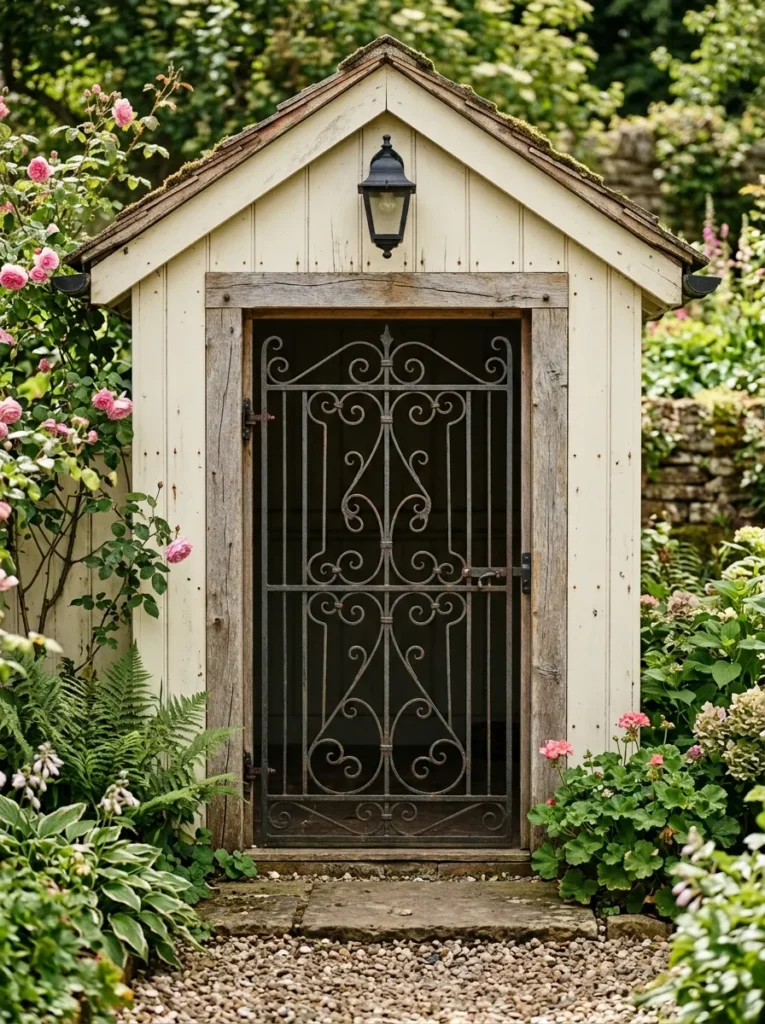
Vibe: The repurposed gate dog shed feels like the most resourceful possible design decision — the found garden gate bringing its own decorative history to the shed’s entry and creating a feature of genuine visual interest from an object that might otherwise have been discarded.
Why it works: A repurposed decorative garden gate as a dog shed entry element applies the found object integration principle — a decorative garden gate sourced from a salvage yard, a secondhand market, or a domestic garden clearance carries the specific visual quality of a well-designed object with its own material history: the patina of aged paint, the character of the decorative scrollwork or picket pattern, the materiality of wrought iron or solid timber. Used as the primary entry feature of an otherwise simple dog shed, the gate creates a focal detail of genuine decorative quality that transforms the shed’s architectural character. A half-height gate (at a height appropriate for the specific dog to step over, or one that can be opened on a hinge for access) is the practical format for a dog shed entry gate.
Budget: Salvaged gate: $20–80 from salvage yard or market. Integration into shed: $20–40 in timber framing materials.
Shop The Look
| Product |
|---|
| Salvage yard decorative gate |
| Wrought iron gate ornamental |
| Timber picket gate painted |
| Gate hinge set suitable |
| Timber frame aperture fitting |
13. Sunken Earthen Dog Den — The Burrow Feature
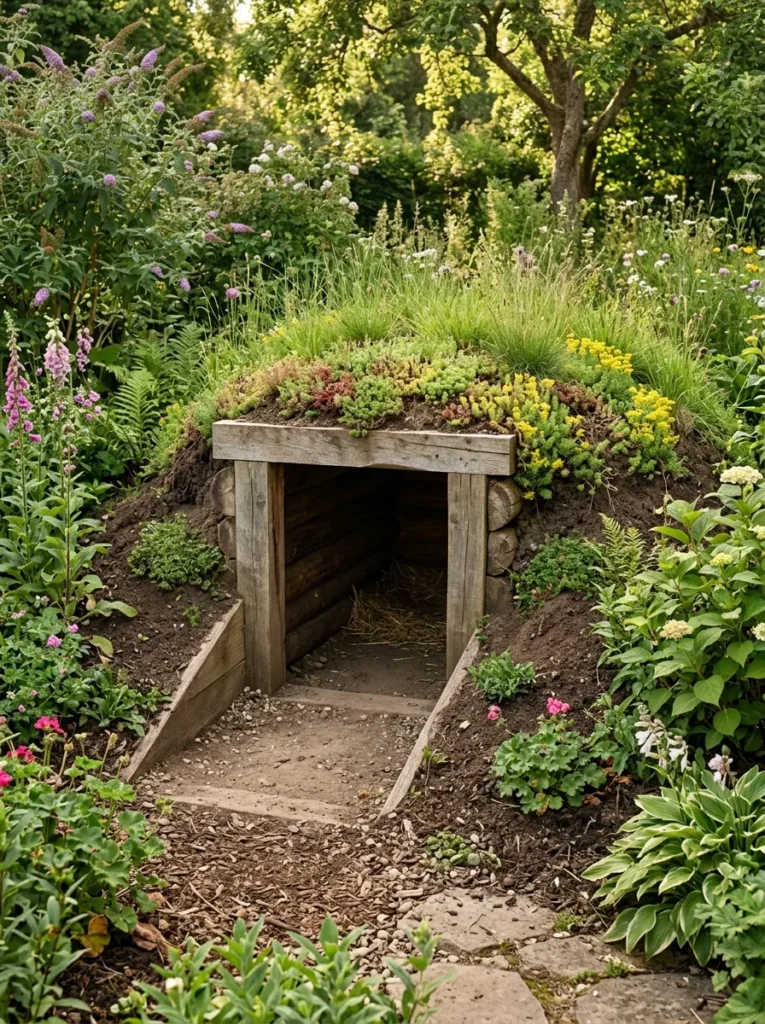
Vibe: The earthen dog den feels like the dog’s shelter was excavated rather than constructed — the sunken, earth-roofed structure creating the specific burrow-like enclosure that earth-den-seeking breeds instinctively value.
Why it works: A sunken earthen dog den applies the species-appropriate shelter typology principle — many dog breeds have strong den-seeking behavior (terriers, who were bred to follow quarry underground; northern breeds, who bed down in snow; scent hounds, who use underground dens as natural shelter in the field). For these breeds, an enclosed, slightly underground shelter with a single entry aperture and a low overhead clearance provides the specific behavioral comfort that a conventional open-front kennel cannot. The earthen construction (the den walls and floor contact the soil directly, thermally regulated by the earth’s constant temperature) also provides the superior thermal mass of genuine earth construction — the den interior maintains a temperature significantly more stable than any above-ground shelter, cooler in summer and warmer in winter than the ambient outdoor temperature.
Construction waterproofing: The interior of the sunken den must be waterproofed before backfilling — use a heavy-duty EPDM rubber membrane (the same material used for pond liners) applied to all interior faces, lapping at the corners with a 30cm overlap. The entry ramp gradient should not exceed 1:5 (rise to run) and should be surfaced with rough timber treads to prevent slipping.
Budget: Sunken earthen den materials: $200–500. Professional excavation and build: $800–2,000.
Shop The Look
| Product |
|---|
| EPDM rubber membrane waterproof |
| Timber framing entry aperture |
| Sedum plug plant roof |
| Native grass seed roof mix |
| Rough timber tread ramp set |
14. Victorian Potting Shed Dog House — The Garden Antique
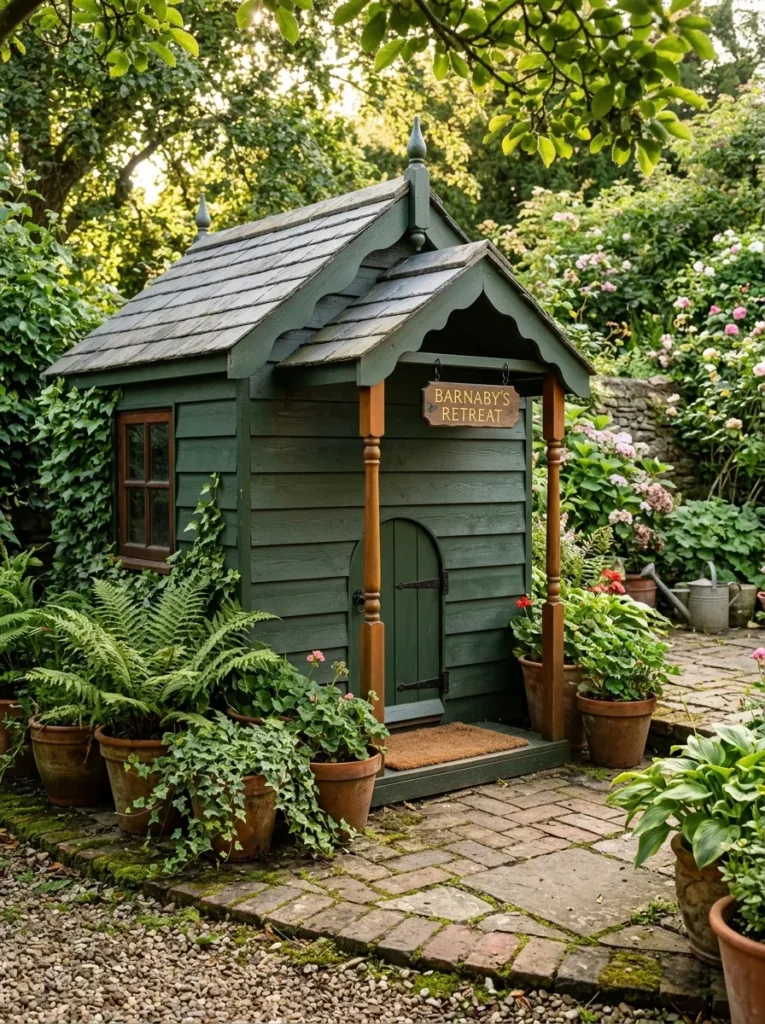
Vibe: The Victorian potting shed dog house feels like the garden’s most charming small building scaled to the dog’s requirements — the deep green, the multi-pane window, and the turned-post porch creating a complete Victorian garden architectural identity in miniature.
Why it works: A Victorian potting shed style dog house applies the historical garden architecture reference principle — the Victorian kitchen garden’s potting shed is one of the most specifically loved small building types in domestic garden history: its specific architectural vocabulary (horizontal shiplap in deep green, multi-pane windows, recessed entry with turned posts, worn brick path approach) carries the warmth and nostalgic quality of a much-loved garden tradition. A dog house designed within this vocabulary reads as a designed garden feature with a specific historical personality rather than as a generic dog shelter — its character is immediately legible to anyone familiar with the Victorian kitchen garden tradition.
The porch detail: The recessed entry porch (a small roof structure over the entry, supported by two turned timber posts) is the most architecturally significant detail of the Victorian potting shed reference — it creates the specific depth and shadow quality that distinguishes a designed building entry from a plain hole in a wall. The porch provides practical benefit as well as aesthetic value: it shelters the entry from rain, provides a transition zone between the garden and the sleeping area, and creates a visual focus for the decorative elements (the hanging name sign, the terracotta pots).
Budget: Victorian potting shed dog house materials: $350–750. Professional build: $800–2,000.
Shop The Look
| Product |
|---|
| Deep Victorian bottle green paint |
| Horizontal shiplap timber board |
| Multi-pane fixed window small |
| Turned timber post pair |
| Terracotta pot set fern planting |
How to Start Your Rustic Dog Shed Project
The single most important first move before beginning any dog shed project is spending one hour looking at the specific site where the shed will be positioned and identifying what the site’s existing landscape character is — what materials are present (timber, stone, brick, rendered wall), what colors dominate (warm neutral, sage, dark earth), what scale the existing garden structures are (fence height, existing shed height, wall dimensions), and what the predominant light direction is for the intended site (morning sun, afternoon shade, dappled canopy). This site reading exercise, which costs nothing and takes under an hour, produces the specific information that every subsequent shed design decision should reference: the material should coordinate with the existing landscape materials, the color should be from the same palette family as the existing structures, the scale should be proportional to the existing garden elements, and the entry orientation should face away from the prevailing weather direction.
The most common mistake in rustic dog shed design is choosing a style and material aesthetic that does not relate to the home’s existing exterior architecture or garden design — a log-cabin style shed in a formal garden, a Scandinavian red shed beside a cream rendered contemporary home, a Victorian green shed in a minimalist landscape. The most successful rustic dog sheds are those that draw from the same material vocabulary as the property’s existing outbuildings, fencing, and garden structures, creating the impression that the shed belongs to the same design campaign as the rest of the garden rather than having been imported from a different aesthetic context.
Three specific additions under $100 that most immediately improve any rustic dog shed’s character and the dog’s wellbeing within it: a raised interior floor (a 20mm marine plywood floor panel raised 75mm above the shed’s base on timber battens, preventing cold and moisture transfer from the ground — $20–40 in materials, the most important single welfare improvement available for any dog shed); a deep bedding provision (a thick fleece pad or a natural straw-filled cotton sack in the correct dimensions for the specific dog, providing the thermal insulation and physical comfort that a bare plywood floor cannot — $20–40); and one climbing plant in a terracotta pot positioned beside the shed entry (a small climbing rose, a jasmine, or a honeysuckle — $15–25 — beginning the botanical transformation of the shed’s entry character in the first growing season). These three additions combined for under $100 address the dog’s thermal comfort, the dog’s physical comfort, and the shed’s landscape integration simultaneously.
Frequently Asked Questions About Charming Rustic Dog Sheds
What size should a rustic dog shed be?
The interior dimensions of a dog shed should allow the dog to stand without its back touching the ceiling, turn around in a complete circle without touching the walls, and lie fully extended in any direction without contact with the walls. As a practical guideline: for a small dog (under 10kg), a minimum interior of 60×60cm and 60cm internal height; for a medium dog (10–25kg), 80×80cm and 80cm internal height; for a large dog (25–45kg), 100×90cm and 100cm internal height. The shed should not be significantly larger than these minimums — a shed that is too large for the dog to heat with its own body warmth will be colder than a correctly proportioned shed and will be avoided rather than used voluntarily by the dog.
How do you insulate a rustic dog shed?
Insulating a rustic dog shed requires addressing three surfaces: the floor, the walls, and the roof. The floor is most important — a raised floor (plywood base raised on timber battens with 50mm rigid foam insulation between the battens) prevents cold transfer from the ground. Wall insulation uses 50mm rigid foam between the exterior cladding and an interior plywood lining, creating a double-skin wall. Roof insulation uses 75mm rigid foam between the roof rafters and a plywood interior ceiling board. All insulation materials should be on the interior face of the cladding and covered by an interior plywood lining that the dog cannot access to chew — rigid foam is not appropriate as an exposed interior surface in a dog shed. The combined effect of floor, wall, and roof insulation in a correctly proportioned shed allows the dog’s body heat alone to maintain the interior temperature approximately 10–15°C above the ambient outdoor temperature.
What wood treatment is safe for a dog shed?
The wood treatment options safe for use in a dog shed — where the dog may lick and chew the interior surfaces — are: linseed oil (food-safe, non-toxic, provides moderate weather resistance, requires annual reapplication); natural beeswax finish (non-toxic, provides good surface protection, suitable for interior surfaces); natural hard wax oil (such as Osmo Polyx, which is certified as non-toxic when cured, suitable for interior floor surfaces); and water-based exterior paint (non-toxic when fully cured, suitable for all exterior surfaces). Treatments to avoid: creosote (toxic and now banned in most domestic markets), oil-based preservatives containing biocides (toxic), solvent-based stains containing aromatic hydrocarbons (toxic when inhaled in enclosed spaces), and any treatment labeled as harmful to aquatic life or requiring protective equipment during application.
How do you make a rustic dog shed weatherproof without losing the rustic aesthetic?
Weatherproofing a rustic dog shed without compromising its rustic aesthetic requires addressing the weather management at the structural level rather than through applied sealants or waterproofing membranes visible from the exterior. The most effective approaches: a wide roof overhang (minimum 20cm beyond the wall face on all sides) that prevents rain from reaching the wall surface during all but the most horizontal rain; a raised floor that keeps the shed’s timber base out of contact with soil moisture; a non-ponding base (a gravel or concrete pad beneath the shed that drains away from the structure rather than pooling around it); and natural timber species with inherent weather resistance (cedar, oak, and larch all perform significantly better than pine or spruce without any chemical treatment). All joints and penetrations (the entry aperture edges, the roof-to-wall junction, the window frame if present) should be sealed with an appropriate silicone or natural linseed oil putty that is flexible, weather-resistant, and unobtrusive.
How long do rustic dog sheds last?
The longevity of a rustic dog shed depends primarily on the material specification and the site conditions rather than on the construction quality. Cedar cladding in a well-maintained shed with good drainage, raised floor, and wide roof overhang can perform for 25–40 years without structural failure. Reclaimed barn wood at equivalent quality can perform similarly, with the additional advantage that its genuine aging means it is already past the most vulnerable stage of new timber weathering. Pallet wood (untreated pine) in a well-constructed and maintained shed typically performs for 8–15 years before significant weathering requires replacement of individual boards. All rustic dog sheds benefit from annual inspection and maintenance: checking the roof for any failed waterproofing, replacing any boards showing rot or significant checking, re-applying oil or paint to exterior surfaces showing weathering, and checking all structural fixings for corrosion.
Ready to Build Your Charming Rustic Dog Shed?
These 14 ideas move through every dimension of what makes a rustic dog shed genuinely charming and genuinely functional — from the material honesty of reclaimed barn wood and the agricultural vernacular of board-and-batten with corrugated metal, through the cabin tradition of horizontal log construction and the zero-cost ingenuity of pallet wood, to the botanical transformation of a rose-covered trellis and a wildflower meadow roof, to the architectural specificity of Scandinavian red, Victorian green, and the whimsical circle-door entry that makes a shed unmistakably a garden story. Starting with the site reading exercise — one hour looking at the existing landscape materials, colors, and scale before making any design or material decision — is the beginning that prevents the most common rustic shed mistake: the structure that is charming in isolation but reads as a foreign object in the garden that surrounds it. Read the site first. Let the garden’s existing material language speak. Then build the shed that the garden would have built for the dog if the garden could build things itself.