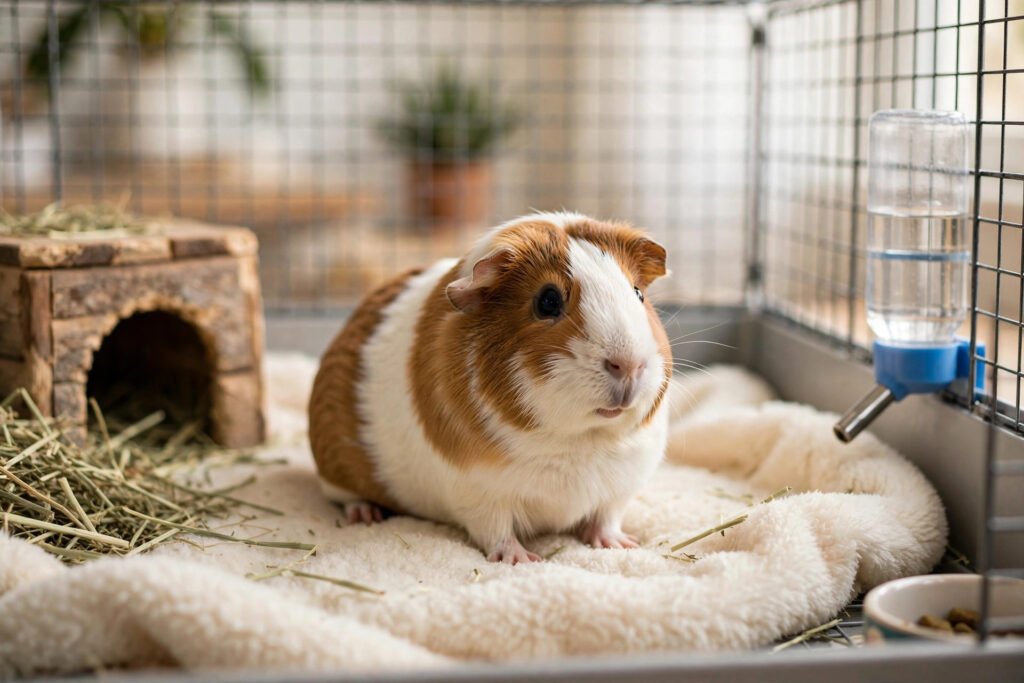
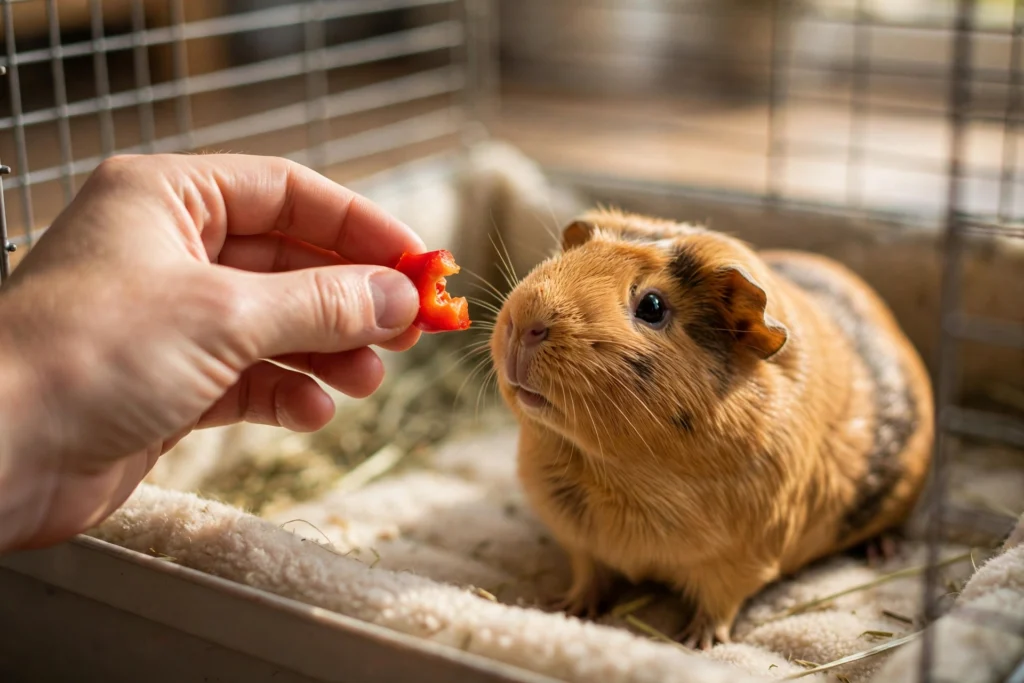
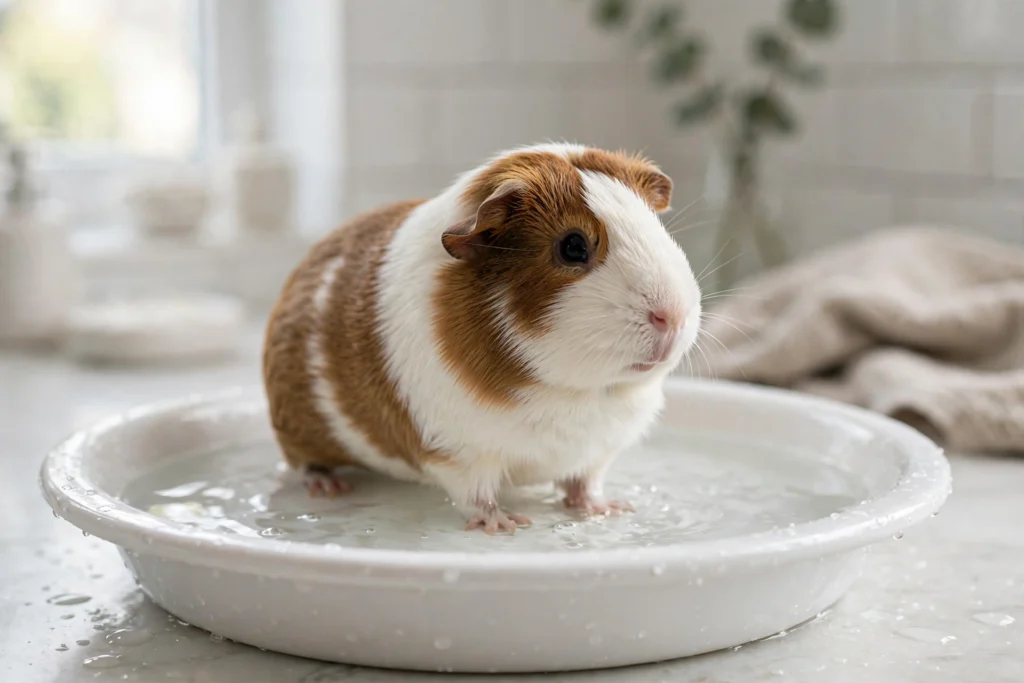
Guinea pigs are herd animals — in the wild they live in groups, and a lone guinea pig is a stressed, lonely guinea pig. But you cannot just drop a new pig into an existing pig’s cage and hope for the best. This guide covers how to introduce guinea pigs safely: the preparation, the neutral-territory method step by step, how to read every behaviour you will see, and exactly when to intervene.
Why Introductions Matter: Guinea Pigs Need Company
A guinea pig on its own may survive, but it rarely thrives. Solitary pigs are more prone to depression-like behaviours — sitting hunched in a corner, reduced popcorning, less vocalisation, even appetite loss. Companionship is not a luxury for these animals; it is a welfare need.
That said, “company” has to be the right company. Guinea pigs are also territorial, and an established pig sees its cage as its kingdom. If you are still deciding whether your pig needs a friend at all, read our can guinea pigs live alone guide first.
Before You Introduce: The Preparation Checklist
Most failed introductions fail before the pigs ever meet. Get these right first:
- Quarantine the new pig for two weeks: any new guinea pig should live separately for 14 days before meeting your existing pig(s). Watch for sneezing, scratching, hair loss, or lethargy — and see a vet if anything looks off.
- Same-sex pairs only (unless neutered): two sows or two boars. An unneutered male with a female means babies within weeks.
- Match age and size sensibly: a baby with a gentle adult often works beautifully — babies submit quickly.
- Boars need space: two males are the trickiest pairing, but many boar pairs bond deeply. They need a larger cage and longer introduction sessions.
- Health check both pigs: introductions are stressful, and stress suppresses immunity. Do not introduce a pig that is ill or recovering.
- Prepare the neutral space in advance: a blocked-off section of floor, a playpen, or a bathtub lined with towels.
The Neutral Territory Method: Step by Step
This is the gold-standard method used by rescues worldwide. The principle is simple: meet on nobody’s turf, with plenty of space and distractions, and let them sort out dominance without territorial rage.
Step 1 — Set up a large neutral area. Bigger is better — at least 4 x 4 feet for a pair, more for boars. Lay down fresh towels or fleece. Scatter several generous piles of hay around the space — hay is the great peacemaker. Add two water sources and two food bowls, spaced apart.
Step 2 — Two of everything, no dead ends. Every resource doubled. Provide hides with two exits each — or no hides at all for the first session.
Step 3 — Place both pigs in at the same time. Put them down at opposite ends of the space, simultaneously. Then step back and watch.
Step 4 — Let them interact for 1–2 hours. Do nothing unless there is blood or a full locked-on fight. Keep a towel nearby to throw over them if you genuinely need to separate.
Step 5 — Look for the settling signs. A successful session ends with the pigs calming down: eating hay near each other, grooming themselves, lying down, or eating from the same hay pile.
Step 6 — Move them to a fully cleaned cage together. Strip the permanent cage completely: fresh bedding, washed bowls and bottles, wiped-down base, rearranged layout so it feels new to both pigs. For the first few days, keep hides to open-ended tunnels and fleece forests.
Step 7 — Monitor the first 48 hours closely. Some chasing and mounting in the cage is normal as they finalise the hierarchy. Watch for sustained bullying — one pig constantly preventing the other from eating, drinking, or resting.
Bonding Behaviours Decoded: What’s Normal, What’s Not
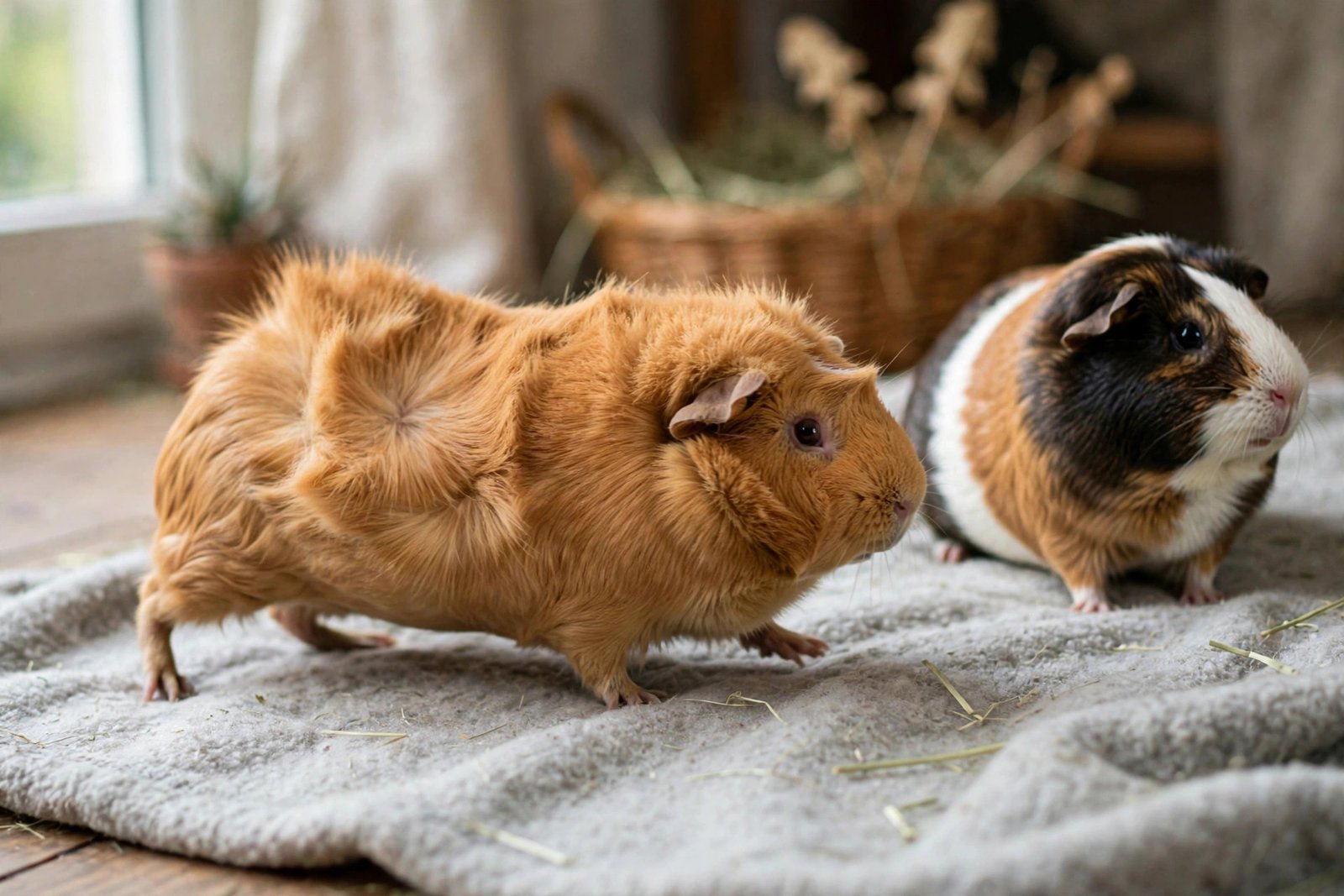
Introductions look alarming if you do not know the script. Here is your decoder:
Normal dominance behaviours (do NOT interrupt)
- Rumblestrutting: hip-swaying with a deep rumble, often with puffed-up fur — the classic “I am in charge” display. Almost always harmless posturing.
- Mounting: one pig climbs on the other’s rear. Both sexes do this; it is about dominance, not mating.
- Chasing: short chases are normal negotiation. The chased pig runs, the chaser eventually gives up, and they reset.
- Nose-offs and head-raising: ritualised “who is taller” contests. Harmless.
- Mild teeth chattering: a short burst (“I am annoyed, back off”) usually de-escalates on its own.
Want to understand their full vocabulary? Our guinea pig sounds guide decodes every wheek, purr, and chatter.
Warning signs (watch closely, be ready)
- Sustained teeth chattering with yawning: the last warning before a lunge. Do not reach in with bare hands — have a towel ready.
- Prolonged chasing with no breaks: relentless pursuit where the chased pig cannot eat, drink, or rest is bullying, not negotiation.
- One pig guarding all resources: sitting in front of food, water, or hay and driving the other away repeatedly.
Separate immediately
- Lunging and locked-on fighting: pigs latched onto each other, rolling in a ball.
- Biting that draws blood: any wound ends the session. Guinea pig bites can abscess badly.
- One pig screaming repeatedly in terror: repeated terrified screaming means the pig is overwhelmed.
To separate a fight safely: throw a towel over both pigs and lift them out separately. Never grab into the middle of a pig fight with bare hands. Check both pigs for wounds; bites easily become abscesses. Our why guinea pigs bite guide covers wound care and bite prevention in detail.
What to Do If Bonding Fails
- Try once more after a break: wait a few days, then attempt a fresh session in a different neutral space.
- Side-by-side living: house the pigs in adjacent cages where they can see, smell, and talk to each other without physical contact.
- Try “boar dating”: many rescues let your boar meet several candidates under expert supervision until he clicks with one.
- Consider a different partner: a baby boar with an adult boar often succeeds where two adult males failed.
- Never force it: pigs that have drawn blood repeatedly will not become friends through persistence.
After a Successful Introduction: The First Two Weeks
- Deep-clean the cage first: fresh everything, rearranged layout.
- No single-entrance hides at first: use tunnels and open hideys so nobody gets cornered.
- Keep resources doubled permanently: two hay areas, two water bottles, food in two spots.
- Expect a dominance echo: some rumblestrutting over the first few days is normal.
- Watch weights: weigh both pigs weekly. If the submissive pig is losing weight, add more feeding stations.
- Do not separate “to give them a break”: separations reset the bond.
Once they are settled, the real fun starts. Our how to bond with your guinea pig guide picks up where introductions leave off.
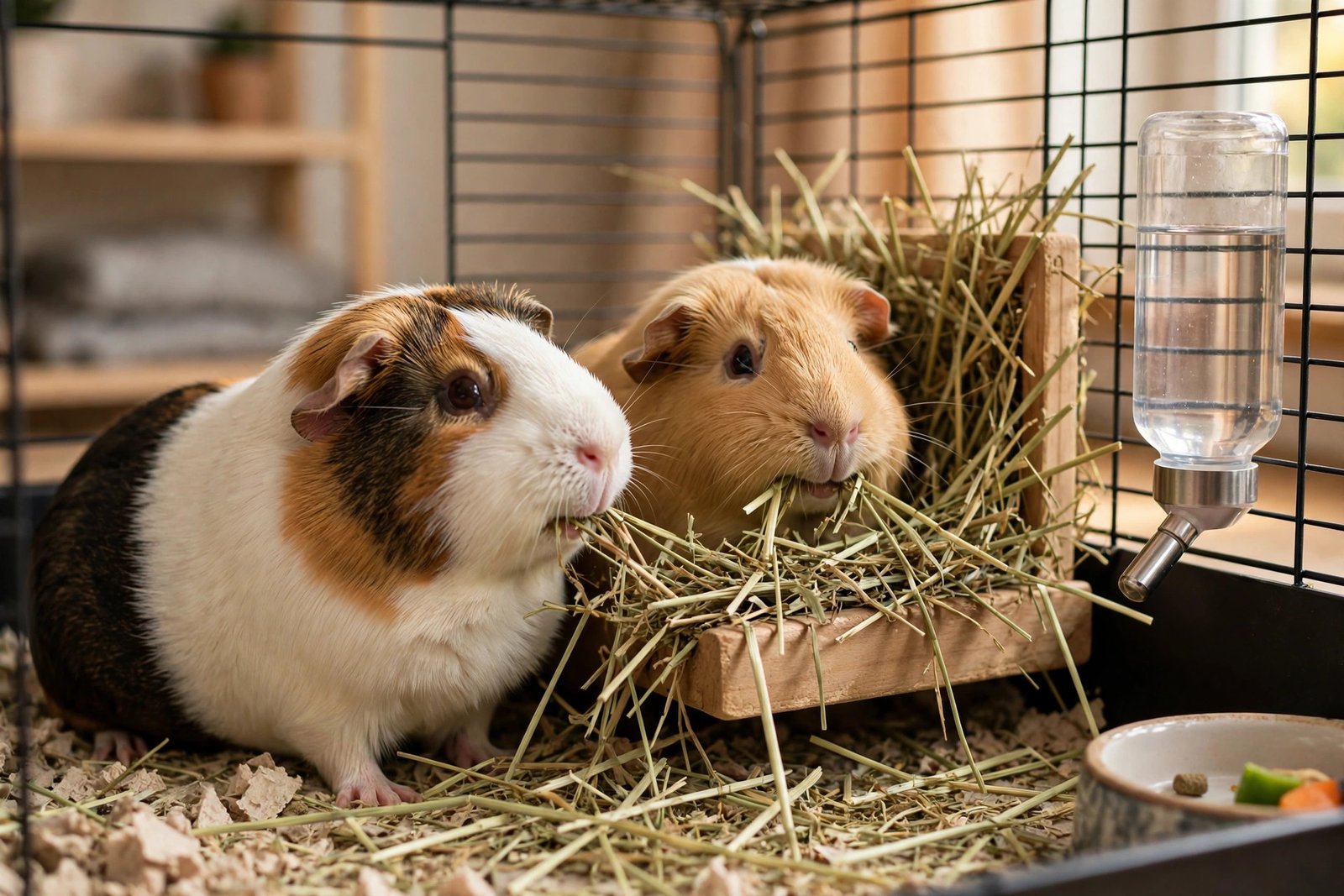
Special Cases: Babies, Trios, and Boar–Sow Pairs
- Babies (6+ weeks): usually slot into an adult pair or single adult easily.
- Trios: adding a third pig to a bonded pair is harder — the pair may gang up on the newcomer. Works best with sows and plenty of space.
- Boar with sows: a neutered boar with sows is often the most harmonious combination. Confirm enough time has passed since neutering.
- Two boars: the highest-difficulty pairing, but very doable — maximise space, minimise single-entrance hides.
How to Introduce Guinea Pigs — FAQs
How long does it take to introduce guinea pigs?
The neutral-territory session typically takes 1–2 hours. The hierarchy usually settles over 1–2 weeks. Boar pairings can take longer.
Can I just put a new guinea pig straight into the cage?
No — this is the most common cause of introduction injuries. Always use the neutral-territory method and a fully cleaned cage.
Is rumblestrutting a sign of fighting?
No, rumblestrutting is normal dominance display. Only intervene if it escalates to lunging or biting.
What does it mean when guinea pigs chatter their teeth at each other?
Short bursts are a normal “back off” warning. Sustained chattering with yawning is an escalation warning.
My guinea pigs fought and drew blood — can they ever live together?
Probably not as cage-mates. Side-by-side housing is the kindest fallback.
Do guinea pigs need a friend?
Yes — they are herd animals, and solitary pigs are prone to loneliness and depression-like behaviours.
Bottom line: introducing guinea pigs is about patience, space, and reading the script. Quarantine first, meet on neutral territory with hay and doubled resources, let the rumblestrutting play out without panicking, and separate only for real fights or blood. Most pairs bond within a couple of hours.