Do Guinea Pigs Need Baths? The Honest Answer
Do guinea pigs need baths? The short answer is no — not as a routine. Guinea pigs are fastidious self-groomers, and in most cases a bath does more harm than good. But “never” is not the right answer either. There are specific situations where a bath is genuinely needed, and knowing the difference matters: an unnecessary bath strips their skin, chills them, and causes real stress. This guide covers exactly when to bathe, how often is safe, and the step-by-step method that keeps your piggy warm, calm, and unharmed.
The Short Answer: Rarely — And Never “Just Because”
In the wild, guinea pigs do not bathe in water. They keep themselves clean through grooming, and their skin produces natural oils that protect them. Bathing strips those oils, which can cause dry, flaky, itchy skin — and dry skin in guinea pigs quickly becomes a scratching problem, then a wound, then a vet visit.
There is also the stress factor. Most guinea pigs find baths genuinely frightening: strange water, strange smells, being handled in an unfamiliar way. Stress suppresses their immune system, and a stressed, damp, chilled guinea pig is a guinea pig vulnerable to respiratory infections. This is why routine baths are a bad idea — the risks outweigh any cosmetic benefit. That said, baths are not forbidden. They are a tool for specific situations, and here is how to tell when one is justified.
When Guinea Pigs Actually DO Need a Bath
A bath is the right call in these situations:
- A soiled rear end: long-haired breeds (Peruvians, Silkies, Texels) get faeces and bedding matted into their rear fur. Boars are also prone to “grease gland” build-up — a sticky, waxy patch just above the tail. If wiping will not shift it, a bath is warranted.
- Medicated treatment: if your vet has prescribed a medicated shampoo for fungal infections like ringworm, bathing is part of the treatment. Follow the vet’s instructions exactly.
- Severe soiling after illness: a pig recovering from diarrhoea or a urinary issue may be caked in waste that spot-cleaning cannot handle.
- Show or rehoming preparation: show pigs and pigs going to new homes are sometimes bathed to look their best. Justified, but keep it rare.
What does not justify a bath: a bit of hay dust, a slightly musty smell (normal for boars), or simply “it has been a while”. If the pig looks and smells like a guinea pig, leave the water alone. For day-to-day cleanliness, a proper setup matters more than any bath — see our guinea pig care guide for bedding and cage routines that keep pigs clean naturally.
How Often Can You Bathe a Guinea Pig?
For a healthy guinea pig, a full bath no more than once every few months — and ideally less. Many owners never fully bathe their pigs at all, and their pigs are perfectly fine. Long-haired breeds and boars with active grease glands may need a rear-end wash every 4–6 weeks, but that is a targeted butt bath, not a full dunk.
Signs you are bathing too often:
- Dry, flaky skin or dandruff between baths
- Excessive scratching after bathing
- Dull, coarse coat that used to be soft
- Your pig panicking at the sight of the bathroom
If you are bathing monthly “as routine”, stop. Spot-cleaning and butt baths handle 95% of hygiene needs — the full bath is the exception, not the rule.
How to Bathe a Guinea Pig Safely: Step by Step
When a bath is genuinely needed, do it right. The whole process should take 10–15 minutes, and the single most important thing is keeping the pig warm throughout.
Step 1 — Prepare everything first. Gather: a shallow basin, guinea-pig-safe shampoo, several dry towels, a jug for rinsing, and a warm room ready for drying. Never leave a wet pig alone while you hunt for a towel.
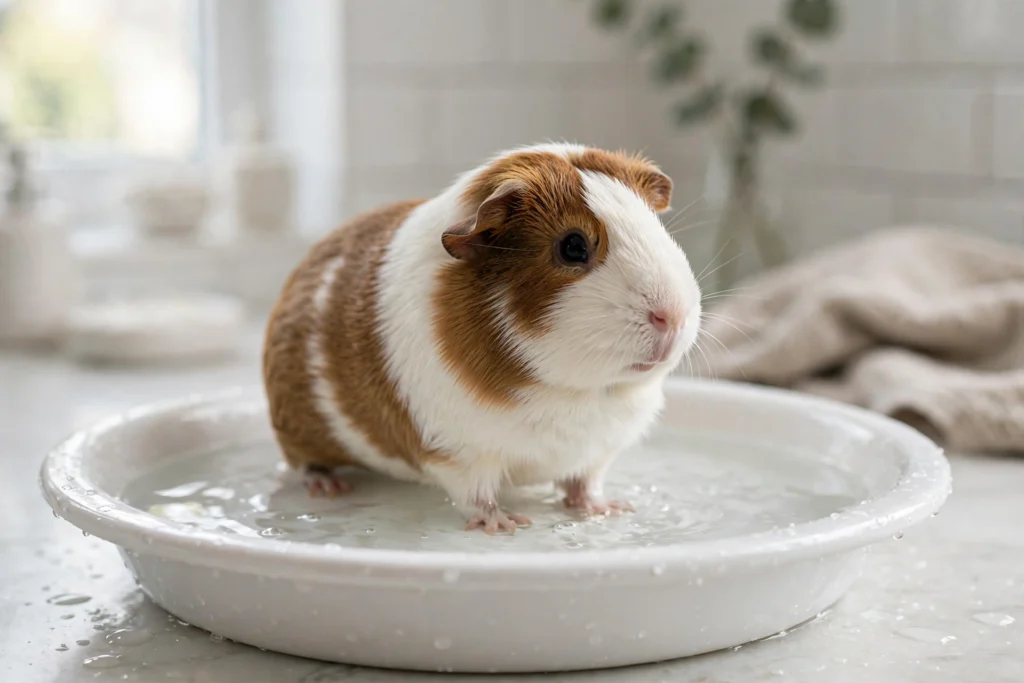
Step 2 — Lukewarm, shallow water. A few centimetres, belly-deep at most — test it on your wrist like you would for a baby. Never fill it deep enough that the pig has to swim.
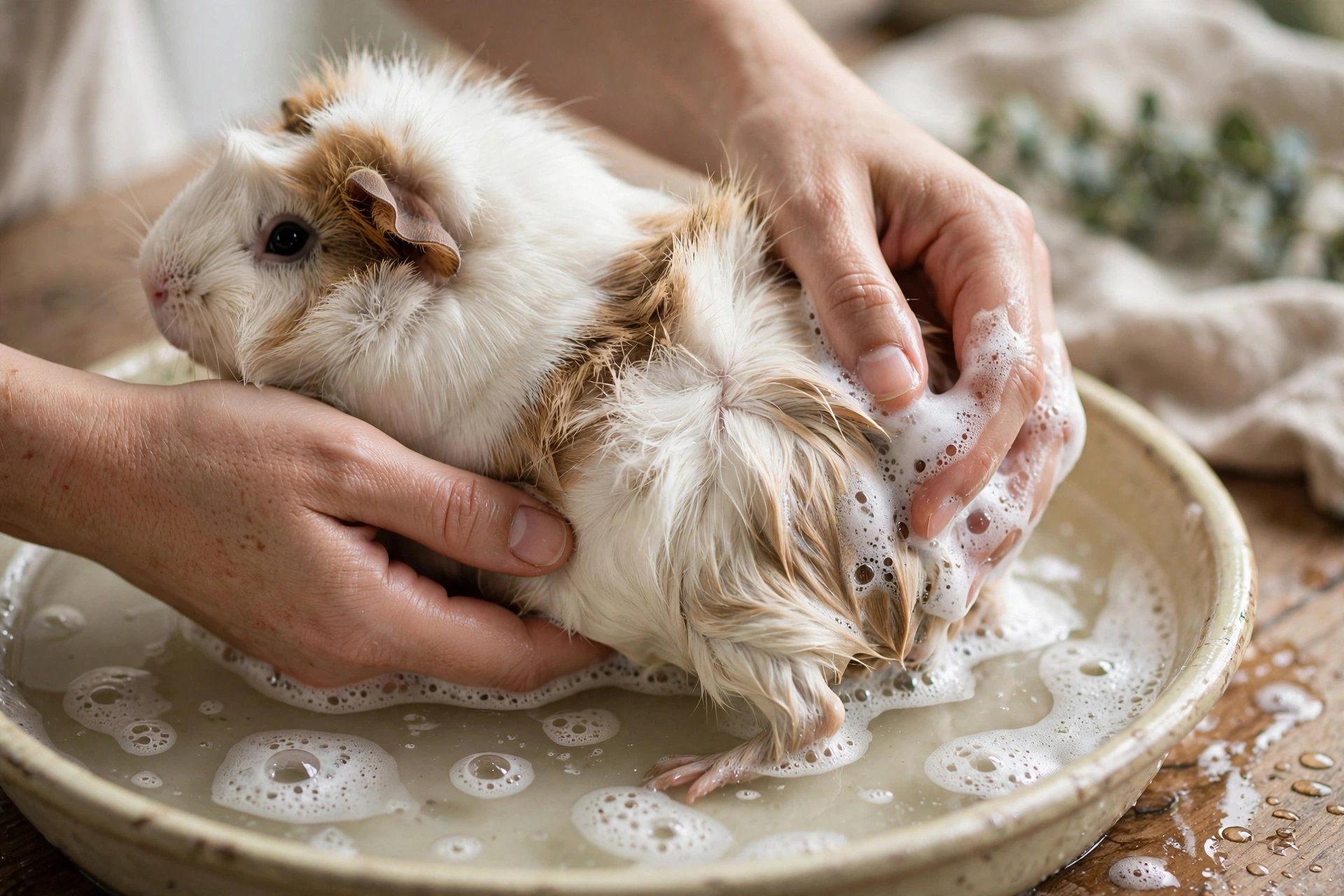
Step 3 — Place them in calmly, rear first. Lower the pig in gently, talking softly. Let their feet find the bottom — most pigs freeze for a moment, then stand. Keep one hand lightly on their back for security. Do not hold them under the water or dunk them.
Step 4 — Wash from the neck down only. Use a tiny amount of shampoo, lather gently into the dirty areas, and rinse thoroughly. Never get water or shampoo on the face or in the ears — water in the ears can cause infections. For a dirty face, use a damp cloth, not the bath.
Step 5 — Rinse completely. Leftover shampoo residue is a top cause of post-bath itching. Rinse with clean lukewarm water until the water runs clear — no slippery feeling left at all.
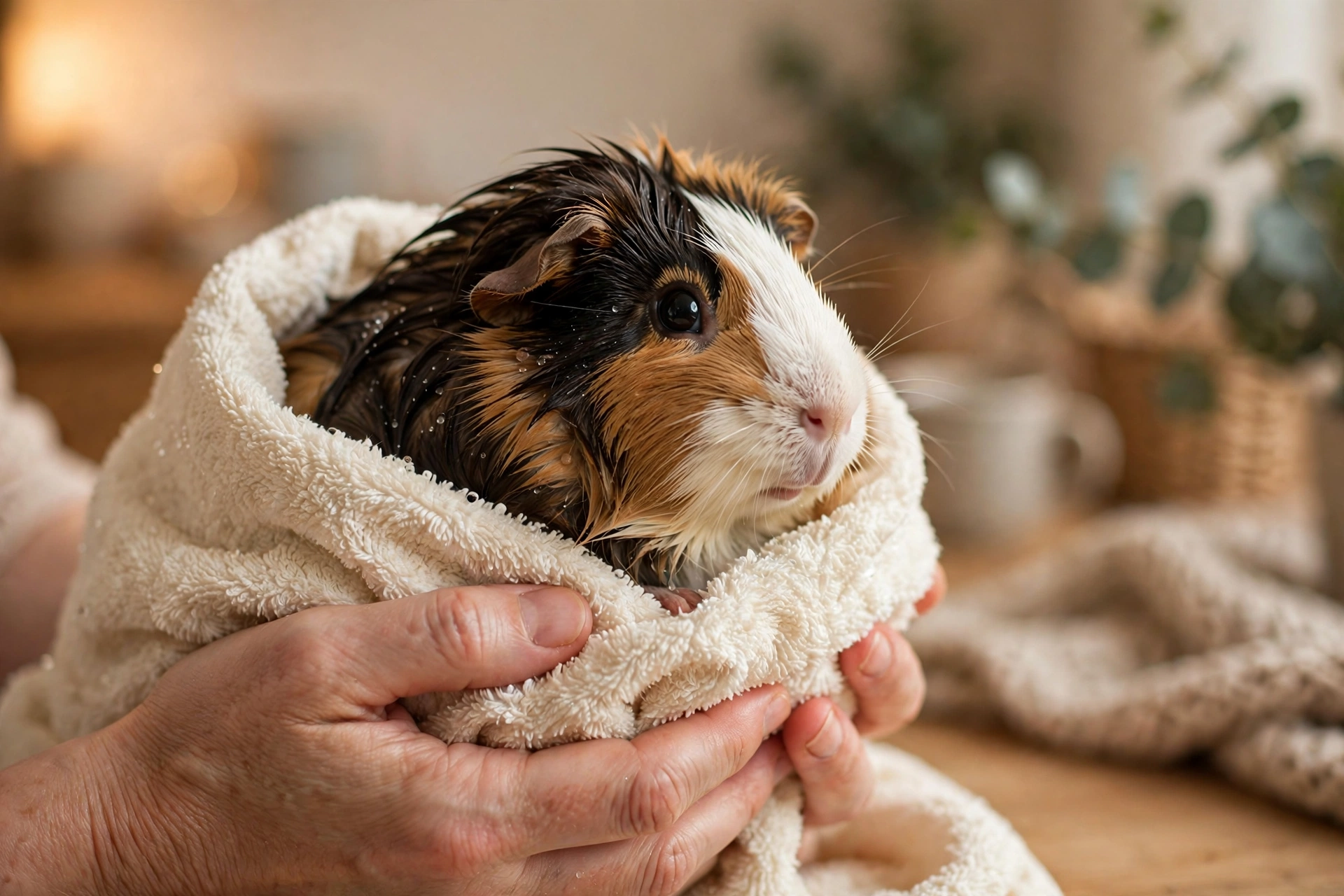
Step 6 — Towel dry immediately. Lift them out and wrap them in a dry towel straight away. Pat — do not rub — and swap to a fresh towel when the first is damp. Keep them wrapped in a warm, draught-free room until completely dry, which can take 30–60 minutes.
Step 7 — Warm room, no cold air. Do not put a damp pig back in the cage or near an open window. Guinea pigs chill fast, and a chill can turn into a respiratory infection within days.
Choosing a Safe Shampoo
This is where many owners go wrong. Human shampoo, baby shampoo, dog shampoo, and dish soap are all too harsh for guinea pig skin — wrong pH, wrong ingredients, and often containing fragrances or essential oils that are outright dangerous to small animals.
Use only a shampoo made specifically for guinea pigs or small animals. Look for: fragrance-free and dye-free, pH-balanced for small animals, and no essential oils — tea tree oil in particular is toxic to guinea pigs.
Use a pea-sized amount at most. More shampoo does not mean more clean — it means more rinsing and more residue risk. For medicated baths, use exactly what your vet prescribed and nothing else.
The Butt Bath: A Smarter Alternative
Most of the time, a full bath is overkill — what the pig actually needs is its rear end cleaned. Fill the basin with just 2–3 cm of lukewarm water. Hold the pig so only their rear sits in the water, gently work out matted droppings or grease with your fingers and a dab of small-animal shampoo, rinse, and towel-dry thoroughly. Done in five minutes, minimal stress, minimal chill risk.
For boars, the grease gland deserves special mention. That sticky, dark patch above the tail is normal scent-gland secretion, but it can build into a crusty mess. A dab of coconut oil massaged in for a few minutes loosens it before the butt bath. Do not scrub it raw; if the skin underneath looks sore, that is a vet question. Our common illnesses guide covers which skin problems need professional help.
What NEVER to Do When Bathing a Guinea Pig
- Never use a hairdryer on hot: the heat burns their delicate skin fast, and the noise terrifies them. Towel drying in a warm room is safer and calmer.
- Never bathe a sick, very young, or elderly pig without vet advice: pups, frail seniors, and pigs with respiratory symptoms should not be bathed — the stress and chill risk is too high.
- Never submerge the head or ears: water in the ears invites infection. Wash the body only.
- Never bathe without a warm drying plan: a damp pig in a cold house is an emergency waiting to happen. If you cannot guarantee a warm, draught-free drying space, postpone the bath.
- Never use flea treatments or essential oils in the bath: many are toxic to guinea pigs. If parasites are the concern, see a vet for a proper diagnosis.
- Never leave a pig unattended in water: even shallow water is a drowning risk if they panic. Stay with them the entire time.
After the Bath: Drying and Warmth Are Critical
The bath itself is the easy part — the drying is where things go wrong. A guinea pig’s small body loses heat fast, and damp fur against the skin in a draughty room is how respiratory infections start. Treat the drying phase as seriously as the bath:
- Pat dry with towels, swapping to dry ones as they get damp — expect to use two or three.
- Keep the pig in a warm room (around 20–24°C) with no draughts until the fur is completely dry to the skin.
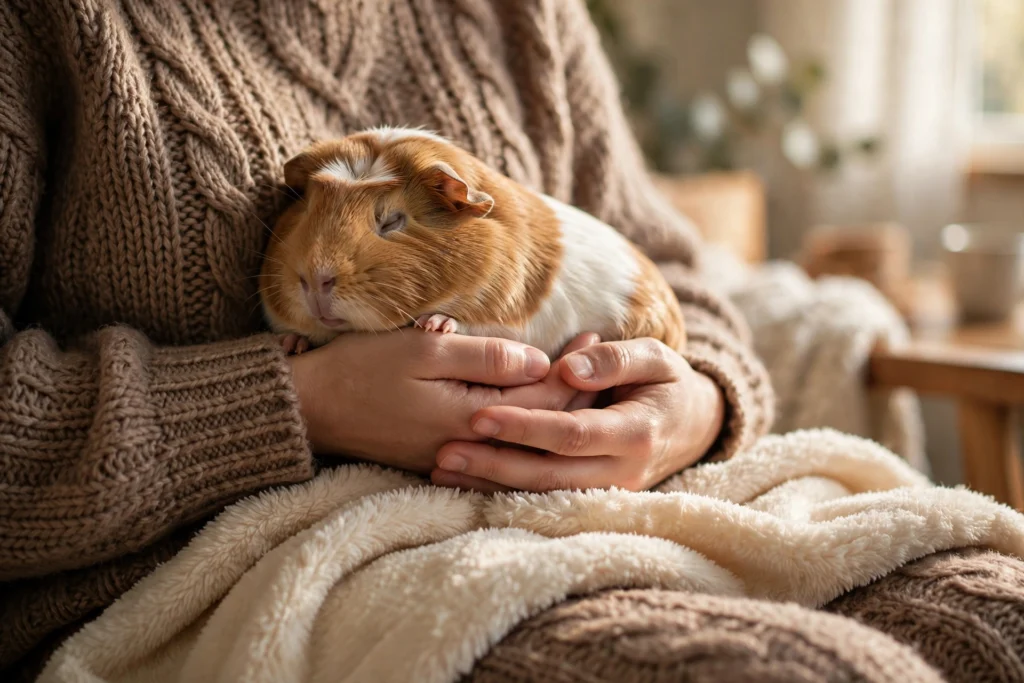
- Cuddle time works brilliantly here — a pig wrapped in a towel on a warm lap dries faster and calms down from the bath stress.
- Only return them to the cage when fully dry, and make sure the cage bedding is clean and dry too.
- Watch them for the next day or two: sneezing, laboured breathing, lethargy, or going off food after a bath are red flags — see a vet promptly.
Do Guinea Pigs Need Baths? — FAQs
Do guinea pigs need baths regularly?
No. Healthy guinea pigs groom themselves and do not need routine baths. Bathe only when there is a real reason — a soiled rear, matted fur, or a vet-prescribed medicated wash. Over-bathing causes dry skin and stress.
Can I use baby shampoo on my guinea pig?
No — baby shampoo is formulated for human skin pH and is too harsh for guinea pigs. Use only a shampoo made specifically for guinea pigs or small animals, fragrance-free and without essential oils.
How do I clean my guinea pig without a bath?
For most messes, a damp cloth or a targeted butt bath is enough. Long-haired pigs benefit from regular gentle brushing to prevent matting.
Why does my guinea pig smell?
A mild hay-and-pig scent is normal. A strong or foul smell usually means a dirty cage, boar scent marking, or occasionally a health issue like a urinary infection. If the smell is new and strong, investigate the cause before reaching for the shampoo.
Can I bathe a baby guinea pig?
Avoid it unless a vet advises otherwise. Very young pups chill dangerously fast. If a pup is soiled, a warm damp cloth on the affected area is far safer than any bath.
My guinea pig is shivering after a bath — what do I do?
Wrap them in a warm dry towel immediately, hold them against you, and move to the warmest draught-free room you have. Shivering means they are losing heat — do not put them back in the cage until they are warm and fully dry. If shivering persists or they become lethargic, contact a vet.
Bottom line: do guinea pigs need baths? Almost never as routine — but yes when there is a genuine reason. Keep baths rare, use only guinea-pig-safe shampoo, never touch the face or ears, and treat drying and warmth as the most important part of the whole process. A clean cage and a butt bath will handle nearly everything else.