Do Guinea Pigs Like to Be Held? The Honest Answer
New owners ask this question constantly — usually while their new piggy is sprinting away from their hand for the third time in a row. Do guinea pigs like to be held? The honest answer is a little complicated: most guinea pigs hate being picked up, but many genuinely love being held once they are settled. It is not a contradiction — it is pure prey-animal logic. This guide explains what is going on in your piggy’s head, how to pick them up safely without wrecking your bond, and how to turn lap time into the best part of both your days.
The Short Answer: It Is Not You, It Is Their Instincts
Guinea pigs are prey animals. In the wild, anything swooping down from above is a hawk, not a hug. When your hand descends into the cage, your piggy is not thinking “oh good, cuddles” — it is thinking “predator”. That split-second panic is hardwired into millions of years of evolution, and no amount of love erases it overnight.
This explains the classic paradox that confuses every new owner: the same pig that panics during pick-up will happily sit on your lap for 30 minutes, purring contentedly. The grab is the scary part, not the hold. Once they are secure — feet supported, body stable, no sudden moves — the predator alarm switches off and the social animal underneath comes out.
Why Some Pigs Hate Being Picked Up but Love Lap Time
Understanding this split helps you work with it instead of fighting it:
- Picking up feels like capture: a hand chasing them around a confined cage triggers every flight instinct they have. Cornering them makes it worse.
- Being lifted feels like predation: rising into the air with their feet dangling mimics being snatched by a bird of prey. An unsupported lift is genuinely terrifying.
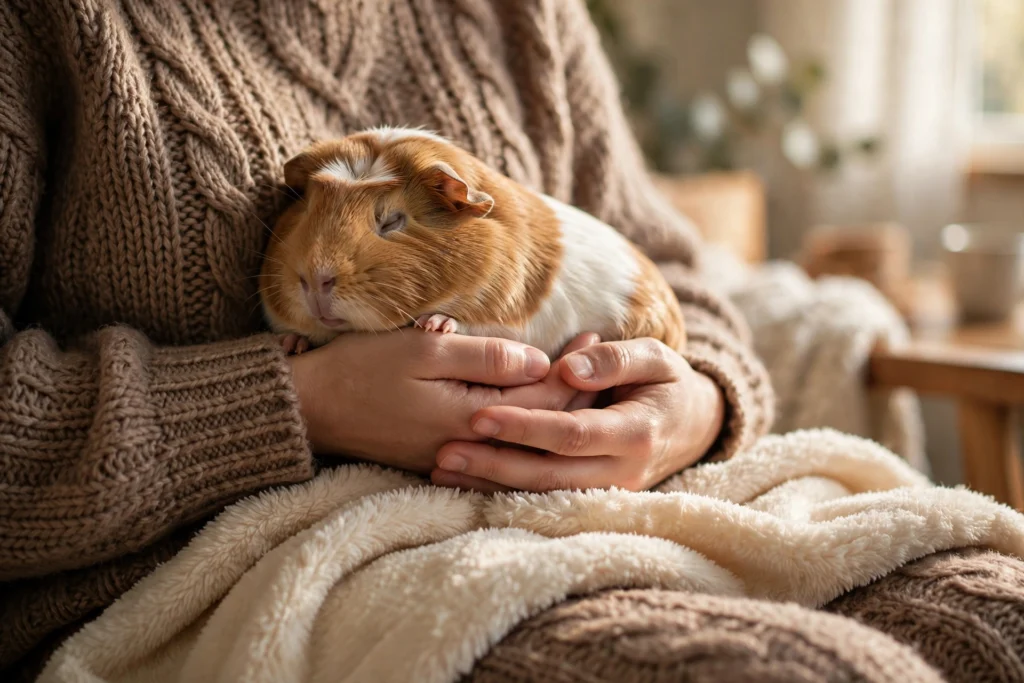
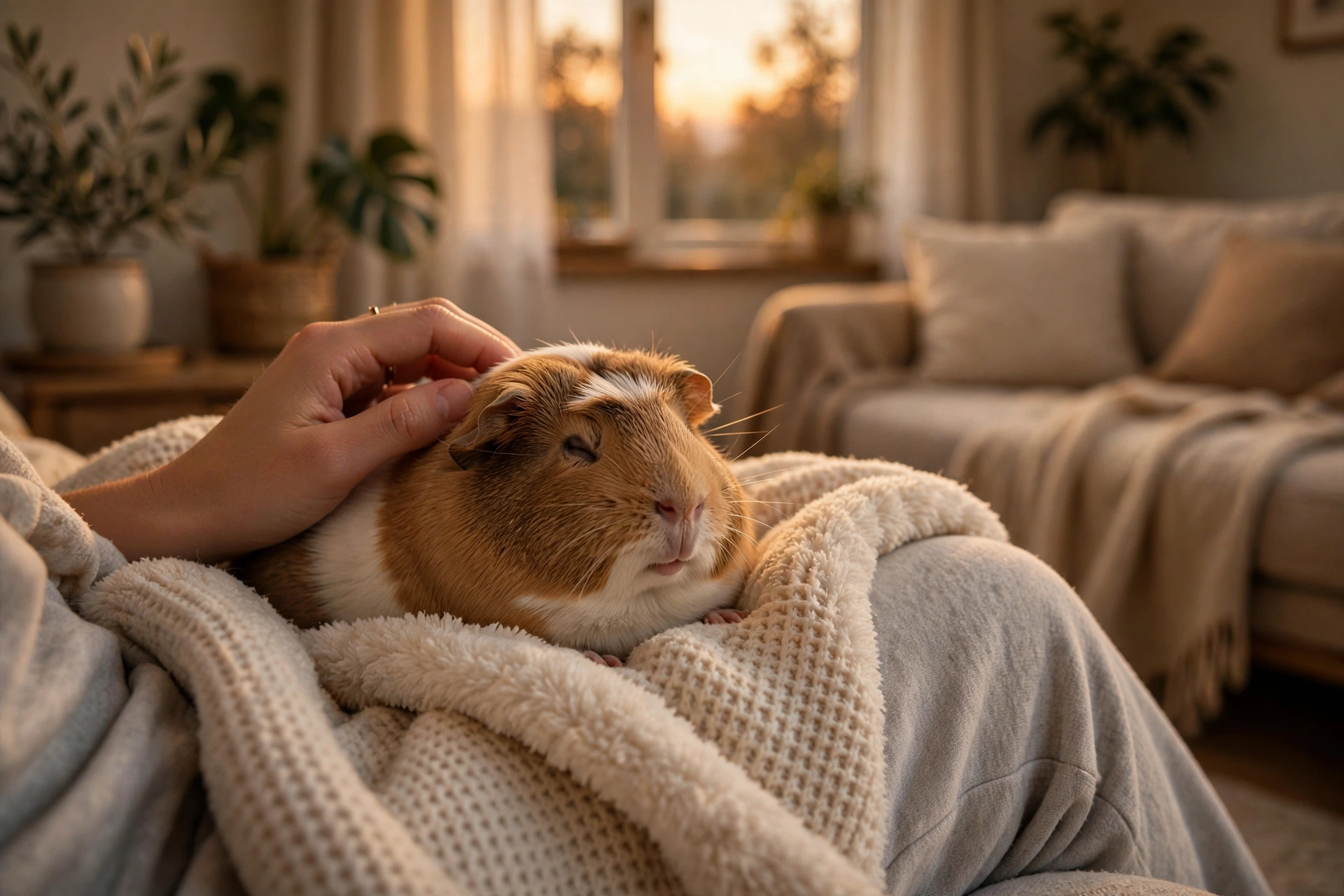
- Lap time feels like a burrow: warm, still, enclosed — the opposite of exposed. A pig on a calm lap feels hidden and safe, which is their favourite feeling in the world.
- Personality matters: some pigs are naturally bold and climb into your hand; most are cautious; a few stay nervous for life. All of these are normal.
The practical takeaway: stop trying to make them love the pick-up. Instead, make the pick-up as quick and low-stress as possible, and pour your effort into making lap time wonderful — that is where the bonding actually happens.
How to Pick Up a Guinea Pig Safely: The Two-Hand Scoop
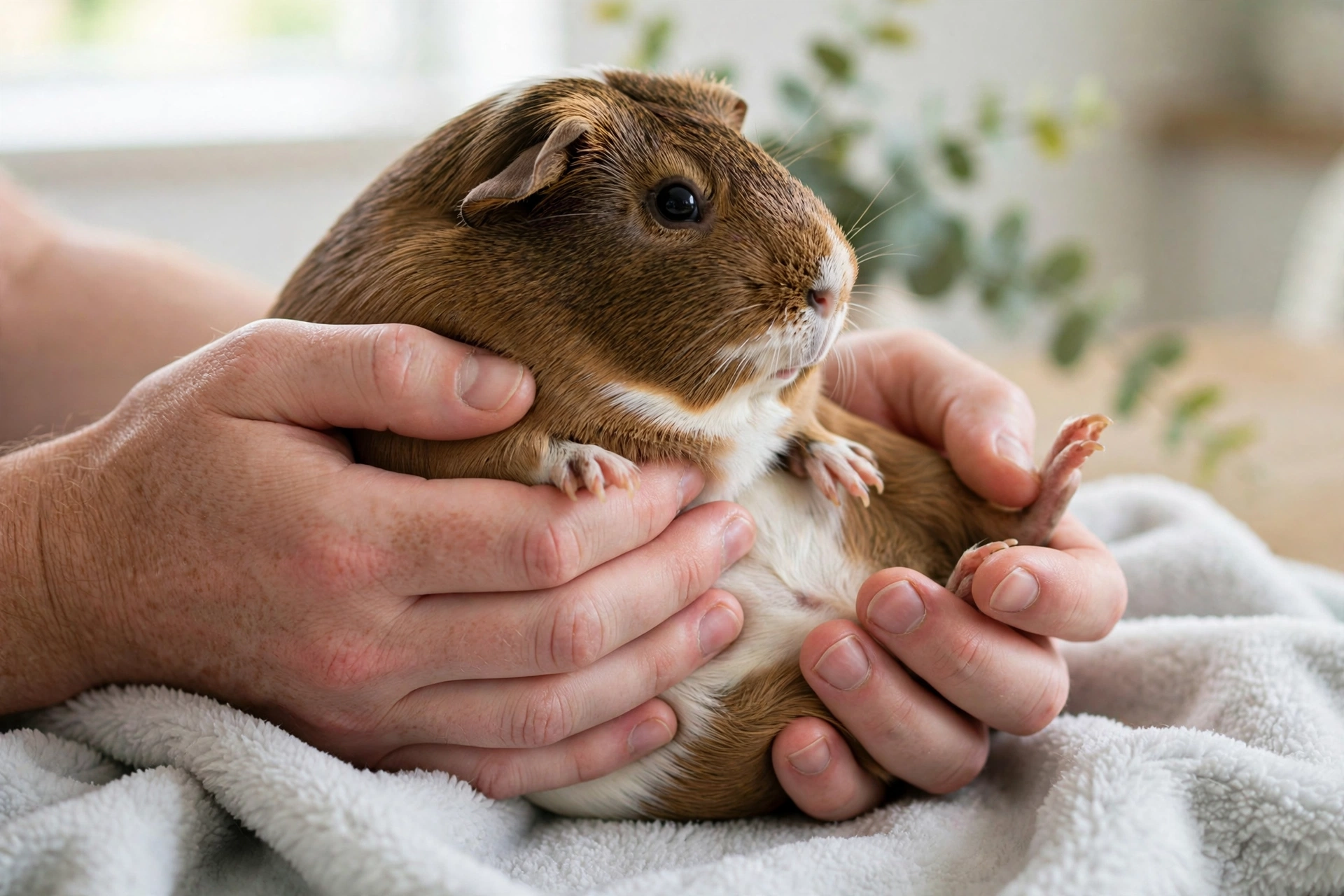
Never grab a guinea pig around the middle with one hand — it squeezes their delicate ribcage and leaves their legs dangling, which causes panic and can cause real injury. The correct method is the two-hand scoop:
Step 1 — Approach low, not from above. Slide your hand in at their level, along the cage floor, and let them see and sniff it first. Talking softly as you approach helps them track you.
Step 2 — One hand under the chest. Slip your dominant hand under their chest, just behind the front legs. Do not squeeze — just cradle.
Step 3 — Other hand under the hindquarters. Your second hand goes straight under their back end. A guinea pig’s spine is fragile; their full weight must be supported, never hanging.
Step 4 — Lift smoothly against your body. Bring them straight to your chest in one calm motion. Hold them close so they feel stable, not dangling in space.
Step 5 — Transition to the lap quickly. Sit down and transfer them to your lap (covered with a towel or fleece). Most pigs settle within a minute or two once their feet are on something solid.
Practice makes both of you calmer. After a few weeks, many pigs learn the routine and stop fleeing — they know the scary ten seconds lead to the good part. For the full picture of piggy body language, read our guinea pig sounds guide — what they are saying during handling tells you everything.
Lap Time Tips: Turning Handling Into Bonding
Once you have got them on your lap, here is how to make it count:
1. Make the lap a safe zone
Always use a towel, fleece pad or cuddle sack. It protects your clothes, gives them something to burrow into, and — critically — removes the slipping panic of bare legs or smooth fabric. A pig that feels secure sits still; a pig that feels exposed tries to escape.
2. Keep sessions short at first
Start with 10–15 minutes and build up. Young or nervous pigs get overwhelmed fast. End on a good note — while they are calm, not after they start squirming — and always return them with a treat so the session ends positively.
3. Pair lap time with their favourite foods
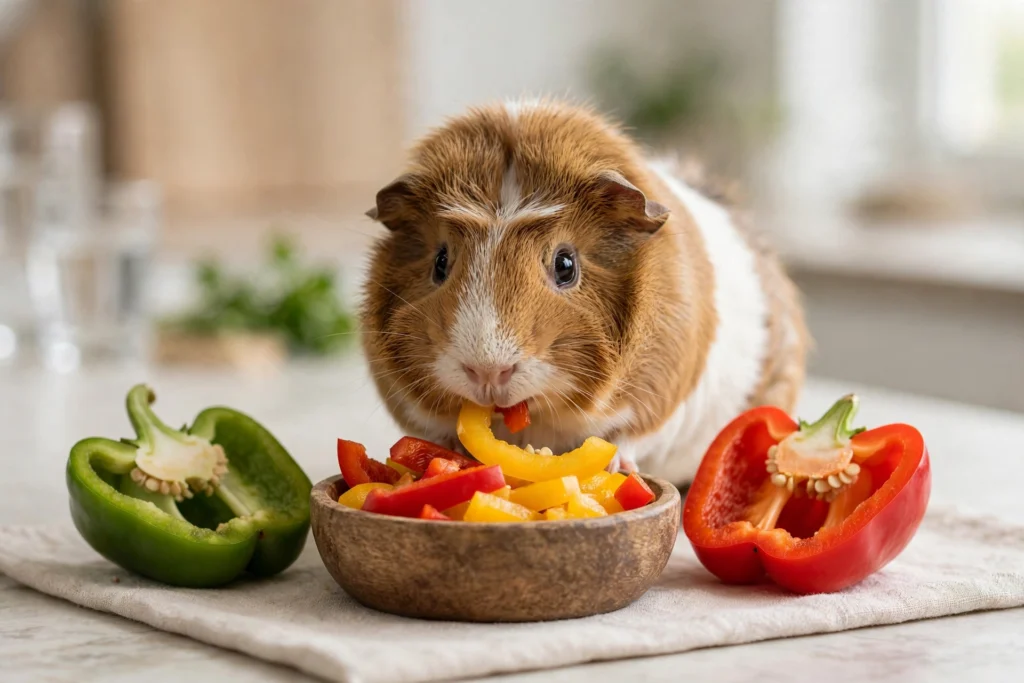
Classical conditioning works beautifully on guinea pigs. Offer a sprig of coriander, a sliver of bell pepper or a favourite veggie only during lap time. Within a couple of weeks, they will associate your lap with good things. Check our safe food list for treat ideas.
4. Talk and stroke — gently
Stroke from nose to rump, following the direction of the fur. Many pigs love gentle chin and ear rubs; most hate having their feet touched. Keep your voice low and steady. Sudden loud noises during lap time can undo weeks of progress.
5. Handle both pigs equally
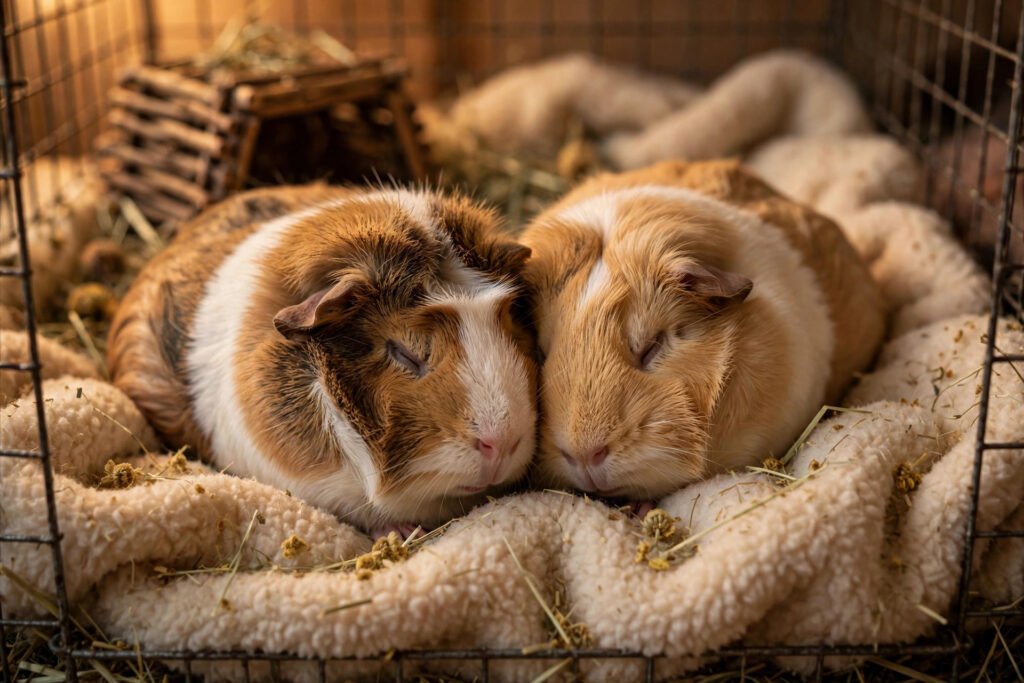
If you have a pair (and you should — see why guinea pigs need a friend), give each pig regular lap time. Favouring the bold one while the shy one only gets chased for nail trims creates a handling gap that widens over time.
6. Try a cuddle sack or tunnel
For nervous pigs, a fleece cuddle sack is a game-changer. They walk in voluntarily (it is a hideout, after all), and you lift the sack, not the pig. Many owners find this eliminates pick-up panic entirely.
Signs of Trust vs Signs of Stress
Guinea pigs are constantly telling you how they feel — you just have to read the signals. Here is the cheat sheet:
| Signal | What it means | Trust or stress? |
|---|---|---|
| Purring (low, relaxed rumble) | Contentment — “this is nice, keep going” | Trust |
| Lying flat, legs tucked or sprawled | Fully relaxed, feels safe | Trust |
| Licking your hand | Affection / grooming behaviour | Trust |
| Popcorning after being put down | Joy and relief — the session went well | Trust |
| Chutting softly while exploring your lap | Curious and comfortable | Trust |
| High-pitched squeal or shriek | Fear or pain — stop immediately | Stress |
| Teeth chattering | Annoyance or warning — back off | Stress |
| Frantic squirming / trying to launch off your lap | Panic — they need to go back | Stress |
| Freezing completely still | Fear response — not calm, just terrified | Stress |
| Biting or nipping | “Put me down” or possibly needs the toilet | Stress |
One nuance worth knowing: a pig that nips gently then settles often just needs to wee — most pigs will not toilet on their owner and signal the need this way. Return them to the cage, let them go, and try again later. Learn the difference between a need-the-toilet nip and a genuine fear bite: the former is polite, the latter comes with a shriek.
Common Handling Mistakes to Avoid
- Chasing them around the cage: five minutes of pursuit destroys trust. Use a hideout or cuddle sack to “catch” them calmly instead.
- Lifting with one hand: squeezes the ribs and dangles the spine. Always two hands, always full support.
- Holding them high in the air: even “just for a photo” terrifies them. Keep handling low and seated.
- Letting children carry them around: kids should only hold piggies sitting down, with an adult present. A dropped pig can break bones or its back.
- Ignoring the warning signs: pushing through shrieks and chattering “to get them used to it” does the opposite — it teaches them that handling means being ignored. Respect the signals and try again tomorrow.
- Only handling them for unpleasant things: if the only time you pick them up is for nail trims and medicine, they will dread your hands. Regular positive lap time rebalances the association.
Handling also gives you a weekly health check for free — feel for lumps, check eyes and feet, and note any weight changes. Know what trouble looks like with our common illnesses guide so early handling sessions double as early detection.
Do Guinea Pigs Like to Be Held? — FAQs
Do guinea pigs like to be held by strangers?
Generally no — most pigs are wary of unfamiliar people and smells. Let visitors offer a treat and sit quietly rather than grabbing the pig. Even bonded pigs often reserve true lap-time relaxation for their own humans.
How long does it take for a guinea pig to trust you?
Most pigs show real progress within 2–4 weeks of daily gentle handling, with full trust taking a few months. Rescue pigs or previously mishandled pigs can take longer. Patience beats every shortcut — there is no trick, only consistency.
Why does my guinea pig run away when I try to pick it up?
Prey instinct — your hand looks like a predator swooping in. It is not rejection. Even pigs that adore lap time will usually run from the pick-up itself. Use the cuddle-sack method if the chase is stressing you both out.
Can you hold a guinea pig too much?
Yes. Over-handling causes stress, weight loss and even illness. Aim for one or two calm sessions a day totalling 30–60 minutes, and always watch their signals. If they are squirming to get down, the session is over — respect it.
Do guinea pigs like being on their backs?
No — never hold a guinea pig on its back. It triggers a fear response (tonic immobility, sometimes mistaken for “relaxing”), restricts breathing and risks spinal injury. Keep them upright, feet supported, always.
Will my guinea pig ever sit still on my lap?
Almost certainly yes, with time. Most pigs go from “frantic escape attempts” to “falls asleep on the fleece” within a month or two of consistent, treat-fuelled lap time. The pigs that never settle are the exception, not the rule.
Bottom line: do guinea pigs like to be held? Not the being-picked-up part — but yes to the being-held part, once they trust you. Respect the prey instinct, master the two-hand scoop, keep lap time calm and treat-rich, and read their signals honestly. Do that, and the pig that once sprinted from your hand will be the one climbing into it.