Can Guinea Pigs Live Alone? Why They Need a Friend (and When Solo Is OK)
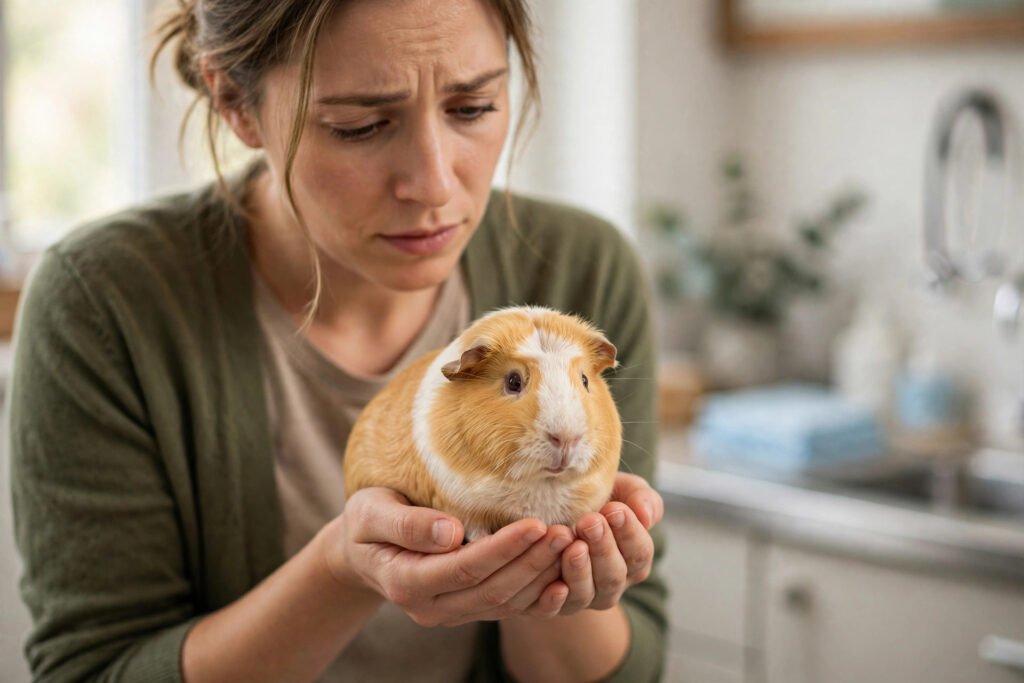
It is one of the most common questions new owners ask: can guinea pigs live alone? The short, honest answer is no — not happily. Guinea pigs are herd animals wired for company, and a solo piggy is a lonely piggy, no matter how much attention you give it. In this guide we explain the science behind their social needs, the warning signs of loneliness, the one country where keeping a single guinea pig is actually illegal, and the rare exceptions when solo living is the kinder option.
Guinea Pigs Are Herd Animals — It Is in Their DNA
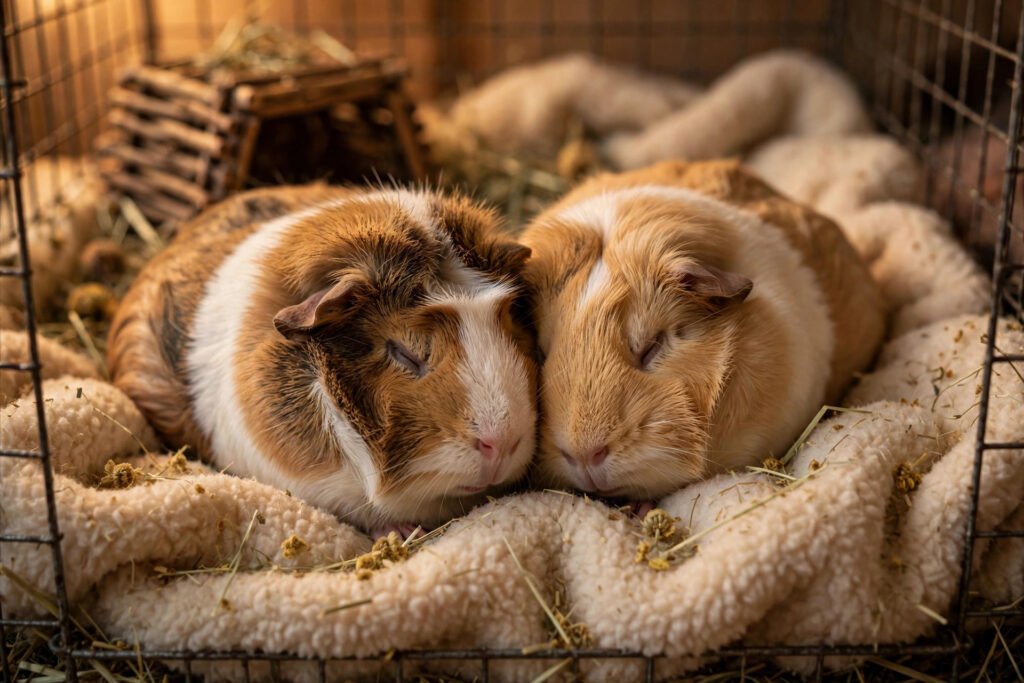
In the wild, guinea pigs live in herds of around ten. There is safety in numbers: many eyes spot predators faster, and the group shares warmth, grooming and constant quiet communication. Your domestic piggy carries the same instincts. A lone guinea pig in a cage is like a person locked in a room with no one to talk to — fed and safe, but fundamentally deprived.
This is not sentimentality; it is biology. Studies of small social mammals consistently show that isolation raises stress hormones, suppresses the immune system and shortens lifespan. A guinea pig with a companion eats better, moves more, popcorns more and recovers from illness faster. If you are setting up for piggies, our cage size guide shows how much space two (or more) need — it is more than most pet-shop cages offer.
7 Signs Your Guinea Pig Is Lonely
A solo piggy will not file a complaint — but it will show you. Watch for:
1. Sitting still for hours
A healthy pair popcorns, chases and explores. A lonely pig often just sits in a corner or hideout, barely moving between meals.
2. Loss of appetite or weight
Guinea pigs are social eaters — they eat more enthusiastically with company. A solo pig may pick at food and slowly lose weight. Weigh weekly; a steady drop is a red flag. Know the other early signs of illness too, since loneliness weakens immunity.
3. Excessive sleeping or lethargy
Some sleep is normal, but a pig that naps all day and shows no interest in floor time or veggies is telling you something.
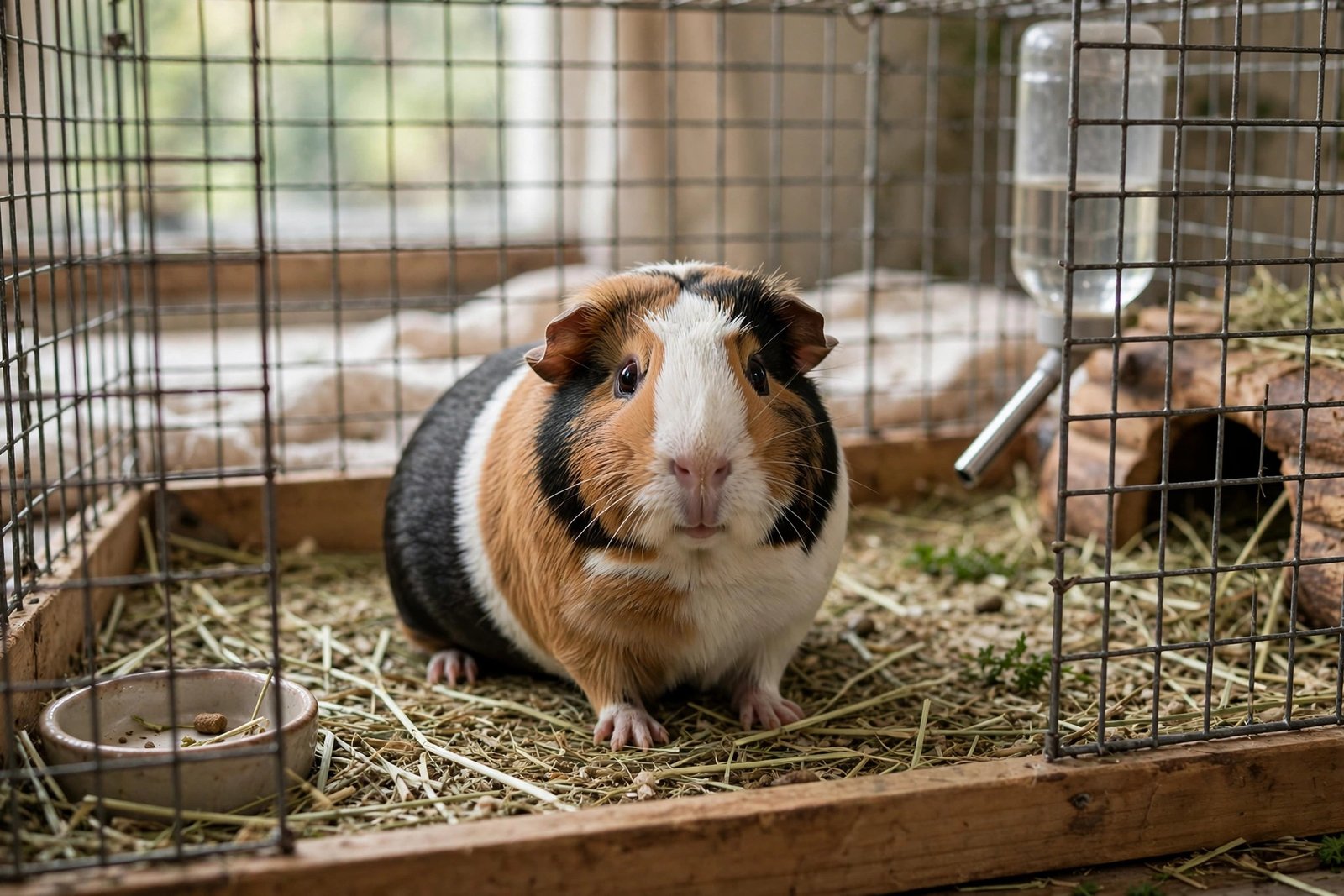
4. Bar chewing or repetitive behaviours
Chewing cage bars, circling, or sitting facing the wall can signal stress and boredom — classic in understimulated solo pigs.
5. Over-attachment to you
Following your hand obsessively, wheeking frantically whenever you leave the room — flattering, but it means you are its entire social world, and you cannot be there 24/7.
6. Silence
Happy guinea pigs are noisy: wheeking, chutting, rumbling. A pig that has gone quiet has often given up trying to communicate — learn what the sounds mean in our guinea pig sounds guide.
7. Depression-like withdrawal
Rescues report that long-term solo pigs can become genuinely withdrawn — uninterested in toys, treats or interaction. The good news: most bounce back remarkably fast once bonded with a friend.
The Switzerland Law: Where Solo Guinea Pigs Are Illegal
Here is how seriously some places take this: in Switzerland, animal welfare law considers guinea pigs social animals, and keeping a single guinea pig without adequate social contact is an offence. Swiss owners who lose one pig of a pair will rent a companion pig from rescues rather than leave the survivor alone. Sweden and Norway have similar social-needs provisions. The message is clear — this is not a preference, it is a welfare requirement.
When Living Alone IS the Kinder Option (the Exceptions)
Rules have exceptions. A guinea pig may need to live solo — temporarily or permanently — in these cases:
- Aggressive boars: some unneutered males simply will not tolerate another pig and will fight dangerously. Neutering and careful re-bonding sometimes fix this, but a truly aggressive boar is safer (and calmer) alone than constantly injured.
- Illness or quarantine: a sick pig may need separation during treatment — but keep the cages side by side so they can still see, hear and smell each other.
- Failed bondings: occasionally two pigs just do not get along after proper introduction attempts. A rescue can help you try “boar dating” to find a compatible match instead.
- End-of-life: a very elderly, frail pig may find a bouncy newcomer stressful. In that case, maximise human contact and consider whether the pig’s remaining time is truly better solo.
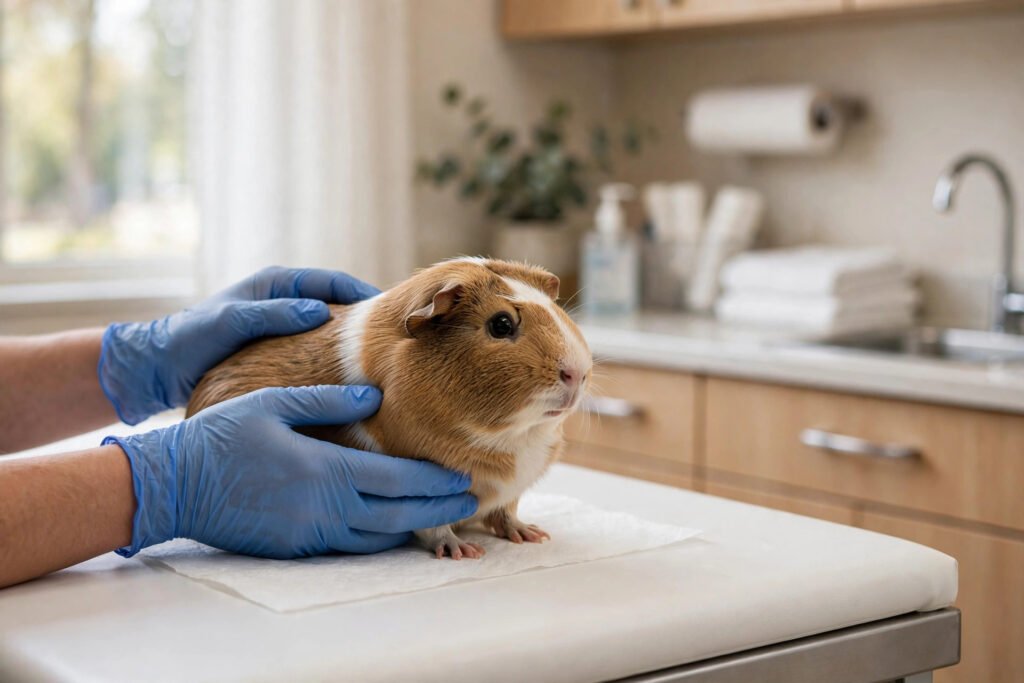
Even in these cases, “alone” should mean alone but not isolated: cage next to other pigs, plenty of human interaction, and enrichment. And always get a vet’s view first — sudden aggression can signal pain, so rule out illness before assuming a behaviour problem.

How to Find Your Piggy a Friend
Convinced? Great — here is how to do it right:
1. Consider a rescue. Rescues are full of single pigs needing homes, and many offer bonding services — they will help match personalities and supervise introductions. Adopting beats pet-shop impulse buys every time.
2. Match carefully. The easiest pairings: two sows, or a neutered boar with a sow. Two boars can work beautifully but need more space and careful introduction. Avoid putting an unneutered male with a female unless you want babies — and read up on responsible care basics first.
3. Introduce on neutral ground. A clean, unfamiliar space (a blocked-off hallway works) with hay and veggies. Expect rumbling, mounting and nose-offs — that is normal dominance sorting. Separate only if there is real biting with intent to injure.
4. Give it time. Some pairs click in an hour; others need days of side-by-side living before sharing a cage. Do not rush it.
How Many Guinea Pigs Should You Keep?
If two is the minimum, is three or four better? In many ways, yes — small herds are the most natural setup of all, and watching herd dynamics (the gentle rumbling, the popcorn trains, the shared naps) is pure joy. But be realistic:
- Space: each additional pig needs more room. Two sows need at least 0.7 m² (7.5 sq ft), and bigger is always better — check the cage size guide before adding pigs.
- Cost: hay, pellets, veggies and vet bills scale with every pig. Budget honestly.
- Boar groups: three or more unneutered males often destabilise — pairs or neutered-male-plus-sows groups are more reliable.
- Odd numbers: trios can occasionally leave one pig sidelined. Pairs and quartets tend to be the most stable.
For most owners, a pair is perfect and a small herd of three to four is the dream upgrade. Whatever number you choose, never drop to one.
What If You Truly Can Only Keep One?
Sometimes circumstances genuinely prevent a second pig. If that is you, commit to being an exceptional solo-pig owner:
- Be present: several hours of interaction daily — lap time, floor time, talking to them.
- Enrich everything: tunnels, hideouts, foraging toys, rotated veggies. A bored solo pig declines fast.
- Keep the cage near household life: not isolated in a spare room — they need to hear and see activity.
- Consider a neighbour pig: even a separate cage right next to another guinea pig (a friend’s, or a foster) provides enormous comfort through the bars.
- Revisit the decision regularly: circumstances change. Keep the door open to getting a companion later.
And feed them brilliantly — a lonely pig that also eats poorly is in real trouble. Our safe food list and diet chart make sure nutrition is never the weak link.
Can Guinea Pigs Live Alone? — FAQs
Is it cruel to keep one guinea pig?
It causes real suffering in most cases — loneliness, stress and weaker immunity. It is not about being a bad owner; it is about meeting a biological need. Two pigs cost barely more than one and are twice the joy.
Will my guinea pig die of loneliness?
Loneliness itself does not kill directly, but the stress suppresses the immune system, making fatal illness more likely — and grieving pigs sometimes stop eating, which can be fatal within a day. If your pig stops eating, treat it as an emergency: see our vet emergency checklist.
Do guinea pigs get lonely at night?
They are crepuscular (most active at dawn and dusk) and rest at night, but a solo pig still lacks the comfort of huddling with a cagemate. Night-time wheeking in a lone pig often signals distress.
Can a rabbit be a companion for a guinea pig?
No — this is a common myth. Rabbits can seriously injure guinea pigs (even accidentally), carry bacteria dangerous to piggies, and cannot communicate with them. A rabbit is company the way a stranger shouting in another language is company: not really.
My guinea pig fights with others — what now?
First, rule out pain or illness with a vet visit. Then try rescue-assisted bonding with different personalities (“boar dating” works wonders). True lifelong loners are rare — but if yours is one, follow the solo-owner commitments above.
Bottom line: guinea pigs need guinea pigs. Get two, give them space, hay and good food, and you will be rewarded with popcorning, chutting and the quiet contentment of animals living the way nature intended. If you already have a solo piggy, today is a great day to start looking for its new best friend.