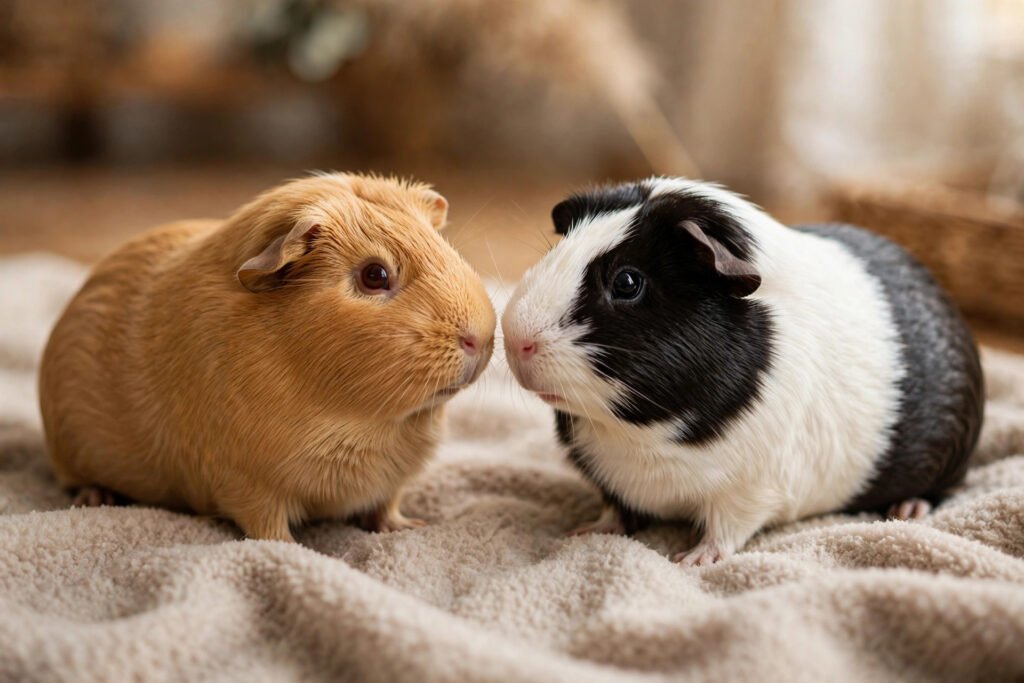
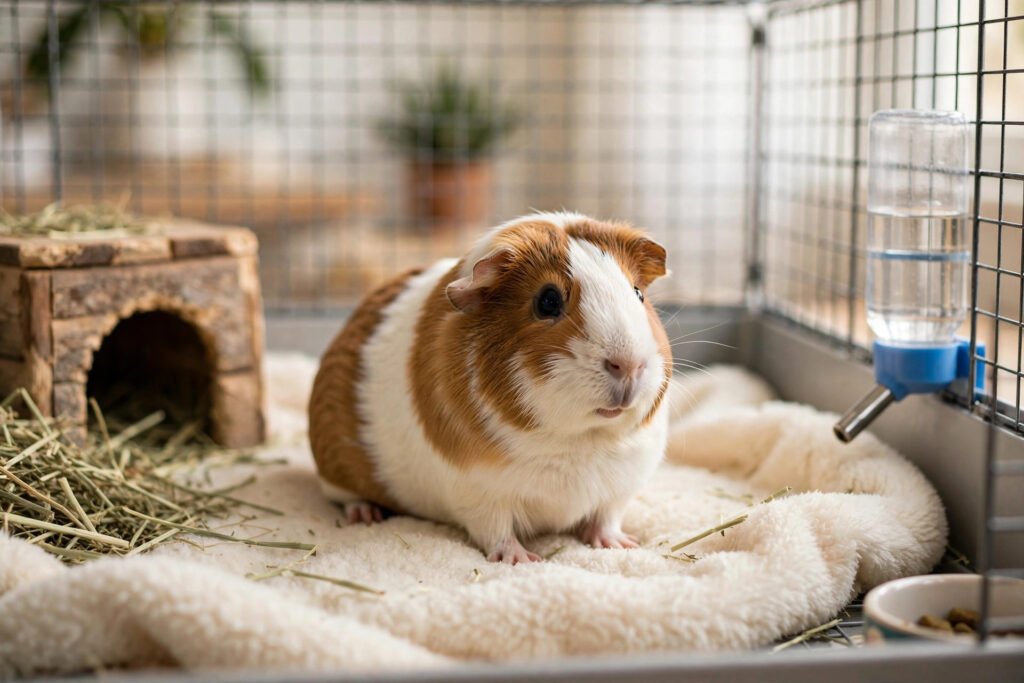
Best bedding for guinea pigs is soft underfoot, low-dust, absorbent, and safe to nibble — because guinea pigs chew everything. Your pigs spend their entire lives standing, sleeping, and eating on it, so the wrong choice does more than smell bad: dusty or aromatic bedding irritates their famously sensitive respiratory systems, causes foot problems like bumblefoot, and can turn a healthy pig into a wheezing one within weeks. This guide ranks the seven genuinely safe options, warns you off the dangerous ones, and covers exactly how deep it should go and how often to clean it.
What Makes Bedding Safe for Guinea Pigs?
Guinea pigs are not hamsters — their needs are stricter. Safe bedding must be low-dust (they are prone to respiratory infections), free of aromatic oils (cedar and untreated pine release phenols that damage liver and respiratory tissue), soft underfoot (hard surfaces cause bumblefoot), absorbent (so pigs are not sitting in damp urine), safe if nibbled, and unscented (perfumed bedding irritates airways). If a bag of bedding makes you sneeze when you open it, imagine living in it.
If you are still choosing your setup, our best cage for guinea pigs guide pairs cage sizing with the right bedding choice.
The 7 Best Bedding Options for Guinea Pigs, Ranked
1. Fleece Liners — Best Overall
Fleece liners are the favourite of experienced guinea pig owners, and it is not close. They are washable, reusable cage liners — typically a fleece top layer stitched to an absorbent middle (bamboo or cotton batting) — that wick urine down through the fleece so the surface stays dry under your pigs’ feet.
- Pros: virtually dust-free; ultra-soft (excellent for bumblefoot prevention); the surface stays dry between changes; zero ongoing cost after the initial purchase; no waste.
- Cons: requires a washing routine — swap liners every 2–4 days and run a dedicated pig laundry load weekly; new fleece must be washed 3–4 times first (“wicking”) so liquid passes through instead of pooling; upfront cost of £30–£60 for a set.
- Dust: none. Odour control: good with daily spot-cleaning and a full change every 2–3 days. Cost per month: ~£0 after setup, plus laundry.
Fleece wins on dust, comfort, and long-term cost. It is the bedding we recommend first, especially for pigs with respiratory sensitivities.
2. Paper-Based Bedding — Best Disposable Option
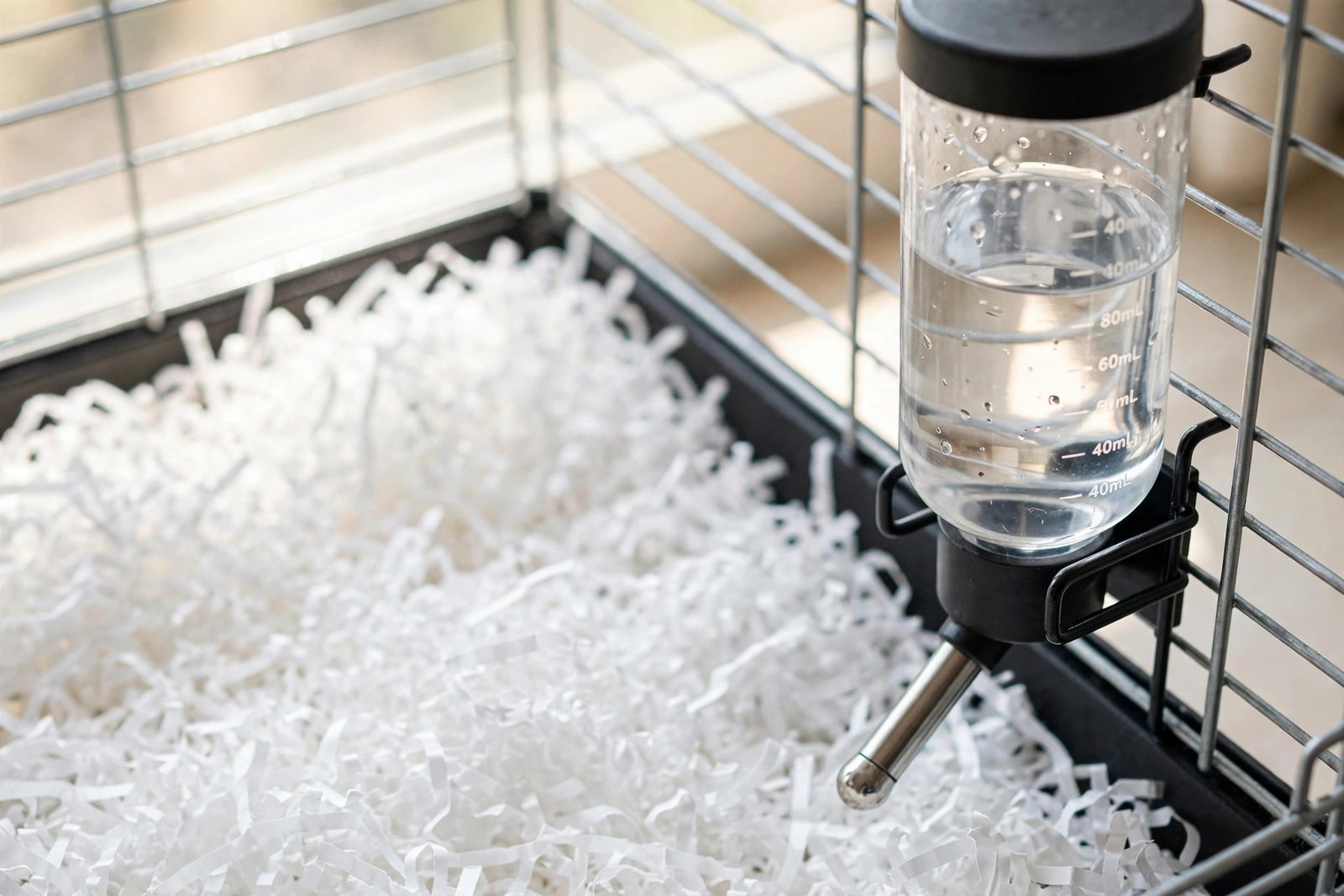
Made from recycled paper, paper bedding is soft, absorbent, and widely available. It is the best choice if you do not want a laundry routine.
- Pros: very soft and low-dust; highly absorbent; biodegradable; easy to find at pet shops and online.
- Cons: the priciest disposable option — a big bag goes fast in a proper-sized cage; some pigs burrow and kick it everywhere; cheaper brands can be dustier.
- Dust: low. Odour control: very good. Cost per month: roughly £20–£40 for two pigs in a large cage.
Choose white or natural unprinted varieties — dyed or heavily perfumed paper beddings add nothing but risk.
3. Aspen Shavings — Best Wood Shaving
Aspen is a hardwood, and unlike softwoods it contains no harmful phenols. Dust-extracted aspen shavings are a genuinely safe wood option with good absorbency.
- Pros: phenol-free and safe; decent absorbency; affordable and widely available; natural look.
- Cons: dustier than fleece or paper — buy dust-extracted only; less soft underfoot; needs full changes more often.
- Dust: moderate (choose dust-extracted). Odour control: moderate. Cost per month: roughly £10–£20.
If you prefer the look and feel of shavings, aspen is the only wood shaving that belongs in a guinea pig cage. Never substitute pine or cedar — more on that below.
4. Hemp Bedding — The Eco Dark Horse
Made from the woody core of the hemp plant, hemp bedding is superbly absorbent, naturally low-dust, and compostable.
- Pros: excellent absorbency and odour control; very low dust; compostable.
- Cons: harder to find in shops (usually ordered online); pricier than aspen.
- Dust: very low. Odour control: excellent. Cost per month: roughly £15–£25.
5. Wood Pellets — Best Under-Layer
Compressed wood pellets (sold as horse or stove pellets) expand as they absorb liquid and are outstanding at odour control. They are best used as a base layer beneath a softer top — fleece over pellets is a popular combination — because the pellets themselves are hard underfoot.
- Pros: phenomenal absorbency and odour control; very cheap; long-lasting.
- Cons: hard surface — never use alone without a soft top layer; verify they are 100% natural wood with no accelerants or additives.
- Dust: low once expanded. Odour control: outstanding. Cost per month: roughly £5–£10.
6. Kiln-Dried Pine — Acceptable With Caveats
Raw pine is unsafe because of its phenols — but kiln-drying drives off most of the aromatic oils. It sits low on this list because quality control varies: not every bag labelled “kiln-dried” is equally well processed. If the bag smells strongly of pine, return it and choose aspen instead.
- Pros: cheap and widely available; decent absorbency.
- Cons: still a softwood — some residual phenols may remain; smell the bag before buying.
- Dust: moderate. Odour control: moderate. Cost per month: roughly £8–£15.
If the bag smells strongly of pine, return it. A properly kiln-dried product should smell faintly woody at most.
7. Hay or Straw — Supplementary Only
Guinea pigs need unlimited hay to eat — but hay makes poor primary bedding. It is not absorbent, it goes mouldy when wet, and straw is worse: stiff, sharp, and an eye-injury risk. Keep hay in a rack or a dedicated hay area for eating and burrowing over proper bedding.
- Pros: pigs love burrowing in it; adds enrichment.
- Cons: poor absorbency; moulds quickly when soiled; seed heads can injure eyes.
- Dust: moderate. Odour control: poor. Cost per month: variable.
Bedding to AVOID: The Danger List
These are genuinely harmful. If you currently use any of them, switch immediately:
- Cedar shavings: the worst offender. Cedar’s phenols cause liver damage and chronic respiratory disease in small animals. Never use cedar for guinea pigs — not even “just for a while”.
- Untreated pine: same phenol problem as cedar, slightly less severe but still dangerous with long-term exposure. “Pine” without “kiln-dried” on the label is a no.
- Cat litter: clumping litter expands inside the digestive tract if eaten and is a blockage risk; clay dust wrecks airways; many contain perfumes and deodorisers.
- Sawdust: fine, dusty, and often from mixed softwoods of unknown origin. A respiratory disaster.
- Newspaper alone: ink can be an irritant, and flat newspaper has zero absorbency — pigs sit in pooled urine.
- Corn cob bedding: moulds quickly when wet and can harbour dangerous fungi; also a choking risk.
- Scented anything: perfumed beddings and scented litter irritate airways while masking the smell of a cage that needs cleaning.
How Deep Should Guinea Pig Bedding Be?
For loose bedding (paper, aspen, hemp), aim for 2–3 inches (5–8 cm) across the cage floor. Go deeper — 3–4 inches — in the “bathroom corners” where your pigs habitually urinate, and under the hay rack where moisture concentrates.
Too shallow is the most common mistake. A thin scattering of shavings looks tidy but soaks through within hours, leaving pigs on damp flooring — which is how you get urine scald and fungal skin infections. If you can see the cage floor through the bedding, add more.
The Cleaning Routine: Spot-Clean Daily, Full Change Weekly
Even the best bedding fails without a cleaning routine. Daily (5–10 minutes): spot-clean — scoop out visibly soiled bedding and the bulk of droppings, especially from bathroom corners and under the hay area. Every 2–3 days: refresh high-traffic zones. Weekly: full change for loose bedding — remove everything, wipe the cage base with a pet-safe cleaner or diluted white vinegar, dry it, and refill.
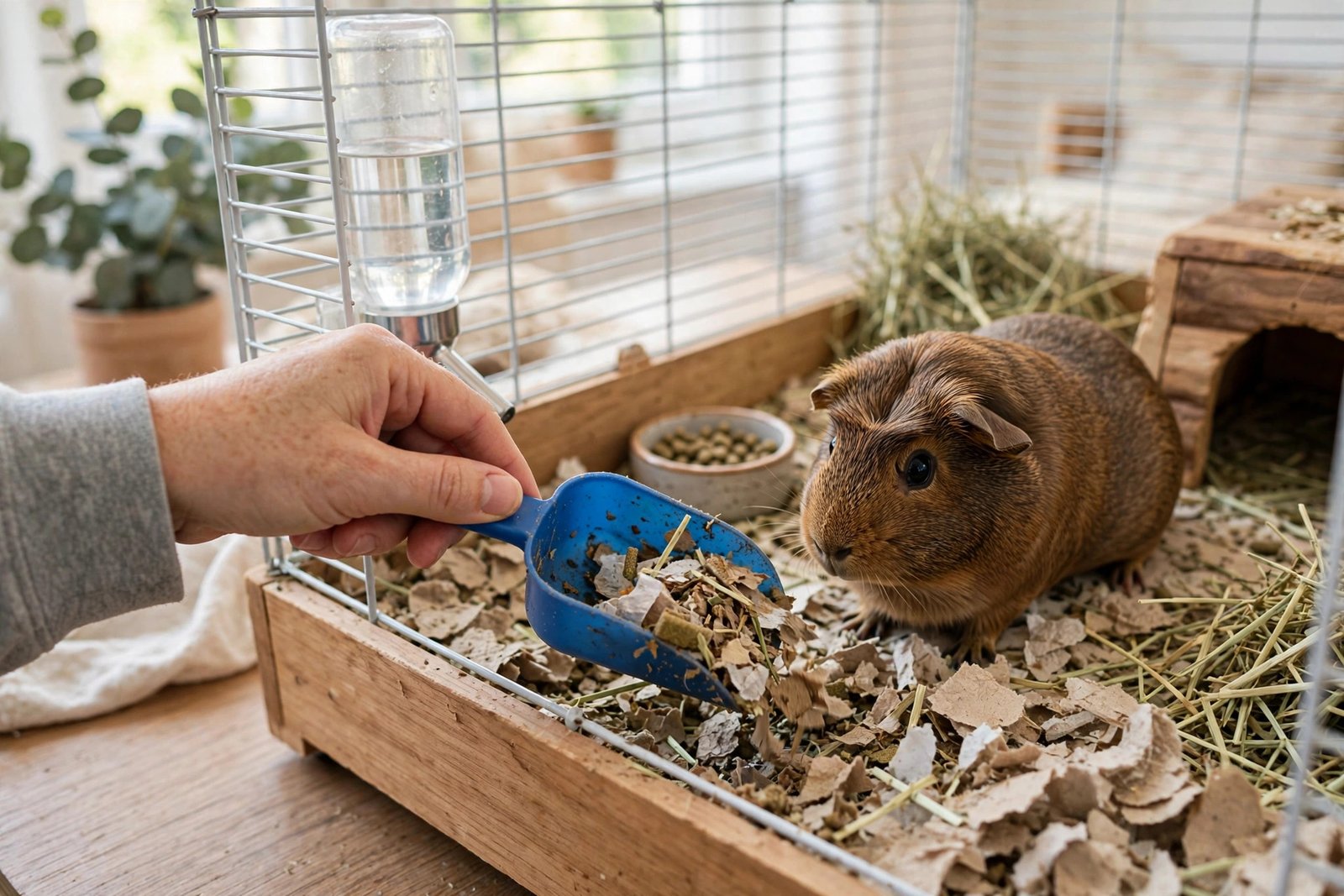
If the cage smells strongly between cleanings, the answer is almost never scented bedding — it is more frequent cleaning, deeper bedding, or a bigger cage. See our guinea pig care guide for the full cage routine that keeps odour down.
Bedding and Respiratory Health: The URI Connection
Guinea pigs have delicate respiratory systems, and upper respiratory infections are among the most common — and most serious — guinea pig illnesses. Bedding is a major factor: dusty bedding keeps airways constantly irritated, and aromatic softwoods add chemical irritation on top. Respiratory symptoms in guinea pigs can escalate fast. If you notice sneezing, a runny nose, or laboured breathing, switch to the lowest-dust option you have and see a vet promptly; never try to wait it out.
Cost Comparison: What Will Bedding Actually Cost You?
For two guinea pigs in a properly sized cage, realistic monthly costs: Fleece liners: ~£0/month after a £30–£60 setup. Paper bedding: ~£20–£40/month. Aspen: ~£10–£20/month. Hemp: ~£15–£25/month. Wood pellets (as base): ~£5–£10/month. Kiln-dried pine: ~£8–£15/month.
Best Bedding for Guinea Pigs — FAQs
What is the absolute best bedding for guinea pigs?
Fleece liners are the best overall: dust-free, soft, dry-surfaced, and free after the initial purchase. If you prefer disposable, dust-extracted paper bedding is the best throwaway option.
Is pine bedding safe for guinea pigs?
Only if it is genuinely kiln-dried. Raw or vaguely “heat-treated” pine is not safe. If the bag smells strongly of pine, do not use it — choose aspen instead.
Why is cedar bedding bad for guinea pigs?
Cedar releases phenols (aromatic oils) that damage guinea pigs’ livers and respiratory systems with long-term exposure. Never use cedar.
Can guinea pigs sleep on hay?
They can burrow and nap in it, but hay should not be the primary bedding — it is not absorbent and moulds when wet. Provide unlimited hay for eating in a rack or hay area, over proper bedding.
Can I use cat litter for guinea pigs?
No. Clumping litter can cause fatal intestinal blockages if eaten, clay dust damages airways, and most litters contain perfumes.
Bottom line: the best bedding for guinea pigs is fleece liners for dust-free comfort and long-term value, or paper bedding for disposable convenience. Keep it 2–3 inches deep, spot-clean daily, change weekly, and never let cedar, untreated pine, cat litter, or sawdust near the cage.