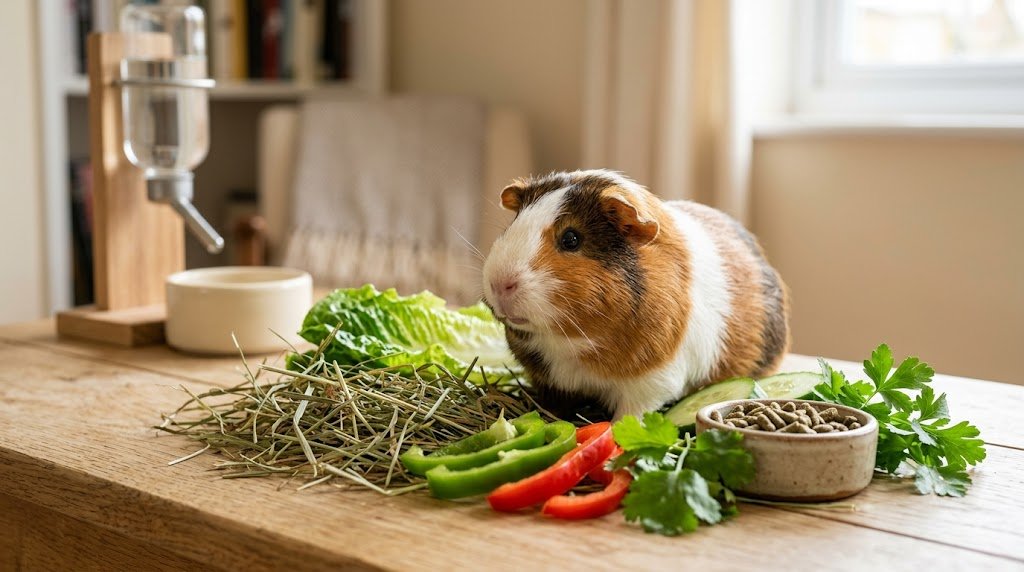
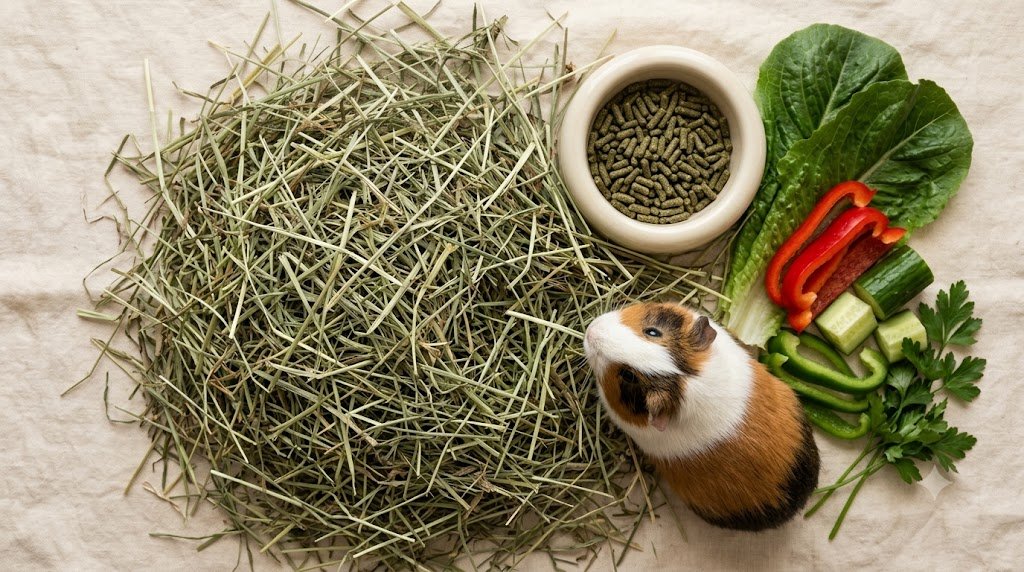
What can guinea pigs eat to stay healthy, active, and happy? While these adorable pets bring immense joy to any home, their digestive systems are extremely sensitive and specialized. Providing the right balance of nutrients is essential for keeping your cavies free from life-threatening illnesses. A guinea pig’s daily diet relies on a strict ratio: 80% High-Quality Hay, 15% Fresh Vegetables, and 5% Fortified Pellets.
1. The Core Foundation: Unlimited Hay
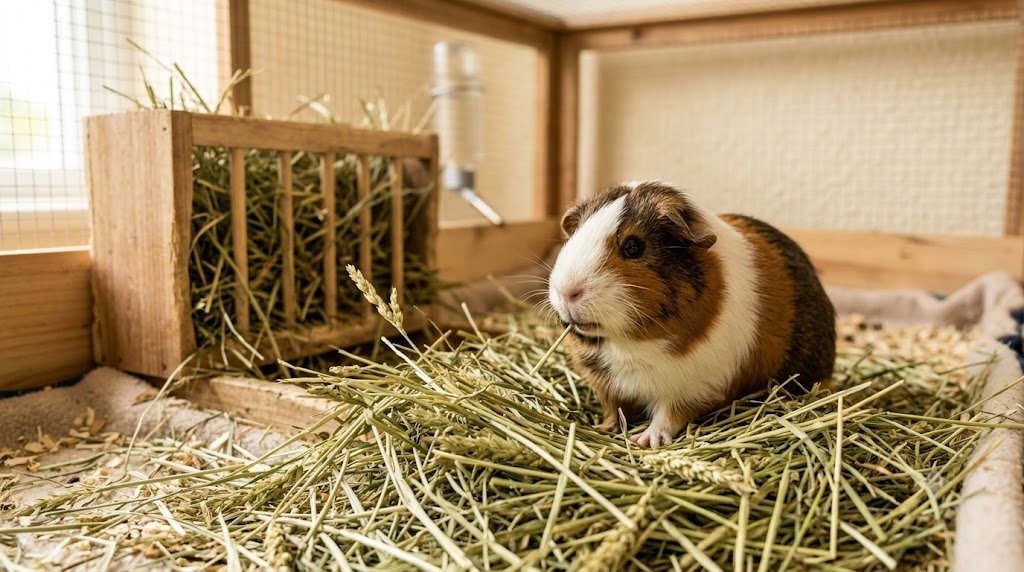
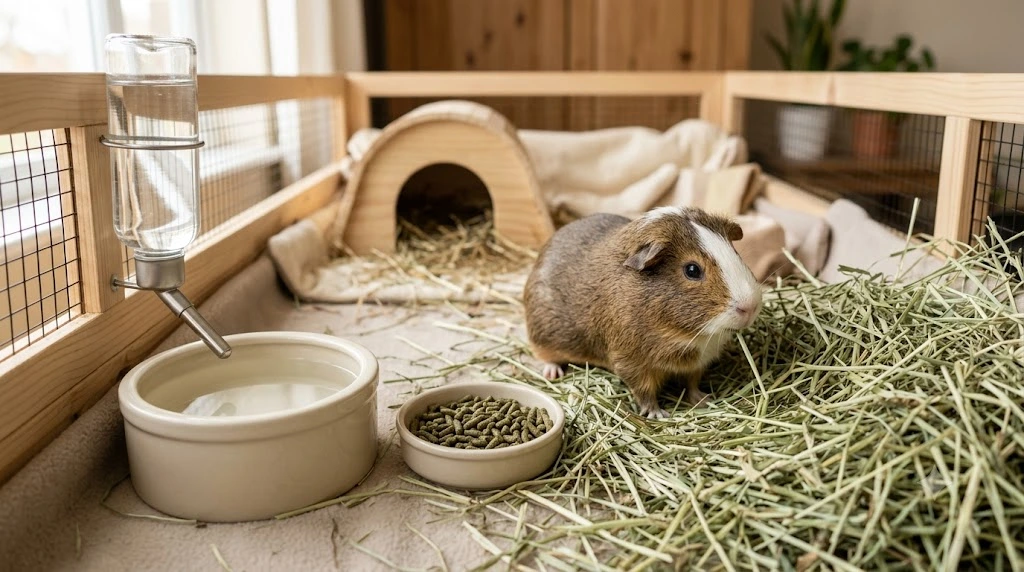
Hay is non-negotiable for guinea pigs. Their digestive tracts require continuous fiber to keep moving (preventing gastrointestinal stasis), and their teeth grow continuously throughout their lives. Chewing long-fiber hay grinds their molars down naturally.
- Timothy Hay: The absolute gold standard for adult guinea pigs (over 6 months old). It is rich in fiber and low in calcium and protein. To learn more about why continuous fiber is critical, check out our guide on guinea pig care basics.
- Orchard Grass & Meadow Hay: Excellent alternatives or mix-ins for variety, especially if household members are allergic to Timothy Hay.
- Alfalfa Hay: High in calcium and protein. Only give Alfalfa to baby guinea pigs (under 6 months), pregnant, or nursing mothers. Adult guinea pigs fed Alfalfa are at high risk of developing painful bladder stones.
2. Fresh Water: Constant Hydration
Water supports every bodily function and aids in digesting fiber.
- Always provide clean, fresh water in a gravity-fed water bottle or a heavy ceramic bowl.
- Change the water daily, even if the container is not empty.
- Avoid adding Vitamin C drops or supplements directly into the water, as light breaks down the vitamin quickly, changes the taste, and may stop your pet from drinking altogether.
3. Commercial Pellets: Balanced Nutrition
Pellets should complement hay, not replace it. Limit adult guinea pigs to 1/8 cup (2 tablespoons) of pellets per day.
- Plain Timothy-Based Pellets: Choose plain, uniform green pellets fortified with Vitamin C.
- Avoid “Muesli” or Mixes: Never buy pellets containing seeds, dried fruit, nuts, or colored bits. Guinea pigs will selectively eat the unhealthy treats and leave the vital nutrition behind, leading to obesity and choking hazards.
4. The Critical Role of Vitamin C
- Unlike most animals, guinea pigs cannot synthesize their own Vitamin C. Without adequate daily intake, they rapidly develop scurvy, a disease leading to joint pain, bleeding gums, rough coats, and immune failure.
- Daily Requirement: An adult guinea pig needs roughly 10 to 30 mg of Vitamin C daily.
- Best Sources: Fresh vegetables (especially bell peppers) and high-quality pellets are the safest daily sources.
5. Safe Vegetables for Guinea Pigs
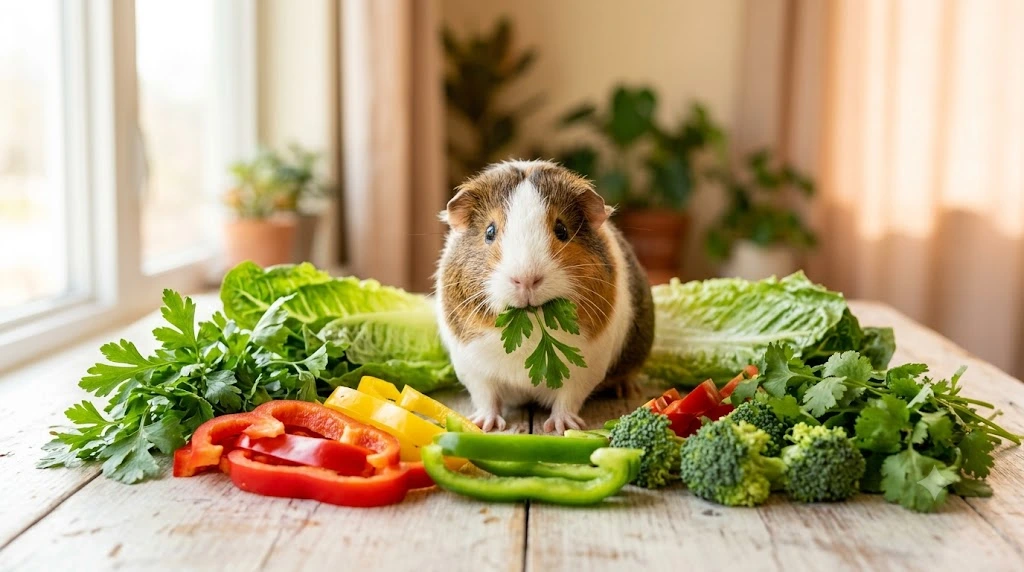
Fresh vegetables provide essential hydration, natural vitamins (especially Vitamin C), and mental stimulation. Aim for 1 cup of fresh vegetables per guinea pig daily, with a heavy emphasis on leafy greens.
Daily Leafy Greens (The Bulk of the Veggie Diet)
Leafy greens should make up about 80% of your pet’s daily vegetable portion. Always wash veggies thoroughly to remove pesticides.
- Romaine Lettuce: High in fiber and water. Avoid Iceberg lettuce as it lacks nutritional value and can cause severe diarrhea.
- Cilantro (Coriander): Excellent daily staple packed with Vitamin C and low in calcium.
- Green Leaf & Red Leaf Lettuce: Great options for daily rotation.
- Red and Green Bell Peppers (Capsicum): The absolute best daily source of natural Vitamin C. Remove the stem and seeds before serving.
Weekly Rotation Veggies (2–3 Times a Week)
These vegetables are nutrient-dense but contain higher levels of oxalic acid or calcium, which can cause bladder stones if fed daily.
- Kale & Spinach: Extremely high in Vitamin C, but also high in calcium and oxalates. Feed sparingly.
- Parsley: Rich in nutrients, but high in calcium. Best used as a weekly treat.
- Broccoli & Cauliflower: Good source of Vitamin C, but can cause painful intestinal gas if overfed.
- Carrots & Carrot Tops: High in sugar and Vitamin A. Serve small slices as an occasional treat.
- Cucumber: High water content; great for hot summer days, but offer in moderation to avoid loose stools.
6. Safe Fruits for Guinea Pigs (Treats Only)
Fruits should be treated as occasional rewards, offered no more than 1–2 times a week in very small portions (e.g., a single small cube). High sugar content can lead to obesity, dental issues, and imbalance in gut flora.
- Apples: Remove all seeds and the core (seeds contain trace amounts of cyanide).
- Strawberries & Blueberries: Excellent treats loaded with antioxidants and Vitamin C.
- Bananas: Serve tiny slices; high in sugar and potassium, and can cause constipation if overfed.
- Watermelon: A refreshing treat with rind included (wash thoroughly), but serve sparingly due to high sugar and water levels.
7. Feeding Guidelines & Portion Control Summary
To keep your cavies in peak condition, follow this daily serving reference:
| Food Category | Daily Portion | Frequency | Key Benefit |
| Timothy Hay | Unlimited | Constant Supply | Essential fiber & dental grinding |
| Fresh Water | Unlimited | Continuous Refresh | Hydration & organ function |
| Timothy Pellets | 1/8 Cup (2 tbsp) | Once Daily | Fortified Vitamin C & minerals |
| Leafy Greens | 1 Cup | Once Daily | Hydration & natural vitamins |
| Fresh Fruit | 1 Small Cube | 1–2 Times / Week | Occasional treat / Vitamin C boost |
8. Toxic & Dangerous Foods to Avoid
Certain common foods can cause severe toxicity, painful bloat, gastrointestinal stasis, or fatal organ failure in guinea pigs. Never feed your pet any of the following items:
- Onions, Garlic, Shallots, & Chives: Contain compounds that destroy red blood cells, leading to severe anemia.
- Potatoes & Potato Sprouts: Contain solanine, a poisonous compound that causes neurological and digestive failure.
- Avocado: High in fat and contains persin, which is toxic to small herbivores.
- Iceberg Lettuce: Contains no nutritional value, high water content, and laudanum-like compounds that cause severe diarrhea.
- Nuts, Seeds, & Dried Corn: Choking hazards high in fat and hard to digest.
- Chocolate, Coffee, & Caffeine: Causes fatal cardiac distress and seizures.
- Dairy, Meat, & Eggs: Guinea pigs are strict herbivores; their bodies cannot process animal proteins or lactose.
- Human Snacks & Processed Foods: Bread, crackers, cookies, and candy cause gut dysbiosis and obesity.
9. Monitoring Health Through Diet & Digestion
A guinea pig’s digestive system offers immediate feedback on their health status. Routine observation prevents minor issues from escalating into emergencies.
Weight Monitoring
Weighted scales are essential tools for pet parents. A weekly weight check helps identify subtle losses before physical symptoms appear. A drop of 2 to 3 ounces (50–90g) requires immediate veterinary attention.
Droppings (Poop) Analysis
- Healthy Droppings: Oval-shaped, uniform, firm, dark brown, and consistent in size.
- Unhealthy Droppings: Teardrop-shaped, soft, clumped, or watery stools indicate intestinal distress, lack of fiber, or bacterial imbalances.
Signs of Scurvy (Vitamin C Deficiency)
- Swollen or painful joints leading to a hopping gait.
- Loss of appetite and weight loss.
- Rough, dull coat and bleeding gums.
10. Conclusion & Final Care Tips
Maintaining a healthy guinea pig comes down to strict consistency. By providing unlimited Timothy hay, a small daily cup of Vitamin C-rich vegetables like bell peppers, controlled pellet portions, and fresh water, you ensure your pet thrives for 5 to 7 years. Always introduce new vegetables gradually to prevent stomach upset, and …consult an exotic veterinarian if your guinea pig ever stops eating for more than 12 hours. If you notice any unusual behavior or want to know what else to watch out for, check our guide on how to tell if your guinea pig is sick.