Dog food storage refers to the systems, containers, and organizational strategies used to keep pet food fresh, pest-free, and easily accessible in your home. This article gives you 17 smart dog food storage ideas covering containers, cabinet solutions, labeling, small-space hacks, and multi-pet setups so your feeding station finally works as hard as you do.
There’s a particular kind of quiet satisfaction in a feeding area that actually makes sense — where the scoop is always where you left it, the kibble stays fresh, and the whole corner of your laundry room or kitchen doesn’t look like an afterthought. Dog food storage done right sits at the intersection of function and calm: a system so logical it becomes invisible. Whether you’re managing one small dog or three large ones, the right storage setup changes the daily rhythm of pet care entirely. Here are 17 ideas worth saving — and stealing.
Why Smart Dog Food Storage Works So Well
Intentional dog food storage draws from the same principles as professional kitchen organization — FIFO (first in, first out) rotation, airtight preservation, and dedicated zones for each function. The practice gained serious momentum during the 2007 pet food recall crisis, when pet owners became acutely aware of how storage conditions affect food safety. Since then, the design world has responded with storage solutions that are as considered as any kitchen canister set.
The materials that perform best for dog food storage are specific: food-grade BPA-free polypropylene or stainless steel for airtight containers, powder-coated steel or solid bamboo for cabinet and shelf structures, and natural cotton canvas or linen for soft storage bags used with sealed inner containers. For labeling, matte chalkboard vinyl or laser-engraved acrylic are the two finishes that hold up to daily handling in a pet feeding zone. Color palettes in well-organized pet corners tend toward warm neutrals — warm white cabinetry, natural bamboo, matte black hardware, and kraft paper labels.
The trend toward intentional pet spaces is unmistakably current. Pinterest searches for “dog feeding station ideas” and “pet food storage organization” have surged alongside the broader home organization movement, driven by the influence of professional organizers and a post-pandemic focus on every corner of the home earning its keep. Pets are increasingly treated as full household members deserving of considered, designed spaces rather than tucked-away afterthoughts.
Small homes and apartments can absolutely achieve excellent dog food storage — the key is vertical thinking. Wall-mounted dispensers, stackable containers, and drawer pull-outs inside existing cabinets make compact feeding stations possible in even the tightest utility corners or kitchen nooks.
Style at a Glance
| Element | Detail |
|---|---|
| Philosophy | Every item has a home; freshness and access are equally prioritized |
| Key Materials | Food-grade BPA-free plastic, stainless steel, bamboo, powder-coated steel |
| Key Colors | Warm white, natural bamboo, matte black, kraft brown |
17 Smart Dog Food Storage Ideas to Keep Things Organized
1. Airtight Flip-Top Canister with Built-In Scoop Holder
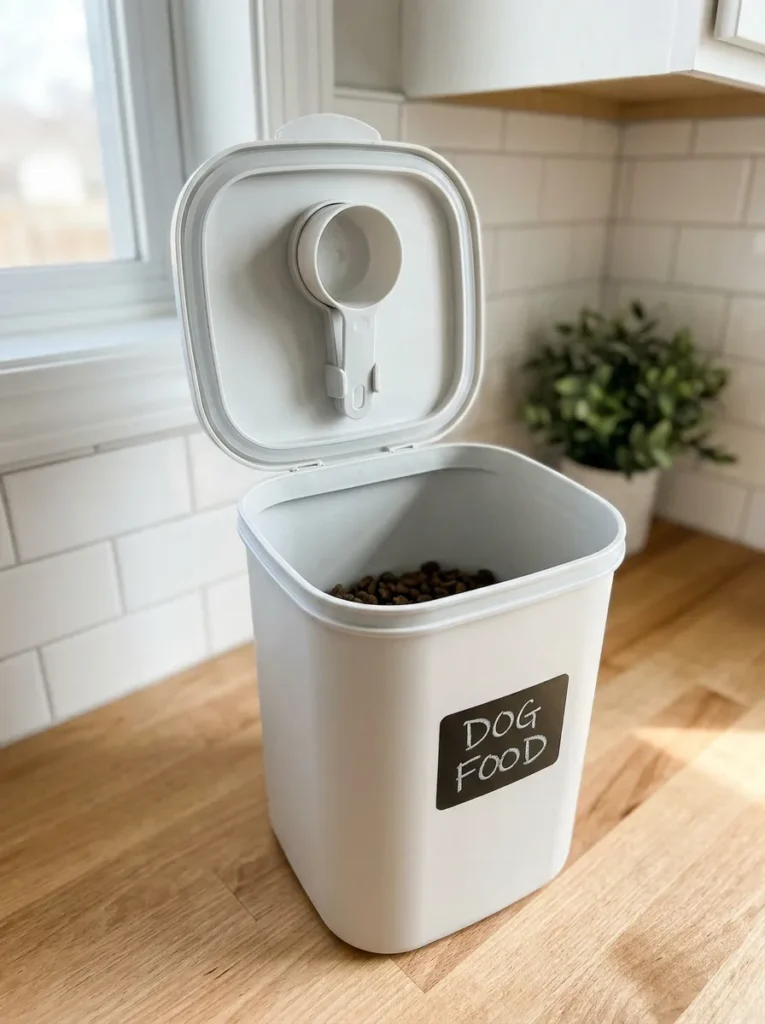
Vibe: The setup is efficient — everything needed for one feeding in a single, contained unit that closes with a satisfying snap.
Why it works: An airtight seal is the single most important factor in maintaining kibble freshness — oxidation and moisture are the two primary causes of fat rancidity in dry dog food, and a silicone-gasketed flip-top lid addresses both. Keeping the scoop clipped inside the lid eliminates the most common feeding station frustration: a scoop that migrates to the wrong drawer or gets buried in the bag. The contained system also prevents cross-contamination from other pantry items.
How to get it: Look for canisters rated food-grade with a silicone (not rubber) gasket — silicone maintains its seal through repeated open-close cycles without degrading. Gamma2 Vittles Vault and Iris USA Airtight containers both meet this spec and come in sizes from 15 to 69 pounds of kibble capacity.
💡 Quick Win: A simple chalkboard label sticker on the front ($8 for a pack of 20) lets you write the food brand, expiration date, and scoop size with chalk marker — erasable when you switch foods.
Shop The Look
- Airtight dog food storage container flip top BPA free
- Clip-on measuring scoop set pet food
- Chalkboard adhesive label stickers round
- Chalk marker white fine tip
- Silicone gasket replacement lid set food storage
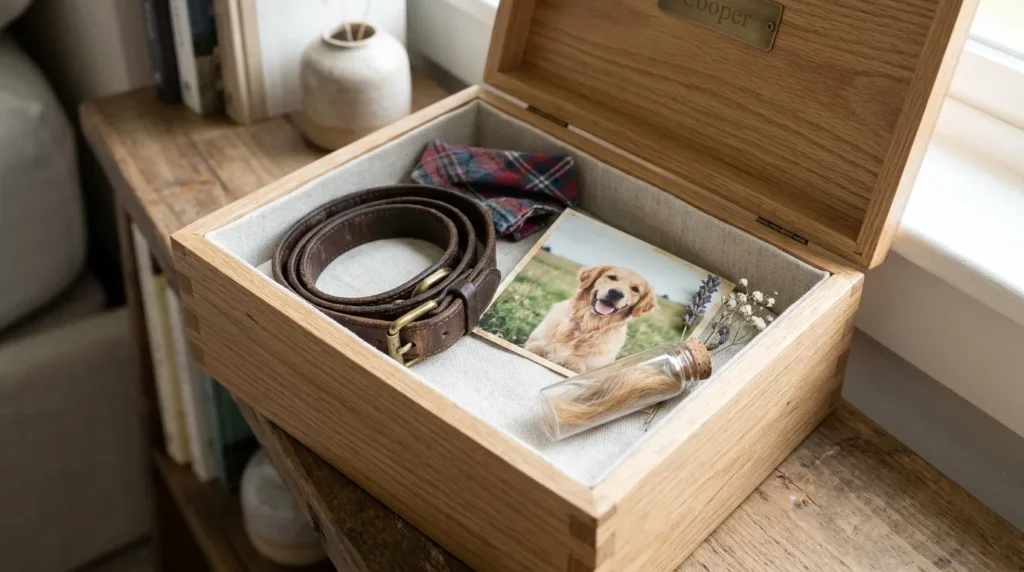
Also view: 14 Clever Dog Memorial Ideas to Honor Your Beloved Pup
2. Rolling Pet Food Bin with Locking Lid and Wheels
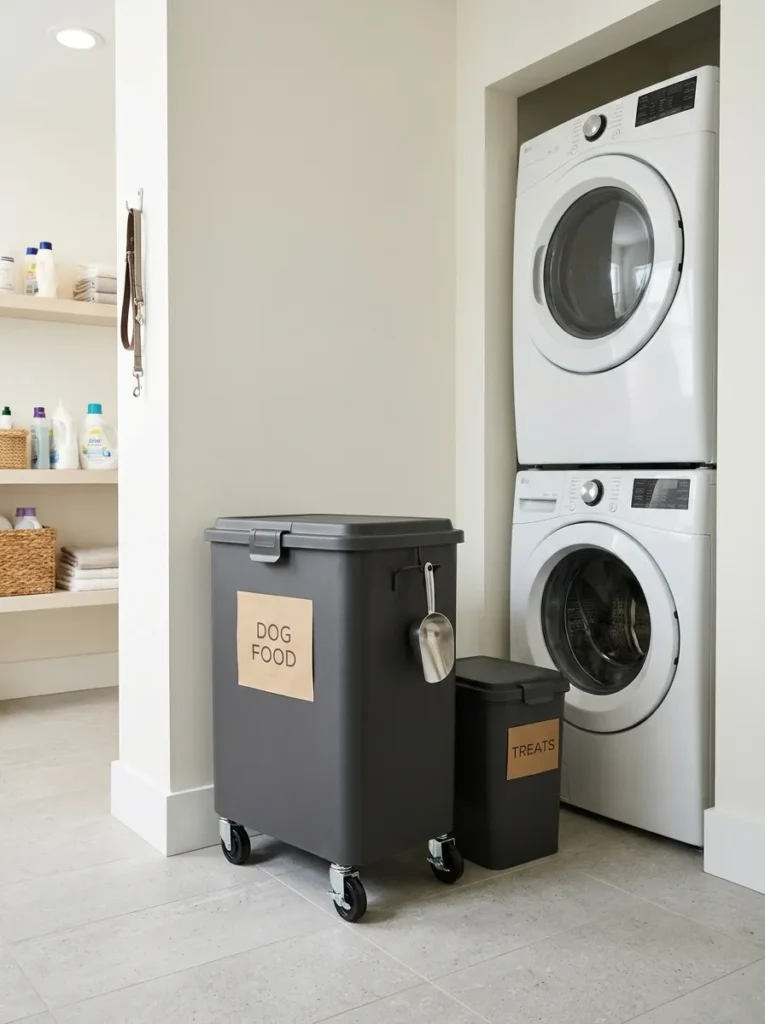
Vibe: The utility corner feels purposeful — a large bin on wheels that moves when you need it and locks when you don’t, keeping a big-dog household running smoothly.
Why it works: Large breed owners dealing with 30–50 pound bags face a specific challenge: decanting the entire bag into a container without losing kibble or straining the container lid. A rolling bin solves this by allowing you to wheel it to the bag’s location for filling, rather than carrying the bag to a fixed container. The locking lid prevents canine counter-surfers and children from accessing the food between scheduled feedings — a genuine safety and portion-control advantage.
How to get it: Choose bins with a capacity rated 10–15% above your bag size to ensure the full bag fits without compression — compressed kibble at the bottom of an overfilled container breaks down faster. IRIS USA and Buddeez both make rolling bins with genuine locking lids (not just press-fit) in 50-pound and 65-pound capacities.
Shop The Look
- Large rolling dog food storage bin locking lid 50lb
- Swivel caster wheels replacement set 4 pack
- Kraft paper adhesive label roll pantry
- Small treat storage bin matching set pet
- Airtight food safe bin liner bags large
3. Cabinet Pull-Out Drawer Dog Food Station
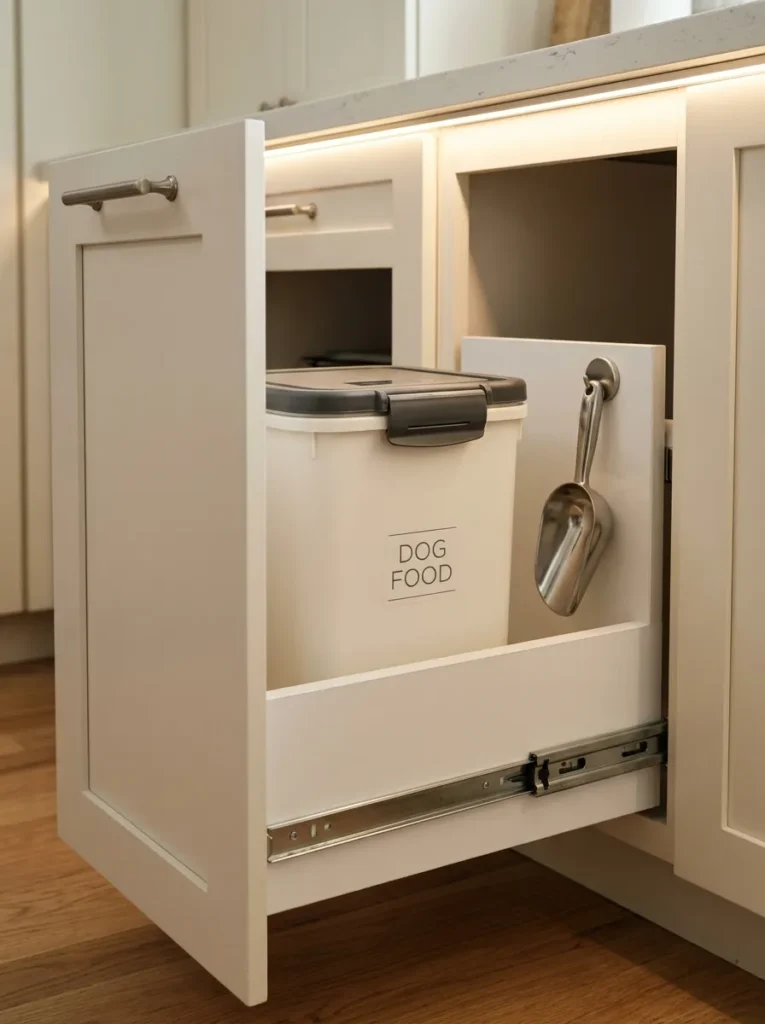
Vibe: The kitchen feels uninterrupted — the dog food station disappears entirely behind a cabinet door and reveals itself only when needed.
Why it works: Concealing dog food storage inside a dedicated pull-out drawer integrates the feeding station into the kitchen’s existing design language without any visual disruption. Full-extension soft-close drawer slides are essential here: they allow you to access the full depth of the container and prevent the drawer from slamming, which can startle dogs mid-meal. The airtight container inside the drawer provides food freshness independent of the cabinet’s ambient humidity.
How to get it: Retrofit an existing base cabinet with a Rev-A-Shelf pull-out drawer organizer (model RV-15PET-L fits a 15-inch cabinet opening) — no new cabinetry required, just removing the existing shelf and installing the pull-out hardware on the cabinet floor with four screws.
💡 Quick Win: A magnetic hook ($6) mounted to the inside wall of the pull-out drawer holds the scoop in place — the magnet holds through repeated opening and closing without the scoop sliding around.
Shop The Look
- Rev-A-Shelf pull-out pet food cabinet drawer
- Soft close full extension drawer slides pair
- Stainless steel measuring scoop dog food
- Magnetic adhesive hook set strong hold
- Under cabinet LED strip light warm white
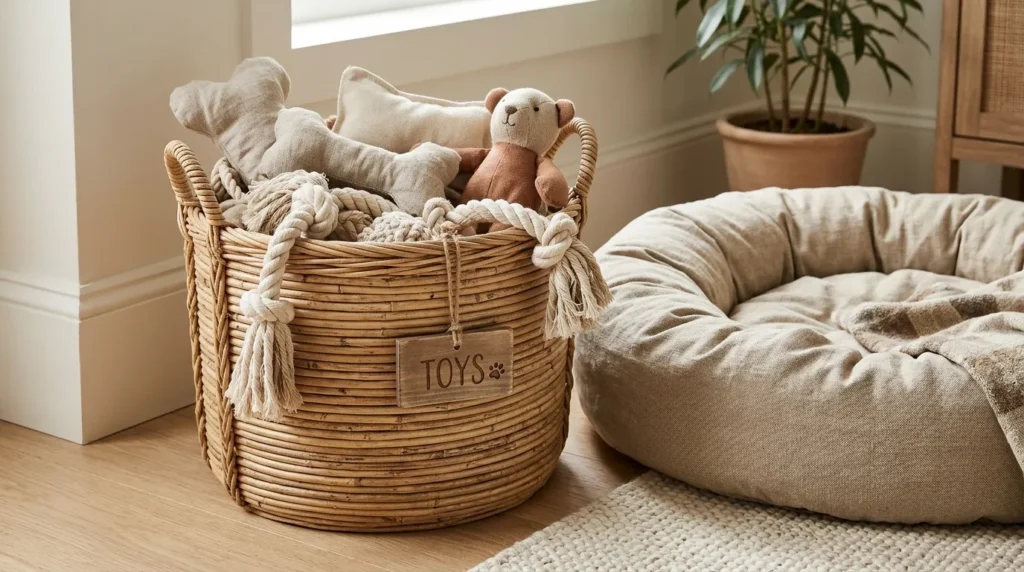
4. Wicker Basket with Inner Sealed Liner for Living Room Feeding Areas
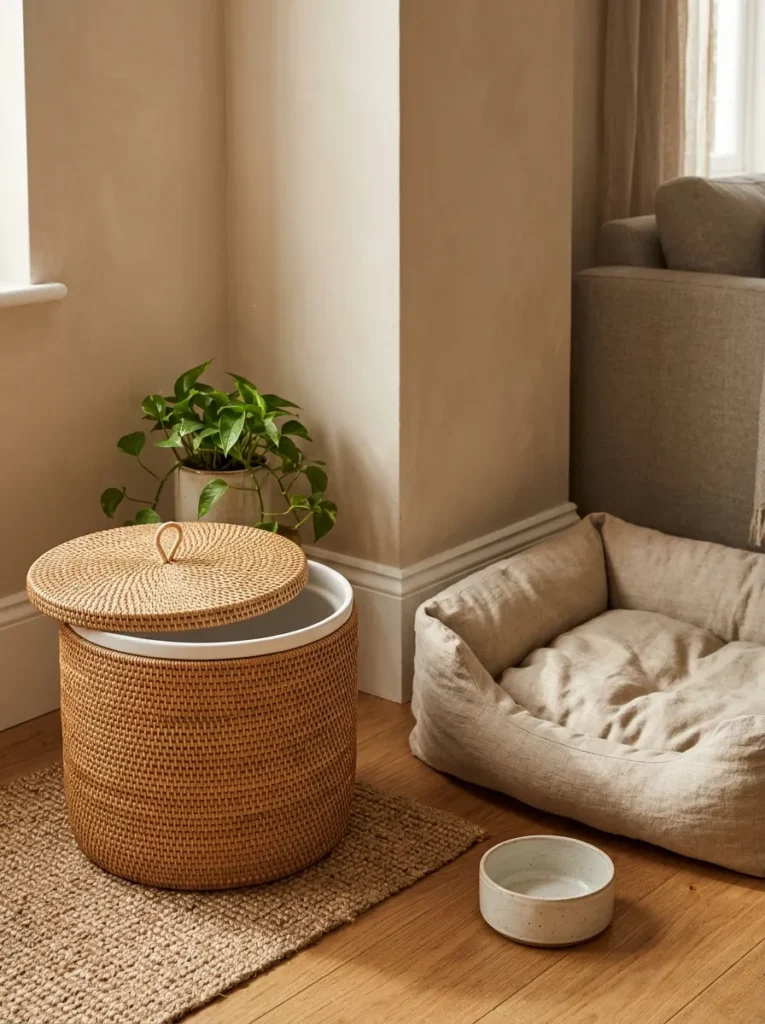
Vibe: The corner is home-integrated — the storage looks like intentional decor, not a pet supply depot in the middle of your living space.
Why it works: The wicker-over-liner system solves the core tension of living room dog food storage: airtight food preservation requires a sealed plastic or metal container, but sealed plastic containers look utilitarian in a designed room. Nesting the functional container inside a decorative basket achieves both goals. The basket’s natural fiber texture reads as home decor; the sealed liner inside does the actual preservation work. This double-container approach also adds an insulation layer that slows temperature fluctuation in rooms with variable climate control.
How to get it: Measure the inner diameter of your chosen wicker basket before purchasing an insert container — aim for a liner that fits with 1–2 inches of clearance on each side so it lifts out easily for refilling. Round food-grade buckets with gamma-seal lids ($18–$25) fit most standard large baskets and seal more reliably than square containers in round baskets.
Shop The Look
- Large natural wicker storage basket with lid
- Round food grade bucket gamma seal lid 5 gallon
- Ceramic dog bowl set elevated stand
- Oat linen dog bed washable cover
- Jute mat small natural fiber doormat
5. Wall-Mounted Gravity Feeder with Storage Hopper
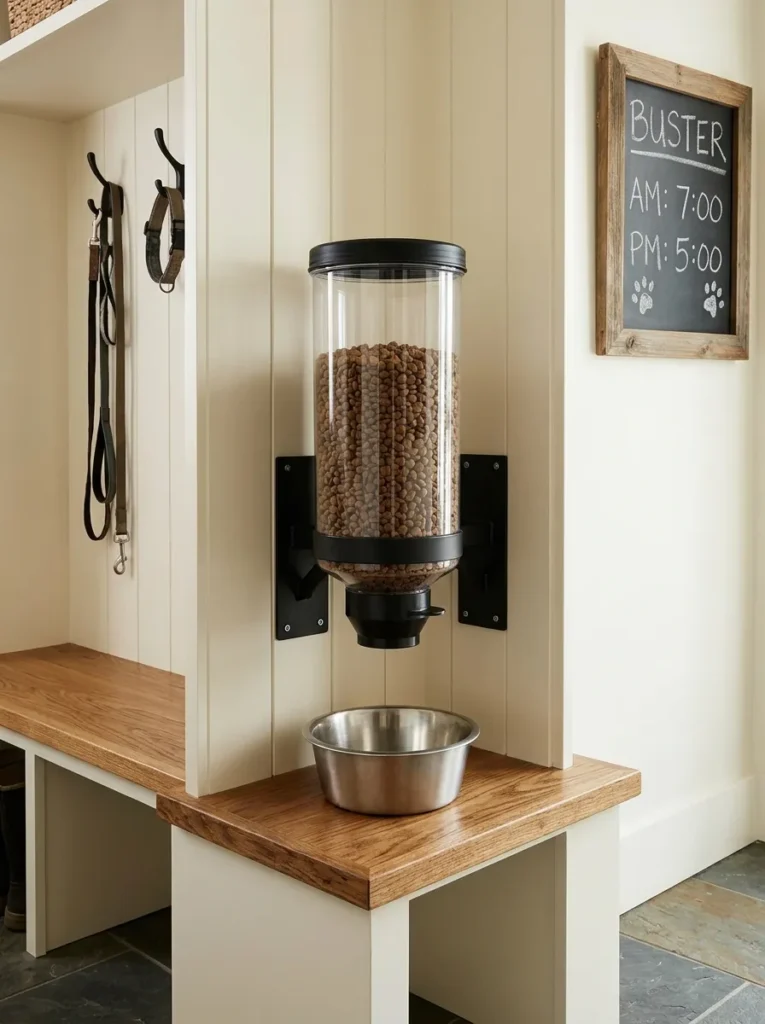
Vibe: The mudroom station is streamlined — the wall-mounted system keeps everything off the floor and organized in a dedicated column that takes almost no horizontal space.
Why it works: Wall-mounting the food storage hopper frees up floor space entirely — critical in narrow mudrooms or laundry rooms where floor square footage is already at a premium. Gravity feeders work on a simple fill-from-top, dispense-from-bottom principle that keeps older kibble moving out first (a passive FIFO system), preventing stale food from accumulating at the bottom of a deep container. The clear hopper also provides an immediate visual inventory check without opening anything.
How to get it: Mount the bracket into wall studs rather than just drywall anchors — a full hopper of kibble can weigh 15–20 pounds, and drywall anchors will fail over repeated refills. Use a stud finder, locate two adjacent studs, and bolt the bracket through both for a secure installation that holds regardless of hopper weight.
💡 Quick Win: A chalkboard paint rectangle ($12 of paint on the wall) beside the feeder creates a permanent meal-schedule board — write portions and times in chalk marker and update as your dog’s diet changes.
Shop The Look
- Wall mounted gravity pet food dispenser clear hopper
- Matte black wall bracket shelf mount set
- Stainless steel dog bowl non-slip base
- Chalkboard paint small can black
- Leash hook set wall mount matte black
6. Stackable Labeled Canisters for Multi-Pet Households
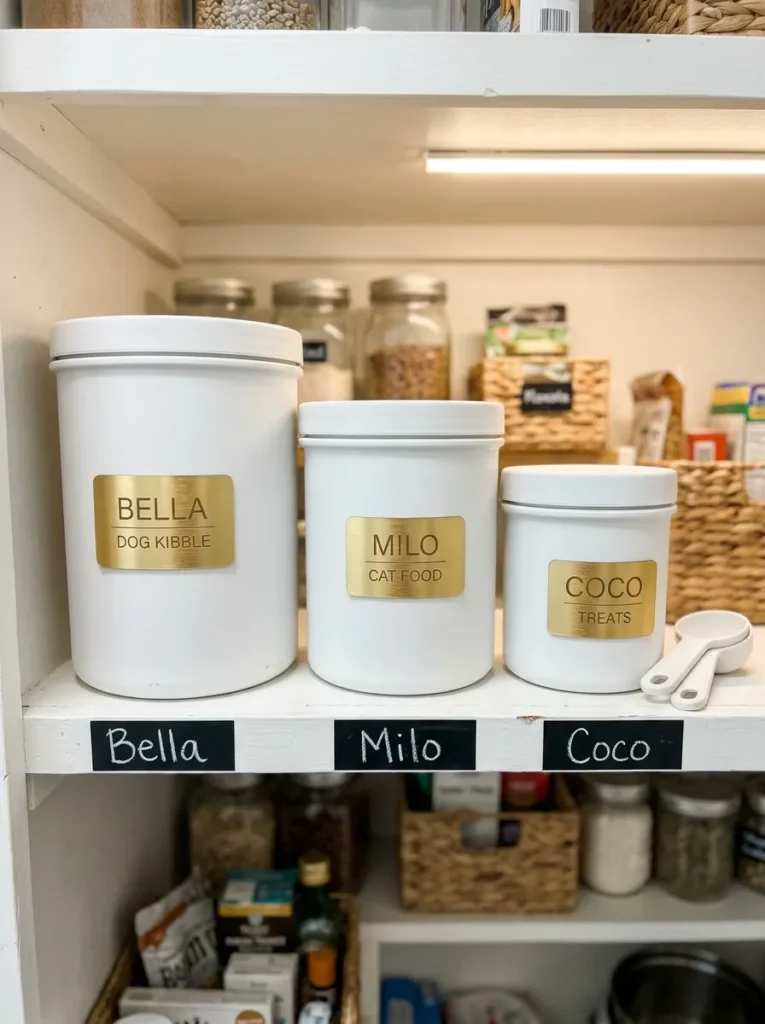
Vibe: The pantry shelf is personal — each pet’s food clearly identified and portioned, with no guessing and no cross-contamination between different diets.
Why it works: Multi-pet households face a specific storage problem that single-container solutions don’t address: different animals often eat different foods, different portions, or different feeding schedules. Matching stackable canisters with clear individual labels solve all three problems — visual identification is instant, stacking maximizes vertical shelf space, and the matched set creates a visual calm that a collection of mismatched bags never achieves. Acrylic labels with engraved text outlast paper labels by years in a high-humidity pantry environment.
How to get it: Order custom laser-engraved acrylic labels on Etsy ($12–$20 per set of three) sized to fit the canister front. For stackable canisters, the OXO Good Grips POP container range is the most reliable for true stacking — the lids interlock flat and don’t shift when stacked three or four units high.
Shop The Look
- OXO Good Grips POP airtight canister set stackable
- Custom acrylic pet name label engraved gold
- White matching dog food scoop set
- Pantry shelf liner white non-slip
- Stacking canister label holder clip set
7. Dedicated Dog Feeding Station Cabinet with Drawer
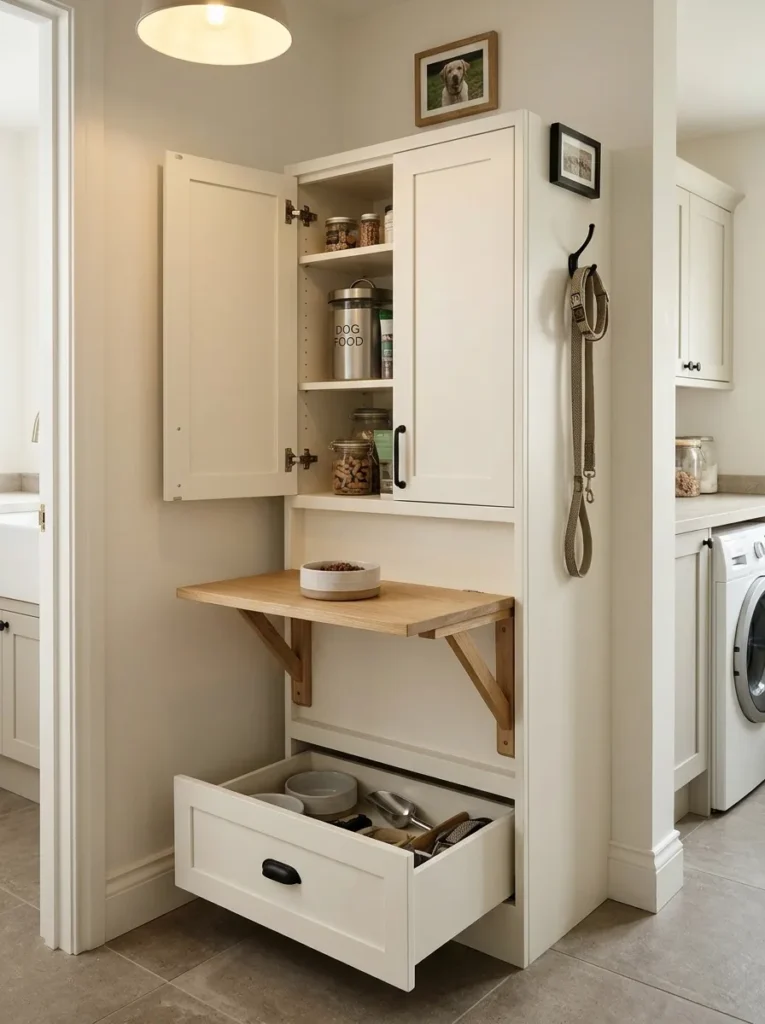
Vibe: The feeding zone is contained — a single cabinet that opens to a complete, ready feeding station and closes to a clean wall surface.
Why it works: A dedicated feeding cabinet consolidates every feeding-related item — food, bowls, scoops, treats, supplements — into a single vertical footprint. The fold-down shelf is the key element: it creates a temporary feeding surface at exactly the right height for your dog without permanently occupying floor space. This system works especially well in laundry rooms and mudrooms where a dog feeding area needs to coexist with other functions without visual conflict.
How to get it: A standard 12-inch-deep wall cabinet from IKEA’s SEKTION range, mounted at counter height, accepts a pull-out interior shelf on simple shelf pins and provides the upper storage cavity for a canister. Add a fold-down shelf bracket ($28, Rockler Hardware) at mid-height on the outside for the bowl surface.
💡 Quick Win: A small S-hook rack mounted inside the cabinet door ($9) holds scoops, can toppers, and a leash without adding any interior clutter — everything visible and accessible in two seconds.
Shop The Look
- White Shaker style wall cabinet 12 inch deep
- Fold down shelf bracket wall mount oak
- Ceramic pet bowl set with non-slip base
- S hook rail organizer cabinet door mount
- Matte black cabinet hardware pull set
8. Freeze-Dried and Raw Food Drawer Freezer Organization
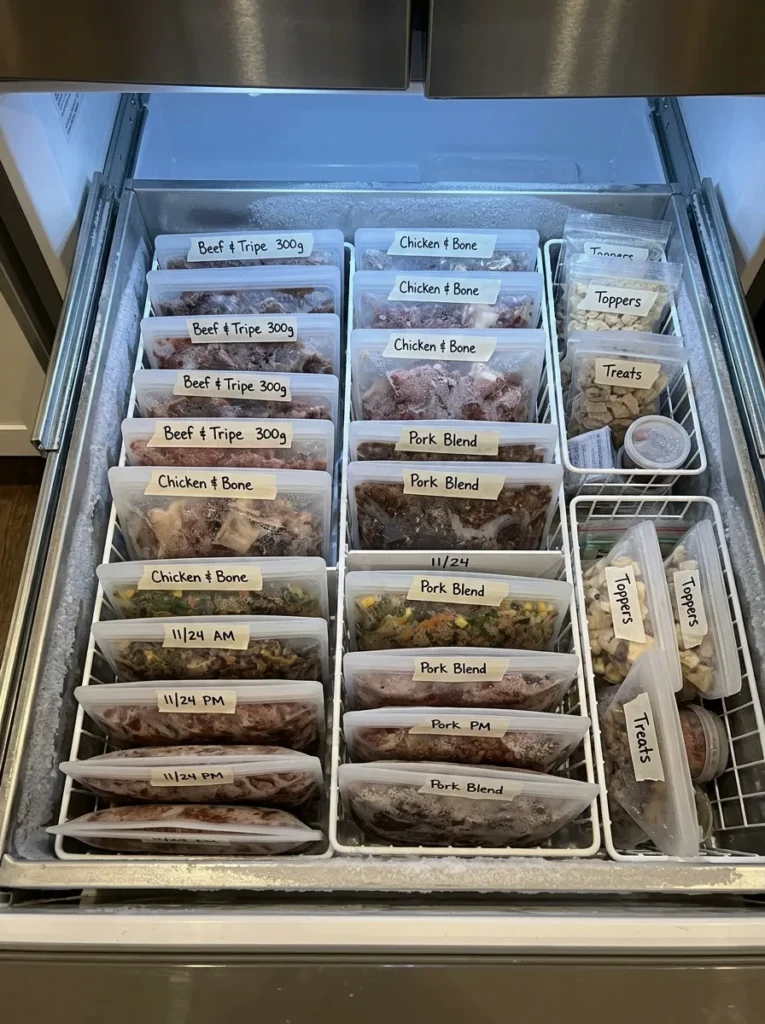
Vibe: The freezer drawer is methodical — pre-portioned meals lined up in rows like a meal-prep system that removes daily decision-making from the feeding routine.
Why it works: Raw and freeze-dried dog food diets require a fundamentally different storage approach than kibble — freezing in individual meal portions eliminates the thaw-and-refreeze cycle that degrades protein quality and food safety. Standing silicone bags upright in freezer drawer dividers mimics the file-folder principle from office organization: you can read every label at a glance without digging. Pre-portioning also prevents overfeeding by removing estimation from the daily routine.
How to get it: Portion raw food into individual meal bags immediately after purchasing — weigh each portion on a kitchen scale to the gram, label with the date and meal weight, and freeze flat before standing upright. Stasher brand reusable silicone bags work best here: they’re freezer-safe, lay flat for initial freezing, and stand upright once frozen solid.
Shop The Look
- Reusable silicone zip freezer bag set large
- Freezer drawer divider organizer set
- Kitchen food scale digital gram precise
- Label tape white roll with dispenser
- Black permanent marker fine tip waterproof
9. Labeled Treat Jars on Open Pantry Shelf
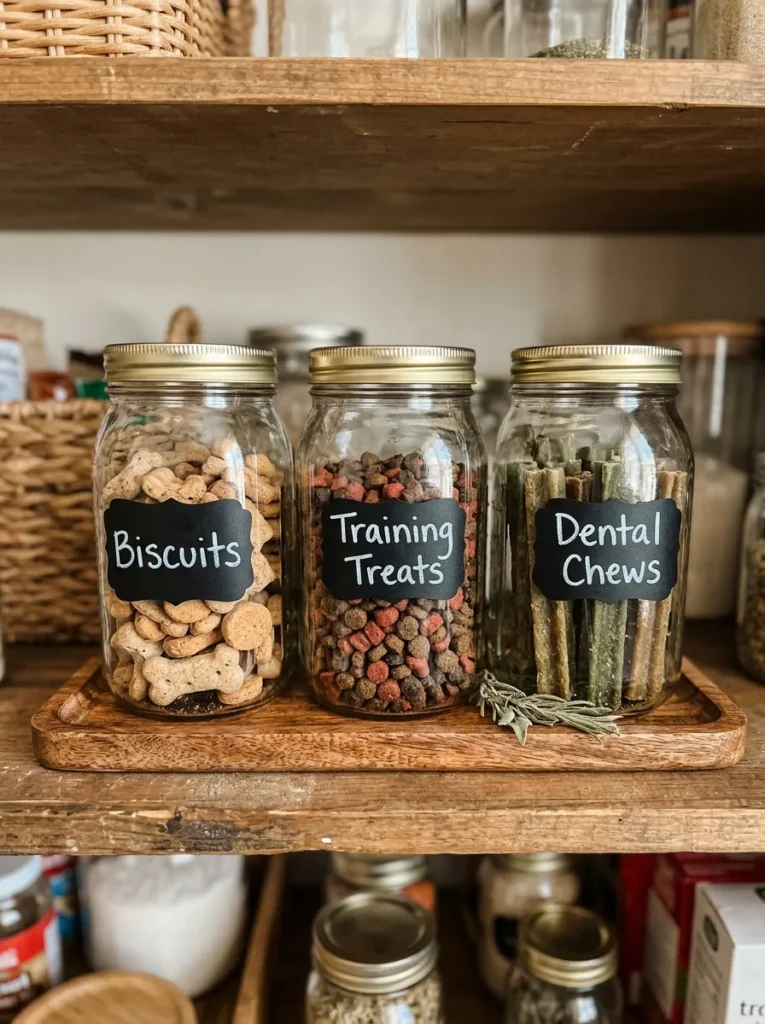
Vibe: The shelf is curated — treat jars that look like a beautiful pantry display and function as a perfectly organized training supply station.
Why it works: Glass mason jars with airtight lids maintain treat freshness better than the original plastic packaging, which typically can’t be resealed effectively after opening. Grouping the jars on a small wooden tray applies the tray-as-anchor principle from interior styling — it defines the treat station as a deliberate zone rather than a collection of random jars. Clear glass provides instant visual inventory without opening anything, which matters during training sessions when you need a treat in under two seconds.
How to get it: Wide-mouth 32-oz mason jars (Ball brand) with gold metal lids work for most treat sizes — for small training treats, use 16-oz jars so the treats don’t pile so deep that the bottom layer goes stale before you reach it. Chalkboard label stickers ($8 for 40) in an oval or rectangle shape sized for mason jar fronts are the clean labeling solution.
💡 Quick Win: A small wooden serving tray ($15–$22 at HomeGoods) groups the jars into a defined station that can be lifted as one unit to wipe the shelf underneath — easy cleaning is the secret to a system that stays organized long-term.
Shop The Look
- Wide mouth mason jar 32oz set of 4
- Brushed gold mason jar lid set wide mouth
- Chalkboard oval label stickers adhesive
- Small wooden serving tray rectangular
- Chalk marker white medium tip erasable
10. Under-Stair Dog Food Storage Nook
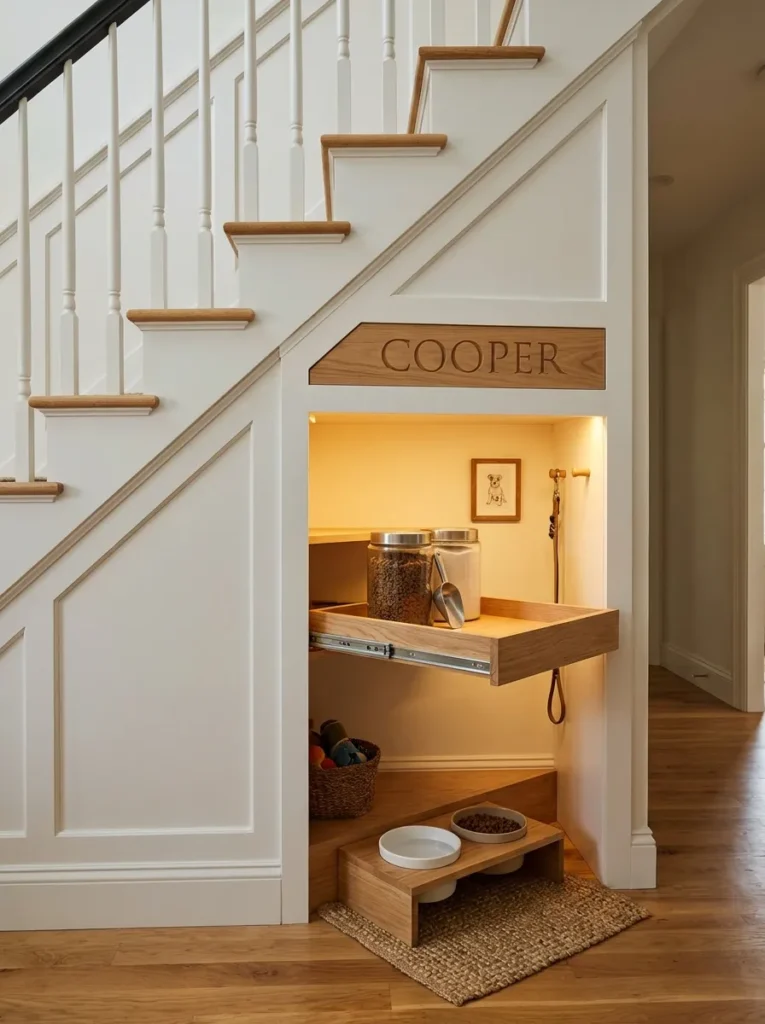
Vibe: The under-stair space is inventive — dead triangular square footage converted into the most charming feeding station in the house.
Why it works: Under-stair spaces are among the most commonly wasted volumes in a home, and their triangular geometry — tall at one end, low at the other — maps almost perfectly to dog feeding station needs: tall end for food storage containers, low end for floor-level bowls and mats. Recessed LED lighting inside the nook solves the darkness problem inherent to under-stair spaces and makes the feeding area genuinely functional rather than just conceptually clever.
How to get it: Frame the under-stair opening with simple painted MDF casing, install a pull-out shelf on full-extension slides at mid-height for the food container, and mount a small strip of recessed puck lights ($35, hardwired or battery-operated) along the ceiling of the nook for visibility. The bowl area at the base stays open — no door — for unobstructed pet access.
Shop The Look
- Under stair pull out shelf kit full extension
- Battery operated LED puck lights set 6
- Rolling food storage bin small under 30lb
- Woven jute mat small natural fiber
- Engraved pet name wooden plaque wall mount
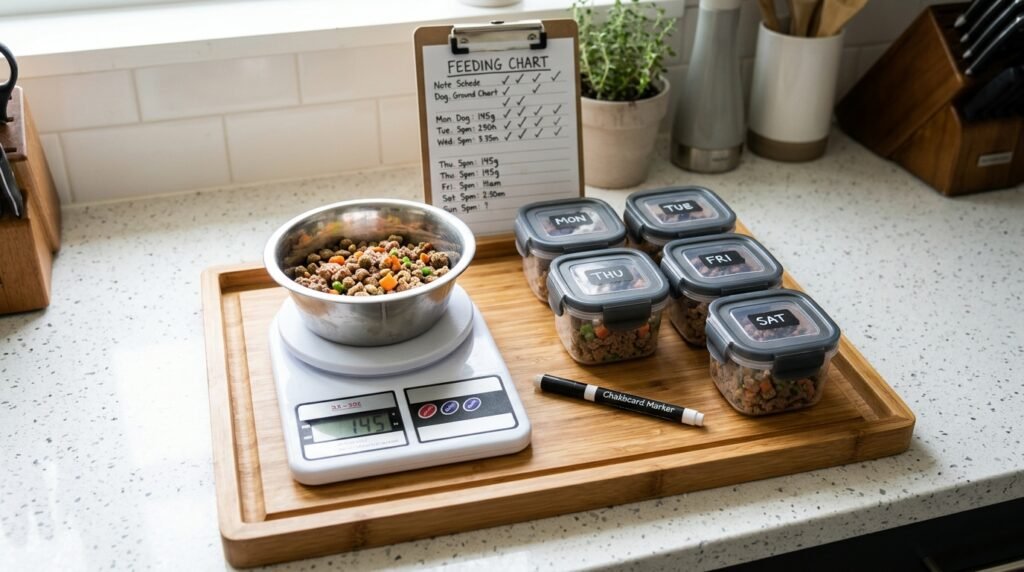
11. Meal Prep Station with Portion Scale and Container Set
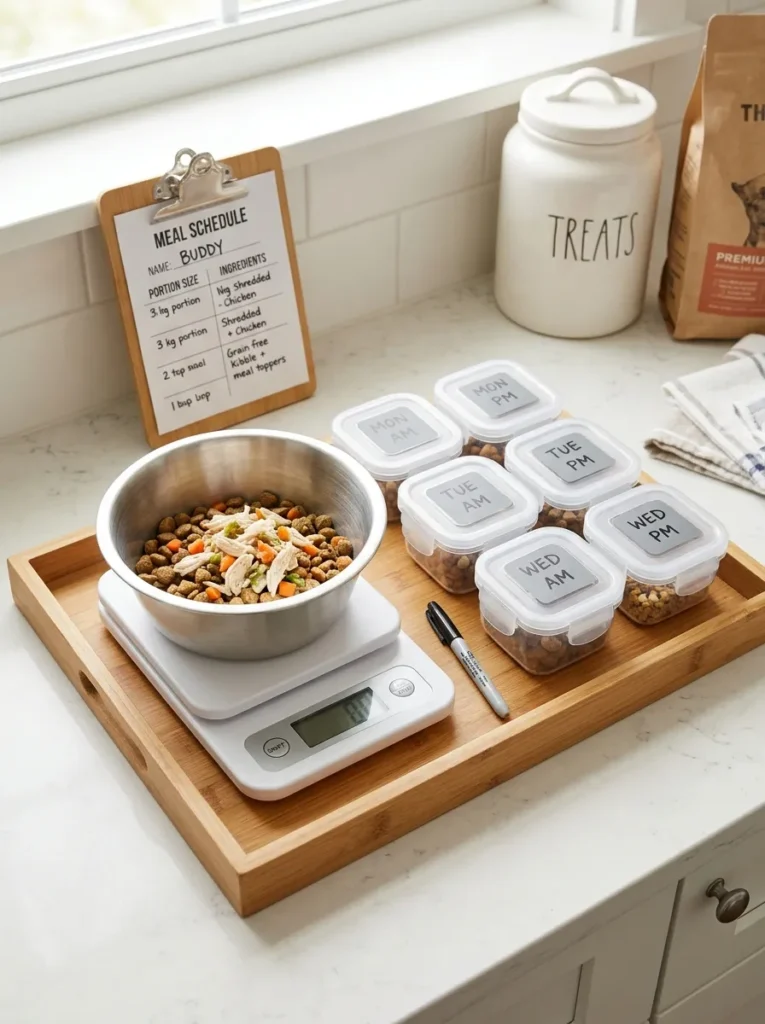
Vibe: The counter station is systematic — a weekly meal prep ritual that eliminates daily measuring and makes consistent portion control effortless.
Why it works: Pre-portioning a week of meals removes the daily friction of measuring, which is the point at which most pet feeding routines break down and overfeeding creeps in. A kitchen scale accurate to 1 gram is the essential tool here — volume measuring with scoops varies significantly depending on kibble size and how tightly packed the scoop is, whereas weight is precise and repeatable every time. The bamboo tray as a base corrals the entire prep station into one liftable zone that stores in a cabinet after Sunday prep.
How to get it: Use the OXO Good Grips 11-pound digital scale (accurate to 1 gram, with a tare function for weighing the bowl separately) and a set of six small square airtight containers (Sistema or Rubbermaid Brilliance both stack perfectly) — prep Sunday through Saturday’s portions in 15 minutes, label each lid with the day, and refrigerate or leave at room temperature depending on food type.
💡 Quick Win: A printed or laminated feeding chart ($0 — design in Canva, print at home) taped inside a cabinet door near the prep station eliminates the daily mental load of remembering portion sizes for different meal types and life stages.
Shop The Look
- Digital kitchen scale white gram accurate
- Small airtight food container set 6 piece
- Bamboo serving tray with handles kitchen
- Stainless steel mixing bowl set small
- Laminating pouches letter size for charts
12. Vintage Metal Tin Dog Food Storage for Farmhouse Kitchens
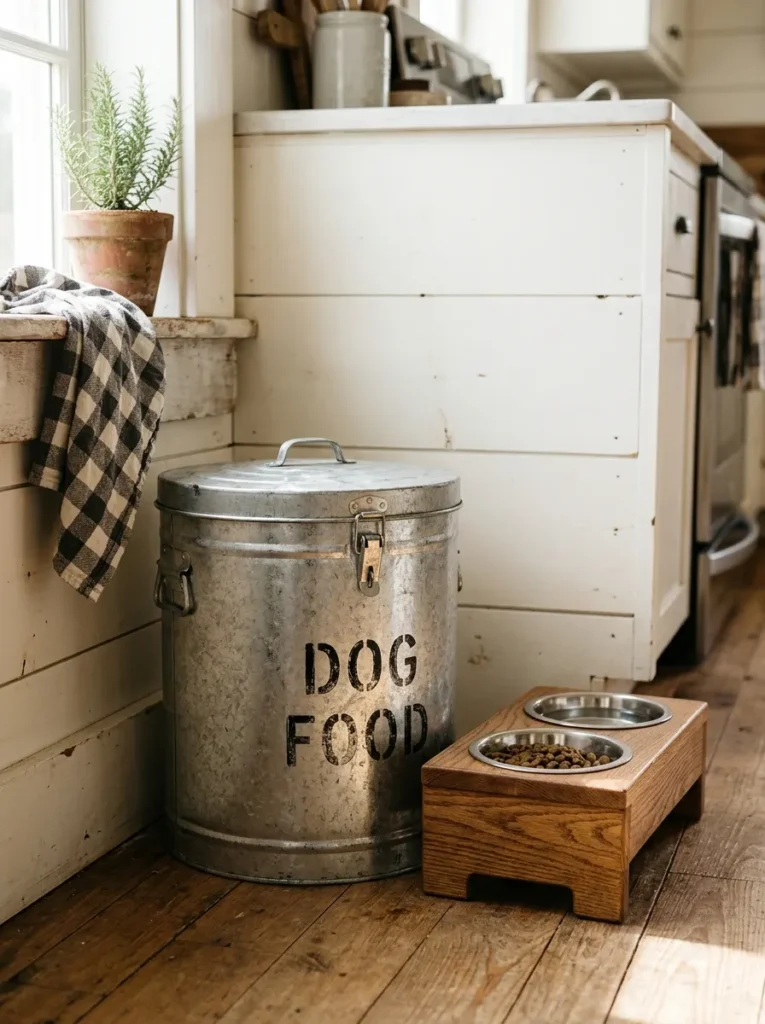
Vibe: The farmhouse corner is grounded — a galvanized tin that looks like it belongs in the space and has always been there, not like a concession to pet logistics.
Why it works: Galvanized steel tins naturally match the material language of farmhouse kitchens — the same galvanized metal used in watering cans, lanterns, and vintage canisters throughout the style. Metal also provides a complete pest barrier: rodents cannot chew through galvanized steel the way they can through cardboard bags or thin plastic containers, which matters in older farmhouse homes. The hinged lid with a clasp provides a genuine seal while maintaining the aesthetic.
How to get it: Line the interior of the galvanized tin with a food-grade HDPE liner bag ($12 for a pack of ten) — galvanized metal is food-safe but unlined metal can impart a faint metallic note to stored kibble over time. Change the liner with each new bag of food. Look for tins with at least a 20-pound capacity — smaller tins require too-frequent refills for large breed owners.
Shop The Look
- Galvanized metal storage tin hinged lid large
- Food grade HDPE liner bag set large
- Elevated wooden dog bowl stand farmhouse
- Buffalo check cotton kitchen towel set
- Black stencil paint kit alphabet letters
13. Pegboard Pet Supply Wall Organizer
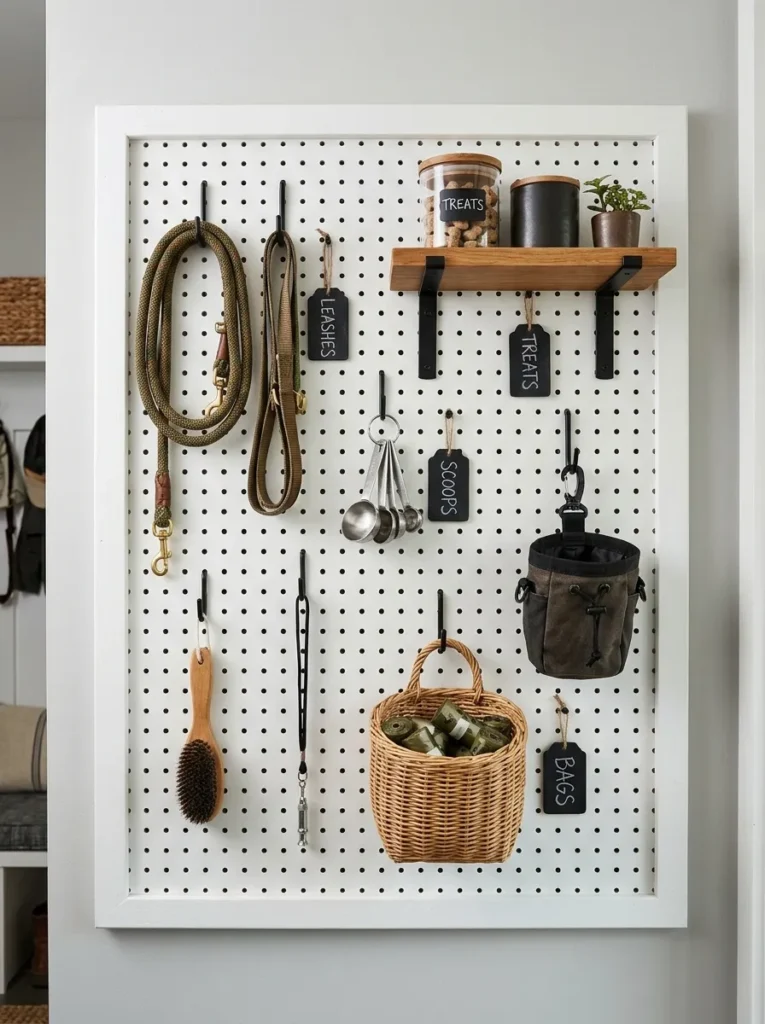
Vibe: The wall feels active — every tool for the dog’s daily routine visible, accessible, and returned to the same spot every time.
Why it works: Pegboard organization applies the visual management principle from professional kitchens and workshops: when tools are visible and have designated spots, they get returned correctly and located instantly. For dog care supplies — scoops, treat pouches, leashes, waste bag dispensers, supplement bottles — a pegboard wall near the feeding area or mudroom door consolidates the entire routine into one vertical surface. Painting the pegboard the same color as the wall makes it feel integrated rather than industrial.
How to get it: Mount the pegboard 1 inch off the wall using 1-inch standoffs — this creates the clearance needed for standard pegboard hooks to insert and remove freely. Paint with a semi-gloss for wipe-ability. Purchase a starter kit of assorted matte black hooks (Amazon Basics pegboard hook set, $18) rather than buying individual hook types before knowing what you need.
💡 Quick Win: Small chalkboard hang-tags ($10 for 20) tied to each hook zone label the station so any household member knows exactly what goes where — the system stays organized even when you’re not the one using it.
Shop The Look
- White pegboard panel wall organizer kit
- Matte black pegboard hook assorted set
- Small pegboard shelf attachment set
- Chalkboard hang tag label set with string
- Small airtight treat canister clear lid
14. Drawer Divider System for Wet Food Cans and Toppers
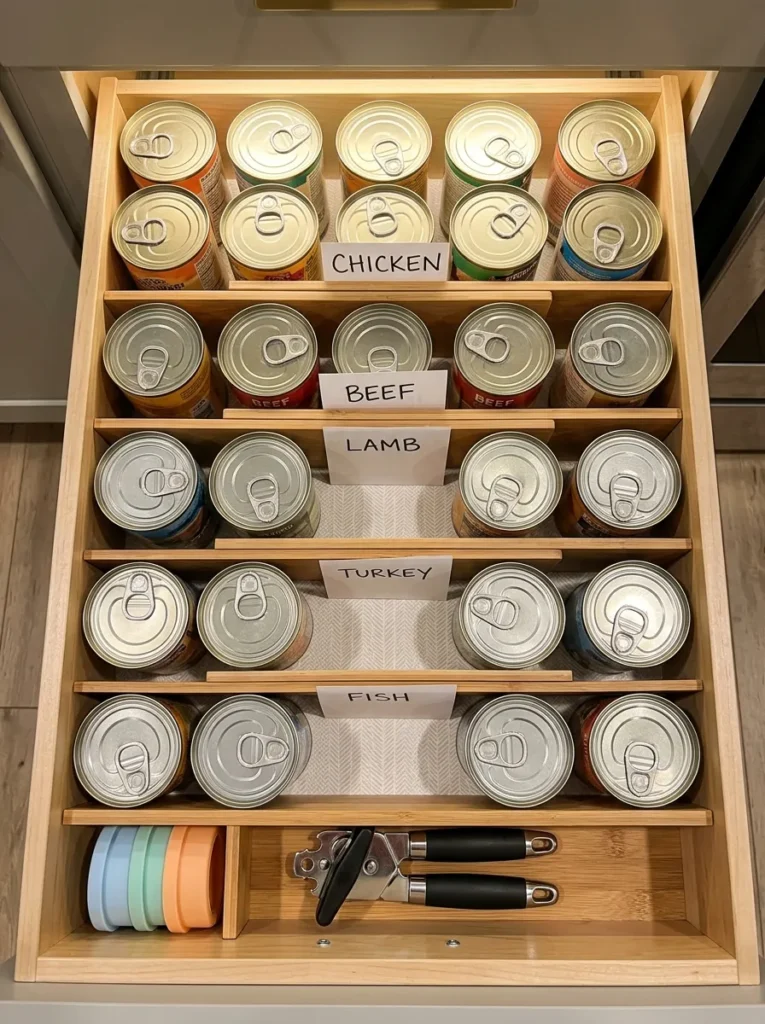
Vibe: The drawer is methodical — cans arranged label-side up by protein type so a 6am feeding requires zero thinking and zero searching.
Why it works: Storing wet food cans in a deep drawer (rather than a pantry shelf) applies the same label-up principle used in professional kitchens: every item readable at a glance from above without moving anything else. Bamboo drawer dividers allow the drawer to be reorganized as inventory changes and maintain the FIFO rotation principle — new cans go in the back, older cans stay at the front. The dedicated can opener in the same drawer eliminates the most common wet food feeding friction: hunting for the opener while a hungry dog circles your feet.
How to get it: Measure your drawer’s interior before ordering dividers — expandable bamboo dividers (Bambüsi brand, expandable from 10 to 17 inches) adjust to fit drawers from small to deep. Line the drawer with a non-slip silicone liner first so cans don’t slide into the dividers when the drawer opens and closes.
Shop The Look
- Bamboo expandable drawer divider set kitchen
- Non-slip silicone drawer liner roll
- Silicone can cover set pet food sizes
- Manual can opener smooth edge safety
- White index card set small label size
15. Countertop Elevated Feeding Station with Hidden Storage
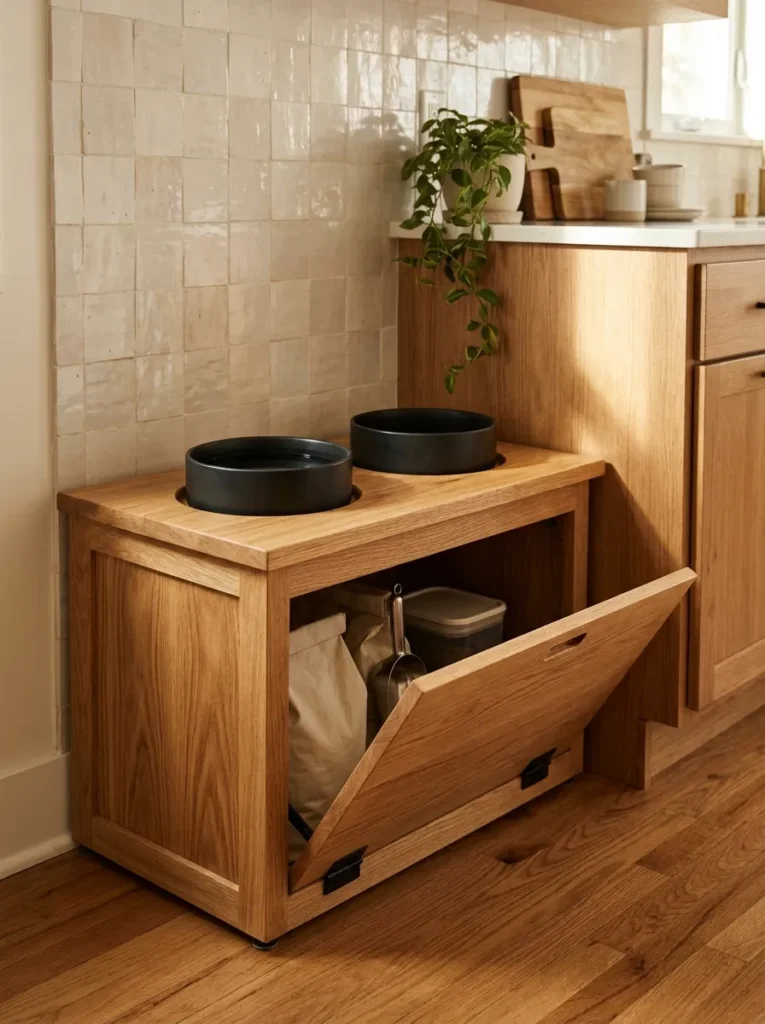
Vibe: The kitchen corner is design-forward — a feeding station that reads as intentional furniture rather than a pet product placed on the floor.
Why it works: Elevated feeding stations serve two functions: ergonomic (reducing neck strain for large breeds) and organizational (the base cavity provides storage directly at the point of use, eliminating the trip to the pantry at every feeding). A solid wood construction with a hinged storage compartment treats the feeding station as furniture-grade rather than pet-product-grade, which means it integrates into a kitchen’s design vocabulary rather than working against it. The routed bowl cutouts prevent bowls from sliding during enthusiastic eating.
How to get it: Measure your dog’s elbow height and subtract 4–6 inches to find the correct bowl height for their size — large breeds (over 60 lbs) typically benefit from a 12-inch elevation; medium breeds from 8 inches; small breeds do better at floor level. Dog feeders that are elevated incorrectly (too high) can increase bloat risk in deep-chested breeds, so measure before purchasing.
💡 Quick Win: A solid wood step stool from a home goods store ($35–$50) with a shallow tray on top works as a temporary elevated station while you plan a permanent solution — drill two holes sized to your bowls’ outer rim diameter for a DIY routed look.
Shop The Look
- Solid wood elevated dog feeding station storage
- Ceramic dog bowl set matte black two pack
- Wood stain natural oak interior finish
- Non-slip furniture feet pad set
- Hinge set soft close small cabinet
16. Labeled Bin System Inside a Pantry Closet
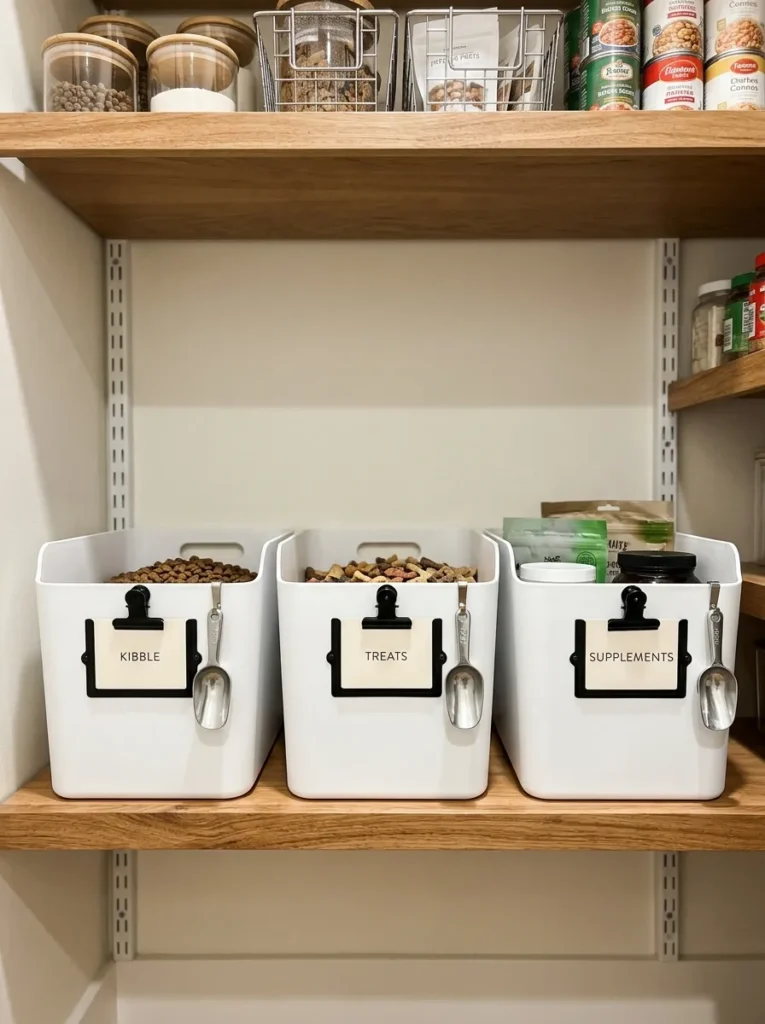
Vibe: The pantry zone is systematized — matching bins that communicate order at a glance and make restocking as simple as one trip to the pet store.
Why it works: The open-top bin system in a pantry closet applies zone organization: every pet-related supply has a clearly defined container, and the containers are grouped together so the “pet zone” of the pantry is self-contained and easy to inventory. Matching white bins create visual consistency that makes the pantry feel organized even when contents are at different levels. Clipping the scoop to the bin’s front edge (rather than dropping it inside) keeps it accessible without digging and prevents it from disappearing into the kibble.
How to get it: IDesign Linus and The Home Edit’s Target collection both make matching open-top bins in multiple widths — use the narrowest width for supplements (which come in small bottles) and the widest for kibble (which takes volume). Label with a P-touch label maker on adhesive label holders clipped or adhered to the bin front for a clean, replaceable label system.
Shop The Look
- White open top storage bin set pantry
- Label holder clip set adhesive bins
- P-touch label maker with tape cartridge
- Measuring scoop clip attachment kitchen
- Pantry shelf liner white non-adhesive
17. Outdoor Dog Food Station for Backyard or Mudroom Entry
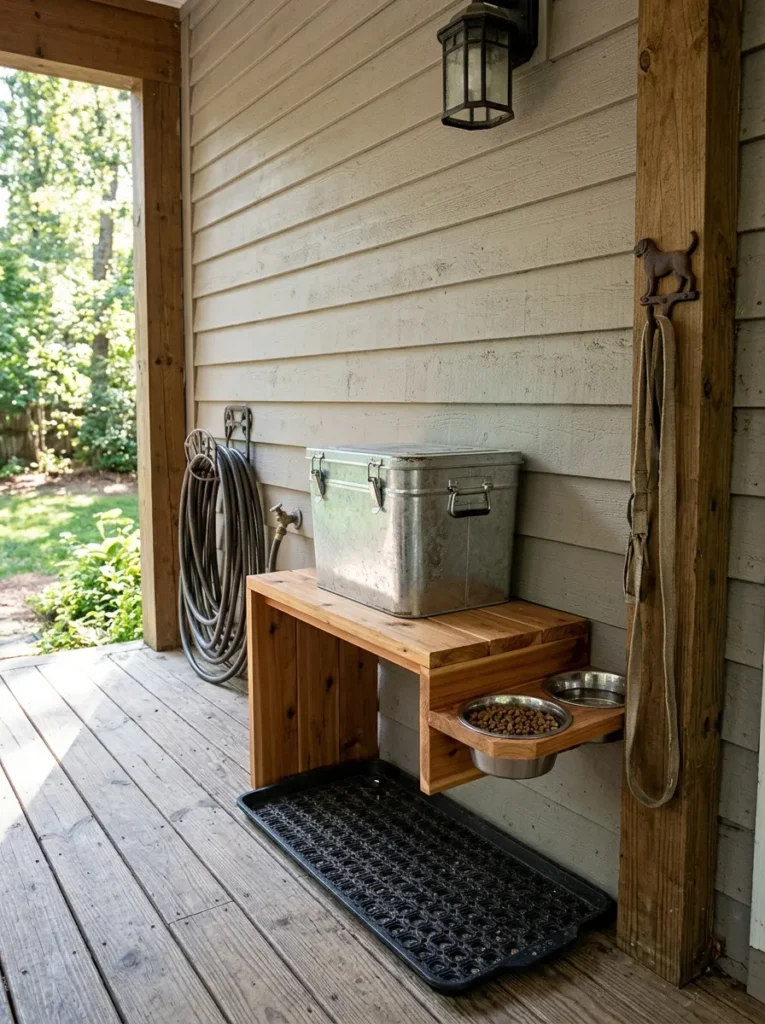
Vibe: The back porch station is practical — everything needed to feed the dog outdoors without tracking kibble through the house or making three trips from the pantry.
Why it works: Outdoor dog food stations serve working dogs, backyard feeders, and households that prefer to keep the feeding routine entirely outside the kitchen. The galvanized metal bin with a locking lid is pest-proof and weather-resistant — the most critical requirements for any outdoor food storage, where raccoons, squirrels, and moisture are constant variables. Cedar shelving weathers to a silver-grey that blends with outdoor settings and requires no finish maintenance. The locking lid is non-negotiable outdoors: a simple press-fit lid will be opened by wildlife within the first week.
How to get it: Store only a 3–5 day supply of food in the outdoor bin at any time — even the best weatherproof containers experience more temperature fluctuation outdoors than inside, which degrades kibble fat content faster. Bring the main supply bag indoors and refill the outdoor bin every few days for the best balance of convenience and food quality.
💡 Quick Win: A rubber outdoor mat ($18) under the feeding station catches kibble scatter and water splashes, making cleanup a 10-second sweep with a brush — the single most practical addition to any outdoor feeding zone.
Shop The Look
- Galvanized metal outdoor bin locking lid weatherproof
- Cedar wood outdoor shelf bracket wall mount
- Stainless steel outdoor dog bowl set two
- Rubber outdoor pet feeding mat large
- Outdoor leash hook stainless steel wall mount
How to Start Your Dog Food Storage Transformation
The single most impactful first move is to purchase one properly sized airtight container and decant your current food bag into it today. Not a new cabinet, not a complete pantry overhaul — just one sealed container that fits your bag size. Specifically, choose a food-grade container with a silicone (not rubber) gasket rated for your bag’s weight plus 10%, because this single change addresses freshness, pest prevention, and the visual chaos of an open bag simultaneously, anchoring every other storage decision around it.
The most common mistake pet owners make when organizing dog food storage is keeping the original bag inside the storage container. The bag is not a liner — the bag’s inner surface can harbor bacteria and oils from previous batches, contaminating the new food added on top. The fix is simple and specific: wash the container with hot soapy water and dry completely before adding each new bag’s contents. This single habit change prevents the stale-bottom-of-the-container problem that most pet owners blame on the food brand.
Three items under $50 that make an immediate difference: a set of oval chalkboard label stickers ($8 for 40) for clear container identification; a stainless steel measuring scoop with a clip hook ($12) so it lives on the container rather than in a drawer; and a bamboo serving tray ($22) to group your canister, scoop, and treat jar into one defined feeding station zone.
Setting up a basic one-dog feeding station — one airtight container, one elevated bowl, one treat jar, proper labeling — takes one weekend and roughly $60–$120 in materials. A full multi-pet pantry organization with custom labels, pull-out drawers, and a dedicated feeding cabinet runs $300–$800 depending on whether you retrofit existing cabinets or build new. A custom under-stair or built-in feeding nook with cabinetry and lighting is a 2–4 week project at $1,200–$3,500 professionally built
Frequently Asked Questions About Dog Food Storage
What is the best type of container for storing dry dog food?
A food-grade airtight container with a silicone gasket seal is the consistently recommended choice for dry kibble storage. Stainless steel is the premium option — it’s non-porous, doesn’t absorb odors, and is completely impervious to pests. Food-grade BPA-free polypropylene (used by Gamma2 Vittles Vault and IRIS USA) is the practical alternative at a lower price point. The critical feature in any container is the gasket material: silicone maintains its compression seal through thousands of open-close cycles, while rubber degrades and loses its airtight quality within 12–18 months of regular use.
How long does dry dog food stay fresh once opened?
Dry kibble is generally recommended to be used within 6 weeks of opening, regardless of the printed expiration date — the expiration date refers to the sealed bag, not to opened food exposed to air. Storing opened kibble in an airtight container at room temperature (below 80°F) extends this to approximately 8 weeks before oxidation begins to measurably affect fat quality. Avoid storing dog food near the stove, dishwasher, or any heat source — temperature fluctuation accelerates rancidity faster than air exposure alone.
How much does a good dog food storage system cost?
A single quality airtight canister appropriate for a 30-pound bag runs $25–$60 (Gamma2 Vittles Vault 30lb retails around $45). A complete single-dog feeding station setup — canister, elevated bowl stand, treat jar, and labeling — can be assembled for $80–$150. A multi-dog pantry system with custom labels and stackable containers runs $150–$350. The highest-investment option — a custom cabinet or built-in under-stair feeding nook — ranges from $800 to $3,500 depending on cabinetry quality and whether lighting is included.
Can I store dog food and human food in the same pantry area?
Yes, provided the dog food is stored in a fully sealed, food-grade container with an airtight lid. The concern is cross-contamination of odors and, in rare cases, bacterial transfer — dry kibble itself is shelf-stable, but the bag surface and any kibble dust can carry Salmonella that has been present in pet food recalls. Storing dog food in a sealed container on a dedicated shelf or in a clearly labeled zone within a shared pantry is the safe and practical solution. Never store dog food loose in the same containers used for human food.
What is the best way to store wet dog food after opening?
Opened canned dog food should be transferred to a sealed food-grade container and refrigerated immediately — do not store in the original can once opened, as the exposed metal can affect taste and the open can provides no seal against refrigerator odors or bacteria. Silicone can covers sized for standard pet food cans ($8–$12 for a set of three) provide a practical resealing option for single-serving storage in the fridge. Refrigerated opened wet food is typically safe for 3–5 days; after that, nutritional quality degrades and bacterial risk increases regardless of appearance or smell.
Ready to Create Your Dream Dog Food Storage System?
These 17 ideas cover the full spectrum of what dog food storage can involve from the airtight seal of a single canister and the visual calm of a labeled treat jar to the spatial logic of a wall-mounted gravity feeder and the quiet ingenuity of an under-stair feeding nook. You don’t need to implement all 17 at once; in fact, starting with a single airtight container and one labeled treat jar often reveals exactly which other pieces your specific household needs. Start today by decanting your current food bag into a properly sealed container that one action, done in five minutes, immediately improves freshness, eliminates the pest risk of an open bag, and gives you a cleaner feeding area without spending a dollar on furniture. When the daily feeding routine stops feeling like a small logistical problem, the whole rhythm of pet care shifts it becomes something you’ve solved rather than something you manage around. Save the ideas that match your space, your dog count, and your kitchen’s style; in pet organization, the system that fits your real life is always the one worth stealing.