Dog boarding spaces for fall and winter are dedicated resting, sleeping, and play environments designed specifically for dogs in the colder, darker months — built with the thermal warmth, material comfort, enrichment depth, and seasonal atmosphere that keeps boarded dogs calm, physically comfortable, and emotionally settled when temperatures drop and daylight shortens. This article gives you 14 dog boarding ideas across sleeping setups, heating solutions, enrichment strategies, calming environments, outdoor access, and seasonal styling so every dog in your care experiences the boarding environment as genuinely comfortable rather than merely contained.
A boarding facility that takes fall and winter seriously understands something that matters deeply to the animals in its care: seasonal change affects dogs physiologically and behaviorally in ways that boarding environments can either support or ignore. The shorter days affect sleep-wake regulation. The cold affects comfort and mobility — particularly in older dogs and short-coated breeds. The reduction in outdoor stimulation affects mental engagement. A boarding space designed for the season rather than for year-round generic function is a boarding space that produces calmer, better-rested dogs and generates the client trust that comes from visible care. Here are 14 ideas worth saving — and building.
Why Seasonal Boarding Design Matters for Dogs
The design of dog boarding environments for fall and winter draws from the convergence of canine behavioral science, veterinary welfare standards, and the hospitality design principle that the quality of a guest’s physical environment directly determines the quality of their experience. The Five Freedoms of animal welfare — freedom from discomfort, freedom from fear and distress, freedom to express normal behaviors, freedom from pain and disease, and freedom from hunger and thirst — all have specific environmental design implications in a seasonal boarding context that generic boarding cage-and-kennel setups systematically fail to address.
The physiological effects of seasonal change on dogs are documented and specific. Reduced photoperiod (fewer daylight hours) affects the canine circadian rhythm, altering melatonin production timing and affecting sleep depth and daytime energy levels in ways analogous to the human seasonal experience. Cold temperature affects joint comfort — particularly in older dogs, large breeds, and short-coated breeds — requiring sleeping surface elevation, insulation, and warmth that room-temperature boarding spaces in summer do not need to provide. Reduced outdoor environmental stimulation (fewer smells on frozen ground, less insect and small animal activity) reduces the natural cognitive enrichment that dogs access during outdoor time, requiring indoor enrichment substitutes. These seasonal variables are design inputs, not background conditions — the boarding environment that addresses them produces measurably different animal welfare outcomes.
The commercial case for seasonal boarding design is equally strong. Pet owners who board their dogs during fall and winter holidays — Thanksgiving, Christmas, New Year’s — are making a high-stakes trust decision, leaving their animals in a facility’s care during the period of maximum family separation anxiety for both dogs and owners. A boarding facility that can visibly demonstrate seasonal attention — heated sleeping spaces, enrichment programming, calming environments, and seasonal aesthetic care — commands premium pricing and generates the word-of-mouth referrals that drive occupancy in an industry where personal recommendations are the primary marketing channel.
Small boarding operations — in-home boarding, small boutique facilities of 10–30 dogs, and individual boarding suites — have specific advantages in seasonal comfort design that large commercial kennels cannot easily replicate: the ability to use residential-quality materials and furnishings, to provide true in-home warmth rather than institutional HVAC management, and to create genuine atmospheric character in the boarding environment rather than the clinical uniformity of large-scale commercial operations.
Design at a Glance
| Element | Detail |
|---|---|
| Philosophy | Seasonal comfort as welfare — every design decision in service of the dog’s physiological and behavioral needs in the colder months |
| Key Elements | Thermal warmth, acoustic softness, visual calm, enrichment depth, outdoor accessibility |
| Scale Range | In-home boarding (2–6 dogs) to boutique facility (10–30 dogs) |
| Seasonal Priority | October through March — the boarding calendar’s highest-volume and highest-welfare-demand period |
14 Cozy Dog Boarding Ideas for Fall and Winter
1. Heated Orthopedic Sleeping Suites with Personal Bedding
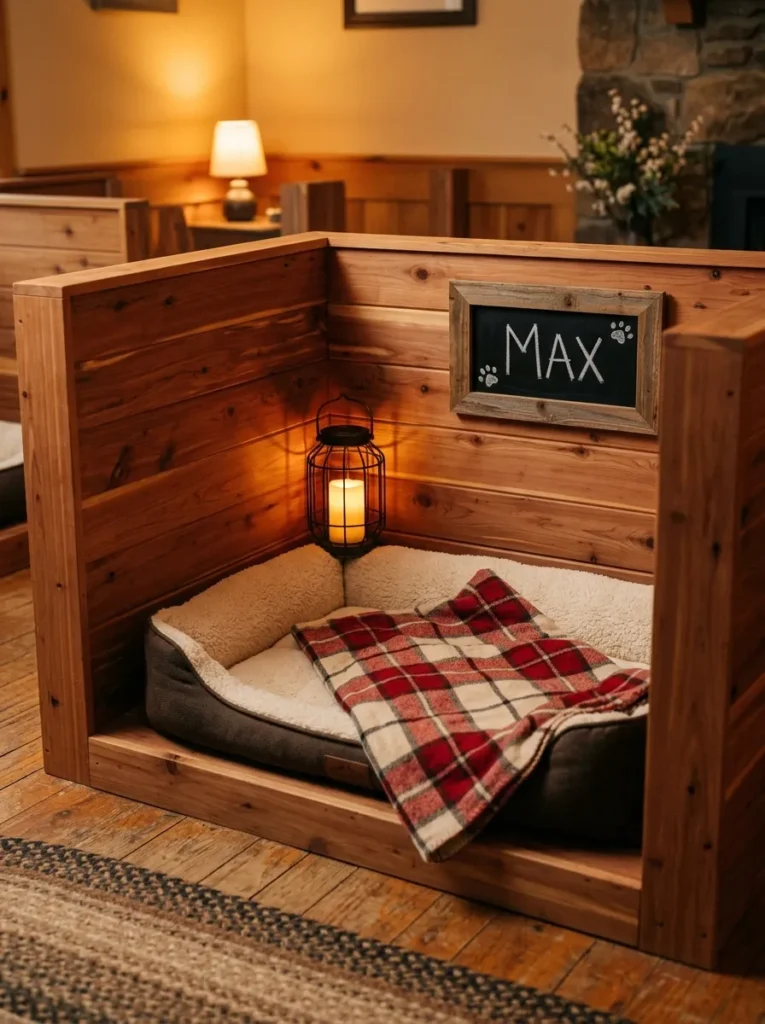
Vibe: The suite is personal — an orthopedic sleeping suite with a personal blanket, a name tag above the door, and a warm light creates the boarding experience that owners imagine when they trust their dog to a facility that genuinely cares — a space designed for a specific animal rather than for interchangeable occupancy.
Why it works: Orthopedic sleeping surfaces are specifically important in fall and winter boarding because cold ambient temperatures cause joints to stiffen — the same mechanism that makes older humans less mobile on cold mornings affects dogs, particularly large breeds (Labrador Retrievers, German Shepherds, Golden Retrievers) and senior dogs whose joint health is most sensitive to thermal conditions. A memory foam orthopedic base maintains its supportive properties regardless of ambient temperature, prevents the pressure point damage that thin foam and flat surfaces create over 24–48 hours of boarding, and provides the thermal insulation from cold floor surfaces that is specifically critical in any boarding space with concrete, tile, or hardwood flooring. The personal blanket (ideally provided by the owner from home, carrying the familiar scent of the dog’s own environment) is a welfare intervention with documented effectiveness in reducing boarding-associated stress cortisol — familiar scent is the fastest-acting anxiolytic available for dogs in unfamiliar environments.
How to get it: Orthopedic dog bed inserts (4-inch memory foam, washable cover) are available in standard sizes for $40–$120 depending on size. Build simple three-sided wood enclosures from 3/4-inch plywood, sized at 30×40 inches interior for medium dogs and 36×48 inches for large breeds — the three-sided design provides den-like enclosure without confining the dog behind a door. Install a small battery-operated warm LED puck light in the upper corner of each suite. Mount a small chalkboard above each suite with the visiting dog’s name written in chalk — this small personalization detail communicates genuine attention to individual dogs in a way that numbered cage labels cannot.
Quick Win: Adding a personal chalkboard name tag above each sleeping space costs under $2 per suite and is the single most visible indicator to returning owners that their specific dog was known and cared for as an individual during their stay.
Shop The Look
- Orthopedic dog bed memory foam waterproof cover
- Plaid dog blanket washable sherpa
- Battery powered LED puck light warm
- Small chalkboard tag sign name
- Chalk marker white fine tip label
Also view: 16 Dog Closet Ideas That Blend Style and Function
2. In-Home Boarding Living Room Integration for Small Dogs
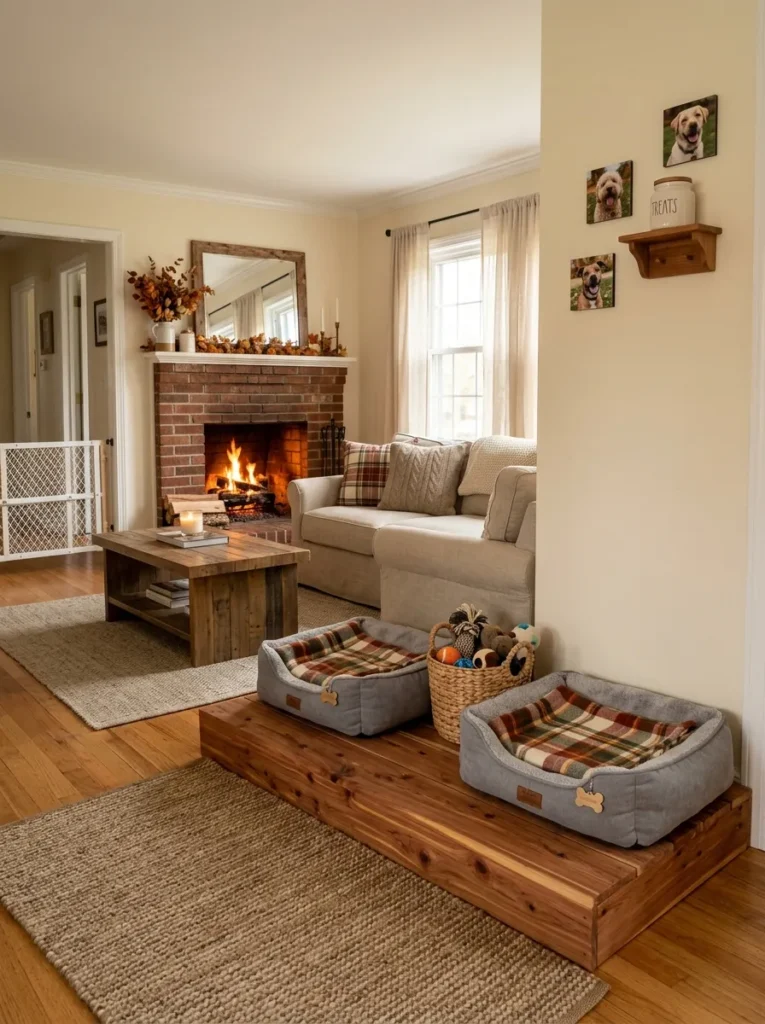
Vibe: The home is welcoming — a living room with a dedicated dog boarding corner that integrates seamlessly with the human domestic environment creates the in-home boarding experience that small dog owners specifically seek: not a kennel, not a cage, but a genuine second home where their dog sleeps on a proper bed in a warm living room.
Why it works: In-home boarding in a residential living environment is the welfare-superior option for dogs who experience kennel stress — those with separation anxiety, small and toy breeds who thermoregulate poorly in cold institutional environments, senior dogs who need the comfort of a domestic setting, and dogs whose owners specifically choose home boarding for behavioral reasons. The living room integration approach positions the dog’s sleeping space as part of the home’s social and thermal center rather than in a separated room, providing the proximity to human activity and ambient warmth that dogs seek in their primary social environment. The low cedar platform elevation (4–6 inches from the floor) provides thermal break from cold floor surfaces while keeping dogs at the appropriate low height for small breeds.
How to get it: Build a low cedar platform (approximately 48×30 inches for two small-to-medium dogs) from 3/4-inch cedar board on 4-inch block legs — cedar is naturally antimicrobial and resists moisture, making it the correct material for a frequently used dog sleeping platform. Position in the room’s warmest corner (near a fireplace, heat register, or south-facing window) but not directly against a heat source. Install a simple safety gate at the room entry ($25–$60) to define the dogs’ space within the home without confining them to a single room. The wicker toy basket between beds provides scent enrichment and play access without cluttering the sleeping surface.
Shop The Look
- Small orthopedic dog bed pair washable
- Autumn plaid dog blanket small washable
- Wicker basket dog toy storage natural
- Safety gate room divider adjustable
- Cedar board platform dog bed DIY
Also view: 16 Cat Grass Box Designs for Happy Indoor Cats
3. Thermal Heating Mat System Under Sleeping Surfaces
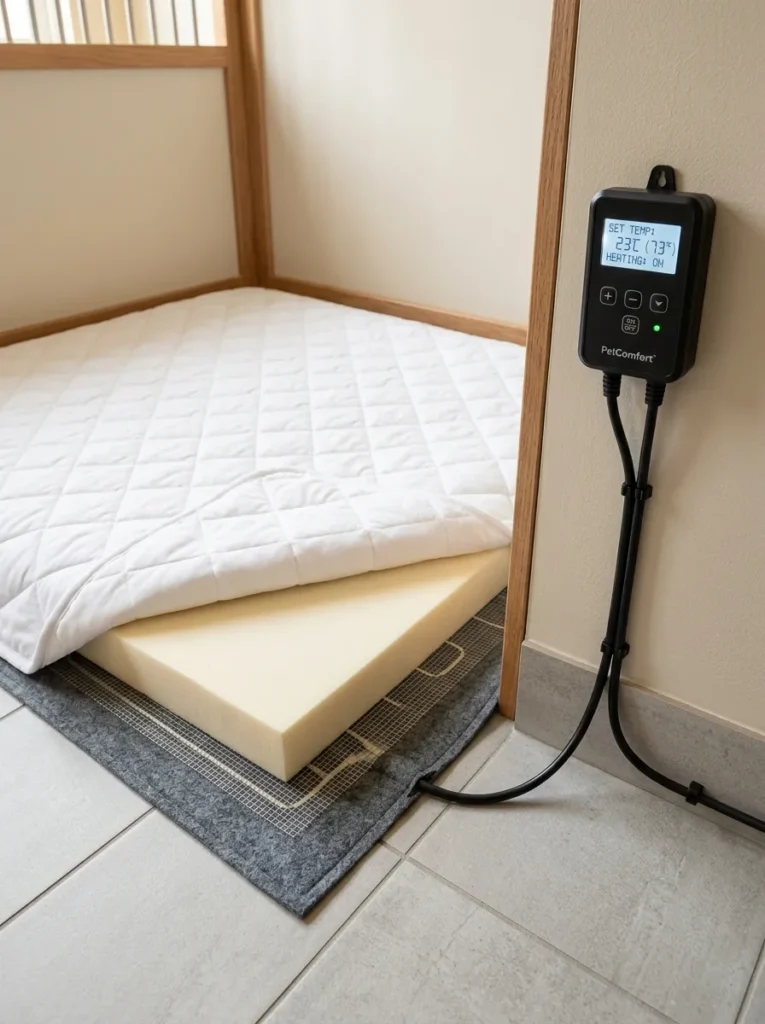
Vibe: The system is caring — a thermostatic heating mat under sleeping surfaces is the infrastructure investment that most directly addresses the physiological comfort of dogs boarding in cold months, providing the gentle warmth from below that dogs seek in cold weather without the overheating risk of direct heat sources.
Why it works: Radiant heat from below a sleeping surface is physiologically superior to ambient air heating for dogs during fall and winter boarding because dogs seek to regulate temperature through their ventral surface (the belly and chest) when cold — lying on a warm surface is the canine thermoregulatory behavior that a heated mat directly supports. Low-watt radiant heating mats (specifically designed for pet use with automatic temperature limitation) maintain the sleeping surface at 98–102°F — comfortable for a resting dog without the risk of thermal burn that higher-wattage human heating pads can cause. For short-coated breeds (Greyhounds, Vizslas, Boxers, Chihuahuas) and senior dogs with reduced thermoregulatory efficiency, a heated sleeping surface is a genuine welfare necessity rather than a comfort luxury during winter boarding.
How to get it: Pet-specific electric heating mats (K&H Pet Products, PetFusion) with automatic temperature limiting are available at $25–$60 for most dog bed sizes. Install under the orthopedic foam layer, not directly under the dog — the foam provides both the comfortable surface and the thermal distribution layer that prevents hot spots. Mount a simple thermostat controller on the wall beside the sleeping area (available for $15–$35) to allow temperature adjustment for different dogs’ needs. Use only pet-rated mats with chew-resistant cord — standard human electric heating pads are not safe for dog use due to higher temperature ranges and non-chew-resistant power cords.
Shop The Look
- Pet heating mat low watt K&H Products
- Orthopedic foam dog bed insert sheet
- Thermostat controller low voltage pet
- Chew resistant cord cover pet safe
- Washable dog bed cover waterproof
4. Calming Scent Station with Lavender and Chamomile Diffusion
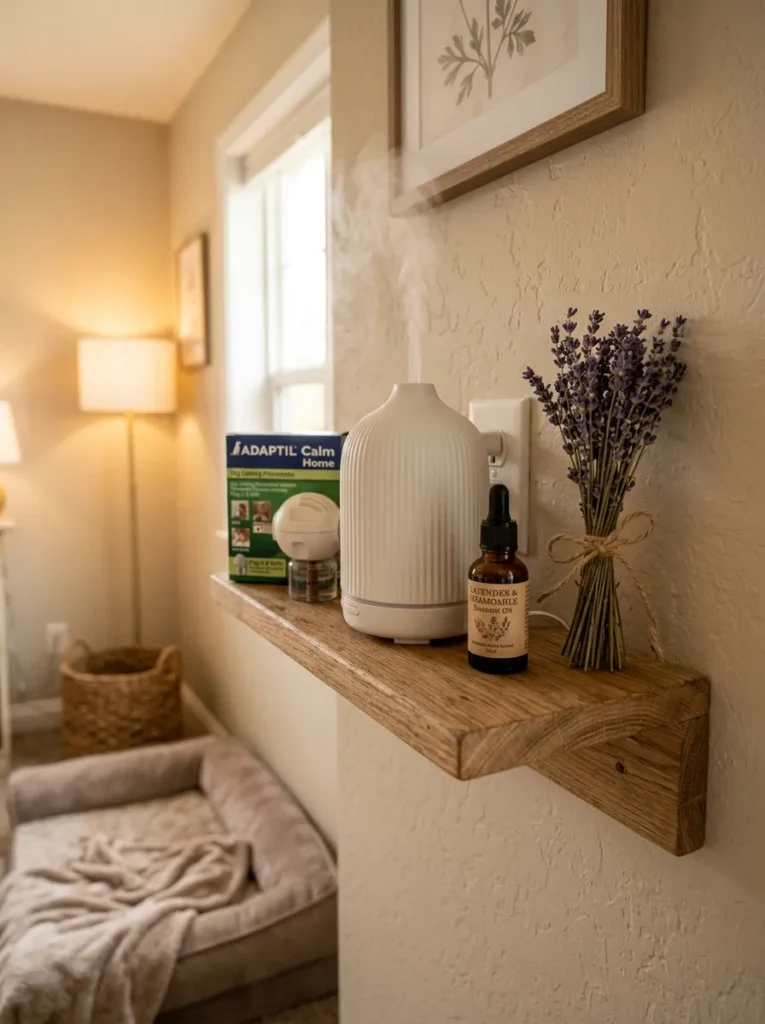
Vibe: The station is calming — a dedicated scent environment in a boarding room using dog-safe aromatherapy creates a passive behavioral intervention that reduces anxiety in newly arriving dogs and maintains calm in the boarding space throughout the day without requiring active staff management.
Why it works: Olfactory stimulation is the most powerful sensory modality for dogs — with approximately 300 million olfactory receptors compared to a human’s 6 million, dogs process environmental scent information at a depth that makes the scent environment of a boarding space a primary welfare variable. Lavender (specifically linalool) and chamomile have documented calming effects in dogs when diffused at appropriate concentrations — research from the University of Arizona and published in the Journal of Veterinary Behavior demonstrated that lavender aromatherapy significantly reduced vocalization and movement in dogs boarding in a kennel environment compared to no aromatherapy control. Critical safety note: essential oils must be diffused at very low concentrations in dog spaces (2–3 drops in 200ml water maximum), must not include eucalyptus, tea tree, or pennyroyal oils (toxic to dogs), and the diffuser must be positioned where dogs cannot contact it directly or drink the diffuser water.
How to get it: Use a ceramic ultrasonic diffuser (not a heat diffuser, which degrades essential oil compounds) positioned on a shelf at 5–6 feet height, well above dog reach. Use only lavender, chamomile, or vetiver essential oils — all documented as safe for dogs at low diffused concentrations. Run the diffuser on an intermittent setting (30 minutes on, 30 minutes off) rather than continuously to prevent olfactory fatigue and reduce total oil exposure. Pair with a commercially available dog pheromone product (Adaptil DAP diffuser, which uses a synthetic version of the canine appeasing pheromone) for the most comprehensive calming scent environment.
Shop The Look
- Ceramic ultrasonic diffuser white small
- Lavender essential oil pure organic
- Adaptil DAP pheromone diffuser dog
- Dried lavender bundle room decor
- Shelf mount elevated secure scent station
5. Indoor Enrichment Puzzle Station for Winter Mental Stimulation
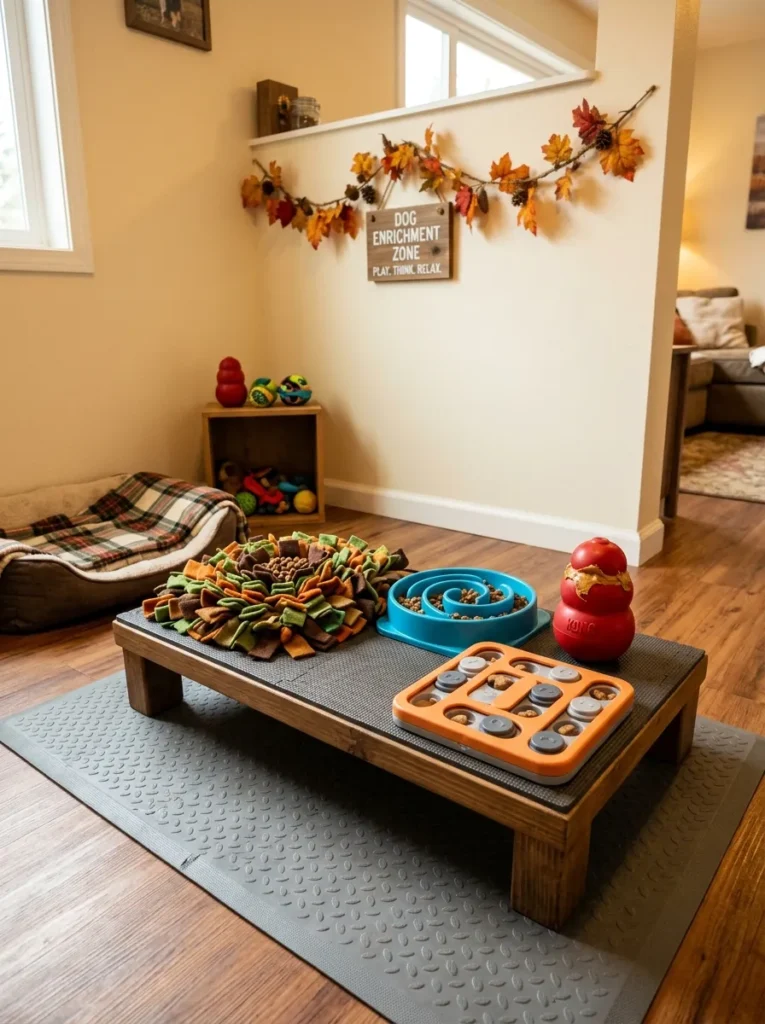
Vibe: The station is engaging — an indoor enrichment puzzle station specifically designed for winter boarding addresses the cognitive stimulation deficit that results from reduced outdoor time and activity, providing mental engagement that tires dogs just as effectively as physical exercise.
Why it works: Cognitive engagement through food puzzles and enrichment activities is documented to produce equivalent fatigue outcomes to moderate physical exercise in dogs — a 20-minute snuffle mat or puzzle session produces measurably similar post-activity rest duration and cortisol reduction as a 20-minute walk, making indoor enrichment an essential substitute for outdoor activity during periods of cold, wet, or icy conditions that limit safe outdoor time. For boarding dogs specifically, the combination of novelty (unfamiliar boarding environment) and reduced stimulation (no outdoor walk, no home scent environment) creates a stress load that enrichment activities directly counteract — the focusing, problem-solving, and rewarding activity of a food puzzle redirects anxiety-driven behavior into productive engagement. Rotating enrichment activities (different puzzle types on different days, different food rewards, different locations in the boarding space) maintains novelty throughout a multi-day boarding stay.
How to get it: Build a simple platform (24×24 inches at 12-inch height — appropriate for medium dogs at nose height) from 3/4-inch plywood on block legs, with a rubber anti-slip mat on top. Stock a rotating selection of puzzle types: snuffle mats ($20–$35, excellent for all breeds), LickiMats ($8–$15, ideal for anxious dogs), Kong Wobblers and similar dispensing toys ($15–$25), and simple sliding puzzle boards ($15–$40 for varied complexity levels). Stuffed frozen Kongs (filled with a mixture of kibble, wet food, and peanut butter, frozen for 24 hours before use) provide the most extended engagement time — a frozen Kong occupies most dogs for 20–45 minutes. Schedule two enrichment sessions per day during winter boarding to compensate for reduced outdoor time.
Shop The Look
- Snuffle mat dog enrichment natural fiber
- LickiMat dog slow feeder plate
- Kong classic red stuffable medium large
- Sliding puzzle board dog beginner level
- Rubber anti slip mat enrichment station
6. Autumn and Winter Seasonal Decor for a Welcoming Atmosphere
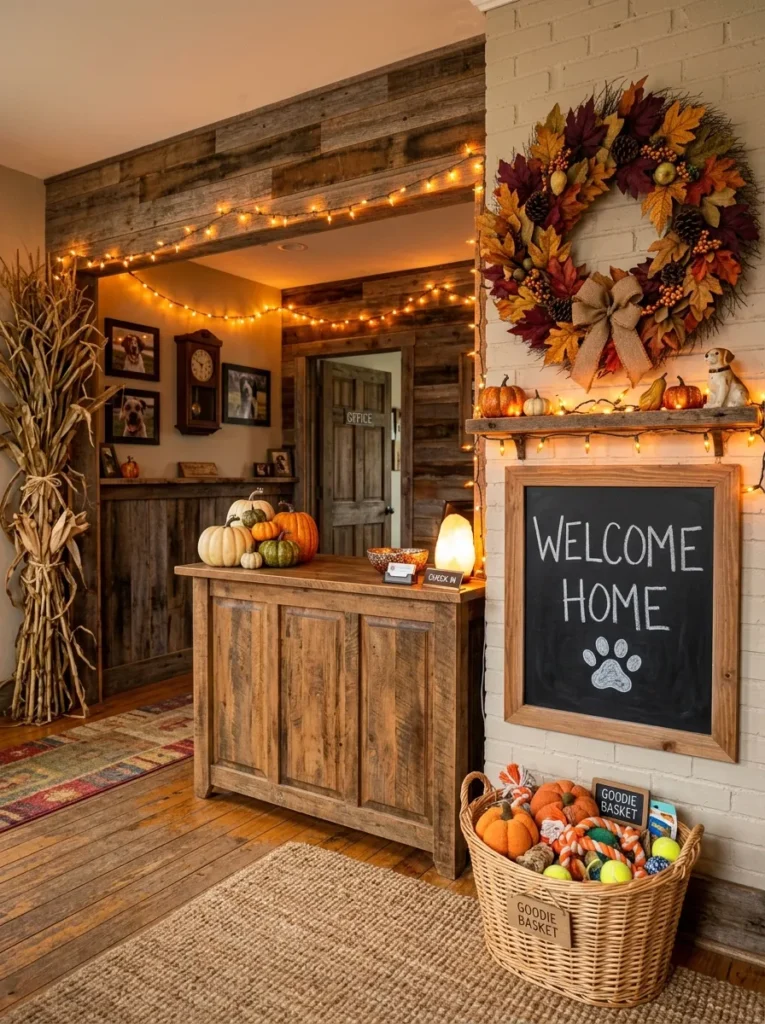
Vibe: The facility is welcoming — seasonal autumn and winter decoration in a boarding facility lobby creates the first impression of a space that pays attention to the details that matter, communicating to arriving owners that their dog is entering a genuinely cared-for environment rather than a utilitarian kennel.
Why it works: The reception and intake zone of a boarding facility creates the critical first impression that determines owner confidence — and owner confidence directly affects the dog’s arrival behavior. Research in veterinary behavior demonstrates that owner anxiety during drop-off transfers cortisol information to the dog through postural cues, vocalization patterns, and altered handling, meaning that a facility that makes owners feel confident and at ease about their dog’s environment is simultaneously reducing the dog’s arrival stress. Seasonal decoration communicates several things simultaneously to arriving owners: that the facility pays attention to the environment, that the staff cares about the atmosphere, and that dogs in this facility experience a genuine home-like environment rather than a clinical one. Safety note: all fall and winter decorations must be dog-safe — no real pumpkins (which mold and cause GI distress if chewed), no plants from the toxic list, no small decorative items that can be swallowed.
How to get it: Source artificial or completely dried decorative pumpkins and gourds ($8–$20 for an assortment) that do not mold and are safe if a dog contacts them. Use preserved (not fresh) botanical decorations — dried corn stalks ($8–$15 per bundle), preserved leaf wreaths ($15–$40), and dried grasses ($5–$15 per bundle) are safe in a dog environment when positioned above dog reach. Install warm Edison string lights along any shelf or display area ($8–$20 for a 15-foot strand). A chalkboard welcome sign ($15–$25) with the arriving dog’s name written in chalk creates a specific personal welcome that owners photograph and share on social media consistently — free marketing with every check-in.
Shop The Look
- Artificial dried pumpkin gourd assortment
- Preserved autumn leaf wreath door wall
- Edison string lights warm amber indoor
- Chalkboard sign welcome message
- Dried corn stalk bundle decor safe
7. Outdoor Cold-Weather Exercise Area with Heated Splash Mat
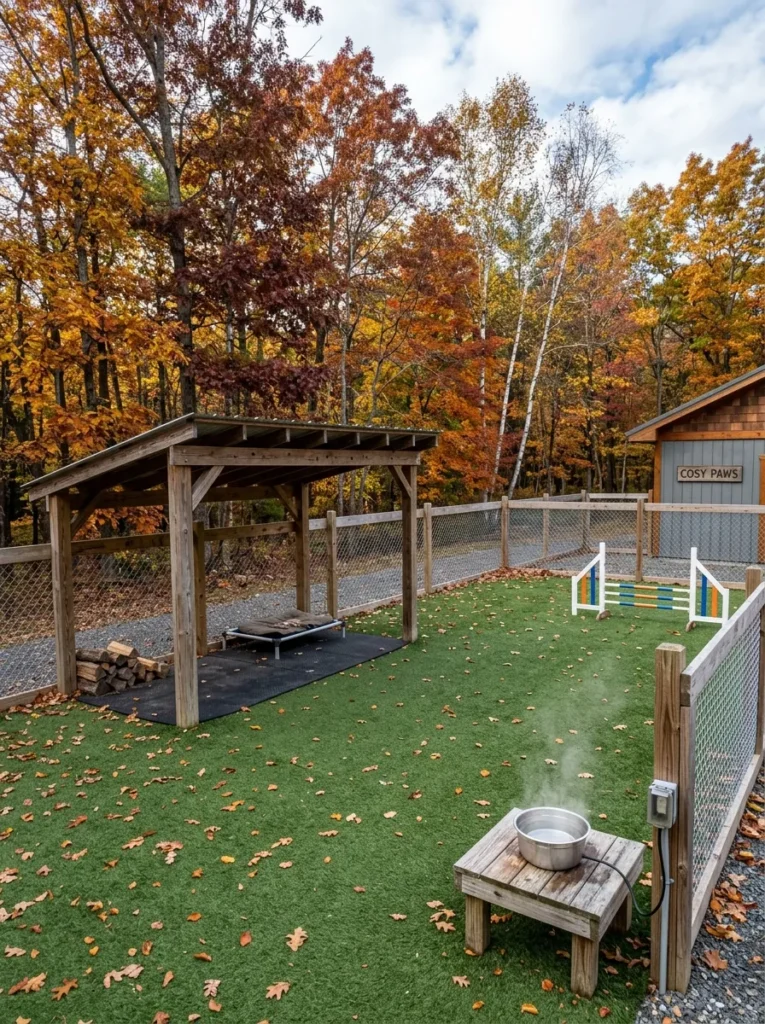
Vibe: The outdoor space is functional — a cold-weather exercise area with a heated surface section, weather cover, and a heated water bowl ensures that outdoor time remains available and enjoyable for boarded dogs even during fall and winter’s harshest conditions, maintaining the exercise and stimulation that indoor environments cannot fully replace.
Why it works: Outdoor time for boarding dogs is not merely a convenience — it is a welfare requirement that the boarding environment’s physical design must protect against seasonal barriers. The three primary barriers to outdoor dog access in fall and winter are cold surfaces (frozen or near-frozen ground that causes paw discomfort and reduces willing outdoor time for many dogs), wet conditions (rain and snow that make outdoor time unpleasant and increase the staff labor of toweling off every dog), and reduced daylight (particularly in December and January when usable outdoor light may be limited to 6–8 hours). A heated rubber or artificial turf pad ($80–$200 for a 6×8-foot section from commercial pet facility suppliers) addresses the cold surface barrier. A simple lean-to roof over one outdoor section ($200–$500 for a basic structure) addresses wet conditions. And a dawn-to-dusk outdoor access schedule (rather than fixed daytime-only schedules) maximizes the available daylight window.
How to get it: Install a commercial heated outdoor rubber mat in the portion of the exercise area that receives the most use — the area immediately adjacent to the exterior door where dogs first exit and the area around the elimination zone. Heated mats for outdoor commercial use are available from pet facility suppliers at $80–$200 and connect to a standard 110V outdoor GFCI outlet. Build a simple 8×10-foot covered lean-to from pressure-treated lumber with a corrugated polycarbonate roof ($200–$500 in materials) to provide rain and light snow cover over a rest and play area. Install a heated outdoor dog water bowl ($30–$50) on a raised platform to ensure fresh, unfrozen water is always accessible during outdoor sessions.
Shop The Look
- Heated outdoor dog mat commercial rubber
- Corrugated polycarbonate roofing panel
- Outdoor heated dog water bowl thermostat
- Artificial turf pet grade roll outdoor
- Simple dog agility jump bar adjustable
8. Breed-Specific Thermal Accommodation System
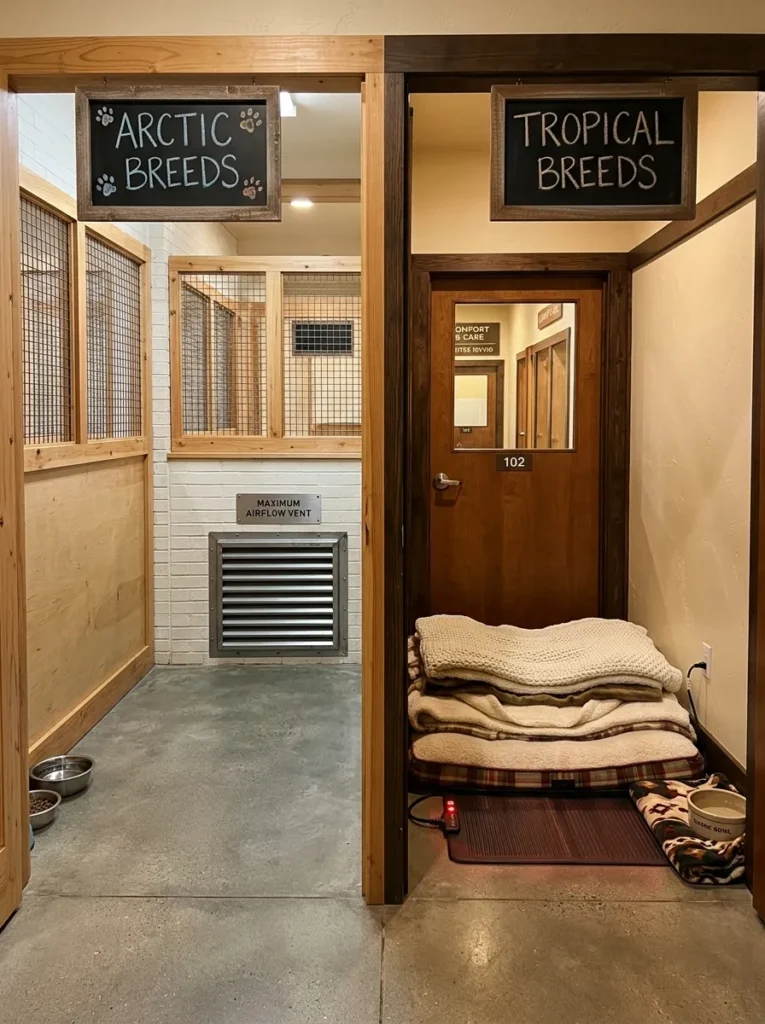
Vibe: The system is professional — a breed-specific thermal accommodation approach that adjusts sleeping surface warmth, bedding depth, and suite temperature to match each dog’s physiological needs demonstrates the kind of knowledge-based care that differentiates a professional boarding facility from a one-size-fits-all operation.
Why it works: Dog breeds vary dramatically in their thermoregulatory efficiency and cold tolerance — a Siberian Husky and a Chinese Crested dog have almost nothing in common in terms of their winter comfort needs. Double-coated Arctic breeds (Huskies, Malamutes, Samoyeds, Chow Chows, Great Pyrenees) are actually more comfortable in cooler environments and may experience heat stress in a boarding suite maintained at 70°F — they benefit from reduced bedding, good air circulation, and access to cool floor surfaces. Single-coated, low-body-fat breeds (Greyhounds, Whippets, Italian Greyhounds, Vizslas) and hairless breeds (Chinese Crested, Xoloitzcuintli) thermoregulate poorly in cold and require heated sleeping surfaces, multiple blanket layers, and suite temperatures of 70–75°F minimum. Senior dogs of any breed require additional warmth compared to young adults of the same breed.
How to get it: Create a thermal accommodation intake questionnaire (two or three questions: breed or coat type, age, cold sensitivity history) that is completed by owners at reservation. Classify incoming dogs into three thermal categories: cool-preference (double-coated Arctic breeds), standard (most medium-coated breeds), and warm-preference (single-coated, hairless, toy, or senior dogs). Stock each category’s suite with the appropriate bedding depth and heating mat status. Display a simple breed reference chart in the staff area showing common breeds in each category. This systematic approach eliminates the guesswork that leads to either cold stress in sensitive breeds or heat discomfort in cold-adapted breeds.
Shop The Look
- Dog boarding intake form breed thermal
- Heated pet mat warm preference suite
- Cooling mat Arctic breed suite option
- Breed reference poster laminated chart
- Suite labeling chalkboard system set
9. Fireplace or Flame-Effect Focal Point in the Social Area
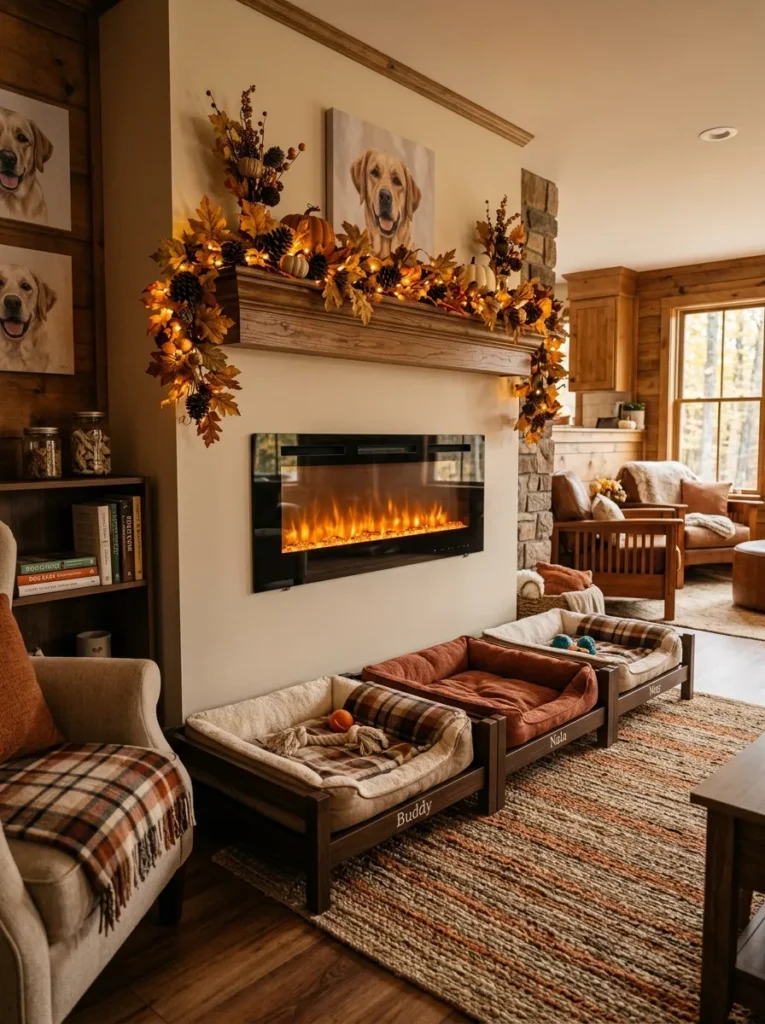
Vibe: The social area is deeply cozy — an electric fireplace as the focal point of a boarding facility’s social room creates the most powerful single atmospheric upgrade available for fall and winter boarding, where the warm flickering light transforms a functional dog room into a genuinely inviting space.
Why it works: The fireplace’s warm flickering light creates a physiological calming effect in dogs through the same mechanism that research has documented in humans — the warm amber color temperature (approximately 1800K), the gentle movement pattern of the flame, and the infrared warmth emitted by the fireplace’s heat element all work together to activate the parasympathetic nervous system. For dogs specifically, research on lighting environments in shelter and boarding settings shows that warm amber light significantly reduces vocalization (barking, whining) and increases resting behavior compared to cool fluorescent or bright white LED environments. The fireplace’s position as the room’s dominant visual focal point also creates an orientation point for dogs in the room — a consistent warm glow that provides the visual anchor that reduces the disorientation some dogs experience in boarding environments.
How to get it: Wall-mounted electric fireplaces with realistic 3D flame effects are available at $200–$600 from major home improvement retailers. Install at a minimum of 36 inches from the floor — above the reach of standing large dogs — and with a surrounding barrier or elevated mantel structure that prevents any direct dog contact with the fireplace surround. Use the flame-only setting during nighttime sleeping hours (no heat, just ambient warm light) and the flame-plus-heat setting during cold days when the room needs supplemental warmth. Add a seasonal garland ($15–$35) on the mantel above the fireplace for fall and winter atmosphere. Check local fire and building codes for electric fireplace installation requirements in commercial pet facilities.
Shop The Look
- Electric fireplace wall mount 3D flame
- Autumn winter mantel garland natural
- Dog room elevated bed platform set
- Fireplace safety barrier guard pet
- Flame effect ambient light timer
10. Calming Music and Sound Masking System
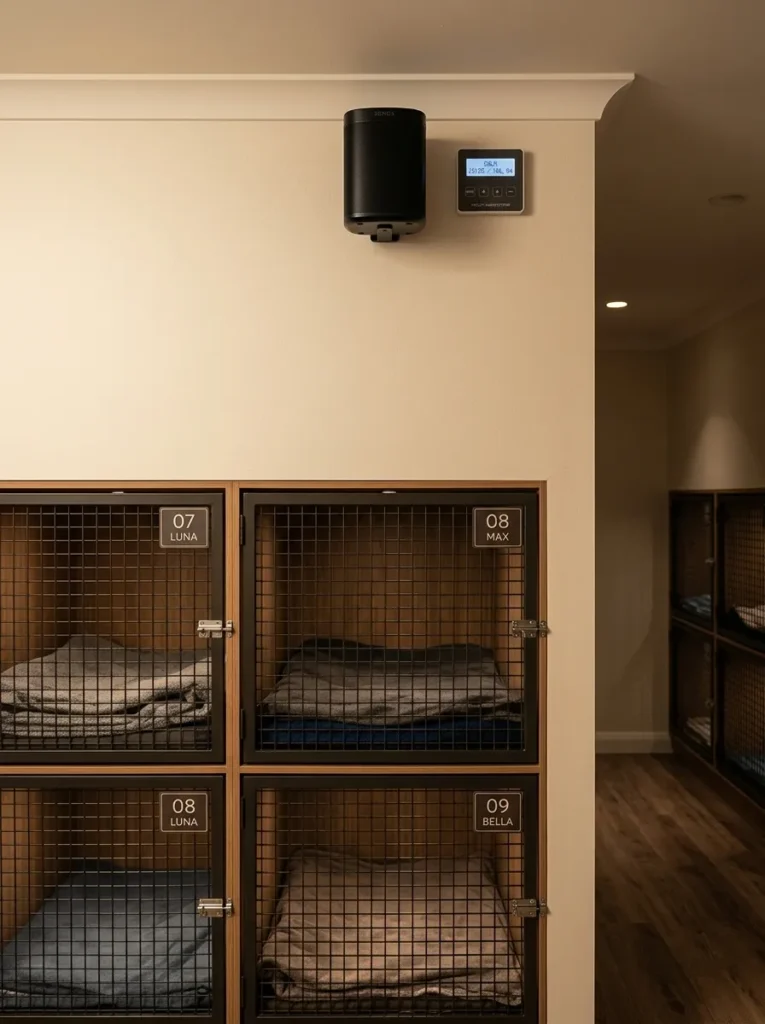
Vibe: The system is calm — a dedicated calming music and sound masking system in a boarding facility’s sleeping room provides continuous acoustic management that reduces startle responses, masks external noise triggers, and creates the consistent auditory environment that supports longer, deeper sleep in boarded dogs.
Why it works: Sound is the sensory modality that most disrupts dog boarding sleep — specifically, the intermittent and unpredictable nature of external sounds (street traffic, other dogs vocalizing in adjacent areas, facility HVAC cycling, delivery trucks, car doors) that the boarding dog’s nervous system must process as potential threats rather than neutral background. The 2002 research by Lori Kogan at Colorado State University demonstrated that classical music reduced shelter dog stress behaviors (barking, repetitive movement) by 50% compared to silence or heavy metal music — subsequent research has refined this to show that specifically composed music for dogs (Through a Dog’s Ear series by Joshua Leeds) using simplified musical structure at 50–70 beats per minute is the most effective format. The combination of calming music and continuous brown noise masking (which reduces the contrast between ambient sound levels and sudden loud sounds) provides the most comprehensive acoustic management for a boarding sleeping environment.
How to get it: Install small wall-mounted wireless speakers ($30–$80 each for a facility-grade option like Sonos or Bose compact models) at 8–10 feet height in each sleeping room, connected to a shared audio system. Program a playlist of canine-specific calming music (available on Spotify as “Through a Dog’s Ear” or “iCalmDog”) mixed with brown noise at approximately 60dB — loud enough to mask intrusive sounds but quiet enough not to be a stressor itself. Run the audio system on a timer matching the facility’s overnight sleeping hours. For facilities with multiple adjoining spaces, acoustic panels on shared walls combined with the sound masking system create the most effective noise management.
Shop The Look
- Wireless speaker small wall mount compact
- Through a Dog’s Ear calming audio
- Brown noise machine continuous loop
- Speaker timer programmable outlet
- Acoustic panel wall mounting kit
11. Cozy Nap Nooks with Privacy Screening
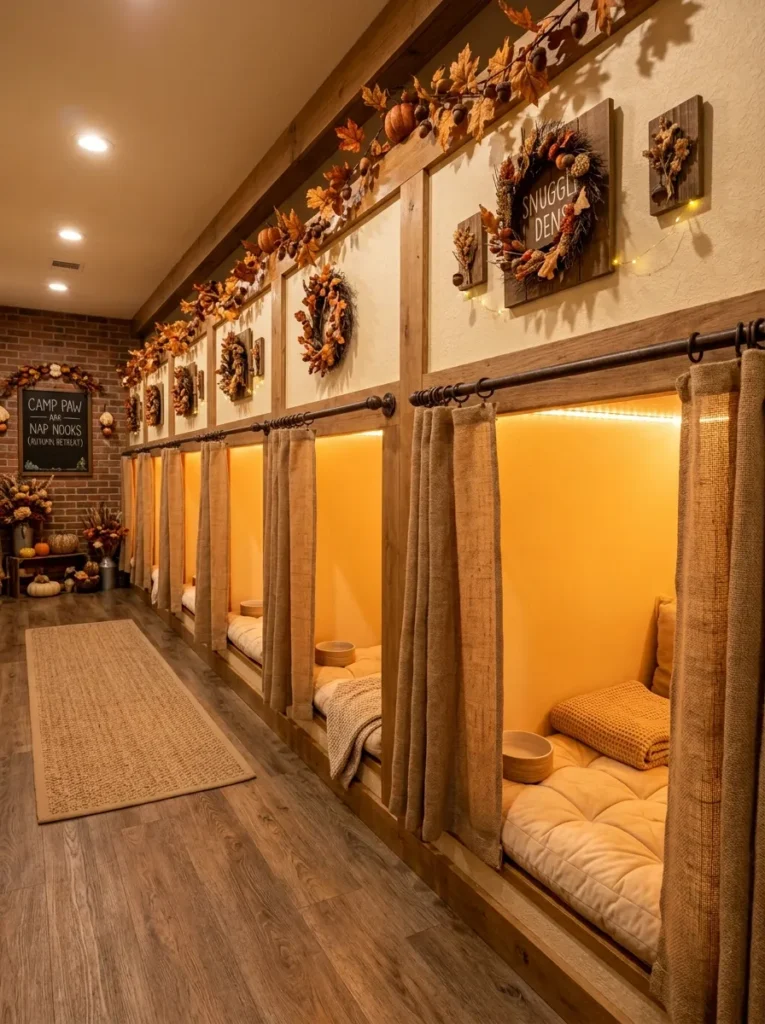
Vibe: The nooks are den-like — individual privacy nap nooks with soft cushions and a partial privacy screen that dogs can push aside create the semi-enclosed sleeping environment that most dogs actively seek when given choice — the den-like refuge that ethological research identifies as the preferred resting position for domestic dogs across all social contexts.
Why it works: The design of optimal dog sleeping spaces has been studied extensively in both shelter and boarding contexts, and the consistent finding is that dogs prefer partially enclosed, semi-private resting spaces over open, exposed sleeping surfaces — a preference that reflects the evolutionary heritage of den sleeping and the survival value of a sheltered, oriented sleeping position. In boarding environments specifically, where multiple dogs are housed in proximity and environmental novelty increases general arousal, the ability to choose a partially enclosed sleeping position that reduces visual exposure to other dogs and to facility activity is a significant welfare benefit. The privacy screen that dogs can push aside (rather than a fixed barrier) gives the dog agency over the degree of enclosure — dogs often begin with the screen pushed back and gradually allow it to close as they settle and relax.
How to get it: Build nap nooks from 3/4-inch plywood as recessed cubbies either built into an existing wall structure or as a freestanding alcove unit. Standard nook dimensions: 30 inches wide, 24 inches deep, 24 inches tall for medium dogs (adjust proportionally for large breeds). Install a warm LED puck light in the upper rear corner of each nook (battery-operated, $6–$12 each). Create privacy screens from natural burlap fabric ($2–$4 per yard) cut to the nook’s opening width and hung on a small tension rod — the fabric is light enough for any dog to push aside but opaque enough to provide genuine visual privacy when hanging naturally.
Shop The Look
- Plywood sheet 3/4 inch nook construction
- Burlap fabric natural tan privacy screen
- Small tension rod nook privacy curtain
- LED puck light battery warm amber
- Cushion insert nook size foam cut
12. Scent-Enrichment Autumn and Winter Sniff Walks
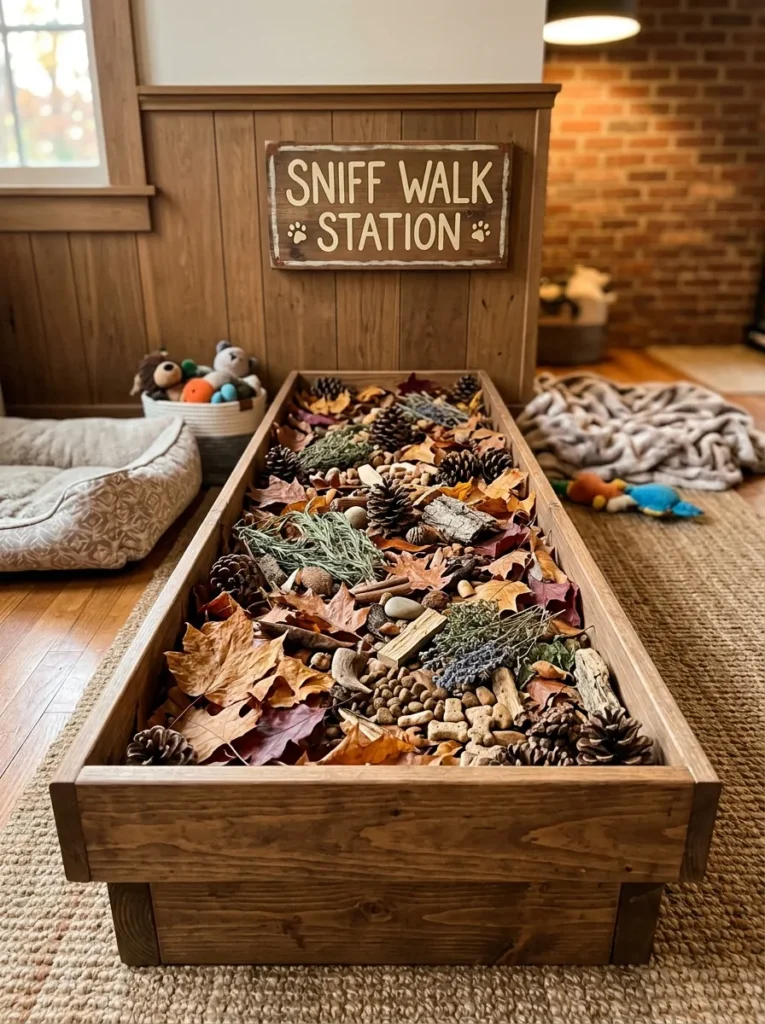
Vibe: The station is natural — an indoor scent-enrichment sniff walk station filled with autumn and winter natural materials brings the outdoor world’s scent complexity into the boarding environment, providing the olfactory stimulation that is the primary cognitive enrichment for dogs and the primary behavioral function of outdoor time.
Why it works: Olfactory investigation — sniffing — is not merely a behavior that dogs engage in during walks; it is the primary mode by which dogs gather information about their environment, other animals, food resources, and environmental change. Research using heart rate monitoring and cortisol analysis has demonstrated that dogs engaged in uninterrupted sniff exploration show measurably lower stress markers and higher post-activity rest duration than dogs who walk the same distance without sniff investigation opportunities. A seasonal scent enrichment box that changes materials with the season (dried autumn leaves and pine cones in fall, dried evergreen sprigs and cinnamon sticks in winter) provides an indoor substitute for the outdoor olfactory complexity that cold or wet weather restricts, maintaining the cognitive engagement that is central to boarding dog welfare.
How to get it: Build a shallow enrichment box from 3/4-inch plywood ($15–$25 in materials) at approximately 48×18×6-inch dimensions with an open top. Fill with seasonal materials: dried autumn leaves ($0 from any garden or park), pine cones ($0 from outdoor collection or $5–$10 from craft stores), dried lavender and rosemary stems ($3–$8 per bundle), and a handful of dog-safe dried herbs. Hide small treats (kibble pieces, small training treats) throughout the box before each use. Change the natural material collection seasonally and replace weekly to maintain novelty. Use only materials that are dog-safe if ingested in small quantities — no chocolate, no xylitol, no toxic plants.
Shop The Look
- Shallow display box plywood construct
- Dried autumn leaf assortment natural
- Natural pine cone bag mixed sizes
- Dried rosemary lavender herb bundle
- Small dog training treat bag enrichment
13. Holiday-Themed Photo Booth for Owner Connection
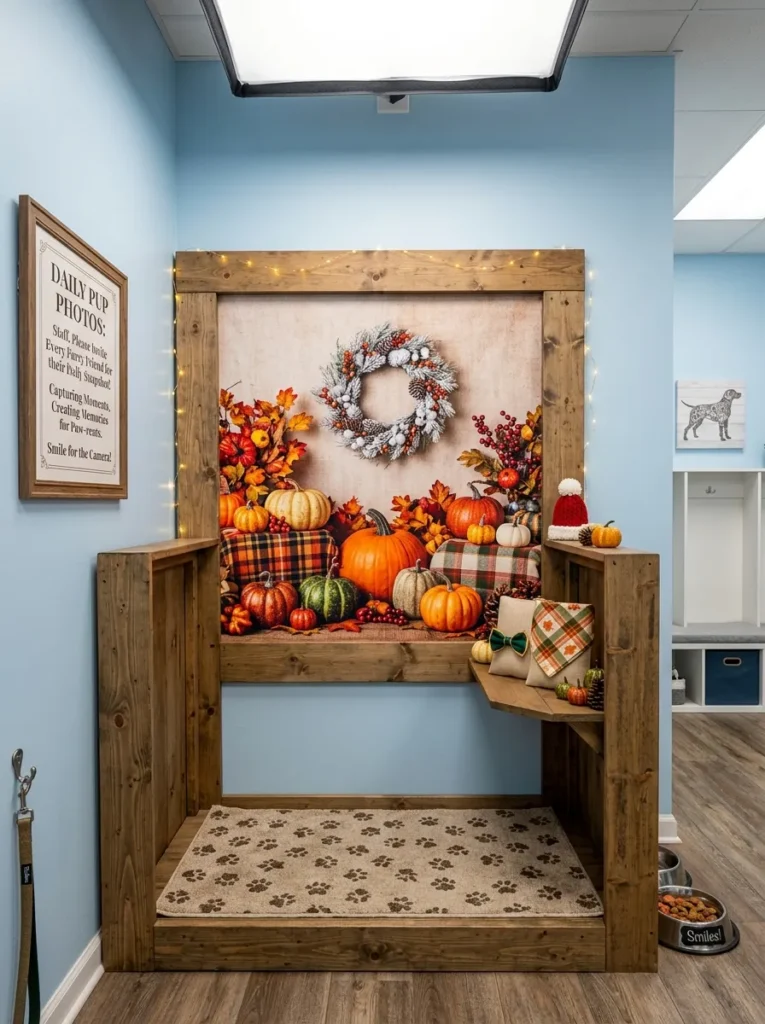
Vibe: The booth is connected — a dedicated holiday photo booth where staff take daily photos of each boarded dog and send them to owners is the communication feature that most directly addresses the separation anxiety that owners — particularly during holiday boarding — experience throughout their dogs’ stay.
Why it works: Owner-dog separation stress is a bidirectional phenomenon — owners’ worry about their dog’s wellbeing during boarding is a real psychological burden that the boarding facility’s communication practices can either alleviate or compound. Research on pet owner behavior during boarding shows that regular photographic updates (even a single daily photo) reduce owner anxiety, increase satisfaction ratings, increase rebooking probability, and generate significantly more social media sharing (free marketing) than any other single boarding facility practice. The holiday photo booth specifically provides a structured, consistent way for staff to capture a daily photo of each dog with minimal preparation time — the backdrop and props are always ready, the lighting is optimized for phone photography, and the seasonal theme creates charming images that owners share widely on social media throughout the holiday season.
How to get it: Build a simple photo backdrop frame from 1-inch PVC pipe ($15–$25 in materials) sized at 4×4 feet, with fabric backdrop clips at the top. Source interchangeable fabric backdrops for each season ($8–$20 per backdrop from Amazon or specialty photography suppliers): autumn plaid, Halloween, Thanksgiving harvest, Christmas/holiday, winter white. Stock a small prop shelf with 4–6 safe, non-threatening dog accessories: a holiday bandana ($5–$10), a small seasonal bow tie ($4–$8), a tiny Santa hat on an elastic ($3–$6 — introduce carefully as some dogs find hats stressful). Install a clip-on ring light ($20–$40) above the frame for consistent photo quality. Establish a staff protocol of one photo per dog per day during fall and winter boarding, sent via text or your reservation system’s messaging feature.
Shop The Look
- PVC pipe photo backdrop frame kit
- Holiday seasonal fabric backdrop set
- Dog holiday bandana set seasonal
- Ring light clip on phone photography
- Small seasonal dog prop bow tie hat
14. Sleep Schedule Matching for Boarded Dogs
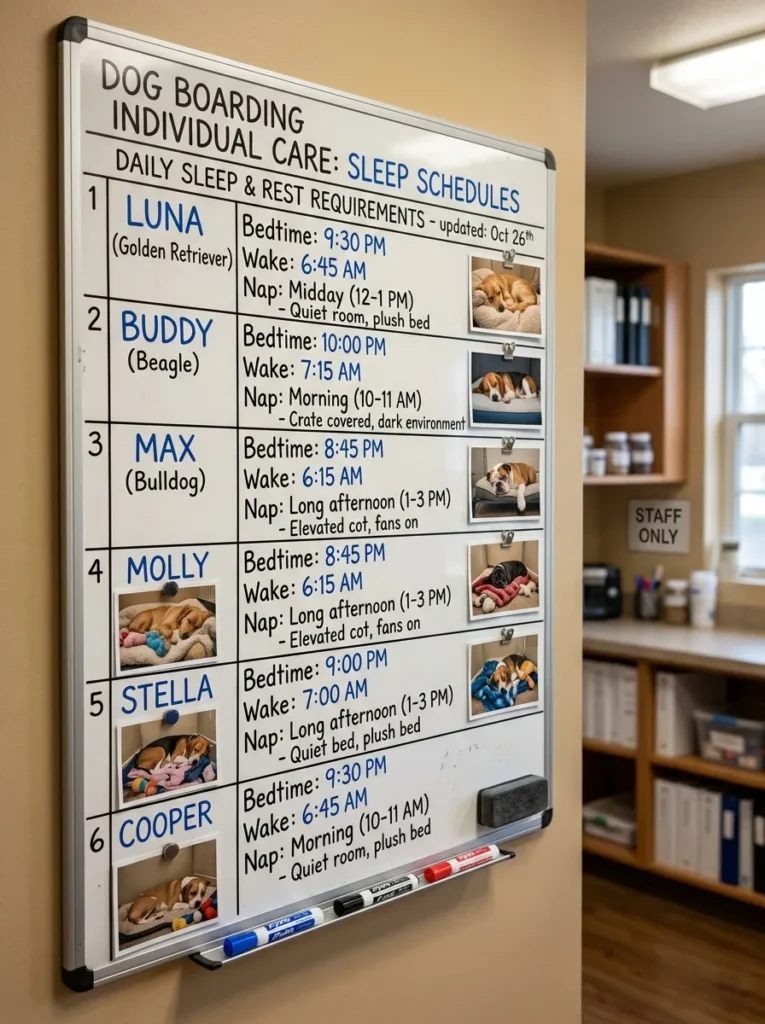
Vibe: The system is professional — a sleep schedule matching protocol that asks owners for their dog’s home sleep routine and implements it during boarding is the welfare practice that most directly reduces the circadian disruption that contributes to boarding stress, particularly during the longer nights of fall and winter.
Why it works: Dogs are habitual sleepers whose circadian rhythms are strongly entrained by their home environment’s light-dark cycle, feeding schedule, and social activity patterns. When a dog’s boarding schedule differs significantly from its home routine — particularly its overnight sleep window — the circadian misalignment produces cortisol elevation, disturbed sleep architecture, and the behavioral signs of fatigue and stress that owners sometimes interpret as “boarding sickness” on return. During fall and winter, when natural darkness begins earlier (5–6pm in northern climates in December), the boarding facility’s lighting and activity schedule needs to align with the shortened photoperiod to support natural melatonin production and appropriate early sleep onset. A simple intake questionnaire asking owners what time their dog normally goes to sleep, when it wakes, and whether it takes daytime naps provides the information needed to create a facility routine that supports each dog’s individual chronobiology.
How to get it: Add four questions to your boarding intake form or reservation system: What time does your dog normally go to sleep at home? What time does your dog normally wake in the morning? Does your dog take regular daytime naps? Is your dog kept in a dark room during sleep? Use this information to assign dogs to the appropriate sleeping suite (quieter suites for early sleepers, more active areas for late risers), to dim and quiet the sleeping room at each dog’s normal bedtime using automated lighting controls, and to schedule feeding times that align with each dog’s normal home routine. Post each dog’s sleep profile on the suite name board so all staff are aware during overnight monitoring.
Shop The Look
- Laminated intake form boarding dog sleep
- Dry erase marker set fine tip
- Whiteboard wall mount boarding chart
- Automated lighting timer outlet boarding
- Sleep schedule template boarding form
How to Start Your Fall and Winter Boarding Upgrade
The single most important first investment in a fall and winter boarding upgrade is the sleeping surface — specifically, elevating every dog’s sleeping area from direct floor contact and adding orthopedic foam as the base sleeping material. This one investment addresses the most physiologically significant welfare gap in conventional boarding environments: cold floor surfaces that conduct heat away from a sleeping dog’s body significantly faster than the ambient air temperature suggests, creating a thermal stress that is invisible to staff inspection but measurably present in the dog’s elevated cortisol and disturbed sleep. A 2-inch memory foam insert ($20–$40 per suite) on an elevated platform ($15–$25 in materials) with a washable waterproof cover ($15–$30) represents a total investment of $50–$95 per sleeping suite that produces immediate, significant welfare improvement for every dog in care.
The most common mistake in fall and winter boarding design is treating the seasonal upgrade as purely aesthetic — adding autumn decorations and holiday imagery without addressing the underlying environmental variables (thermal comfort, acoustic quality, light management, enrichment provision) that determine actual animal welfare. Seasonal decoration is valuable primarily for its effect on owner perception and confidence, but owner confidence is only justified if the physical environment it signals is genuinely comfortable. The correct investment priority is thermal comfort first, acoustic management second, enrichment provision third, and seasonal aesthetic last — not because the aesthetic is unimportant but because the welfare substance it communicates must be genuine to be sustainable.
Three fall and winter boarding upgrades under $80 that produce immediate improvement in both dog welfare and owner satisfaction: a warm LED strip behind each sleeping suite’s nook opening ($15–$25 per suite) that provides the specific warm 2200K ambient light that supports melatonin production and signals sleep during fall and winter’s early-dark evenings; a snuffle mat ($20–$35) added to the enrichment rotation for rainy or cold days when outdoor sessions are shortened; and a personal chalkboard name tag mounted above each sleeping suite ($2–$5 per suite) that creates the individualized welcome visible in every owner’s drop-off and pick-up photograph.
A complete fall and winter boarding upgrade — orthopedic sleeping suites with heated mats, acoustic management, indoor enrichment station, scent diffusion, electric fireplace focal point, and holiday photo booth — is achievable over one preparatory month before the fall boarding season begins, with a total investment ranging from $500–$1,500 for a boutique facility of 10–20 dogs. This investment represents a per-dog-night addition of $1.50–$3.50 to the facility’s operating cost, which is more than justified by the premium pricing that demonstrably superior seasonal boarding environments command — most boutique winter boarding facilities that implement these approaches charge $10–$25 per night above market rates for standard boarding, generating a return on investment within the first winter season.
Frequently Asked Questions About Fall and Winter Dog Boarding
What temperature should a dog boarding facility maintain during fall and winter?
The optimal temperature range for most dog boarding facilities during fall and winter is 68–72°F for the general facility ambient temperature. However, this range serves as a population average rather than an individual prescription — significant breed-based variation exists in thermal comfort preferences. Short-coated, lean, toy, and senior dogs require the warmer end of this range (70–72°F) or supplemental heating through heated sleeping mats. Double-coated Arctic breeds (Huskies, Malamutes, Samoyeds) are most comfortable at the cooler end (65–68°F) or even slightly below standard range, and may experience heat stress if maintained at 72°F continuously. The floor surface temperature is as important as air temperature — a room maintained at 70°F with an unheated concrete floor may have an effective floor-contact temperature of 58–62°F, which is below the comfortable range for most short-coated dogs resting directly on it. Elevated sleeping surfaces and heated floor mats address the floor temperature variable independently of ambient air temperature.
How do I manage dogs that are anxious or stressed during winter boarding?
Anxiety management in boarding dogs during fall and winter requires addressing the three primary anxiety triggers simultaneously: separation from the owner, environmental novelty, and disruption of routine. Familiar scent (owner-provided bedding from home) addresses the separation component — research demonstrates consistent cortisol reduction when boarding dogs have access to their owner’s scent. Gradual environmental familiarization (a brief 30-minute “meet the facility” visit before the first overnight stay) addresses the novelty component. Schedule matching (feeding and sleep times consistent with home routine) addresses the routine disruption component. For dogs with documented anxiety disorders, veterinary consultation before boarding to discuss short-term anxiolytic options is appropriate — a boarding facility’s role is to optimize the environmental variables within its control while supporting veterinary recommendations for individual dogs whose anxiety exceeds what environmental management can adequately address.
What enrichment activities work best for dogs during cold winter boarding?
The most effective winter boarding enrichment activities engage the three core behavioral systems that outdoor access normally satisfies: olfactory exploration, cognitive problem-solving, and physical activity. Olfactory enrichment (snuffle mats, nose work games, scent-enrichment boxes with seasonal natural materials) is the highest-priority indoor substitute for outdoor sniffing time and produces the most consistent welfare improvement per session time. Food puzzle enrichment (frozen stuffed Kongs, LickiMats, slow feeder bowls, progressive-difficulty puzzle toys) engages the cognitive problem-solving system and provides equivalent fatigue to moderate exercise. Physical enrichment options for indoor use include stair climbing (if available), hide-and-seek games with staff, obstacle courses made from boarding facility furniture and equipment, and indoor fetch in hallways or large play areas. Rotating between these three categories ensures that novelty is maintained throughout a multi-day winter boarding stay.
How should I handle outdoor time during cold, wet, or icy conditions?
A tiered outdoor time protocol for adverse weather conditions provides the welfare benefit of fresh air and outdoor access while managing the safety and comfort risks of extreme cold, heavy rain, or icy surfaces. Tier one (mild cold, 32–45°F, no precipitation): full outdoor sessions of normal duration with standard monitoring for signs of cold stress (shivering, reluctance to move, seeking warmth). Tier two (cold with precipitation, 25–35°F or any rain): shortened outdoor sessions of 10–15 minutes maximum for short-coated or small dogs, focused on elimination and brief exercise rather than play, with covered outdoor areas prioritized; full outdoor sessions maintained for cold-adapted breeds. Tier three (extreme cold below 25°F, ice, or heavy snow): elimination-only outdoor access of 5 minutes maximum for most breeds, with extended indoor enrichment substituting for outdoor exercise time; all dogs returned indoors immediately if signs of cold stress are observed. Paw care (checking for ice accumulation, using paw wax for salt protection on urban surfaces) is required before and after all Tier two and Tier three outdoor sessions.
How do I communicate the quality of my fall and winter boarding to potential clients?
Effective communication of seasonal boarding quality combines visual documentation, transparent process description, and social proof. Visual documentation through daily photos and videos (sent via text or boarding management app messaging) provides ongoing evidence of individual dog wellbeing that is more persuasive than any facility description. Transparent process description through the facility website, intake forms, and pre-stay communications that specifically describes the seasonal protocols (heated sleeping surfaces, calming scent diffusion, indoor enrichment schedule, outdoor weather modification protocols) communicates knowledge and preparedness. Social proof through testimonials specifically about fall and winter boarding experiences, holiday season social media posts using the photo booth images, and before-and-after showcases of the seasonal facility upgrades builds the trust that drives bookings during the highest-demand holiday periods. Facility tours (in-person or virtual video tours) during the fall and winter setup period allow potential clients to see the seasonal environment before committing to their first booking.
Ready to Create a Cozier Fall and Winter Boarding Experience?
These 14 ideas cover the full range of what a genuinely well-designed fall and winter dog boarding environment can offer — from the physiological precision of orthopedic heated sleeping suites and breed-specific thermal accommodation, to the behavioral intelligence of indoor enrichment puzzle stations and seasonal scent-enrichment sniff walks, from the acoustic wisdom of calming music systems and privacy nap nooks to the atmospheric warmth of an electric fireplace focal point and holiday seasonal decoration, from the welfare depth of a sleep schedule matching protocol to the owner connection of a daily holiday photo booth. You do not need to implement all 14 before the first cold snap of fall — the most effective seasonal boarding upgrade starts with the single element that most directly addresses your specific facility’s most significant welfare gap in the colder months. For most facilities, that is the sleeping surface: elevated, orthopedic, thermally insulated from the floor. Start there, assess the change in dog settling behavior within the first two weeks, and let the evidence of improved welfare guide the next investment. A boarding facility that takes fall and winter seriously does not merely keep dogs safe during the cold months — it creates an environment where dogs genuinely rest, genuinely recover, and are genuinely ready to return home to their families in better condition than when they arrived. That is the standard worth building toward.