30+ Foods Toxic to Guinea Pigs (What Never to Feed)
Knowing which foods guinea pigs cannot eat is one of the most important parts of guinea pig ownership. Guinea pigs have delicate digestive systems, and even a small piece of the wrong food can cause serious illness. Unlike rats or hamsters, guinea pigs cannot vomit, so anything harmful stays in their system until it passes through — which is exactly why prevention matters more than any cure.
This guide gives you the definitive, vet-reviewed list of toxic foods for guinea pigs, grouped into easy categories so you can check it at a glance. If you’re unsure what a healthy guinea pig diet looks like, start with our complete safe food list for guinea pigs first — then come back here to learn what to keep far away from your piggies.
Why Some Foods Are Dangerous for Guinea Pigs
Guinea pigs are strict herbivores with a highly specialised digestive tract. Their gut relies on constant fibre movement (from unlimited hay) to stay healthy. Foods that are perfectly safe for humans — or even for other pets — can disrupt this balance in several ways:
- Organ damage: Compounds like oxalic acid (rhubarb) or thiosulphate (onions, garlic) can damage red blood cells, kidneys, or the liver.
- Digestive shutdown: Starchy or fatty foods (potatoes, bread, dairy) can slow or stop gut movement, a dangerous condition called GI stasis.
- Choking and blockages: Guinea pigs have small throats. Corn kernels, nuts, and seeds are serious choking hazards and can block the intestines.
- No vomiting reflex: Guinea pigs physically cannot vomit, so they cannot expel something poisonous the way a cat or dog might.
The takeaway is simple: if a food isn’t on the safe list, don’t offer it “just to see.” When in doubt, stick to hay, plain guinea pig pellets, and safe vegetables — and check with an exotic vet before introducing anything new.
The Definitive Toxic List: 30+ Foods Guinea Pigs Cannot Eat
Below is the full list, grouped by category. Print it, screenshot it, or stick it on the fridge — everyone in the household should know these.
Vegetables to Never Feed
Some of these grow in ordinary gardens or sit in the fridge, which is exactly why they’re the most common cause of accidental poisoning.
- Onions (all types, cooked or raw) — contain thiosulphate, which destroys red blood cells and can cause life-threatening anaemia.
- Garlic — same family as onions, equally dangerous. Never use garlic powder or garlic-seasoned food either.
- Chives — another member of the allium family; toxic for the same reason as onions and garlic.
- Leeks — alliums again. The whole plant is unsafe.
- Shallots and spring onions — all alliums are off the menu, no exceptions.
- Raw or green potatoes — contain solanine, a toxin that is especially concentrated in green skin and sprouts. Cooked potato is not toxic, but it’s still starchy and unsuitable — just skip potatoes entirely.
- Rhubarb (leaves and stalks) — extremely high in oxalic acid, which can cause kidney damage. One of the most dangerous garden plants for guinea pigs.
- Mushrooms — wild mushrooms can be deadly, and even shop-bought mushrooms offer no nutrition and can upset the digestive system. Avoid all mushrooms.
- Tomato leaves and stems — the ripe tomato fruit itself is fine in small amounts, but the green leaves and stems contain tomatine, which is toxic.
- Iceberg lettuce — not technically toxic, but it is high in water and low in nutrition, causes diarrhoea, and can be harmful in anything more than a tiny nibble. Choose romaine or leaf lettuce instead.
Fruits to Never Feed
Here’s some good news: most common fruits are safe for guinea pigs in moderation — including grapes, oranges, apples, strawberries, and blueberries. For a full breakdown, see our guide to safe fruits for guinea pigs. The real dangers in the fruit category are:
- Avocado — contains persin, which is toxic to guinea pigs, plus it’s extremely fatty. Never feed any part of the avocado, including the pit and leaves.
- Apple seeds, cherry pits, peach pits, and other fruit seeds/stones — these contain amygdalin, which converts to cyanide. Always core apples and remove seeds and pits before serving fruit.
- Coconut — very high in fat; guinea pig digestion can’t handle it.
- Dried fruits — concentrated sugar and often contain sulphites and preservatives. Stick to fresh fruit only.
- Citrus peels — the flesh of oranges and mandarins is fine in moderation, but the peels contain oils that irritate the mouth and gut.
Human Foods & Pantry Items to Never Feed
Guinea pigs are strict herbivores — they should never eat animal products, and most processed human foods are dangerous or useless to them.
- Chocolate — contains theobromine and caffeine; toxic to guinea pigs, just as it is to dogs and cats.
- Dairy products (milk, cheese, yoghurt, ice cream) — guinea pigs are lactose intolerant. Dairy causes severe digestive upset.
- Meat of any kind — guinea pigs cannot digest animal protein.
- Eggs — an animal product; never feed.
- Nuts and seeds (sunflower seeds, peanuts, almonds, pumpkin seeds) — high in fat, a serious choking hazard, and hard to digest. Despite being sold in some pet shops as treats, they are unsafe.
- Corn kernels — a serious choking hazard and nearly indigestible. Corn husks and silk are safe, but never the kernels.
- Bread, crackers, biscuits, and baked goods — starchy, processed, and often contain salt, sugar, and preservatives that guinea pigs cannot handle.
- Caffeine (coffee, tea, energy drinks, cola) — toxic to guinea pigs’ hearts and nervous systems.
- Alcohol — poisonous in any amount.
- Crisps, chips, popcorn, and salty snacks — excess salt and fat with zero nutrition.
- Breakfast cereals, pasta, and rice — grains and starches disrupt gut flora and offer nothing a guinea pig needs.
- Honey, jam, and sweets — guinea pigs cannot process concentrated sugar properly.
- Anything cooked, seasoned, or flavoured for humans — if it has salt, spices, oil, or flavouring, it doesn’t belong near your guinea pig.
Plants & Household Items to Never Feed
If your guinea pigs get floor time outdoors or roam indoors, these are worth knowing — some are extremely common.
- Ivy — toxic to guinea pigs and widespread in gardens and on house walls.
- Daffodils and other bulb flowers (tulips, hyacinths, lilies) — the bulbs are especially toxic; all parts should be avoided.
- Foxglove, hemlock, and nightshade — extremely poisonous wild plants. Check any outdoor grazing area carefully.
- Tomato leaves and stems (repeated from above — worth remembering, since many people grow tomatoes at home).
- Oak leaves and acorns — contain tannins that are toxic in quantity.
- Houseplant leaves in general — many common houseplants (dieffenbachia, philodendron, peace lily) are toxic. If your guinea pig roams indoors, keep houseplants well out of reach.
- Grass treated with weedkiller or fertiliser — only offer untreated, pesticide-free grass from a safe area.
- Cedars and pine shavings (as bedding) — not food, but worth flagging: aromatic softwood beddings release fumes that damage guinea pig lungs. Use paper-based or aspen bedding instead.
| Food | Why it’s dangerous | Risk level |
|---|---|---|
| Onions & garlic | Destroy red blood cells (thiosulphate) | Very high |
| Raw/green potatoes | Solanine poisoning | Very high |
| Chocolate | Theobromine toxicity | Very high |
| Avocado | Persin; very high fat | High |
| Rhubarb | Oxalic acid; kidney damage | Very high |
| Dairy products | Lactose intolerance; digestive upset | High |
| Nuts & seeds | Choking hazard; high fat | High |
| Mushrooms | Potential toxins; digestive upset | High |
| Iceberg lettuce | Diarrhoea; harmful, not nutritious | Moderate |
| Bread & crackers | Starch disrupts gut flora | Moderate |
What to Do If Your Guinea Pig Eats Something Toxic
Stay calm and act quickly — speed genuinely matters here. Follow these steps:
- 1. Remove the food immediately. Take away whatever remains, and note exactly what it was and roughly how much was eaten. This information is vital for the vet.
- 2. Do NOT try to make your guinea pig vomit. Guinea pigs cannot vomit, and forcing it could cause choking or injury.
- 3. Watch for symptoms. Lethargy, loss of appetite, diarrhoea, bloating, difficulty breathing, or unusual stillness are all warning signs. Learn to spot trouble early with our guide on how to tell if your guinea pig is sick.
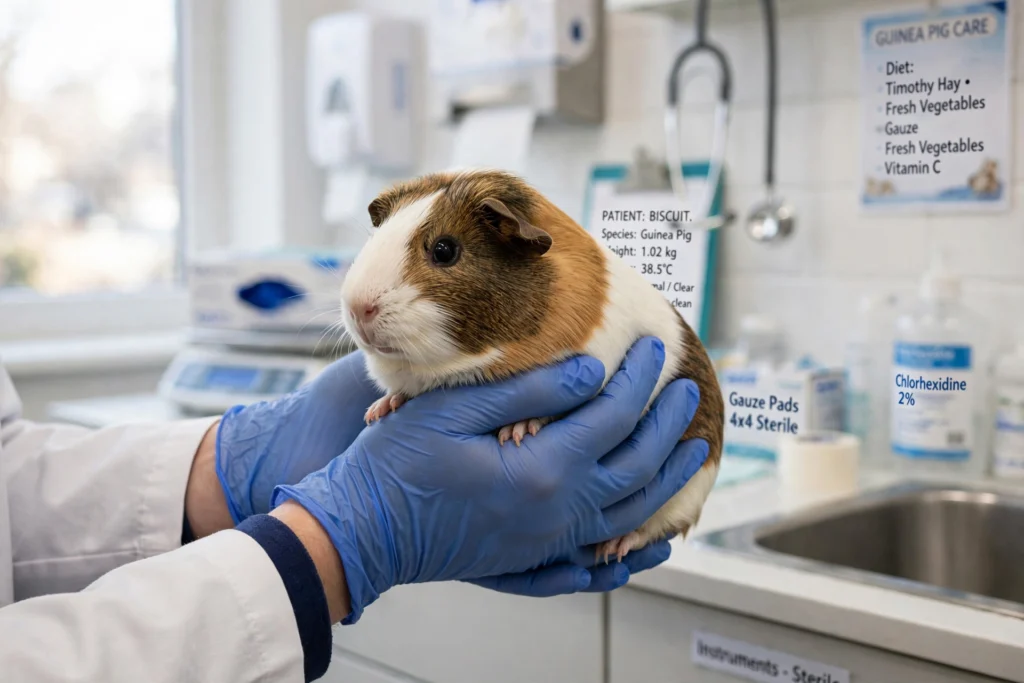
- 4. Call an exotic vet right away. Do not wait to see if symptoms appear — with some toxins (like onion or rhubarb poisoning), early treatment matters enormously. Find an exotic-animal vet, not just a general small-animal practice.
- 5. Offer fresh hay and water. Hay keeps the gut moving; water helps with hydration. Do not syringe-feed water unless your vet tells you to.
Keep your vet’s emergency number saved in your phone before anything happens — at 2 a.m., you don’t want to be Googling.
Safe Alternatives: What to Feed Instead
The good news is that the safe menu is huge. When you remove everything toxic, what’s left is a delicious, varied diet:
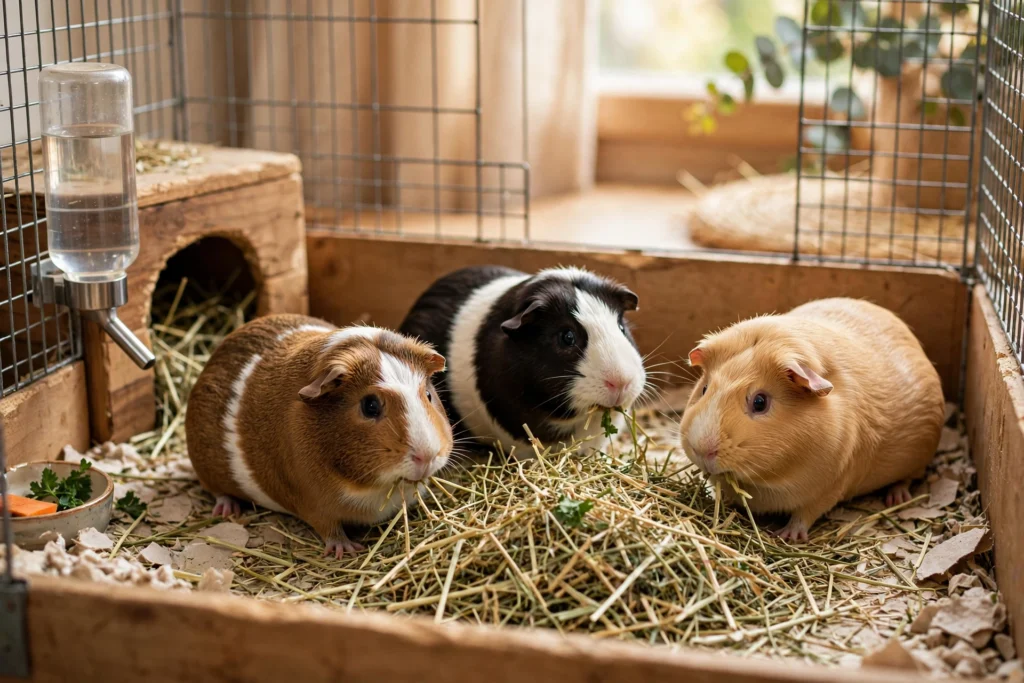
- Unlimited timothy hay — the foundation of every meal, every day.
- Plain timothy-based pellets — a small daily portion (about 1/8 cup per pig), with no coloured bits, seeds, or dried fruit mixed in.
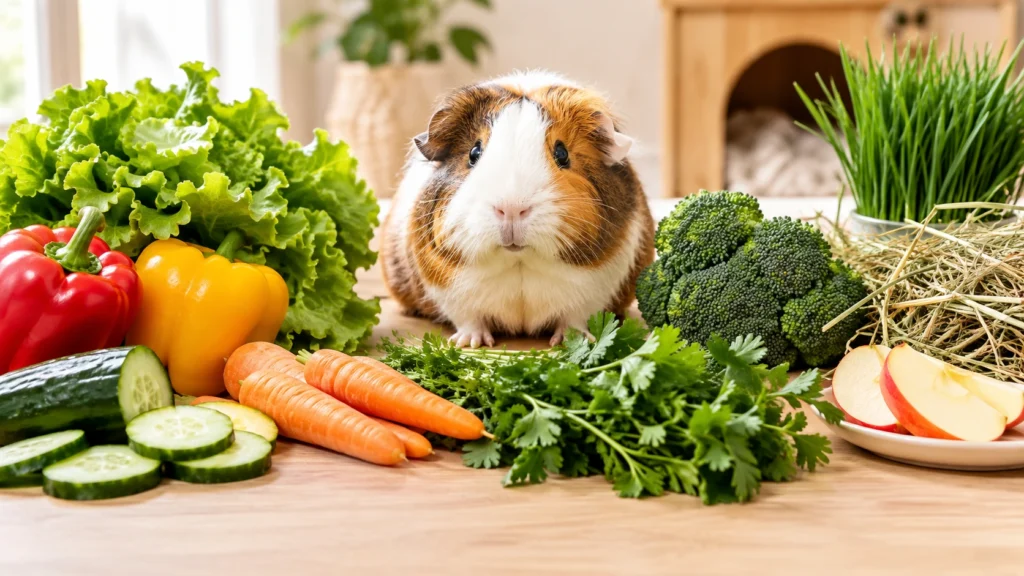
- Safe vegetables daily: romaine lettuce, bell peppers (vitamin C superstars), cucumber, courgette, celery, coriander, and small amounts of carrot.
- Safe fruits as occasional treats (2–3 times a week): apple slices (seeds removed), strawberries, blueberries, grapes, and small orange segments.
- Fresh water — changed daily.
Variety keeps your guinea pigs happy and covers their vitamin C needs — guinea pigs, like humans, can’t make their own vitamin C, so fresh veg every day is non-negotiable.
Frequently Asked Questions
Can guinea pigs eat tomatoes?
Yes — ripe tomato flesh is safe in small amounts. However, the green leaves and stems contain tomatine and must never be fed. If you grow tomatoes, make sure your guinea pigs can’t reach the plants.
Are grapes and oranges safe for guinea pigs?
Yes, both are fine in moderation as occasional treats. Grapes are sugary, so offer just a few at a time. Orange flesh is a good source of vitamin C; just remove the peel first, as the oils can irritate their mouths.
Can guinea pigs eat iceberg lettuce?
Technically it’s not poisonous, but it’s strongly discouraged. Iceberg lettuce is mostly water with almost no nutrition and can cause diarrhoea. Romaine, butterhead, or other leaf lettuces are much better choices.
What should I do if my guinea pig ate chocolate?
Remove any remaining chocolate, note how much was eaten, and call an exotic vet immediately — don’t wait for symptoms. Chocolate contains theobromine and caffeine, both toxic to guinea pigs.
Are apple seeds really dangerous for guinea pigs?
Yes. Apple seeds (and cherry, peach, and plum pits) contain amygdalin, which converts to cyanide when chewed. Always core apples and remove all seeds and pits before serving fruit.
Can guinea pigs eat potatoes if they’re cooked?
No — skip potatoes entirely. Cooking doesn’t make them suitable: they’re starchy, low in fibre, and disrupt gut flora. Raw or green potatoes are outright toxic due to solanine. There’s simply no good reason to feed potato.
The bottom line: memorising the foods guinea pigs cannot eat protects your piggies from the most common diet mistakes. When in doubt, stick to hay, plain pellets, and proven safe vegetables — and always check with an exotic vet before adding anything new to the menu.