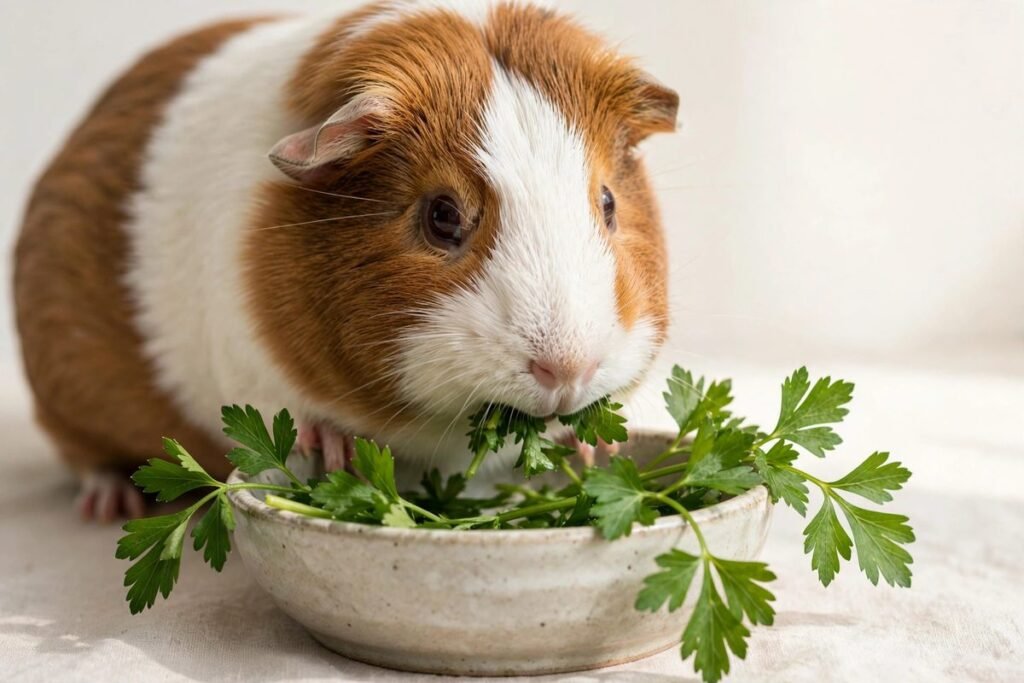
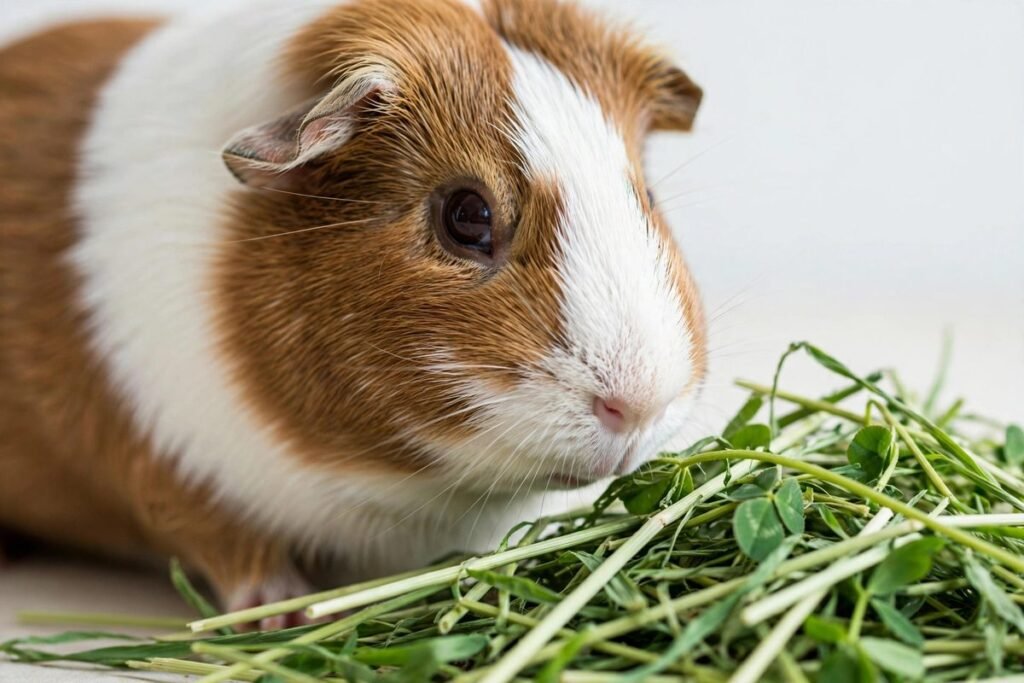
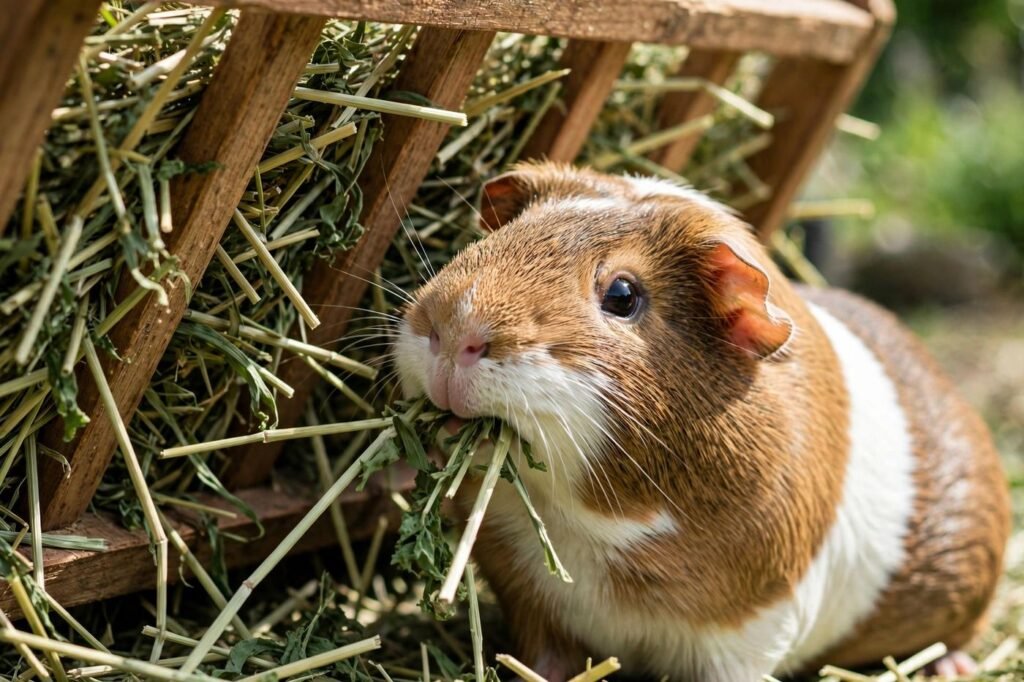
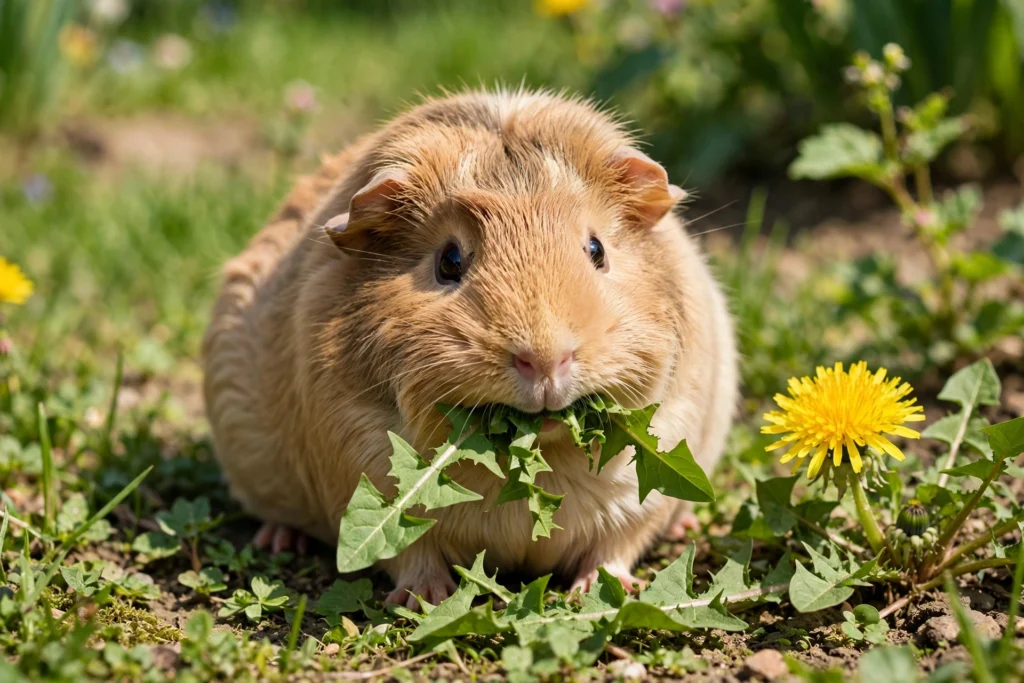
Can guinea pigs eat parsley? Yes — both flat-leaf and curly parsley are safe for guinea pigs, and most pigs love the stuff. It’s packed with vitamin C, which guinea pigs can’t make themselves and must get from food. But there’s a catch: parsley is also high in calcium and oxalates, so it’s a sometimes-herb, not an everyday staple. Here’s exactly how much is safe, how often to serve it, and the mistakes to avoid.
Is Parsley Safe for Guinea Pigs?
Completely safe — parsley isn’t toxic to guinea pigs in any form you’d buy at a shop. The reason for the portion limits isn’t poison, it’s minerals:
- Vitamin C: Parsley is genuinely rich in vitamin C — a real plus, since guinea pigs need 10–30mg daily and can’t synthesise it.
- Calcium: Parsley is also high in calcium. Too much calcium over time raises the risk of bladder stones, one of the more common (and painful) guinea pig health problems.
- Oxalates: Present in moderate amounts; another reason not to overdo it.
So the verdict: parsley is a healthy treat herb, served in small amounts a couple of times a week — not a daily salad base. Think of it like coriander’s richer cousin: lovely, but rationed.
For the full list of what belongs in the daily bowl, see our safe food list.
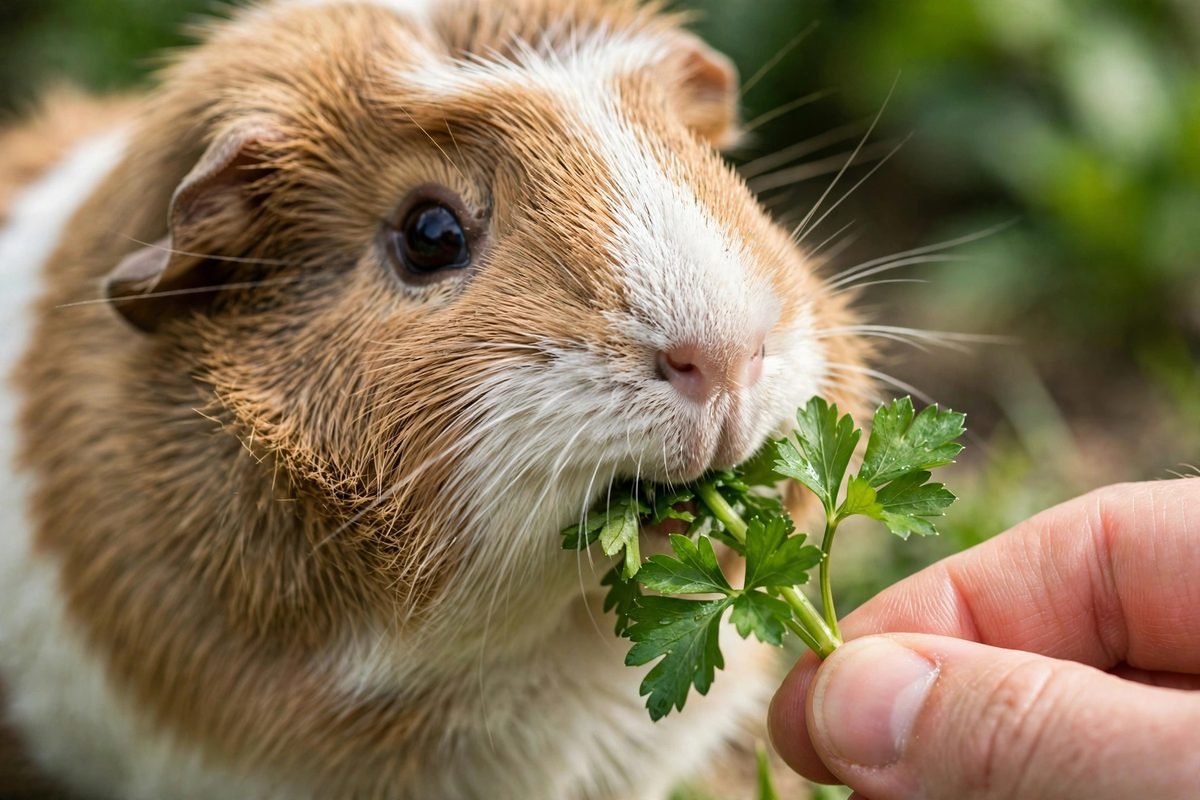
Flat-Leaf vs Curly Parsley: Does It Matter?
No — both flat-leaf (Italian) parsley and curly parsley are equally safe for guinea pigs. Nutritionally they’re near-identical, and pigs don’t tend to prefer one over the other the way humans do.
The one practical difference: flat-leaf parsley is easier to wash thoroughly, since dirt hides in curly parsley’s ruffles. Whichever you buy, give it a good rinse — shop herbs can carry pesticide residue and grit.
Verdict: Buy whichever looks fresher and greener. Wash it well. Done.
How Much Parsley Can Guinea Pigs Eat?
Here’s the portion guide that keeps parsley in the safe zone:
- Serving size: A small sprig or two — roughly a tablespoon of leaves per pig.
- Frequency: 2–3 times per week at most, not daily.
- Part of a mix: Serve parsley alongside lower-calcium greens (romaine lettuce, cucumber, bell pepper) rather than as the whole portion.
Why the restraint? A pig that gets a big bunch of parsley every day is getting a steady calcium load on top of whatever’s in its pellets and other veg. Over months, that’s how bladder sludge and stones build up. For the full daily balance, our diet chart shows exactly how herbs fit into the weekly rotation.
Tip: If your pig is prone to urinary issues or has had bladder stones before, skip parsley altogether and stick to low-calcium herbs like coriander and dill. Ask your vet if you’re unsure.
The Calcium Warning, Explained
This deserves its own section because it’s the single most misunderstood thing about parsley. Guinea pigs absorb calcium from food very efficiently — and excrete the excess in their urine. Chronically high calcium intake leads to:
- Bladder sludge — thick, gritty urine that’s uncomfortable to pass
- Bladder stones — hard mineral stones that often need surgical removal
- Pain and blood in urine — the signs owners usually notice first
Parsley isn’t the villain here — any high-calcium food fed heavily causes the same problem (kale and spinach included). The fix is rotation: no single high-calcium green every day. Parsley twice a week within a varied veg rotation is perfectly fine for a healthy pig.
How to Serve Parsley to Guinea Pigs
- Fresh only. Crisp, green sprigs — never wilted, slimy, or yellowing.
- Wash thoroughly. Rinse under running water to remove pesticides and grit, especially curly parsley.
- Introduce gradually. A tiny piece first; new foods introduced suddenly can upset guinea pig digestion.
- Room temperature. Don’t serve fridge-cold herbs straight from the fridge — let them warm up a little.
- Remove uneaten portions. Pick out wilted leftovers within a few hours; rotting veg breeds bacteria.
- Stems are fine. The tender stems are safe too — pigs often eat the whole sprig.
What about dried parsley or parsley flakes? Skip them. Dried herbs are concentrated, dusty, and offer none of the hydration of fresh greens. Fresh is always the answer.
Parsley vs Other Popular Herbs
Quick comparison for your shopping list:
- Parsley — High calcium — 2–3x per week, small amounts
- Coriander (cilantro) — Low calcium — daily staple herb, the best everyday choice
- Basil — Moderate calcium — a few times a week
- Mint — Low–moderate calcium — a few times a week, small amounts
- Dill — Low calcium — a few times a week
If you want one herb to buy every week without thinking, make it coriander — low calcium, pigs adore it, and it’s safe daily. Keep parsley as the twice-a-week treat.
And remember the never-list: for plants and foods that are genuinely dangerous, check our toxic foods guide before offering anything unfamiliar — and the RSPCA’s guinea pig diet advice is a solid vet-backed second opinion on daily feeding.
What NOT to Do With Parsley
- Don’t feed it daily in large amounts. The calcium adds up — bladder stones are the risk.
- Don’t serve dried, seasoned, or cooked parsley. Fresh and plain only.
- Don’t use it to replace vitamin C supplements or varied veg. It’s a contributor, not a complete diet.
- Don’t feed parsley to pigs with urinary problems. Stick to low-calcium greens and check with your vet.
- Don’t assume “herbs are herbs.” Some garden herbs and plants are toxic to guinea pigs — always verify a new plant before serving.
The Takeaway
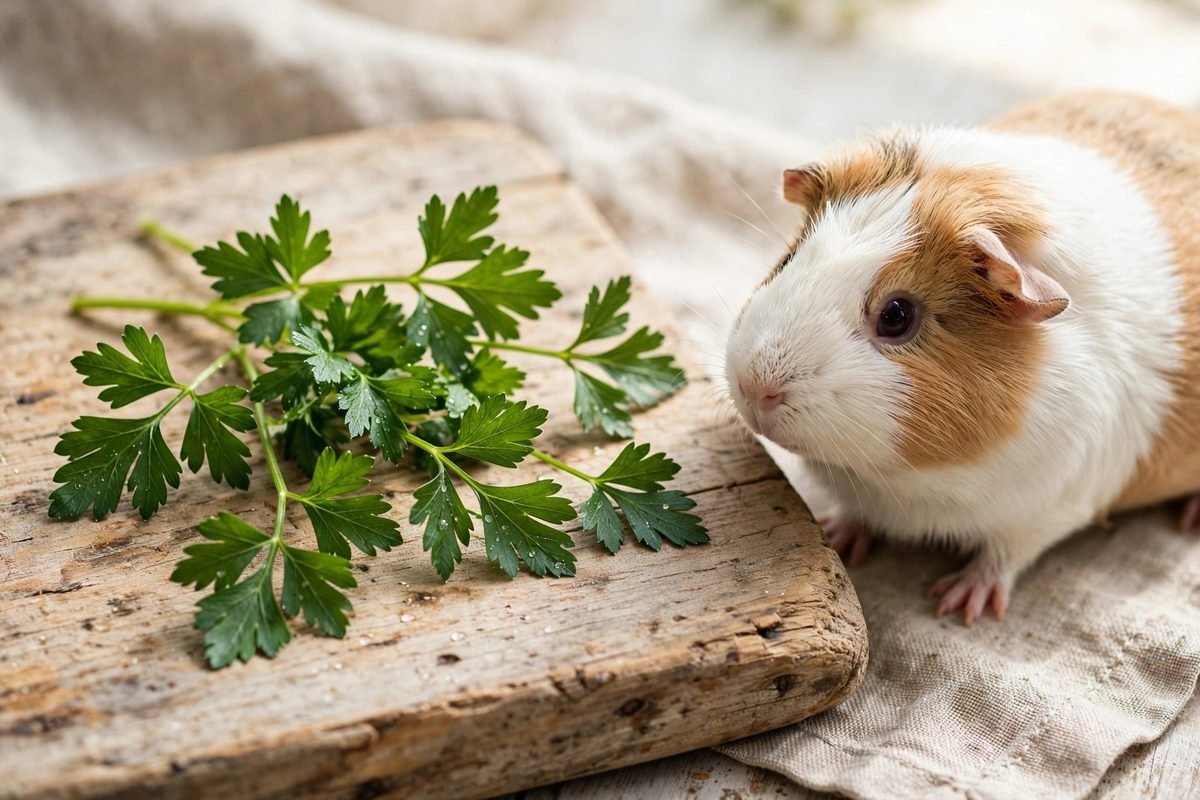
Can guinea pigs eat parsley? Yes — a small sprig or two, 2–3 times a week, as part of a varied veg rotation. It’s rich in vitamin C and perfectly safe in those amounts. The only real rule is the calcium one: don’t let parsley (or any high-calcium green) become a daily habit, or bladder stones become a risk. Wash it fresh, serve it plain, rotate it with low-calcium favourites like coriander — and your pigs get all the benefit with none of the worry.
Frequently Asked Questions
Can guinea pigs eat parsley every day?
No — keep it to 2–3 times per week in small amounts. Parsley is high in calcium, and daily feeding over time raises the risk of bladder stones. Coriander is the better daily herb.
Is flat-leaf or curly parsley better for guinea pigs?
Both are equally safe and nutritious. Flat-leaf is slightly easier to wash clean; otherwise buy whichever looks fresher.
Can baby guinea pigs eat parsley?
Yes, in tiny amounts — a single small leaf as an occasional treat. Young pigs under 6 months actually need more calcium for growth, but keep portions small and introduce any new food gradually.
Is parsley high in vitamin C for guinea pigs?
Yes — parsley is one of the more vitamin-C-rich herbs you can offer, which is valuable since guinea pigs can’t produce their own vitamin C. It complements, but doesn’t replace, a varied fresh diet.
Can guinea pigs eat parsley stems?
Yes, the tender stems are safe and most pigs eat the whole sprig. Avoid thick, woody stems — stick to fresh, soft sprigs.
What herbs can guinea pigs eat daily?
Coriander (cilantro) is the best everyday herb — low in calcium and loved by most pigs. Basil, mint, and dill are good a few times a week. Keep high-calcium parsley and kale to 2–3 times weekly.