Guinea Pig Teeth: 11 Facts Every Owner Must Know
Guinea pig teeth never stop growing — not in a young piglet, not in a five-year-old senior, not ever. In the wild, hours of grazing on tough grasses grind them down as fast as they grow. In your living room, that job falls to you, and getting it wrong is one of the commonest causes of slow, miserable decline in pet guinea pigs. Overgrown or misaligned teeth stop a pig eating properly, and a guinea pig that cannot eat loses condition frighteningly fast. This guide gives you the 11 dental facts that matter: how their teeth work, the warning signs of trouble, the one diet rule that prevents most problems, and exactly when to get a vet involved.
1. Guinea Pigs Have 20 Teeth
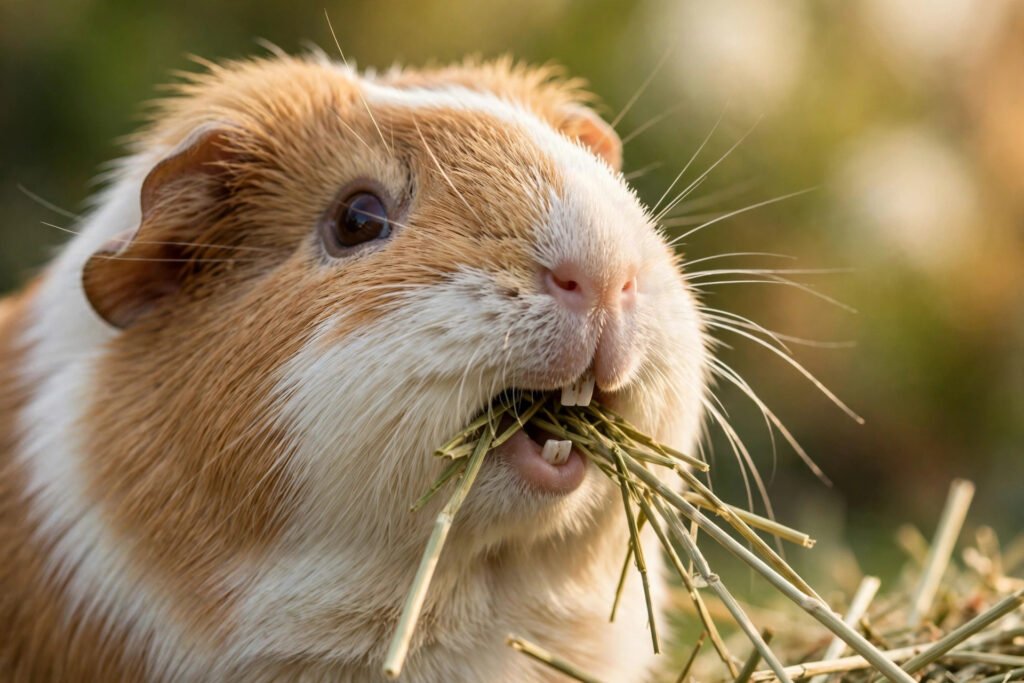
A full adult set is 20 teeth: 4 incisors (the big, visible front ones — two up, two down) and 16 cheek teeth (premolars and molars) hidden at the back of the mouth. Unlike human teeth, every one of them is open-rooted, meaning the roots stay open and the tooth keeps erupting throughout the pig’s entire life. There is no “adult teeth are in” milestone. The system only works when constant growth is matched by constant wear.
2. All 20 Teeth Grow Continuously
This is the single most important fact in this article. Incisors grow roughly 1–2 mm per week, and the molars keep growing too. The teeth evolved for a diet of abrasive grasses that grind them down around the clock. A diet of soft pellets and the occasional lettuce leaf simply does not wear them enough — and that is where nearly all dental problems begin. If you remember nothing else from this guide, remember this: teeth grow constantly, so the diet must grind constantly.
3. Hay Is the Toothbrush (and the Toothpaste)
Unlimited grass hay — timothy, orchard, or meadow — is the single best dental-care product you can buy, and it is cheap. The long-strand fibre requires the side-to-side grinding motion that wears the cheek teeth evenly, which is precisely the wear pellets and veg cannot provide. A pig eating hay properly wears its teeth down naturally, hour after hour. Our guinea pig diet chart shows exactly how hay, pellets, and fresh veg should be balanced across the day — but the headline rule is simple: hay available at all times, no exceptions.
4. Overgrown Incisors Are the Easiest Problem to Spot
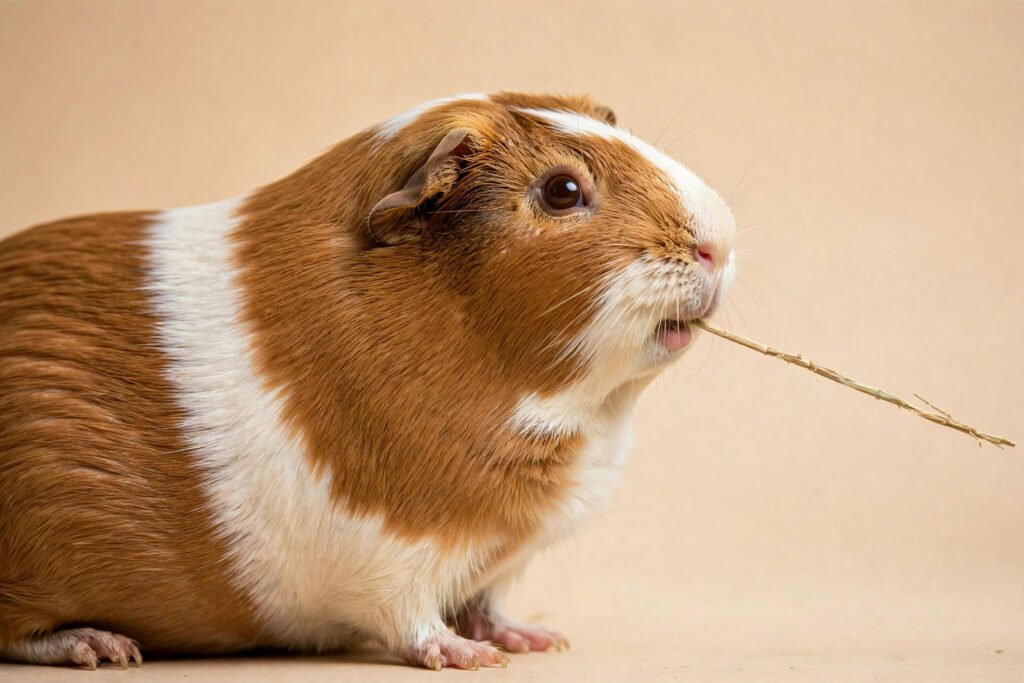
The front teeth are the ones you can see, so they are your early-warning system. Healthy incisors are roughly even, with the uppers overlapping the lowers slightly, and a natural yellowish-white colour. Watch for incisors that are visibly long, curved, broken, or growing at an angle. A pig with overgrown incisors may drool, drop food, or tilt its head oddly while eating. You can check the incisors weekly at home by gently lifting the lips — no tools, no force. The molars, however, you cannot see at all, which is why they cause the worst surprises.
5. Molar Problems Are the Dangerous, Invisible Ones
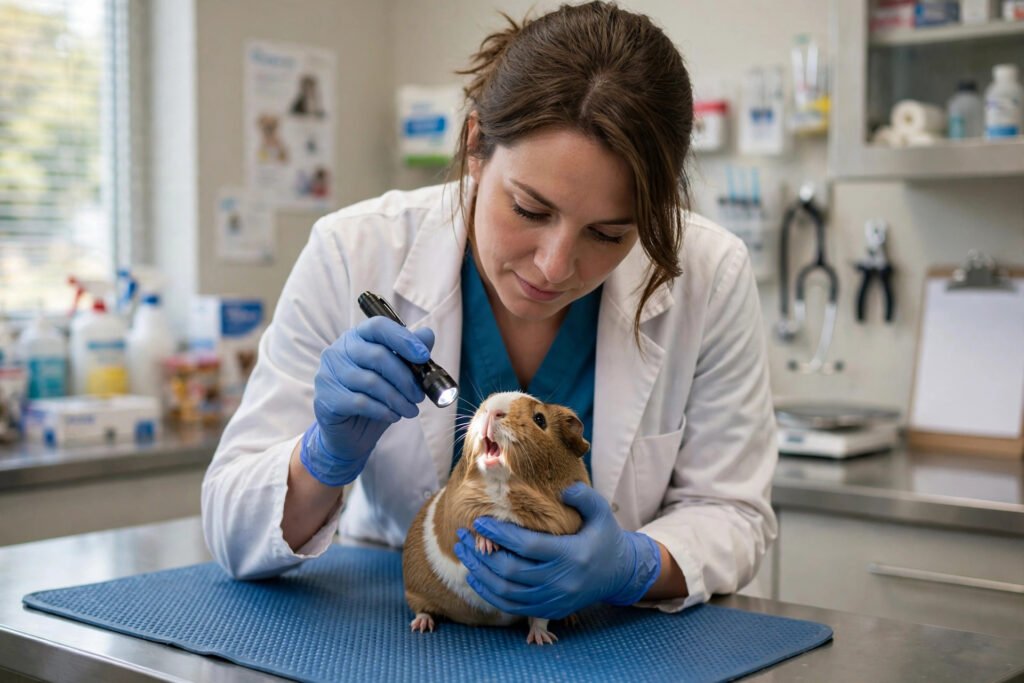
The cheek teeth do most of the grinding, so they cause most of the trouble. When molars do not wear evenly, sharp edges called spurs form and cut into the tongue or cheeks. Because you cannot see this happening, the first signs are behavioural: the pig takes longer to eat, prefers soft food, drools (a “wet chin”), drops half-chewed pellets, or gradually loses weight. Molar spurs need a vet with proper equipment to file them down — this is never a home job. Any pig eating slowly or losing weight deserves a dental check as well as a general one; our guinea pig vet checklist covers what to ask at the appointment.
6. Malocclusion: When the Teeth Don’t Meet Right
Malocclusion means the upper and lower teeth no longer align correctly, so they cannot wear against each other. It can be inherited (some pigs are simply born with misaligned jaws), caused by injury, or develop after a diet too soft for too long. Once malocclusion sets in, the uneven wear accelerates: teeth grow long where they miss each other, alignment worsens, and eating becomes painful. Pigs with hereditary malocclusion often need regular dental trims for life — a commitment worth knowing about before it happens, not after.
7. Drooling and a Wet Chin Are Red Flags
A healthy guinea pig’s chin is dry. Persistent drooling, a damp or matted chin, or wet front paws (from wiping the mouth) are classic dental red flags — often called “slobbers” by vets. Drooling means the pig cannot swallow comfortably, which almost always traces back to the mouth: spurs, overgrowth, an abscess, or a trapped piece of food. Do not wait to see if it clears up on its own. A drooling guinea pig needs a vet appointment within a day or two, sooner if it has stopped eating.
8. Weight Loss Is the Silent Alarm
Guinea pigs are prey animals and masters at hiding pain. By the time a dental problem is obvious, the pig has often been struggling for weeks — and the first measurable sign is usually weight loss. Weigh your pigs weekly on kitchen scales; a steady drop of 50 g or more is a vet-visit trigger even if the pig seems fine. Weight charts catch dental trouble far earlier than watching behaviour does, because the numbers do not hide pain.
9. Never Trim Teeth at Home
It is tempting — the incisors look long, the clippers are right there — but never cut a guinea pig’s teeth at home. Clipping incisors with nail clippers can split the tooth up into the root, causing fractures, abscesses, and agony. Filing molars at home is impossible and dangerous. Dental work on guinea pigs requires sedation or anaesthesia, proper speculums, and rotary burrs in trained hands. The cost of a professional dental trim is always less than the cost of fixing a botched home attempt.
10. Vitamin C Protects More Than Immunity
Guinea pigs, like humans, cannot make their own vitamin C — and deficiency (scurvy) weakens the gums and the tissues holding teeth in place, making dental problems worse. Fresh veg rich in vitamin C (bell pepper is the champion; see our safe food list for the full ranking) supports strong gums and a healthy mouth lining. It is not a substitute for hay-based wear, but it is an important supporting act.
11. Know Exactly When to Call the Vet
Book a dental check promptly if you see any of these: drooling or a wet chin, dropping food, eating much more slowly than usual, favouring soft foods, weight loss, facial swelling, eye discharge on one side (tooth roots sit near the eyes), or a pig that has stopped eating entirely. A guinea pig that has not eaten for 12 hours is an emergency — their gut must keep moving, and dental pain can shut it down. The RSPCA’s guinea pig health guidance also stresses that dental disease is common and treatable when caught early, so do not delay out of worry about the bill.
For broader health context, the RSPCA’s guinea pig health advice is a solid reference alongside your vet’s guidance.
Frequently Asked Questions
How many teeth do guinea pigs have?
Twenty: 4 incisors at the front and 16 premolars and molars at the back. All of them grow continuously throughout the pig’s life.
Do guinea pig teeth grow back if broken?
Yes — because the roots are open, a broken tooth will regrow. But a break can misalign the bite and cause uneven wear, so have the vet check it, and watch that the opposing tooth does not overgrow while its partner is missing.
Can I file my guinea pig’s teeth myself?
No. Dental work needs sedation, specialist tools, and training. Home trimming risks splitting teeth into the root and causing abscesses. Always see a vet.
What is the best food for wearing down guinea pig teeth?
Unlimited long-strand grass hay (timothy, orchard, or meadow). The side-to-side grinding motion of chewing hay is what wears the cheek teeth evenly. Pellets and veg are important nutrition but do not provide the same wear.
How often should a vet check my guinea pig’s teeth?
At every routine health check (at least yearly), plus immediately if you notice drooling, slow eating, dropping food, or weight loss. Senior pigs and those with a history of dental issues may need checks every few months.
Why is my guinea pig drooling?
Persistent drooling usually signals a mouth problem — molar spurs, overgrown teeth, an abscess, or something trapped. See a vet within a day or two, sooner if the pig has stopped eating.