Dreamy cozy dog nooks treat a pet’s corner with the same design care as any other room, using soft textiles, warm wood, and considered placement so the space feels like part of the home rather than an afterthought. This guide gives you 15 dreamy dog nook ideas for comfortable pets, from bedding to lighting to layout.
Picture a nook tucked under a staircase, lined in a plush bouclé bed with a woven canopy overhead, warm light spilling across a small brass name plate. The mood is soft, low, and quietly attentive — nothing plastic, nothing that looks like it came straight off a pet store shelf. Here are 15 ideas worth saving — and stealing.
Why Dreamy Cozy Dog Nooks Work So Well
Dreamy cozy dog nook design borrows its soft-structure instinct from Scandinavian nursery design and its material warmth from modern farmhouse interiors — the idea that a pet’s resting space deserves the same textural intention as a reading corner or window seat. What separates it from a standard dog bed setup is integration: the nook is built into the room’s existing architecture and palette, not dropped in as a separate object.
The palette leans on warm oat, dusty clay, and soft charcoal, built from bouclé, brushed cotton canvas, rattan, and unfinished oak. These materials are chosen to feel good against fur and paws while still reading as intentional decor rather than pet-store plastic.
This style is trending as more households treat pets as full family members deserving dedicated space, and Pinterest search data shows steady growth in searches for “dog nook” and “pet corner ideas” as people move away from bulky plastic crates toward furniture-integrated solutions.
Small homes handle this style well. Prioritize a wall-mounted or under-furniture nook first, since both add a defined resting spot without claiming open floor area.
Style at a Glance
| Element | Trait 1 | Trait 2 |
|---|---|---|
| Philosophy | Integrated, not bolted on | Soft materials, considered placement |
| Materials | Bouclé, brushed canvas | Rattan, unfinished oak |
| Color palette | Warm oat, dusty clay | Soft charcoal |
1. Under-Stair Built-In Dog Nook
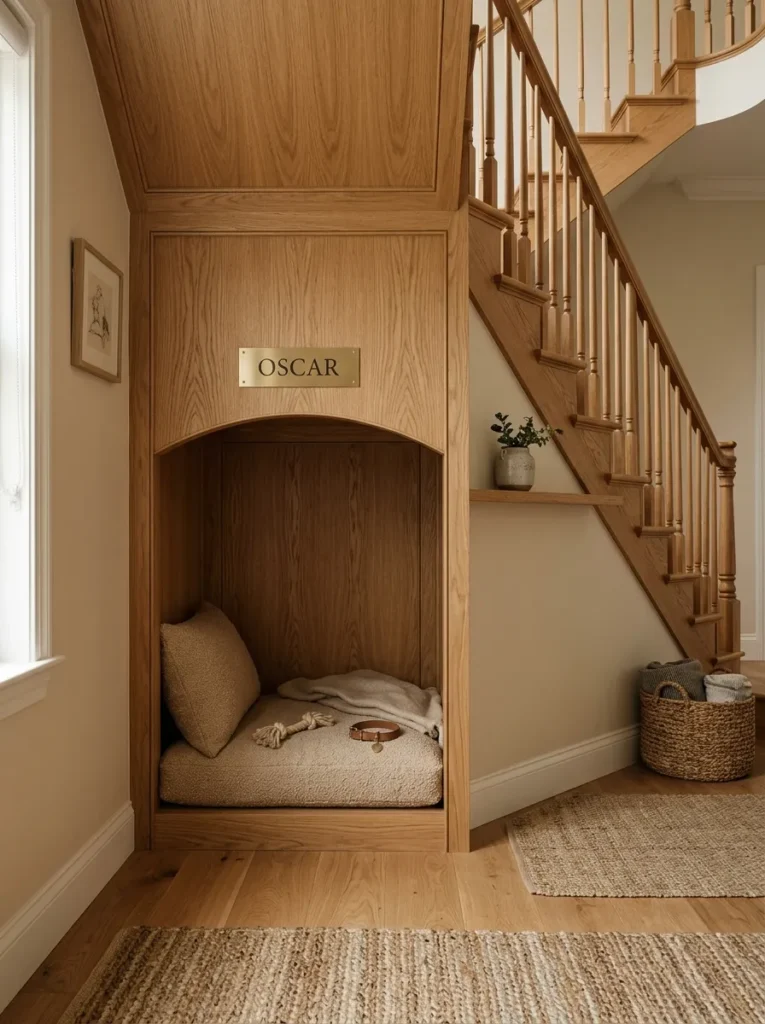
Vibe: The nook feels grounded and settled, like it was always meant to be there.
Why it works: Building the nook into the stair’s dead space uses architectural integration as the core design principle — the opening’s arched or squared frame echoes the home’s existing lines, so it reads as built-in furniture rather than an added pet accessory.
How to get it: Line the interior in warm oak paneling and fit a bouclé cushion cut exactly to the floor dimensions, leaving at least six inches of headroom above the tallest point the dog would sit.
Quick Win: A $35 bouclé cushion cover fitted to an existing under-stair gap gets most of the look without any carpentry.
Shop The Look
- Bouclé pet bed cushion custom fit
- Oak wall paneling kit
- Brass name plate small
- Non-slip cushion base pad
- Small oak trim molding
Also view: 17 Creative Dog Crafts for Home Decor and Gifts
2. Woven Canopy Bed for a Statement Corner
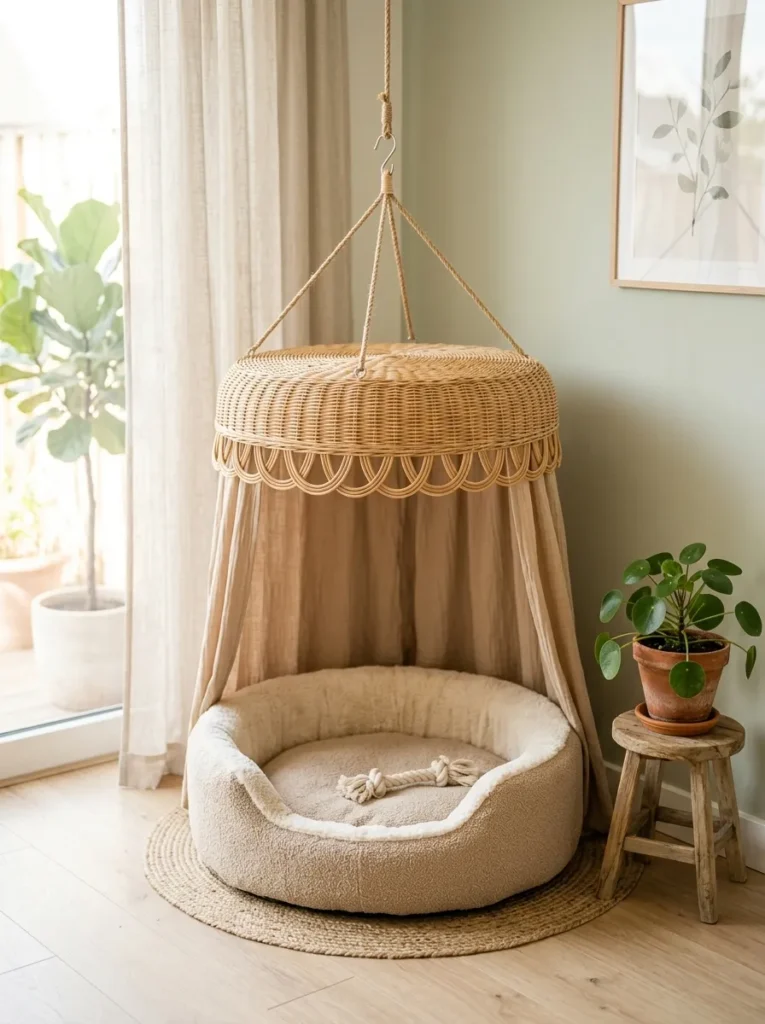
Vibe: The corner feels airy and a little whimsical, like a miniature canopy bed built just for one small resident.
Why it works: A suspended rattan canopy uses vertical space to add presence without any floor footprint increase, applying the same negative-space thinking as a hanging chair — visual interest builds upward instead of outward.
How to get it: Hang a round woven canopy frame from a ceiling hook positioned directly above the bed, lining the interior with a soft cotton fabric that echoes the room’s existing palette.
Shop The Look
- Round rattan canopy frame
- Ceiling mount hook kit
- Soft cotton canopy lining fabric
- Plush oat bouclé dog bed
- Small potted plant faux
3. Warm Puck Lighting Above the Nook
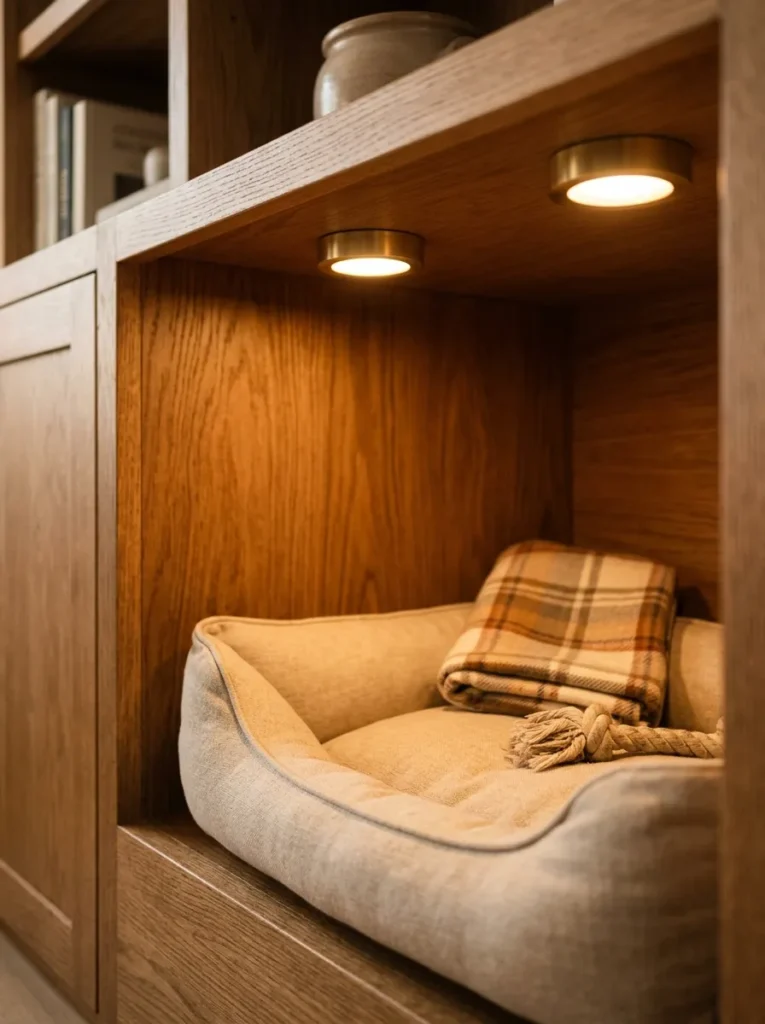
Vibe: The nook feels warm and inviting, softly lit rather than tucked into shadow.
Why it works: Small warm-toned puck lights placed directly above the nook solve the common problem of built-in corners sitting dim and overlooked, using targeted task lighting to make the space feel considered rather than like leftover square footage.
How to get it: Mount two battery-operated puck lights along the nook’s upper edge, angled downward and set to a warm 2700K temperature to match surrounding fixtures.
Quick Win: A $16 stick-on puck light with a built-in dimmer needs no wiring and installs in minutes.
Shop The Look
- Battery puck light set warm white
- Adhesive light mounting pad
- Dimmer remote control
- Small folded throw blanket oat
- Brass light trim ring
4. Bouclé Bed on a Low Wood Platform
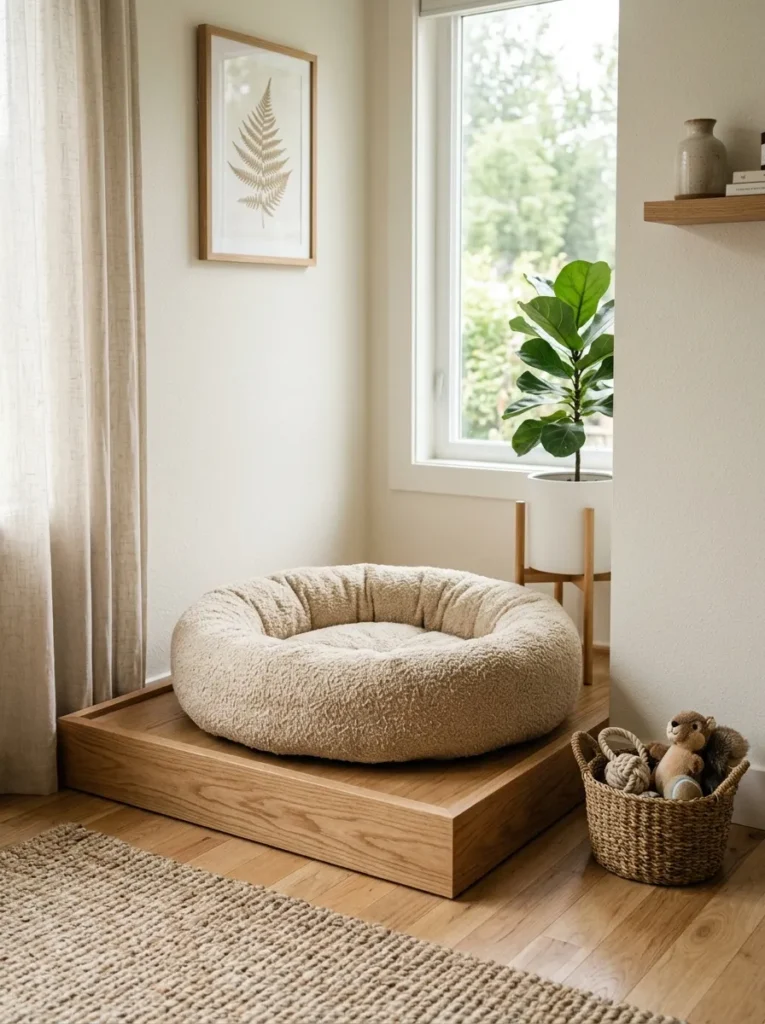
Vibe: The bed feels still and a little elevated, like real furniture instead of a cushion on the floor.
Why it works: Raising the bed onto a low oak platform, roughly two inches, defines the nook’s boundary through a subtle floor transition rather than walls, applying the same zone-definition principle used in feeding station layouts to a resting space.
How to get it: Build or buy a low oak platform sized several inches larger than the bed cushion on every side, keeping the platform height under three inches so it stays easy for older dogs to step onto.
Shop The Look
- Low oak platform base
- Bouclé dog bed cushion oat
- Small woven toy basket
- Non-slip platform pad
- Corner floor protector
5. Dusty Clay Accent Wall Behind the Nook
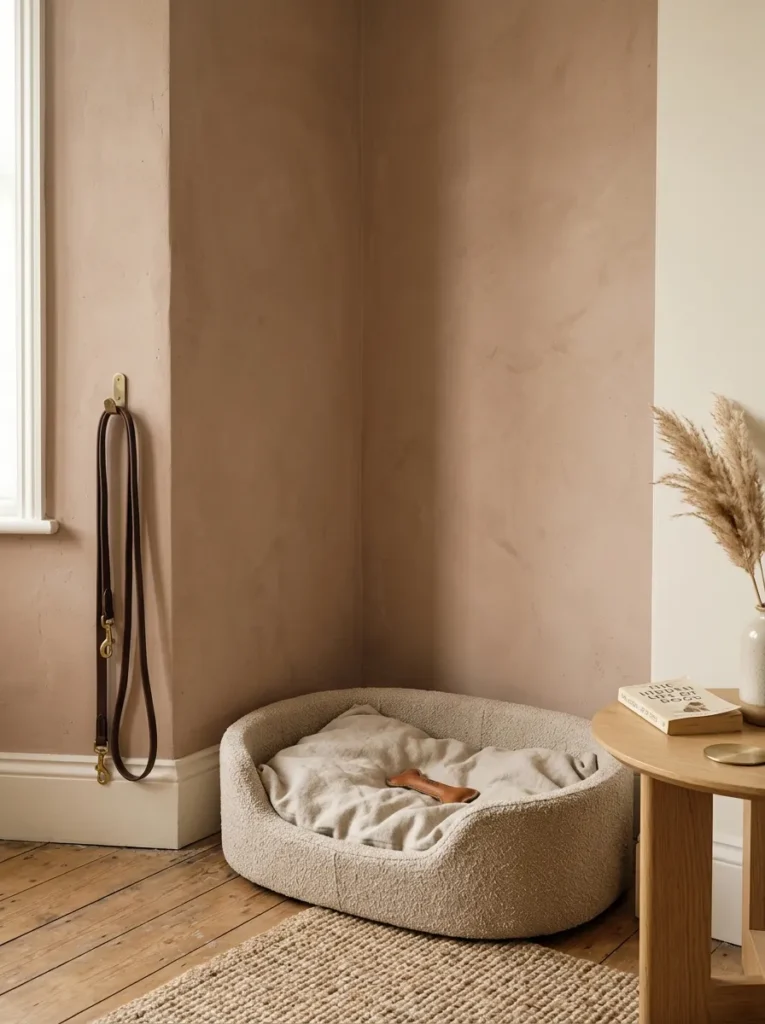
Vibe: The corner feels warm and defined, the clay tone giving the nook its own visual identity.
Why it works: Painting just the wall directly behind the nook in a warm terracotta-adjacent clay tone uses color as a contained accent, the same technique used to define a kids’ closet zone — it signals “this spot belongs to something” without needing a physical boundary.
How to get it: Paint a section of wall roughly three feet wide directly behind the bed in a dusty clay tone like Farrow & Ball Red Earth, keeping surrounding walls neutral for contrast.
Quick Win: A $20 sample pot covers most nook-sized wall sections in a single coat.
Shop The Look
- Sample-size interior paint dusty clay
- Painter’s tape roll
- Small brass leash hook
- Foam paint roller kit
- Bouclé dog bed oat
6. Woven Storage Basket for Toys Beside the Nook
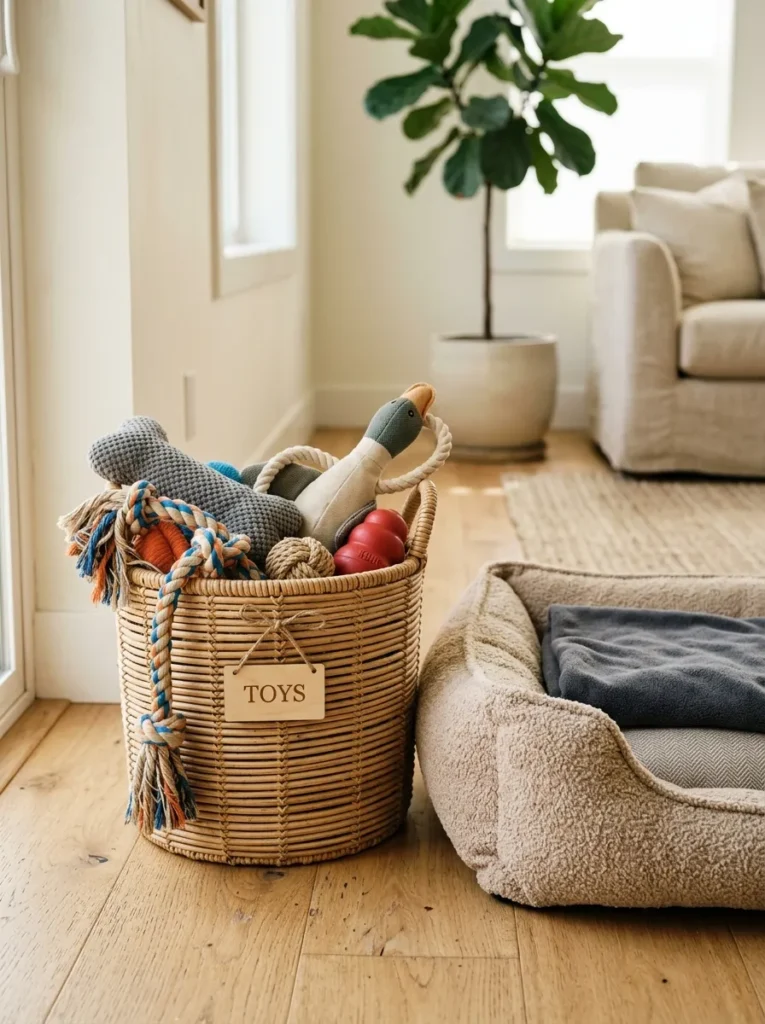
Vibe: The corner feels layered and lived-in, toys close at hand without scattering across the floor.
Why it works: Placing one dedicated basket directly beside the bed uses proximity as an organizing principle — toys used near the resting spot stay near the resting spot, which keeps the rest of the room clear without requiring the dog to learn a distant storage location.
How to get it: Choose a rattan basket sized to hold a rotating handful of toys, roughly 14 inches wide, and commit to swapping toys in and out rather than letting the basket overflow.
Shop The Look
- Rattan storage basket medium
- Wood label tag small
- Rope toy set neutral
- Canvas basket liner
- Small ceramic treat jar
7. Layout Placed Away from High-Traffic Paths
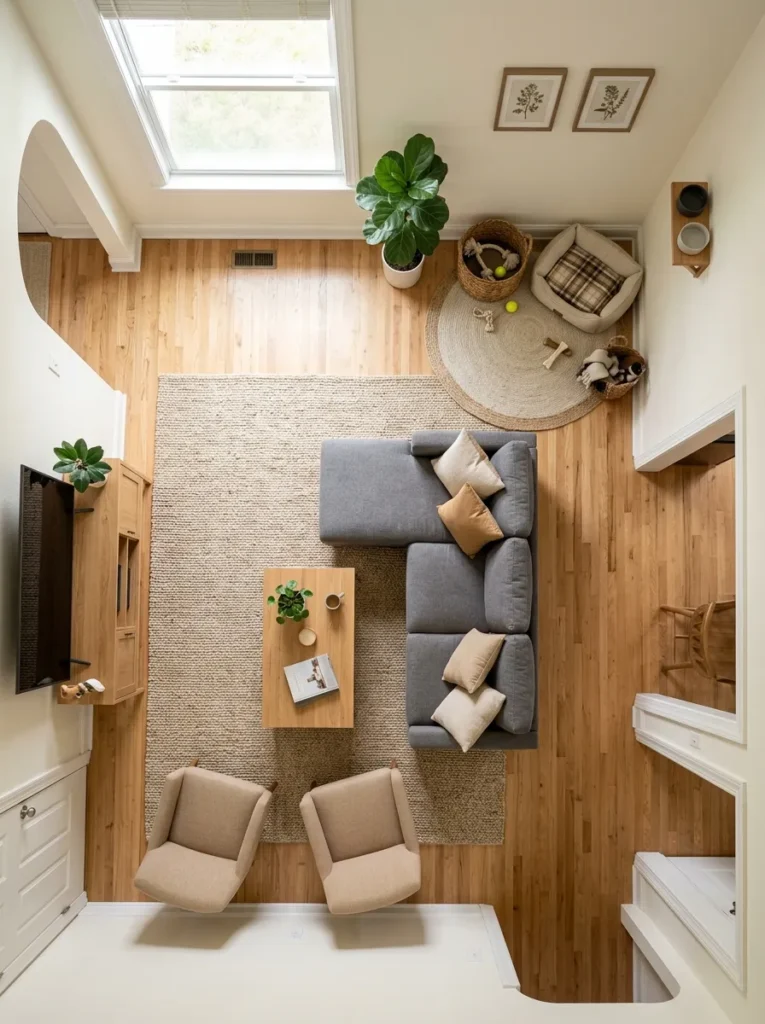
Vibe: The room feels still and considered, the nook’s placement clearly intentional rather than accidental.
Why it works: Positioning the nook outside the room’s main traffic flow applies a layout principle borrowed from furniture placement generally — a resting spot needs to feel protected from foot traffic to actually get used, not just decorated.
How to get it: Measure your room’s natural walking path between doorways and seating, then place the nook at least 18 inches outside that line, typically in a true corner.
Shop The Look
- Small area rug for nook zone
- Bouclé dog bed oat
- Woven toy basket
- Non-slip rug pad
- Corner floor protector
8. Slim Wall-Mounted Shelf Nook for Small Apartments
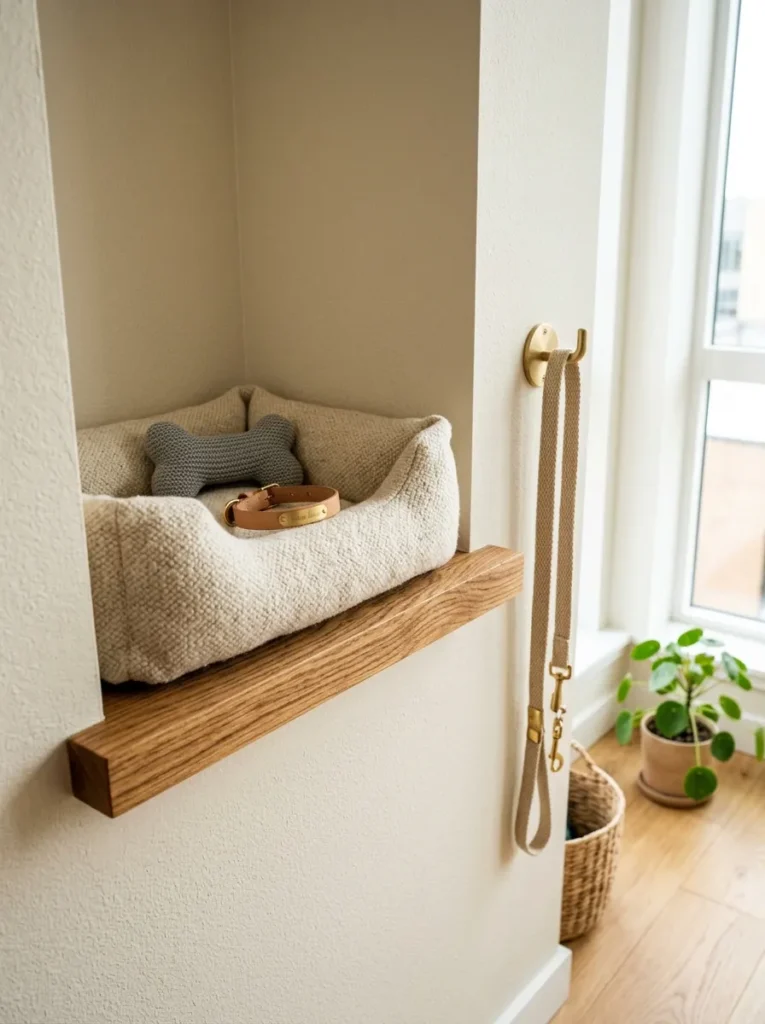
Vibe: The nook feels airy and unobtrusive, adding a resting spot without claiming floor space.
Why it works: A wall-mounted shelf nook just off the floor solves the specific limitation of small apartments, where a full built-in isn’t possible — the raised platform still reads as a defined space while using zero additional square footage.
How to get it: Mount a wide, shallow oak shelf using heavy-duty brackets rated for the dog’s full weight, positioning it low enough — under 6 inches — for easy stepping on and off.
Quick Win: A $30 floating shelf kit rated for at least 50 pounds handles most small to medium dogs safely.
Shop The Look
- Wide floating oak shelf
- Heavy-duty shelf bracket set
- Small bouclé cushion fitted
- Brass wall hook accent
- Non-slip shelf grip pad
9. Warm Wood Crate Reimagined as Furniture
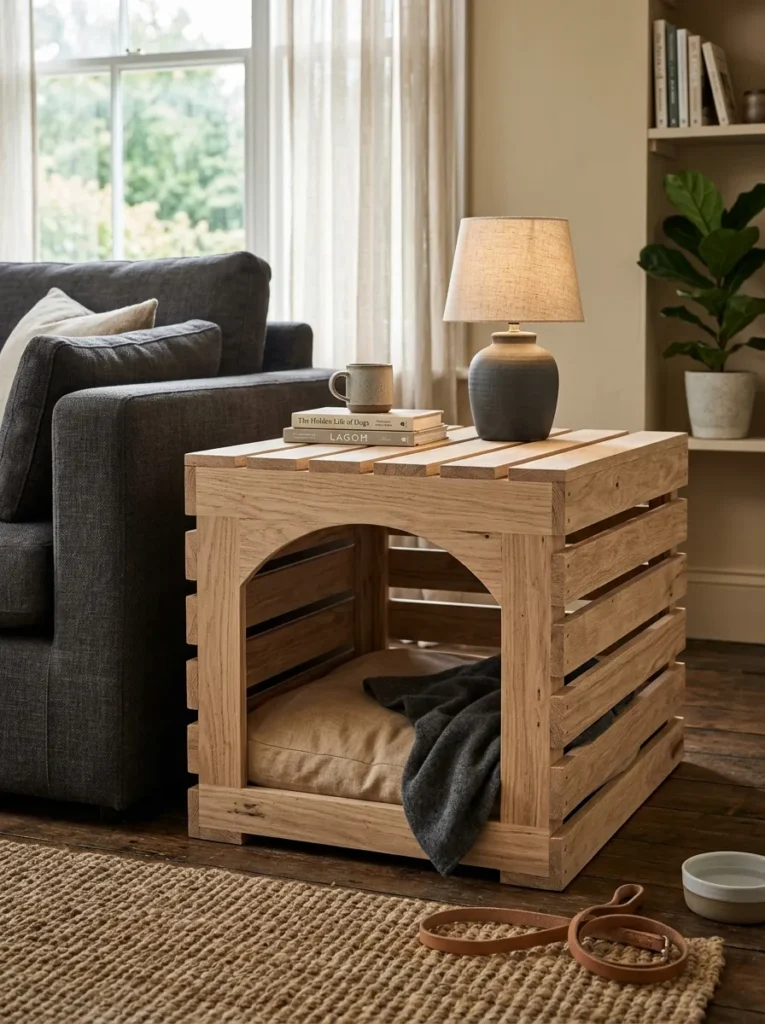
Vibe: The crate feels grounded and dual-purpose, doing double duty as real furniture.
Why it works: A flat-topped oak crate functions as both a dog house and a side table, applying furniture doubling — the same principle behind a storage ottoman — so the piece earns its floor space twice over instead of sitting as a single-use object.
How to get it: Choose a crate-style dog house with a flat, sturdy top rated to hold a small lamp or plant, finished in unfinished or lightly stained oak to match surrounding furniture.
Shop The Look
- Oak crate-style dog house furniture
- Bouclé cushion insert fitted
- Small ceramic table lamp
- Wood coaster tray for top surface
- Small potted plant faux
10. Charcoal and Oat Two-Tone Bed Styling
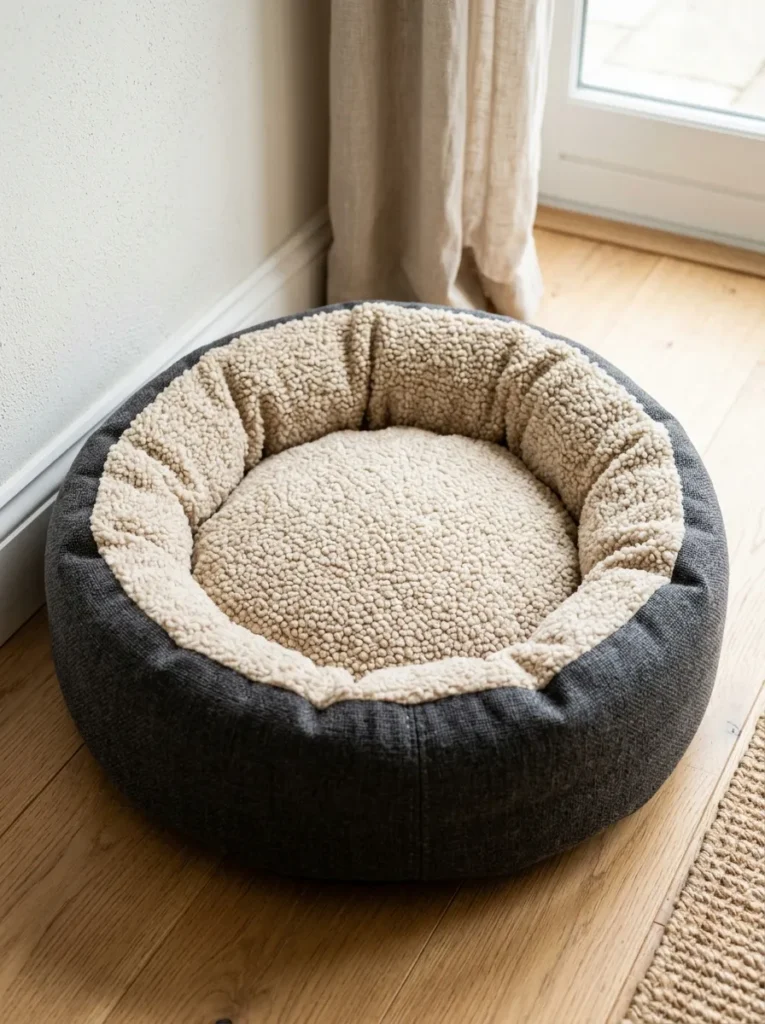
Vibe: The bed feels serene and settled, the two tones balancing rather than competing.
Why it works: Pairing a charcoal exterior shell with a warm oat interior cushion uses contained color contrast — the darker exterior grounds the piece visually while the lighter interior keeps it from reading as heavy or overly dark against lighter flooring.
How to get it: Choose a round bed with a soft charcoal canvas or bouclé exterior and a warm oat bouclé cushion insert, keeping both tones matte rather than glossy.
Shop The Look
- Two-tone round dog bed
- Bouclé cushion insert oat
- Charcoal canvas bed cover
- Small washable bed liner
- Non-slip bed base pad
11. Layered Textile Corner with Throw and Cushion
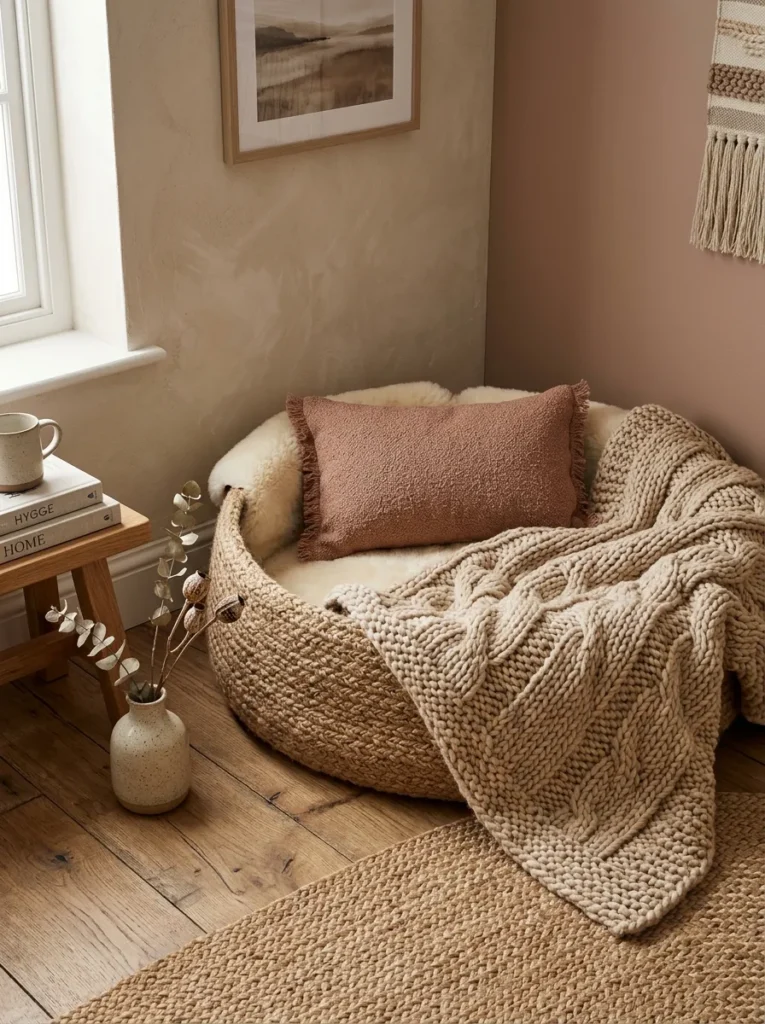
Vibe: The corner feels layered and inviting, texture doing most of the visual work.
Why it works: Draping a chunky knit throw over part of the bed and adding one small cushion applies texture layering the same way a cozy bedroom headboard uses mixed fabrics — variety in surface finish elevates a single-material bed into something styled.
How to get it: Drape a chunky knit throw loosely over one edge of the bed rather than covering it fully, and add one small lumbar cushion in a complementary dusty clay tone.
Quick Win: A $20 knit throw draped over an existing plain bed adds instant texture with zero sewing or fitting.
Shop The Look
- Chunky knit throw blanket oat
- Small lumbar cushion clay
- Round bouclé dog bed
- Dried botanical stem accent
- Small ceramic bud vase
12. Symmetrical Double Nook for Multi-Pet Homes
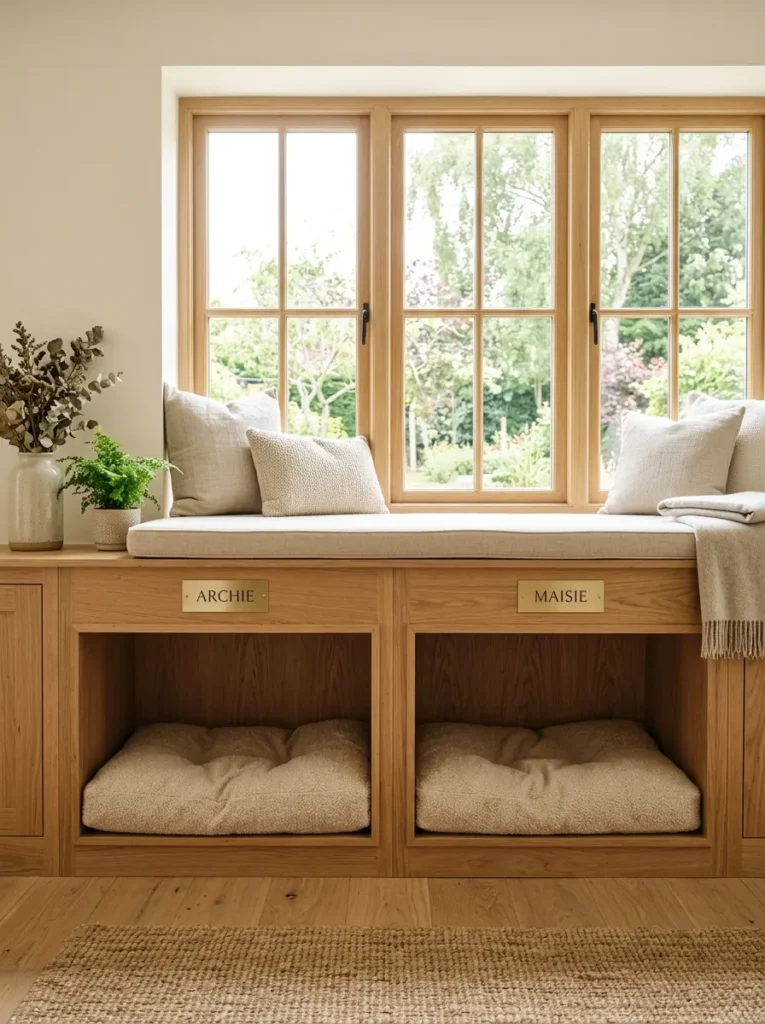
Vibe: The window bench feels still and balanced, each pet given equal, clearly defined space.
Why it works: Building two identical nooks side by side rather than one larger shared space applies symmetry to prevent resource guarding or spatial competition between pets, a layout choice that’s as practical as it is visually clean.
How to get it: Frame two matching oak nooks of equal size beneath a window bench, fitting each with an identical bouclé cushion and a separate small brass name plate above.
Shop The Look
- Matching bouclé cushion pair
- Oak nook framing kit
- Brass name plate pair
- Window bench seat cushion
- Small brass hook pair
13. Motion-Sensor Night Light Near the Nook Floor
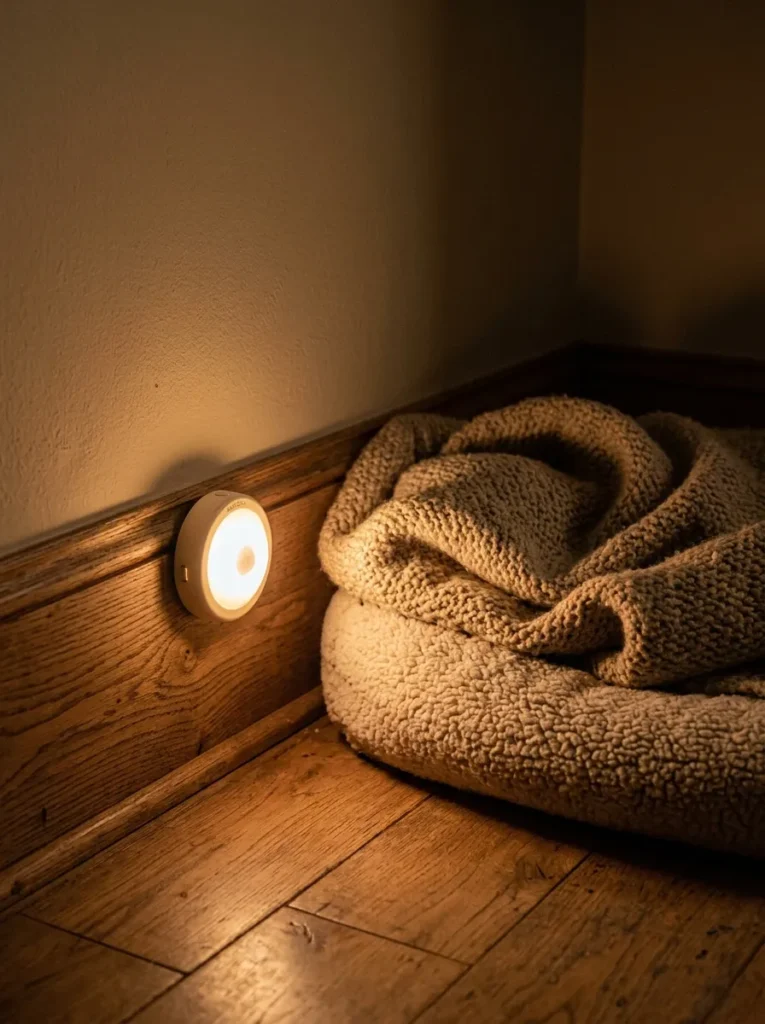
Vibe: The nook feels hushed and gentle, lit just enough for a middle-of-the-night check-in.
Why it works: A motion-sensor light near the floor activates automatically when a dog moves in or out of the nook at night, solving the practical need for low-level visibility without requiring anyone to remember a switch.
How to get it: Mount a battery motion-sensor puck light near the floor baseboard beside the nook, angled to softly illuminate the bed without shining directly into it.
Quick Win: A $12 stick-on motion light needs no wiring and installs in under five minutes.
Shop The Look
- Battery motion-sensor puck light
- Adhesive light mounting pad
- Warm white LED bulb replacement
- Oak baseboard trim
- Small night light diffuser cover
14. Fold-Flat Travel Bed That Matches the Home Nook
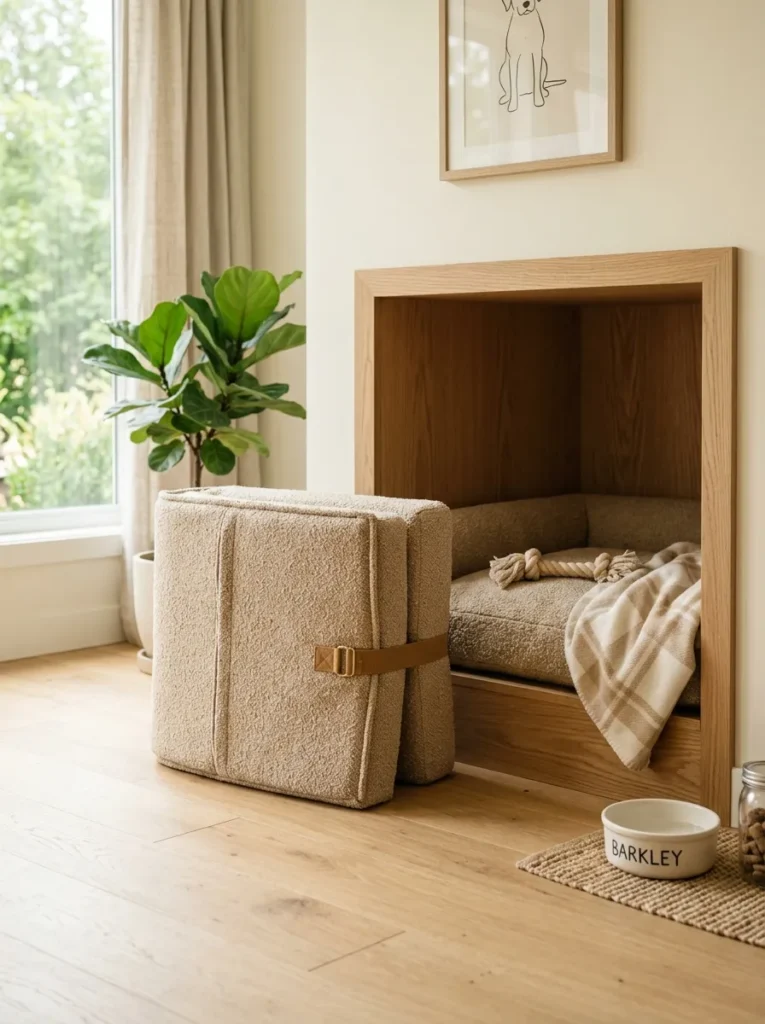
Vibe: The folded bed feels airy and ready, ready to travel without breaking the room’s visual consistency.
Why it works: Choosing a travel bed in the same fabric and tone as the home nook keeps the pet’s resting environment visually consistent between spaces, reducing the jarring shift from a styled corner to a generic travel accessory.
How to get it: Choose a fold-flat travel bed in matching warm oat bouclé with a canvas carrying strap, storing it folded beside or inside the main nook when not in use.
Shop The Look
- Fold-flat travel dog bed oat
- Canvas carrying strap
- Small storage basket for travel bed
- Matching bouclé fabric swatch
- Compact travel water bowl
15. Small Space Nook Using a Repurposed Bookshelf Cubby
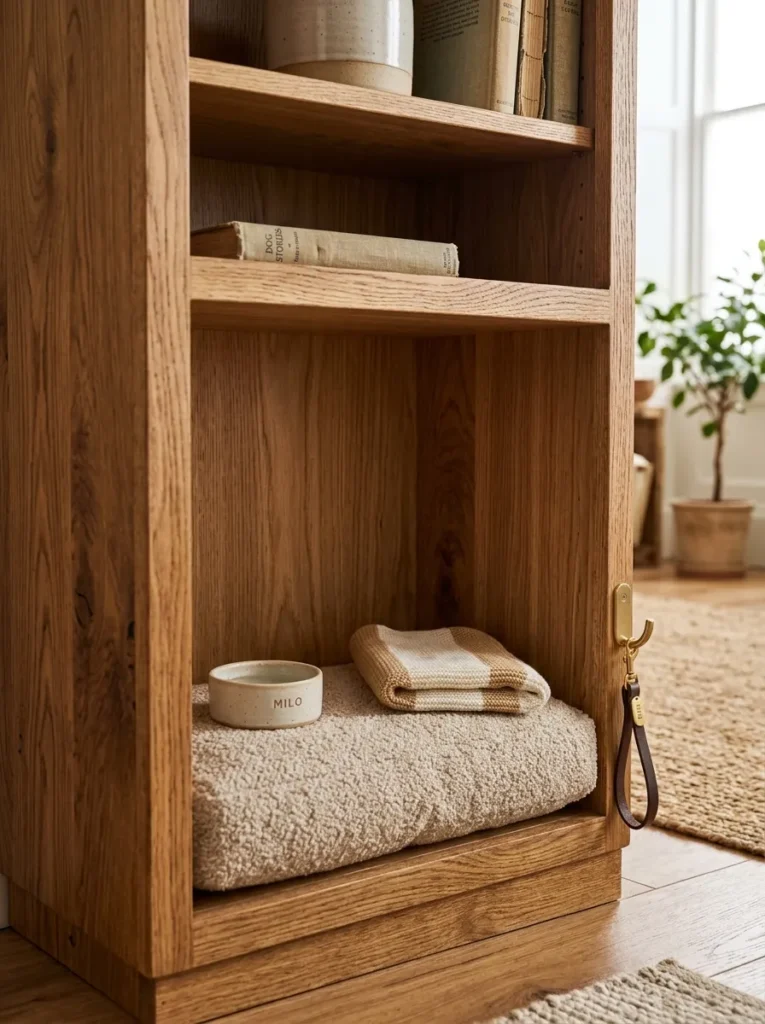
Vibe: The cubby feels layered and resourceful, a whole nook found inside furniture already in the room.
Why it works: Repurposing one lower cubby of existing bookshelf furniture is the ultimate small-space adaptation — it claims zero new floor area at all, solving the core limitation of tight apartments by working entirely within a footprint already accounted for.
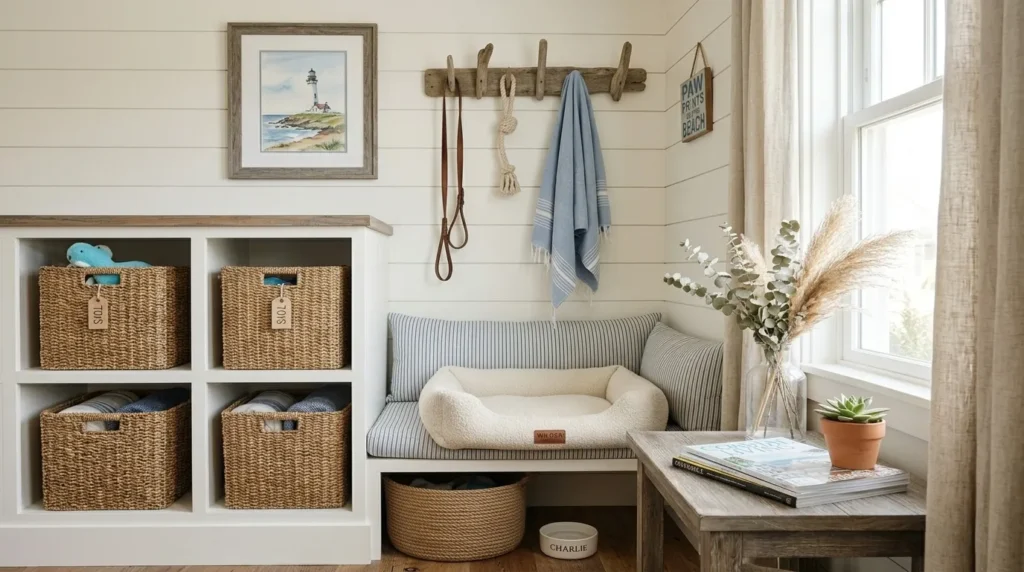
How to get it: Remove books from one lower cubby at least 16 inches wide, fit a custom-cut bouclé cushion to the interior dimensions, and add a small brass hook to the shelf’s side for a leash.
Quick Win: A $25 custom-cut foam cushion wrapped in bouclé fabric fits almost any standard bookshelf cubby.
Shop The Look
- Custom-cut foam cushion bouclé cover
- Small brass side hook
- Non-slip cushion base pad
- Small wood name plate
- Compact water bowl mat
How to Start Your Dreamy Dog Nook Transformation
The single best first move is choosing the nook’s location before buying anything. Since placement outside high-traffic paths determines whether the space actually gets used, walk your main living area first and identify the one quiet corner that isn’t in anyone’s regular walking path.
The most common mistake is buying a bed sized to the dog’s current dimensions without accounting for growth or sprawl, resulting in a cushion that looks pinched rather than plush. Fix it by measuring your dog lying fully stretched out, then adding four to six inches on every side.
Three items under $50 that make an immediate difference: a $20 chunky knit throw for layering, a $16 stick-on puck light for warm task lighting, and a small wood name plate for a personal, finished touch.
A full built-in nook realistically takes two to three weekends if you’re framing and paneling from scratch, or a single afternoon if you’re repurposing existing furniture like a bookshelf cubby. Budget $80–$150 for a starter version using existing furniture, or $400–$700 for a full built-in with lighting and custom paneling.
Frequently Asked Questions About Dreamy Dog Nooks
What’s the difference between a dog nook and a standard dog bed setup?
A dog nook is architecturally or visually integrated into the room — built into a stair gap, a bookshelf cubby, or a defined wall zone — while a standard setup is simply a bed placed wherever there’s open floor. The nook approach treats the pet’s space as part of the room’s design rather than an object added on top of it.
What colors work best for a dog nook?
Warm oat and oak tan work as a neutral base that suits nearly any room, with one accent like dusty clay or soft charcoal used sparingly on cushions or an accent wall. Avoiding bright plastic-toy colors keeps the nook blending into the room’s existing palette instead of standing out as clearly “pet gear.”
How much does it cost to build a dog nook?
A basic setup using an existing furniture cubby or corner with a bouclé cushion runs $80–$150. A wall-mounted shelf nook with lighting typically costs $200–$350, while a full built-in under-stair or paneled nook can run $500–$900 depending on materials and labor.
Does a dog nook work in a small apartment?
Yes — a wall-mounted shelf nook or a repurposed bookshelf cubby are both excellent small-space options, since neither claims new floor area. A shelf rated for the dog’s weight and mounted under six inches off the ground handles most small to medium dogs safely.
What’s the most important element to get right first?
Placement matters most, since a nook tucked into a high-traffic path will rarely get used regardless of how well it’s styled. Choose a quiet corner outside the room’s main walking line before investing in cushions, paneling, or lighting, and the rest of the system will actually get lived in.
Ready to Create Your Dream Dog Nook?
These 15 ideas cover everything from built-in under-stair corners and woven canopies to repurposed bookshelf cubbies and layered textiles, so there’s a starting point whatever your space or budget looks like. This kind of setup doesn’t need to happen all at once — adding one bouclé cushion to an already-quiet corner this week is a genuine, complete first step. Today, walk your main living space and pick the one corner outside your regular foot traffic that could hold a bed. Once it’s styled, you’ll have a spot your dog actually chooses to settle into — proof that a little design intention goes a long way, even for the smallest member of the household. Pin your favorite canopy or crate-furniture idea now, before your next furniture rearrange changes what corner is quiet.