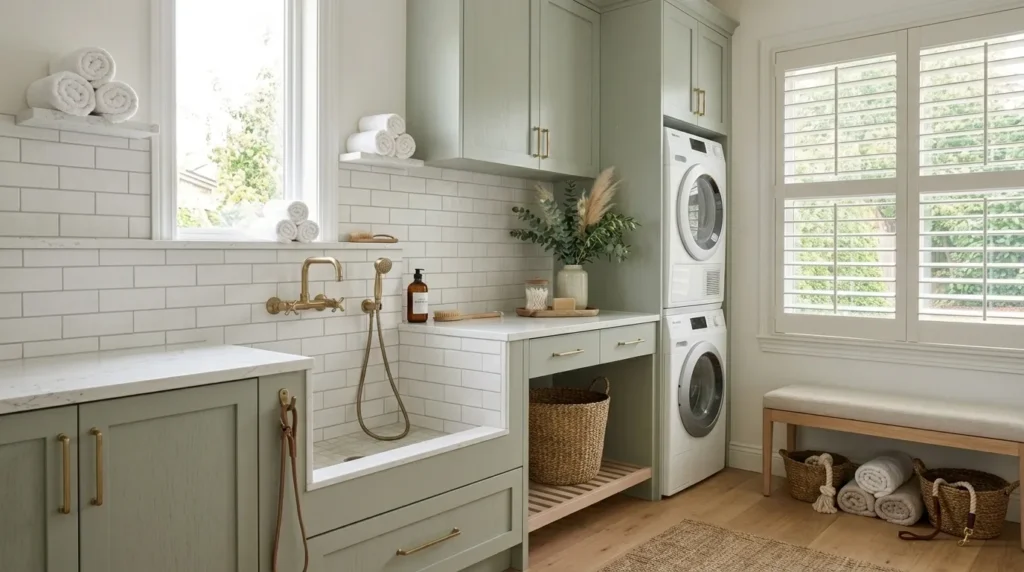
DIY dog nook ideas are dedicated, designed spaces built specifically for your dog — using repurposed furniture, basic carpentry, and thoughtful styling to create a spot that works for the dog and looks intentional in your home. This article gives you exactly 15 ideas spanning under-stair nooks, repurposed furniture, built-in benches, small-space solutions, and cozy corner setups — all achievable on a real budget without sacrificing style.
A dog nook done right doesn’t announce itself. It belongs — tucked under the stairs, nestled beside a bookshelf, fitted into a mudroom corner like it was always meant to be there. The dog has a place. The room has its cohesion back. That particular domestic satisfaction — functional and considered at the same time — is exactly what a well-built dog nook delivers. Here are 15 ideas worth saving — and building.
Why DIY Dog Nook Ideas Work So Well
The concept of a dedicated animal space within the home is not a contemporary pet-culture invention — working dogs in European farmhouses occupied designated hearth corners and kennel alcoves for centuries, and the Victorian era produced elaborate built-in dog beds integrated into kitchen cabinetry and inglenook fireplaces. What the contemporary DIY dog nook movement has added is the design consideration: the dog’s space is no longer hidden or purely utilitarian, but treated as a room element that deserves the same aesthetic attention as the furniture around it. This shift reflects the documented change in how people relate to their pets — a 2023 American Pet Products Association survey found that 67% of American households own a pet, and the majority of dog owners describe their dogs as family members rather than animals, with corresponding expectations for how the dog’s space integrates into the home.
The core materials that make DIY dog nooks both durable and design-forward include: painted or stained MDF for built-in frames and archways, unfinished pine for custom crate frames and platform beds, wipeable vinyl or outdoor-grade fabric for cushion covers (essential for practicality), wrought iron or matte black steel for arch frames and door hardware, and natural materials like rattan, seagrass, and solid oak for styled accessory elements. Hardware finishes that read as intentional rather than utilitarian — brushed brass, unlacquered iron, matte black — elevate a basic dog nook from a kennel to a piece of furniture.
Pinterest searches for “dog nook ideas” and “built-in dog bed” increased by over 140% between 2021 and 2024, driven by two converging trends: the explosion of home improvement content during and after the pandemic, and a design movement toward purposeful, every-inch-considered home organization. The dog nook sits at the intersection of both: it solves a real organizational problem (where does the dog sleep, eat, and keep their things without taking over the house) while satisfying a design impulse toward homes that feel curated rather than accumulated.
Small homes and apartments absolutely support a dedicated dog nook — and in many cases benefit from one more than larger homes do, because a designated dog space in a small home prevents the dog’s presence from spreading across every surface. The honest consideration: a dog nook in a space under 400 square feet should serve double duty as human-functional space — a storage bench with a dog bed underneath, a window seat with a crate built in, a bookshelf with a recessed lower cubby. The ideas in this list include specific small-space adaptations where applicable.
Style at a Glance
| Element | Functional Core | Aesthetic Edge |
|---|---|---|
| Philosophy | Every dog deserves a place | The nook belongs to the room |
| Materials | Pine, MDF, vinyl fabric | Oak, rattan, matte black hardware |
| Color Palette | Warm white, oat, warm gray | Sage green, navy, natural wood |
1. Under-Stair Dog Nook with Arched Entry and Built-In Bed

Vibe: The nook feels warm and completely intentional — like the stairs were always designed with this in mind.
Why it works: The arched entry is the single design decision that transforms a functional storage space under stairs into a dedicated, designed nook — the arch reads as architectural rather than makeshift, giving the dog’s space the same visual weight as a built-in bookshelf or window seat. A low platform bed (raised 3–4 inches from the floor) improves airflow under the cushion, preventing mold in a space that may have limited ventilation. The LED strip inside the nook provides the warm ambient glow that makes the space visible and inviting from across the room.
How to get it: Cut the arch from 3/4-inch MDF using a jigsaw, following a template made from a piece of cardboard scored with a pencil attached to a string as a compass. Attach the arch panel to the existing stair framing using construction adhesive and finish nails. Sand and prime before painting with Benjamin Moore Chantilly Lace OC-65 for a clean white that reads as warm rather than stark. Build the platform from 2×4 framing topped with 3/4-inch plywood, sanded and stained to match the stair treads.
Quick Win: A pre-cut MDF arch panel ($35–55 from most lumber yards) eliminates the jigsaw step entirely — order the arch cut to your opening dimensions, paint, and attach. The entire arched entry can be installed in an afternoon.
Shop The Look
| Product |
|---|
| MDF arch panel pre-cut paintable interior trim |
| Battery powered LED strip warm white adhesive |
| Thick oat linen dog bed cushion cover washable |
| Wooden pet name sign custom wall mount |
| Small woven seagrass basket dog toy storage |
Also view: 25 Poultry Pen Layout Ideas for Better Organization
2. Repurposed IKEA KALLAX Unit as a Dog Crate and Storage Combo

Vibe: The unit feels purposeful — storage for the home and shelter for the dog, unified in a single piece.
Why it works: Removing the central divider between two adjacent KALLAX cubbies using a hand saw creates a 66 cm wide × 33 cm tall opening — sufficient for most medium-small dogs up to approximately 30 lbs. The KALLAX’s modular structure makes this modification straightforward and reversible (the divider can be replaced). A custom door panel built from MDF with welded wire mesh or flat steel bar inserts in matte black reads as furniture-grade hardware rather than a cage, elevating the nook into a genuine design feature.
How to get it: Remove the internal divider panel by unscrewing from the back panel and carefully prying from the side walls. Cut a door frame from 3/4-inch MDF to fit the combined opening, attach 1/2-inch flat steel bar stock in a grid pattern using countersunk screws, and hang from the KALLAX side panel using two small hinges. Paint all new wood to match the KALLAX finish. Add a magnetic cabinet latch for closure.
Shop The Look
| Product |
|---|
| Flat steel bar stock 1/2 inch craft metalwork set |
| Matte black small cabinet hinge set hardware |
| Magnetic cabinet latch closure set |
| Oat linen dog cushion cover removable washable |
| Small chalkboard label set adhesive craft |
3. Mudroom Dog Nook with Built-In Cubbies and Leash Hooks

Vibe: The mudroom feels complete — every dog-related item has a home before it reaches the rest of the house.
Why it works: Positioning the dog nook in the mudroom applies the principle of entry-point organization — the dog transitions from outside to inside at the same location where leashes, harnesses, treats, and wipes are stored, preventing the scatter of dog accessories throughout the home. The built-in bench above the nook serves dual human-functional purpose (seating for shoe removal, storage under the lid) while the nook below provides the dog’s dedicated space in the same footprint. Matte black hardware throughout the entry zone creates visual consistency that reads as a designed system.
How to get it: Frame the dog cubby from 2×4 lumber set into the wall or built out from the wall using 3/4-inch plywood for the sides, back, and top surface. Finish with 1/4-inch MDF panels over all visible framing for a smooth, paintable surface. Install a 1×3 pine board as a ledger rail above the cubby to support the bench framing. Add a piano hinge along the bench front edge for a clean, full-width lid opening.
Quick Win: Three matte black wall hooks ($8–12 each) mounted in a line at 5-foot height beside any dog nook create an instant leash station — the most functional single addition to any dog entry zone, at under $40 total.
Shop The Look
| Product |
|---|
| Matte black wall hook set coat leash entryway |
| Piano hinge stainless steel bench lid 18 inch |
| Natural coir doormat rectangle entry |
| Dog treat storage jar lid ceramic white |
| Framed paw print art print neutral nursery |
4. Sage Green Painted Dog Crate Frame for a Living Room Nook

Vibe: The crate feels considered — a piece of furniture that happens to be a dog’s home.
Why it works: A slatted wood dog crate painted in a room-coordinating color applies the principle of furniture integration — when the crate uses the same material language (painted wood) and color palette (dusty sage or any wall-adjacent tone) as the surrounding furniture, it reads as a designed element rather than a functional insert. The flat roof surface, reinforced to hold 20–30 lbs, serves as a functional side table surface for the adjacent sofa, making the crate earn its floor space from a human-function perspective as well. Sage green specifically bridges the gap between the dog’s earthy, natural associations and the refined, botanical aesthetic of contemporary living rooms.
How to get it: Build the crate frame from 1.5-inch square pine dowel or 2×2 lumber. Cut four vertical corner posts at your desired height (typically 24–28 inches for a medium dog), four base rails, four top rails, and evenly spaced slats for the two visible sides and back. Join with pocket screws and wood glue at all corners. Paint in Sherwin-Williams Jade Lime SW 0042 or Benjamin Moore Pale Avocado 2145-40 using exterior-grade paint for durability against scratching and occasional damp paws.
Shop The Look
| Product |
|---|
| Square pine dowel lumber 1.5 inch craft building |
| Dusty sage exterior grade paint quart durable |
| Pocket screw jig set woodworking beginner |
| Thick dog crate cushion oat removable cover |
| Small white ceramic pot indoor plant side table |
5. Window Seat Dog Nook with Storage Drawers Below

Vibe: The window seat feels sun-warmed and genuinely shared — a space that belongs to the dog and the room equally.
Why it works: A window-facing dog nook exploits a dog’s natural behavioral preference — most dogs prefer to rest in locations with a view of the room’s entry point and outdoor activity, and a window seat delivers exactly this sightline. Building the seat at 14–16 inches from the floor (standard bench height) with a dog cushion at one end and a human-usable cushion at the other makes the entire built-in serve dual purpose. Storage drawers below the platform hold dog food, extra bedding, and grooming supplies in the most convenient possible location — directly beside where the dog sleeps.
How to get it: Frame the platform from 2×4 lumber at 14 inches high, top with 3/4-inch plywood, and face with 1/2-inch MDF panels for a smooth painted finish. Install two drawer boxes using full-extension drawer slides (the most beginner-friendly drawer hardware — no fitting or adjustment required). Face the drawers with flat MDF panels painted to match and add matte black bar pulls. Cushions for both the dog end and the human end can be made from foam cut to size and wrapped in washable outdoor-grade linen.
Quick Win: Full-extension drawer slides ($12–18 per pair) make the drawer installation beginner-proof — the slides self-align and require no shimming or adjustment after mounting, which is the most intimidating part of any drawer project for a first-time builder.
Shop The Look
| Product |
|---|
| Full extension drawer slide set 18 inch pair |
| Matte black bar pull handle set cabinet hardware |
| High density foam sheet cut to size cushion |
| Outdoor grade linen fabric washable upholstery |
| Small woven basket dog toy storage natural |
6. Bookshelf Dog Nook Using the Bottom Shelf as a Den

Vibe: The bookshelf feels complete — the dog’s space integrated so naturally it reads as original to the design.
Why it works: The bottom shelf of a standard freestanding bookshelf (typically 12–14 inches tall and 10–12 inches deep) is the least useful shelf for books — most books exceed this height — making it ideal for conversion to a dog den without sacrificing functional shelf space. A small painted arch panel fitted to the front of the bottom opening transforms it from an awkward low shelf to an intentional architectural feature. The dog benefits from an enclosed, den-like space with bookshelves overhead — the sense of enclosure on three sides and overhead is specifically comforting to dogs, mirroring the denning instinct.
How to get it: Measure the bottom shelf opening precisely (width and height). Cut an arch panel from 1/4-inch MDF to fit the opening, with an arch cut from the center using a jigsaw. Attach to the shelf front using small finish nails and a thin bead of wood glue. Paint to match the bookshelf finish. Add a small command strip hook inside the shelf for a nightlight or LED strip. Fit a custom-cut foam cushion covered in washable fabric.
Shop The Look
| Product |
|---|
| Thin MDF sheet 1/4 inch paintable craft panel |
| Small command hook strip indoor damage-free |
| Custom foam cushion cut to size upholstery |
| Washable velvet cushion cover removable zipper |
| Small ceramic dog bowl set stainless insert |
7. Warm Lighting Dog Nook with Edison Bulb and Rope Accents

Vibe: The nook feels glowing — the kind of corner a dog chooses before you’ve even finished building it.
Why it works: Lighting is the most underused element in dog nook design — a warm Edison bulb positioned just outside the nook entrance (not inside, where heat could be uncomfortable) casts a pool of amber light that visually defines the space as a dedicated zone within a larger room. Light at 2200–2400K color temperature creates the warmest, most den-like ambiance, making the nook feel like a firelit corner even in a room without a fireplace. Natural rope accents — a rope basket, a knotted toy — introduce organic texture that reads as intentional styling rather than pet clutter.
How to get it: Install a plug-in Edison pendant light on a swag hook above the nook entrance — the cord drapes decoratively and plugs into a standard outlet with no electrical work required. Choose a clear Edison bulb at 40-watt equivalent (LED) in 2200K color temperature and a simple socket pendant in matte black or natural wood. Hang the pendant at approximately 6 feet from the floor so the light pools down and inward toward the nook entrance.
Shop The Look
| Product |
|---|
| Plug-in Edison pendant light matte black socket |
| Clear filament Edison LED bulb 2200K warm amber |
| Swag ceiling hook pendant cord mount kit |
| Natural cotton rope basket dog toy storage |
| Personalized wooden pet name sign carved |
8. Navy Blue Dog Crate Cabinet with Furniture-Grade Finish

Vibe: The cabinet feels furniture-grade — designed for the living room, not merely tolerated in it.
Why it works: A navy painted dog crate cabinet applies the principle of color intentionality — deep navy is a sophisticated anchor color that reads as designed and deliberate, transforming a functional dog space into something that looks as considered as the adjacent armchair. Furniture-style construction (solid frame, slatted panels rather than wire, cabinet hardware) gives the piece the visual language of a credenza or entertainment unit. The flat top surface, finished to hold weight, doubles as a display surface — books, a plant, a ceramic object — making the unit earn its floor space as a piece of room furniture.
How to get it: Build from 3/4-inch plywood for the top, bottom, and side frames, with 1×2 pine slats for the panel sides and back spaced 1.5 inches apart. Hang the front door on two brass cabinet hinges and add a brass barrel bolt or magnetic latch for closure. Sand all surfaces to 220 grit, prime with a shellac-based primer, and apply two coats of Farrow & Ball Hague Blue No. 30 or Benjamin Moore Van Deusen Blue HC-156 in an exterior-grade eggshell for durability.
Quick Win: Replacing the hardware on any existing wooden dog crate with aged brass cabinet hinges and a matching latch ($20–35 for a full set) immediately elevates the piece from utilitarian to furniture-grade — the fastest single upgrade available for a wooden crate.
Shop The Look
| Product |
|---|
| Aged brass cabinet door hinge set furniture hardware |
| Brass barrel bolt cabinet latch door closure |
| Navy blue exterior eggshell paint quart |
| Small brass plant pot trailing ivy indoor |
| Design book set hardcover coffee table stack |
9. Pallet Wood Platform Dog Bed for a Rustic Nook

Vibe: The bed feels raw and warm — a piece that looks like it was found and not purchased.
Why it works: Pallet wood platform beds apply the principle of material honesty — the visible grain, knots, and imperfections of reclaimed timber read as authentic rather than manufactured, giving the dog nook a warmth that no mass-produced pet bed can replicate. The elevated platform (4–6 inches from the floor) improves airflow under the dog during sleep, reduces floor-level drafts, and makes the bed easier for older dogs with joint issues to step on and off. Whitewashing pallet wood — applying diluted white chalk paint and wiping off the excess — brightens the material without hiding its character.
How to get it: Source wooden pallets from local hardware stores, garden centers, or furniture retailers (always use heat-treated pallets marked HT, not chemically treated ones marked MB). Disassemble the pallet using a reciprocating saw, sand all boards to 120 then 220 grit, and reassemble as a simple platform using 2×4 legs at each corner. Whitewash with a 1:1 mix of white chalk paint and water, apply with a brush, and wipe off with a cloth within 60 seconds. Seal with a matte polyurethane for washability.
Shop The Look
| Product |
|---|
| White chalk paint quart furniture craft |
| Matte polyurethane sealant furniture protection |
| Thick dog bed cushion oat cover washable zipper |
| Natural cotton knit throw blanket oat warm |
| Terracotta pot medium indoor plant corner decor |
10. Small Apartment Dog Nook Using a Console Table Frame

Vibe: The setup feels clever — the dog has a private den and the table is still doing its job.
Why it works: A console table dog nook applies the small-space principle of vertical zone division — the table’s top surface serves the human function (display, storage, lamp) while the space beneath serves the dog’s function (sleeping, retreating) within the same footprint. Linen curtain panels on a tension rod provide the enclosure dogs prefer without any construction — the panels can be pushed aside for access and drawn closed for the dog’s privacy. The entire setup requires zero tools and zero permanent modification, making it the most accessible dog nook on this list for renters.
How to get it: Choose a console table at least 28 inches tall (clearance needed for most medium dogs) and 36–48 inches wide (enough for a dog bed plus some space). Install a 3/4-inch tension rod inside the table’s lower cross-rail area and hang two linen panels cut to the table width and interior height. Fit a custom-cut foam cushion covered in washable fabric inside. The entire setup takes under 30 minutes and costs $60–120 depending on table source.
Quick Win: A tension rod and two linen fabric panels from IKEA ($6–12 total) transform the underside of any existing console table into an enclosed dog den in under 20 minutes — no tools, no drilling, no commitment.
Shop The Look
| Product |
|---|
| Slim tension rod 36-48 inch bronze or white |
| Linen curtain panel set tab top short length |
| Thin foam cushion cut custom dog den |
| Narrow console table white oak 36 inch |
| Small trailing pothos artificial plant table decor |
11. Dog Nook Accent Wall with Peel-and-Stick Wallpaper

Vibe: The nook feels finished — the wallpapered interior transforms the back wall from a bare surface into the room’s focal point.
Why it works: Applying wallpaper to the interior back wall of a dog nook only — not to the surrounding room walls — applies the principle of reveal-and-surprise: the wallpaper is visible only when looking directly into the nook, creating a moment of unexpected design that guests notice and comment on. The limited application (one small wall of a nook interior) means a single roll of peel-and-stick covers the entire area, keeping the cost minimal while producing a high-impact result. The botanical pattern softens the nook’s interior and makes the space feel less like a kennel and more like a designed room.
How to get it: Measure the interior back wall of the nook precisely. Cut peel-and-stick wallpaper to size with 1/2-inch overlap on all edges (trim flush after installation). Apply from the top down, smoothing with a credit card or squeegee as you press each section flat. For a nook with an arch entry, apply the wallpaper to the back wall first, then construct and paint the arch over the nook opening — the arch edge will cover the wallpaper’s side margins cleanly.
Shop The Look
| Product |
|---|
| Small botanical sage cream peel-and-stick wallpaper |
| Wallpaper smoother squeegee installation tool |
| Small wooden paw hook wall mount pet |
| Linen bolster pillow cover neutral oat |
| Wooden pet monogram sign custom wall |
12. Built-In Bench Dog Nook for a Kitchen or Dining Room

Vibe: The kitchen feels thought-through — every family member, including the four-legged one, has a built-in place at the table.
Why it works: Integrating a dog nook into the base of a kitchen banquette bench is the highest-function dog nook design because the kitchen is typically where dogs spend most of their time — near the family activity center. The bench base nook keeps the dog present and comfortable in the room without occupying additional floor space, and the human seating above means the entire built-in serves both inhabitants simultaneously. An arched cut-out at floor level (rather than a rectangular opening) softens the base visually and reads as intentional architectural detailing rather than a hole cut in a cabinet.
How to get it: Build the bench base from 3/4-inch plywood framing with MDF panel faces, standard banquette construction. Before attaching the front MDF panel on the dog nook section, cut the arch opening using a jigsaw with a template. Finish the arch interior edges with 1/4-inch pine trim for a clean painted edge. Install a removable cushion platform inside the nook at floor level, sized to hold a dog cushion precisely.
Quick Win: A pre-made wooden arch trim piece ($15–25 at most lumber yards, sold as decorative cabinet arch trim) applied to the front of an existing bench base cabinet opening creates the arched dog nook effect without any jigsaw work — attach with construction adhesive and finish nails, fill seams with paintable caulk, and paint.
Shop The Look
| Product |
|---|
| Cabinet arch trim piece MDF paintable decorative |
| Paintable wood filler caulk seamless finish |
| Dog bowl set stainless insert white ceramic holder |
| Built-in bench cushion oat linen waterproof cover |
| Small potted herb plant kitchen windowsill |
13. Freestanding Wooden Dog House Nook with Pitched Roof

Vibe: The dog house feels charming without being kitsch — it belongs in the room the way a side table does.
Why it works: An indoor dog house with a pitched roof reads as a furniture piece rather than pet equipment because the pitched roof form references domestic architecture — it is recognizable as a house rather than a kennel, which makes it feel designed rather than functional. Painting it in the room’s primary color (white, sage, or navy) integrates the piece into the room’s palette. The flat roof area above the pitch creates a small display surface for a plant and a lantern, making the dog house earn its visual footprint by functioning as a styled corner accent as well as a sleeping space.
How to get it: Build the walls from 3/4-inch plywood cut to your desired house size (a 24×24 inch floor plan accommodates most medium dogs). Cut the front and back wall panels with a peaked gable at the top using a jigsaw. Build the roof from two panels of 1/2-inch plywood meeting at the ridge line, supported by a 1×2 ridge board. Join all panels with wood glue and 2-inch finish nails. Sand to 220 grit, prime, and paint. Add a 1×3 pine ridge cap along the roof peak for a finished appearance.
Shop The Look
| Product |
|---|
| Interior plywood sheet 3/4 inch project panel |
| White exterior primer spray can furniture |
| Battery operated lantern small decorative indoor |
| Small succulent set white ceramic pot indoor |
| Woven jute entry mat small natural fiber |
14. Dog Nook with Chalkboard Name Wall and Feeding Station

Vibe: The corner feels personal — this isn’t a generic dog space, it’s specifically this dog’s space.
Why it works: A chalkboard paint accent section above the dog nook applies the principle of personalization through surface — the chalkboard provides an erasable, updatable space for the dog’s name, a rotating quote, or seasonal illustrations, making the nook feel lived-in and personal rather than static and designed. The built-in double bowl feeding station (a simple painted wood frame with two cut-out holes sized to hold standard stainless steel bowls) elevates the feeding area from a bowl on the floor to a designed feature, preventing bowls from being pushed around and containing the feeding zone visually.
How to get it: Apply chalkboard paint (two coats, roll and cut in carefully at the section boundary) to a rectangular section of wall above the dog bed — approximately 24×16 inches is sufficient for a name and simple illustration. Build the feeding station from 3/4-inch MDF: a simple box frame with two holes cut in the top panel sized to accept standard 6-inch diameter stainless steel bowls. Paint to match the room trim and mount on the wall or leave freestanding.
Shop The Look
| Product |
|---|
| Chalkboard paint quart matte black wall |
| Chalk marker pen white set lettering |
| Stainless steel dog bowl set 6 inch diameter |
| Small terracotta pot indoor plant corner |
| Linen dog bed blanket throw washable oat |
15. Renter-Friendly Freestanding Dog Nook Frame with Curtain

Vibe: The frame feels considered and impermanent in the best way — designed for this apartment, packable for the next one.
Why it works: A pipe-and-wood freestanding frame applies the principle of renter-friendly design — the structure stands independently, attaches to nothing, and can be disassembled and moved without leaving a single mark on the walls. The industrial-meets-domestic aesthetic of matte black pipe with warm linen curtain panels bridges the gap between practical pet equipment and intentional interior styling. The open curtain design allows the dog to enter and exit independently while providing the visual enclosure (three sides and a back) that creates the den-like quality dogs seek in a rest space.
How to get it: Build the frame from 3/4-inch black iron pipe (available cut to length at most hardware stores) with floor flanges at the base of each upright screwed into a 3/4-inch plywood base board for stability. Connect the uprights with a horizontal top rail using standard pipe tees. Hang a linen curtain panel from the top rail using 10–12 small brass curtain rings on a tension rod inserted into the top pipe. The entire structure assembles with a pipe wrench in under 30 minutes and disassembles just as quickly.
Quick Win: Pre-cut 3/4-inch black iron pipe sets ($30–50 for a standard frame’s worth of pipes and fittings) are available at most hardware stores — bring your desired dimensions and have them cut to length on-site, eliminating the need for any pipe-cutting tools at home.
Shop The Look
| Product |
|---|
| Black iron pipe set 3/4 inch plumbing hardware fittings |
| Floor pipe flange set 3/4 inch black iron |
| Small brass curtain ring set clip-on 12 piece |
| Linen curtain panel short oat natural tab top |
| Woven jute mat small round natural fiber |
How to Start Your DIY Dog Nook Transformation
The single best first move is identifying the one underused space in your home that the dog already gravitates toward — the corner beside the sofa, the alcove under the stairs, the gap beside a bookshelf — and building the nook there rather than choosing a location based on design preference alone. Dogs are consistent about their preferred rest spots, and a nook built in the dog’s chosen location will be used immediately. A nook built somewhere convenient for the room but ignored by the dog is a design project, not a dog nook.
The most common mistake is buying a dog bed before designing the nook around it, then discovering the nook dimensions don’t accommodate the bed comfortably. A dog bed that fits loosely into a nook — with 2–3 inches of clearance on each side — looks designed. A dog bed wedged tightly into a space sized for a different bed dimension looks makeshift. Always measure your specific dog (length from nose to tail base while sleeping, plus 4 inches) and design the nook dimensions from that measurement outward.
Three specific items under $50 that immediately elevate any DIY dog nook: a personalized wooden pet name sign ($15–22 on Etsy with custom engraving) mounted above the nook entry; a washable dog cushion cover in outdoor-grade linen in oat or sage ($22–35) that replaces any existing dog bed cover; and a pack of 20 warm-white LED fairy lights on a copper wire ($10–15) strung inside the nook for instant ambient warmth.
A basic DIY dog nook — a cushion in a defined space with a simple arch entry — can be built in a single weekend for $40–100 in materials. A more complete nook with built-in storage, a custom-built crate cabinet, or an under-stair installation runs $150–400 depending on material quality and tool availability. The freestanding and renter-friendly options (console table curtain nook, pipe frame nook) cost $60–150 and require no tools beyond a screwdriver. Every idea on this list is achievable in a weekend by a beginner with basic tools.
Frequently Asked Questions About DIY Dog Nook Ideas
What’s the difference between a dog nook and a dog crate?
A dog crate is a containment tool — primarily used for training, travel safety, and preventing destructive behavior when unsupervised. A dog nook is a designed, permanent space that serves as the dog’s home base within the home — a place to sleep, retreat, and rest that integrates visually into the room’s design. Many of the ideas in this list transform a functional crate into a nook by applying furniture-grade construction, room-coordinating colors, and designed hardware — the functional purpose remains similar but the aesthetic and psychological effect is fundamentally different. A dog nook signals permanence and belonging; a crate signals temporary containment.
How big should a DIY dog nook be?
The minimum comfortable nook size is the dog’s length from nose to tail base (while sleeping) plus 4 inches, by the dog’s shoulder height plus 6 inches. For a medium dog (30–50 lbs), this typically means a floor area of approximately 30×40 inches and a height of 24–28 inches. For small dogs under 15 lbs, a 20×26 inch floor area and 18-inch height is comfortable. The most common sizing mistake is building too small — a nook that fits the dog precisely will be outgrown or feel cramped as the dog ages. Build to the upper end of the comfortable range rather than the minimum.
What materials are safest for a DIY dog nook?
The safest materials for a dog nook are formaldehyde-free or low-VOC MDF and plywood (both are widely available — look for products labeled CARB Phase 2 compliant), solid pine or poplar lumber, and water-based acrylic or latex paints allowed to fully cure (at least 30 days) before the dog uses the space. Avoid solvent-based stains and oil-based paints inside the nook interior — these off-gas for extended periods in an enclosed space. Cushion covers should be made from materials washable at 60°C to manage allergens and bacteria. Avoid adhesive-backed foam or spray foam inside the nook — dogs chew these materials when accessible.
Can a dog nook work in a small apartment?
Yes — the console table curtain nook (idea 10) and the bookshelf bottom-shelf nook (idea 6) are specifically designed for small apartments and require no construction, no tools, and no permanent modification. Both work in any size apartment and use existing furniture rather than adding new pieces. For an apartment under 500 square feet, the bookshelf nook is the most space-efficient option because it uses the least useful shelf in an existing unit rather than occupying any additional floor space. The freestanding pipe frame nook (idea 15) works well in slightly larger apartments where a corner can be dedicated to the dog without compromising the room’s circulation.
How do I make a DIY dog nook easy to clean?
The three key decisions for a cleanable dog nook are: washable cushion covers with zippers (removable covers that can go in the washing machine at 60°C, in outdoor-grade fabric or microfiber velvet that resist hair embedding); a painted or sealed hard surface for the nook floor and walls (eggshell paint wipes clean, flat paint does not — always use eggshell or satin inside the nook); and an open entry design rather than a door with hinges (doors trap moisture and prevent air circulation, which accelerates odor and bacterial growth in an enclosed pet space). A removable wooden platform inside the nook, rather than a fixed floor, allows the platform to be lifted out, scrubbed, and dried separately from the nook structure.
Ready to Build Your Dream DIY Dog Nook?
These 15 ideas move through every dimension of what makes a dog nook genuinely work — from the color and material choices that integrate the space into your home’s design, to the lighting that transforms a corner into a glowing den, to the layout solutions that serve small apartments and large mudrooms equally. Starting with the simplest version — a tension rod and linen curtain under a console table, or a cushion slid into the bottom of a bookshelf — is not a lesser beginning. It is the right beginning, because the dog will tell you immediately whether the location is correct, and location is the only thing that cannot be fixed with paint or hardware. Pick up a personalized name sign today and hang it above the spot your dog already sleeps — that act of naming the space makes it a nook before the building even begins. Save the ideas that match your home’s style and your actual space, and return to the built-in versions when the simple version has proven the spot is right.