If your guinea pig is sneezing, don’t panic — the occasional sneeze is completely normal. A pig that sneezes once or twice after burying its face in a fresh hay pile is just clearing dust from its nose, the same way you sneeze in a dusty room. But frequent sneezing, especially paired with a runny nose, crusty eyes, or laboured breathing, can signal a respiratory infection — and those can turn serious fast in guinea pigs. Here’s how to tell the difference, what to do right now, and when the vet can’t wait.
Is It Normal for Guinea Pigs to Sneeze?
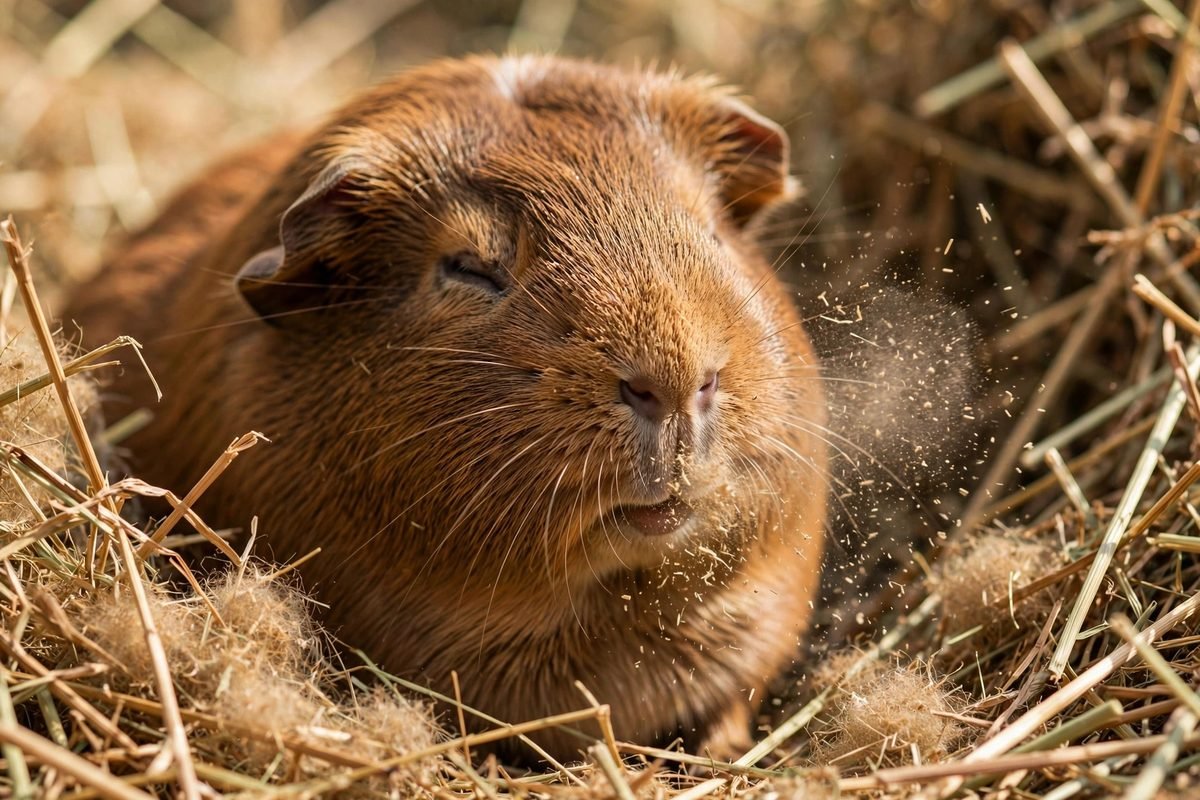
Yes — up to a point. The occasional sneeze is a healthy reflex. Guinea pigs spend their lives nose-deep in hay and bedding, so a sneeze now and then is just housekeeping for their airways.
Normal sneezing looks like this:
- One or two sneezes, then back to normal behaviour
- No discharge from the nose
- Pig keeps eating, drinking, popcorning and wheeking as usual
- Often happens right after fresh hay is added or during a cage clean
Concerning sneezing looks like this:
- Repeated sneezing fits, several times an hour or throughout the day
- Any coloured or crusty discharge around the nose
- Sneezing plus watery or crusty eyes
- Noisy, laboured, or wheezy breathing
- The pig goes quiet, eats less, or sits hunched and fluffed up
The rule of thumb: a lone sneeze is fine; a pattern plus symptoms is a vet trip. Guinea pigs are prey animals — they hide illness well, so by the time symptoms are obvious, the problem may already be advanced. When in doubt, call the vet.
7 Common Causes of Guinea Pig Sneezing
1. Dusty hay
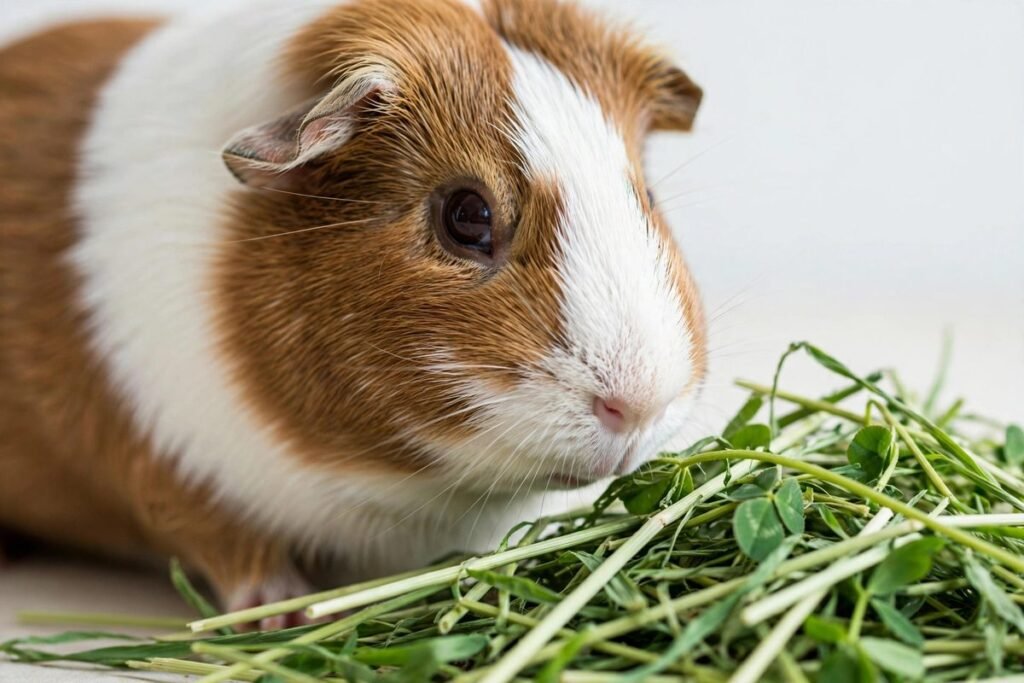
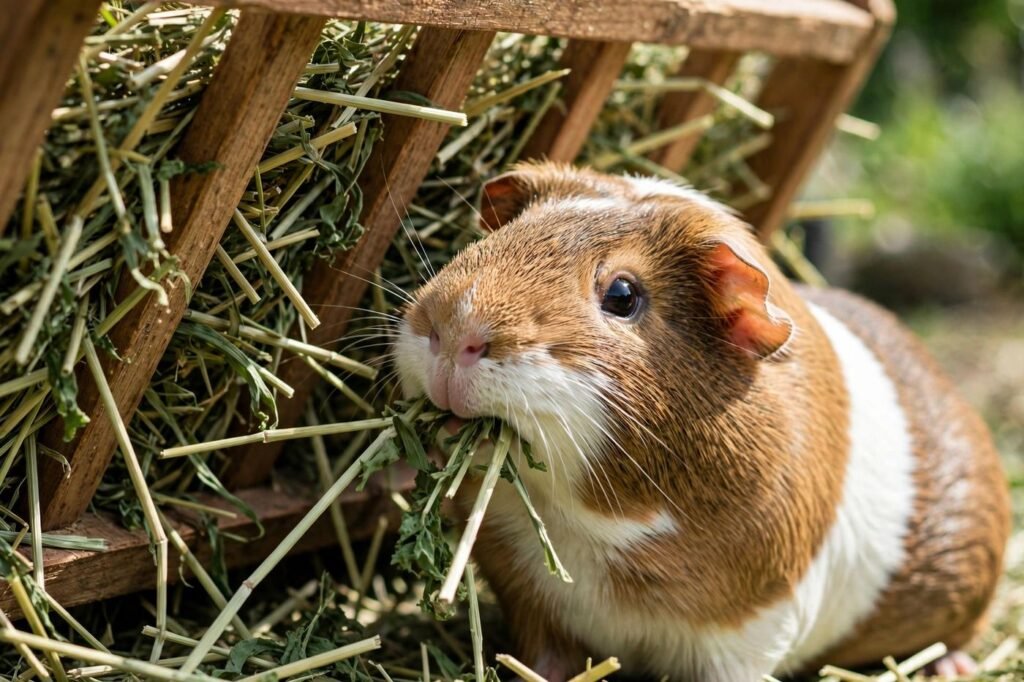
The number one cause, by a mile. Cheap or old hay sheds clouds of fine dust every time your pig burrows into it. If the sneezing started right after you opened a new bag, the hay is your prime suspect. Switch to a greener, fresher-smelling batch and watch whether the sneezing fades within a day or two. Our best hay guide explains how to spot quality hay that won’t set off sneezing fits.
2. Dusty bedding
Wood shavings — especially pine and cedar — are notorious for fine dust and aromatic oils that irritate guinea pig airways. Even “dust-extracted” shavings vary in quality. If your pig sneezes most after a full bedding change, try switching to fleece liners or paper-based bedding and see if it settles. Our bedding guide ranks the safest options.
3. Strong smells and sprays
Guinea pigs have sensitive respiratory systems. Air fresheners, scented candles, essential-oil diffusers, cleaning sprays, and even strong perfume near the cage can all trigger sneezing. Keep the pig room fragrance-free and clean the cage with plain hot water or a pet-safe cleaner, rinsed well.
4. Dry air
Central heating in winter dries indoor air, which can irritate nasal passages and cause light sneezing. If the whole household is sniffly in January, the air may be the culprit. A bowl of water near (not in) the cage area or a humidifier in the room can help — but never mist the pigs directly.
5. Allergies
Guinea pigs can develop sensitivities to specific hays, beddings, or pollens — much like hay-fever in humans. Allergy sneezing tends to be seasonal or tied to one specific product. If sneezing appears every time you use a particular hay brand and vanishes when you switch, you’ve found your answer.
6. Colds and draughts
A cage sitting in a draught — near a frequently opened door, a window, or an air-conditioning vent — chills guinea pigs and stresses their immune system. Pigs are comfortable roughly between 17–24°C. Move the cage somewhere draught-free and stable in temperature, and the sneezing often stops on its own.
7. Upper respiratory infection (URI)
This is the serious one. Bacterial respiratory infections are common in guinea pigs and can progress to pneumonia quickly. URI sneezing is rarely a lone symptom — expect some combination of thick or coloured nasal discharge, crusty eyes, laboured or clicking breathing, lethargy, and appetite loss. A URI needs antibiotics from a vet; it will not clear up on its own. For the full picture of respiratory illness signs, see our common illnesses guide.
Warning Signs That Mean a Vet Visit Can’t Wait
Call your exotic vet the same day if you notice any of these alongside the sneezing:
- Coloured nasal discharge — yellow, green, or thick white (clear and watery can still be worth a call, but coloured is urgent)
- Crusty eyes or nose — dried discharge matting the fur
- Noisy breathing — wheezing, clicking, crackling, or visible effort with each breath
- Not eating or drinking — a guinea pig that stops eating can decline within hours; gut stasis is an emergency
- Lethargy or hunched posture — sitting fluffed up in a corner, unusually still
- Weight loss — weigh weekly; a drop of 50g+ is a red flag
Tip: Sneezing plus ANY breathing noise is an emergency, not a wait-and-see. Guinea pig lungs are small and infections move fast — a same-day vet visit can be the difference between a course of antibiotics and a crisis.
What to Do Right Now: The 24-Hour Checklist
If your pig has started sneezing but shows no red-flag symptoms yet, work through this before panicking:
- Check the hay. Is it brown, dusty, or musty-smelling? Replace with fresh, green, sweet-smelling hay.
- Check the bedding. Recently changed? Sniff-test it for dust; consider a switch to fleece or paper bedding.
- Remove fragrances. No air fresheners, candles, diffusers, or cleaning sprays near the cage for 24 hours.
- Check the cage position. Out of draughts? Away from windows, doors, and AC vents? Room temperature steady?
- Watch and weigh. Monitor for a full day: count sneezing fits, check for discharge, weigh the pig. Any escalation — vet, same day.
- Don’t medicate at home. No human cold remedies, no essential oils, no “natural” antibiotics. Guinea pigs react badly to many common drugs.
If the sneezing fades once you’ve fixed the environment, you’ve likely solved it. If it persists beyond 24–48 hours with no clear trigger — vet.
How Vets Diagnose and Treat Sneezing
At the appointment, the vet will listen to the chest, check the nose and eyes, and may take a swab to identify the bacteria. Most URIs are treated with guinea-pig-safe antibiotics (never penicillin-based drugs, which are dangerous for cavies — a good reason to see an exotic vet, not a generalist guessing at doses).
Treatment usually means 7–14 days of antibiotics plus supportive care: keeping the pig warm, tempting it to eat (critical — syringe-feed if appetite drops), and sometimes nebulisation for congested pigs. Caught early, most URIs clear up completely.
Preventing Sneezing Long-Term
- Buy good hay — green, fresh-smelling, low-dust. It prevents more sneezing than anything else.
- Choose low-dust bedding — fleece or quality paper bedding over dusty shavings.
- Keep the room fragrance-free — no sprays, candles, or diffusers near the cage.
- Stable temperature, no draughts — 17–24°C, away from doors and windows.
- Clean weekly, spot-clean daily — ammonia from soiled bedding irritates airways.
- Quarantine new pigs — two weeks separate before introductions; new arrivals can carry infections silently.
For the full routine that keeps pigs healthy day to day, our guinea pig care guide covers housing, diet, and weekly health checks — and the RSPCA’s guinea pig health advice is a solid vet-backed second opinion.
The Takeaway
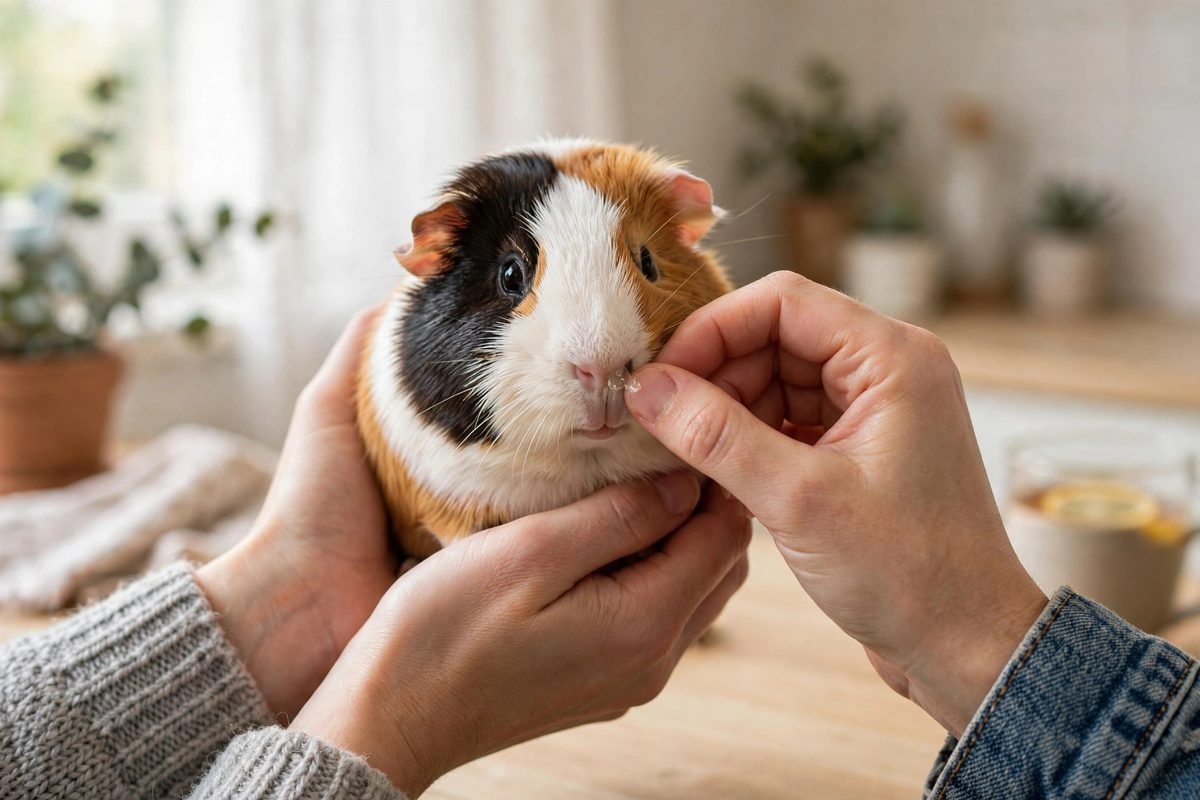
An occasional sneeze from your guinea pig is normal — dusty hay, a bedding change, or a strong smell is usually all it is. The line is drawn at patterns and companions: repeated sneezing fits, any nasal discharge, crusty eyes, breathing noises, or appetite loss mean a vet visit the same day. Fix the easy environmental triggers first (fresh hay, clean bedding, no fragrances, no draughts), monitor for 24 hours, and never try to medicate at home. Most sneezing is harmless — but the few cases that aren’t move fast, so trust your eyes and call the vet early.
Frequently Asked Questions
Why is my guinea pig sneezing so much?
The most common reasons are dusty hay, dusty bedding, strong smells, or dry air. If the sneezing is frequent and comes with nasal discharge, crusty eyes, or breathing noises, it may be an upper respiratory infection — see a vet the same day.
Is it normal for guinea pigs to sneeze?
Yes, an occasional sneeze is completely normal — it’s how they clear dust from their noses after burrowing in hay. What’s not normal is repeated sneezing fits or sneezing paired with other symptoms.
Can guinea pigs catch a cold from humans?
Guinea pigs don’t catch human colds, but they can develop their own bacterial respiratory infections. Stress factors like draughts, cold rooms, and poor ventilation make infections more likely.
What does a guinea pig respiratory infection sound like?
Beyond sneezing, listen for wheezing, clicking, or crackling sounds when breathing, and watch for laboured breathing with visible effort. Any breathing noise plus sneezing warrants a same-day vet visit.
Should I separate a sneezing guinea pig from its cage mate?
If the sneezing is environmental (dusty hay), no need. If you suspect infection — discharge, lethargy, breathing noises — separate them to reduce spread and get the sick pig to a vet promptly; then have the cage mate checked too.
How can I stop my guinea pig sneezing?
Start with the environment: fresh low-dust hay, clean low-dust bedding, no fragrances near the cage, no draughts, stable room temperature. If sneezing persists beyond 24–48 hours or any warning signs appear, see an exotic vet.