10 Most Common Guinea Pig Diseases & Illness Symptoms
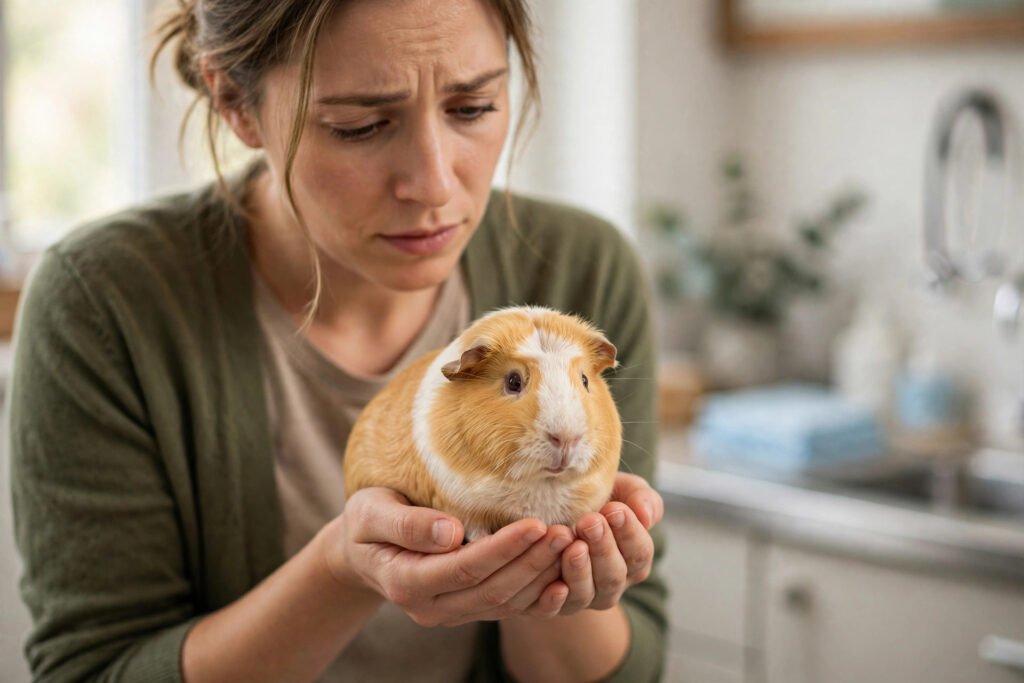
Spotting common guinea pig illnesses early is one of the most important skills you can learn as an owner. Guinea pigs are prey animals, and their instinct is to hide pain and weakness for as long as possible. By the time a guinea pig looks obviously sick, the illness is often well advanced — which is why knowing the warning signs makes such a difference. This guide covers the ten illnesses vets see most often: what each one looks like, when to call the vet, and the simple prevention steps that keep most of them away.
Why Guinea Pigs Hide Their Symptoms
In the wild, showing weakness makes an animal a target, so guinea pigs have evolved to mask pain and behave normally until they cannot. That means the classic, dramatic signs — sitting hunched in a corner, refusing food — are usually late-stage signals. The real skill is noticing the subtle changes: eating a little slower, sleeping a little more, a slightly different sound when they breathe. If you are new to reading these cues, start with our guide on how to tell if your guinea pig is sick.
The 10 Most Common Guinea Pig Illnesses
1. Respiratory Infection (URI)
Upper respiratory infections are among the most frequent reasons guinea pigs visit the vet. They are usually caused by bacteria, spread easily between pigs, and get worse with cold draughts, damp bedding, and dirty cages.
- Symptoms: sneezing, wheezing or crackly breathing, runny nose or crusty eyes, loss of appetite, lethargy.
- When to call the vet: any breathing that sounds laboured, noisy, or faster than usual — this is a same-day emergency. Guinea pig airways are tiny, and a URI can turn into pneumonia in a matter of days.
- Prevention: keep the cage out of draughts, change bedding regularly, quarantine new pigs for 2–3 weeks, and wash your hands between handling different groups.
2. Scurvy (Vitamin C Deficiency)
Unlike most animals, guinea pigs cannot make their own vitamin C — they must get it from their diet every day. Scurvy develops when the diet is low in fresh vegetables and weakens blood vessels, gums, and joints.
- Symptoms: swollen or bleeding gums, rough or patchy coat, reluctance to move, limping or swollen joints, weight loss.
- When to call the vet: if your pig stops moving normally, has bleeding gums, or limps. The vet can give a vitamin C boost while you fix the diet.
- Prevention: feed fresh bell peppers, broccoli, and kale daily. Guinea pig pellets lose their added vitamin C over time, so buy small bags and store them cool and dark.
3. Bumblefoot (Pododermatitis)
Bumblefoot is an infection and inflammation of the foot pads. It starts when the skin on the feet is damaged by wire or rough flooring, hard surfaces, dirty bedding, or excess weight — then bacteria invade the sore. Heavy or older guinea pigs are most at risk.
- Symptoms: red, swollen, or crusty foot pads; limping; sitting still more than usual; open sores on the feet in advanced cases.
- When to call the vet: at the first sign of swelling or limping. Bumblefoot can reach the bone if ignored, and early treatment is much simpler.
- Prevention: use solid flooring only (never wire), keep bedding clean and dry, provide soft fleece liners or deep bedding, and keep your pigs at a healthy weight.
4. Urinary Stones (Bladder Stones)
Guinea pigs excrete calcium through their urine, which makes them prone to bladder stones — especially boars. A diet too high in calcium is the main driver, and large stones can block the bladder completely.
- Symptoms: squeaking or crying while urinating, blood in the urine, frequent small wees, hunched posture, straining.
- When to call the vet: if your pig cries when peeing or you see blood in the urine — go promptly. A blocked bladder is life-threatening within hours.
- Prevention: limit high-calcium foods (alfalfa hay, parsley, excess kale), offer plenty of fresh water, and feed timothy or orchard hay as the staple. Gritty white urine deposits signal too much calcium.
5. Dental Disease (Malocclusion)
A guinea pig’s teeth grow continuously and stay worn down only through constant chewing of hay. When teeth grow crooked or too long — malocclusion — the pig cannot eat properly, and sharp points can cut the tongue and cheeks.
- Symptoms: dropping food, eating slowly or only soft foods, drooling (wet chin), weight loss, eye discharge on one side (tooth roots can press on tear ducts).
- When to call the vet: any change in eating or a wet chin needs a dental check within a day or two. Overgrown teeth need trimming under sedation — this is not a home job.
- Prevention: unlimited good-quality hay is the single best prevention — it should make up about 80% of the diet. Avoid feeding only pellets and treats.
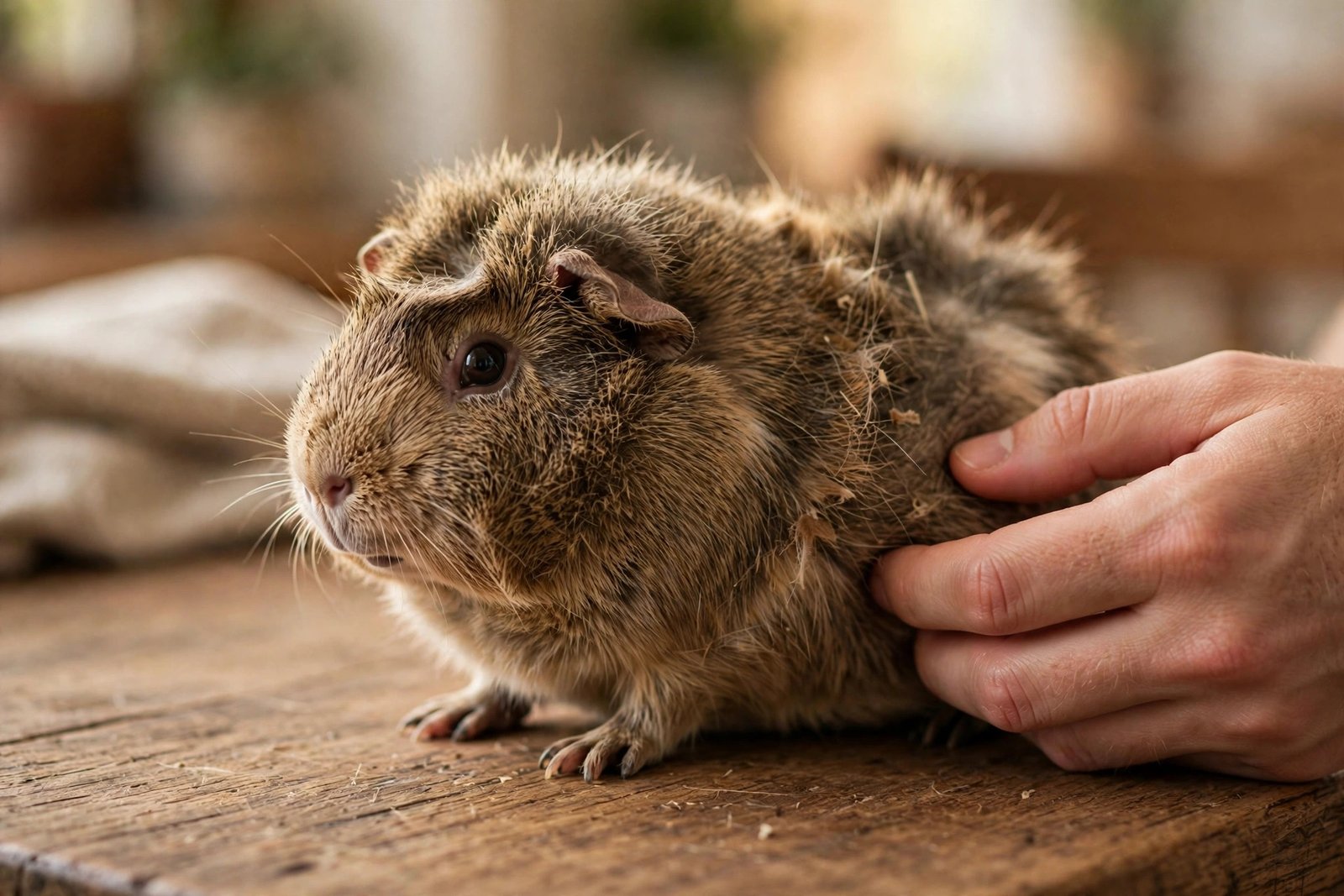
6. Skin Mites & Fungal Infections
Skin problems are often mistaken for “just scratching”. Trixacarus mites cause intense itching and hair loss, while ringworm (a fungus, not a worm) causes circular bald, flaky patches.
- Symptoms: constant scratching, flaky or scabby skin, patchy hair loss, crusty ears or nose, seizures in severe mite cases (from the pain of being touched).
- When to call the vet: if scratching is constant, skin looks sore or flaky, or hair falls out in patches. Both mites and ringworm need proper medication — ringworm can spread to you, so wear gloves.
- Prevention: keep cages clean and dry, quarantine new pigs, handle your pigs regularly so you notice skin changes early. If you notice shedding alongside skin issues, read our guide on why your guinea pig is losing hair.
7. GI Stasis & Bloat
A guinea pig’s digestive system must keep moving constantly — it is designed for a steady flow of fibrous food. When the gut slows down (GI stasis) or gas builds up (bloat), it becomes dangerous fast. Causes include sudden diet changes, low-fibre diets, dehydration, and stress.
- Symptoms: not eating or passing droppings, a tight or swollen-looking belly, lethargy, sitting hunched, teeth grinding.
- When to call the vet: if your pig has not eaten or pooed for more than 8–12 hours, treat it as an emergency. A guinea pig that stops eating can go downhill in a single day.
- Prevention: unlimited hay, introduce new foods gradually, keep fresh water available, and minimise stress. Weigh your pigs weekly — unexplained weight loss often flags gut trouble before appetite changes do.
8. Eye Infections & Injuries
Guinea pig eyes are large and exposed, so infections and scratches from hay are common. Conjunctivitis causes red, weepy eyes; hay poke injuries cause a cloudy spot on the cornea.
- Symptoms: crusty or watery eyes, redness or swelling, squinting, a white or cloudy patch on the eye surface.
- When to call the vet: any eye that is cloudy, swollen shut, or oozing needs checking within 24 hours. Eye injuries can worsen quickly.
- Prevention: use soft, dust-free hay; keep the cage clean; ensure enough vitamin C in the diet. Trim long hay strands that poke at face level.
9. Ear Infections
Ear infections are less common but serious — they usually spread from an untreated respiratory infection and can reach the inner ear, affecting balance.
- Symptoms: head tilt, walking in circles or losing balance, scratching at one ear, discharge or bad smell from the ear.
- When to call the vet: a head tilt is always a same-day vet visit. Ear infections need proper antibiotics, and balance problems can become permanent if treatment is delayed.
- Prevention: treat respiratory infections promptly so they cannot spread to the ears; keep the cage clean and dry.
10. Heatstroke & Ovarian Cysts
These two very different conditions round out the list because both catch owners off guard. Guinea pigs cannot sweat and overheat easily — temperatures above about 26°C (79°F) are risky. Separately, unspayed sows over about 18 months old commonly develop ovarian cysts.
- Heatstroke symptoms: panting, drooling, limpness, lying stretched out — this is an emergency. Move the pig to a cool spot immediately and call the vet.
- Ovarian cyst symptoms: symmetrical hair loss on the flanks, crusty nipples, changes in behaviour. Needs a vet ultrasound and often hormone treatment or spaying.
- Prevention: keep the cage out of direct sun and away from radiators, provide shade and cool tiles in summer, and have sows checked by an exotics vet annually after 18 months.
Emergency Warning Signs: Call the Vet Now
Whatever the underlying illness, these signs mean do not wait:
| Warning Sign | What It May Mean |
|---|---|
| Not eating or drinking for 12+ hours | GI stasis, dental disease, severe pain |
| Laboured or noisy breathing | Respiratory infection / pneumonia |
| Blood in urine or crying while peeing | Urinary stones or bladder infection |
| Head tilt or circling | Ear infection |
| Panting, drooling, or limp in heat | Heatstroke |
| Sudden weight loss or complete lethargy | Any serious systemic illness |
Guinea pigs decline fast — when in doubt, call your exotics vet and describe what you see.
Preventing Common Guinea Pig Illnesses
Most of the illnesses above share the same few root causes, which is good news — a handful of daily habits prevent most of them:
- Unlimited good hay: timothy or orchard hay, available 24/7. It wears teeth and keeps the gut moving.
- Fresh vegetables daily: vitamin C-rich veg like bell peppers prevents scurvy and supports immunity.
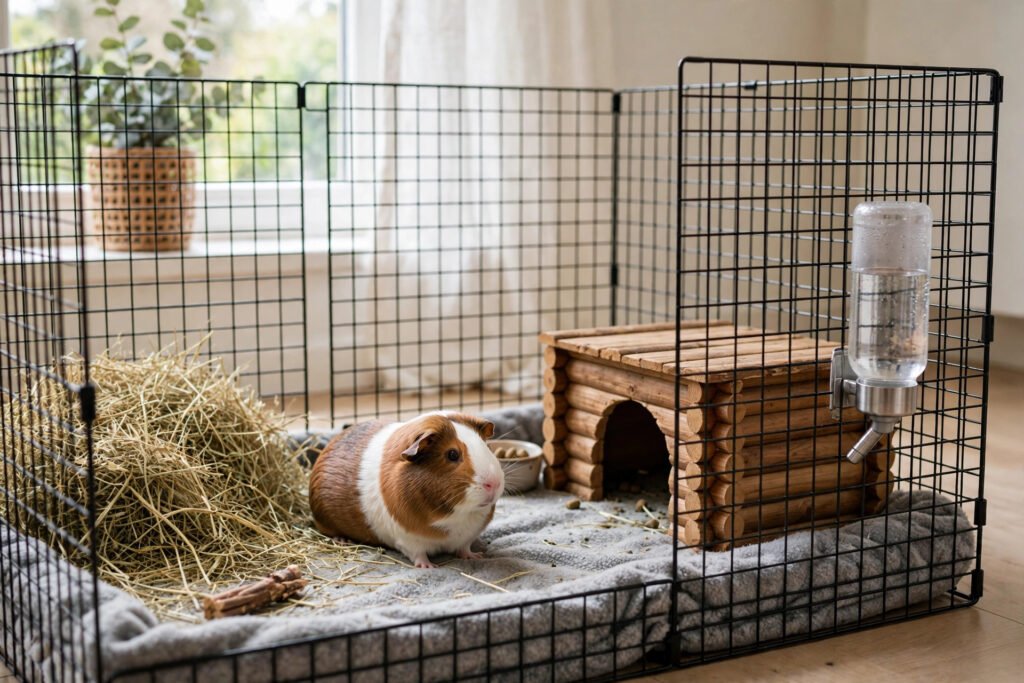
- Clean, dry, draught-free housing: spot-clean daily, full clean weekly. For the full picture of day-to-day care, see our complete guinea pig care guide.
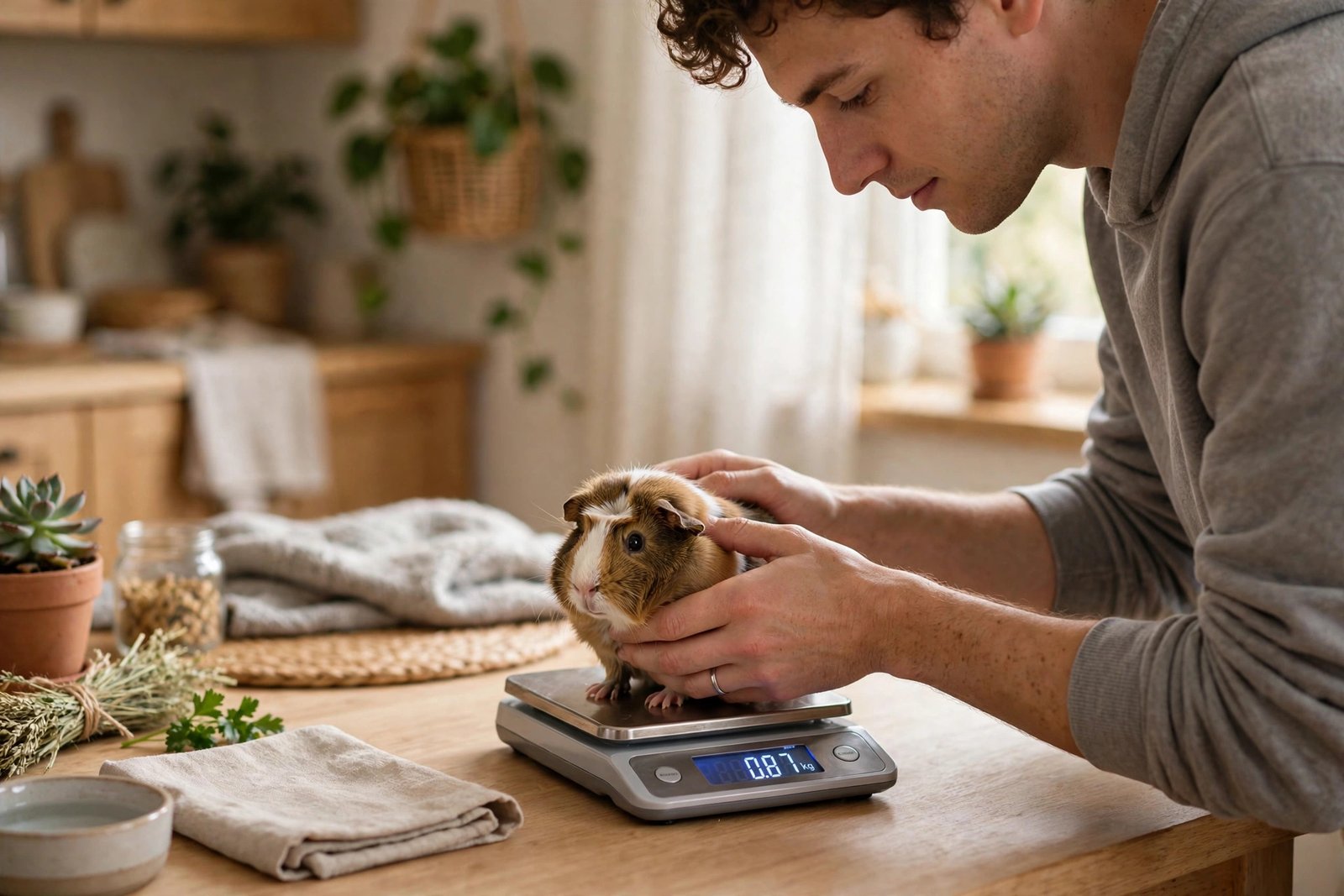
- Weekly weigh-ins: a kitchen scale and 30 seconds once a week catches weight loss — the earliest warning sign of many illnesses.
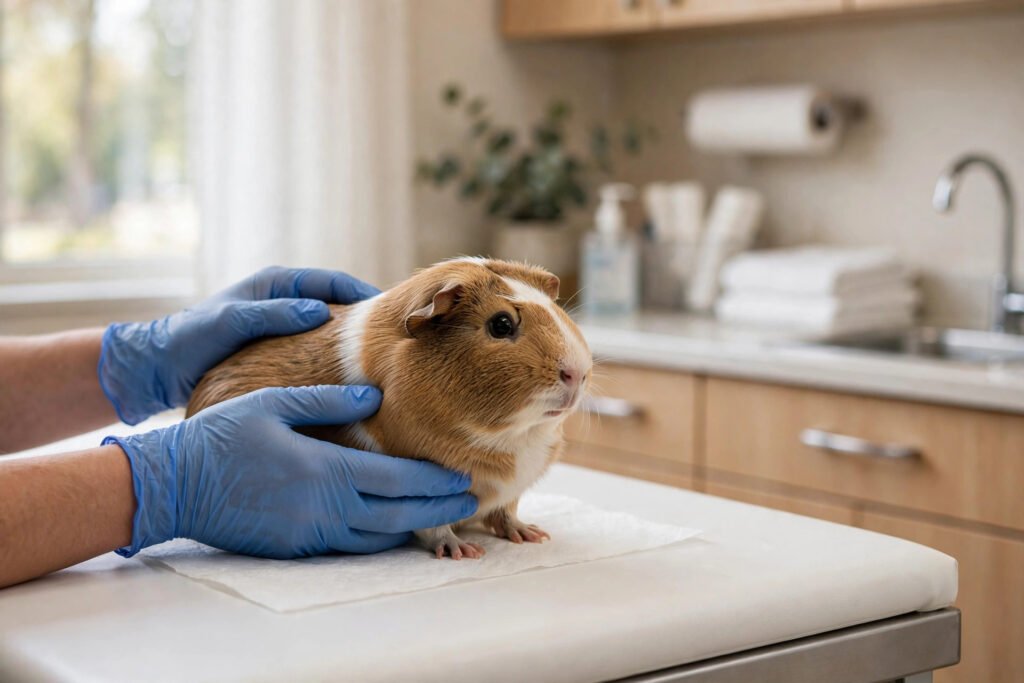
- Handle and observe daily: lap time is health-check time. Feel the feet, look at the eyes and ears, check the coat.
- Quarantine newcomers: keep new pigs separate for 2–3 weeks before introductions.
- Find an exotics vet now: not all vets treat guinea pigs. Register before you face an emergency.
Frequently Asked Questions
What is the most common illness in guinea pigs?
Respiratory infections and skin problems (mites and fungal infections) are the two most frequent vet visits. Both are very treatable when caught early — watch for sneezing, noisy breathing, scratching, and patchy hair loss.
How do I know if my guinea pig is in pain?
Look for subtle signs: sitting hunched or puffed up, eating more slowly, squeaking when picked up, or grinding their teeth. Any of these together with reduced activity warrants a vet check.
Can guinea pig illnesses spread to humans?
Most cannot, but there are two exceptions: ringworm (a fungal skin infection) and, rarely, bacterial infections like Bordetella. Wear gloves when handling a pig with skin lesions, wash your hands after handling, and get treatment for yourself if you develop an itchy circular rash.
How quickly can a sick guinea pig deteriorate?
Very fast. A guinea pig that stops eating can develop fatal liver complications within 24 hours, and respiratory infections can turn into pneumonia in days. Always call the vet the same day you notice a real change.
Do guinea pigs need vaccinations?
No routine vaccinations exist for guinea pigs in most countries. Prevention relies on good diet, clean housing, quarantine, and regular health checks instead — plus a good relationship with an exotics vet who knows your pigs.
What should I do while waiting for the vet appointment?
Keep the pig in a small, comfortable carrier or hospital cage. Offer favourite foods and water — if they will not eat, try hand-feeding small pieces of bell pepper or coriander. Do not give human medicines. Note down what you observed for the vet.
The Bottom Line
The ten common guinea pig illnesses above — respiratory infections, scurvy, bumblefoot, urinary stones, dental disease, skin mites and fungus, GI stasis and bloat, eye and ear infections, and heatstroke or ovarian cysts — cover the vast majority of guinea pig vet visits. Most are preventable with unlimited hay, daily vitamin C-rich vegetables, clean dry housing, and weekly weigh-ins. Your job as an owner is not to diagnose — it is to notice. Learn the subtle signs, act the same day something changes, and keep an exotics vet’s number on your fridge.