Guinea Pig Sounds and What They Mean: The Complete Guide
Guinea pigs are some of the most talkative small pets you can own. From the famous “wheek!” that greets the rustle of a vegetable bag to soft purrs during lap time, your piggies are constantly telling you how they feel. Learning to recognise guinea pig sounds and what they mean turns random noise into real conversation — and helps you spot health problems early, sometimes before any visible symptoms appear.
Below is every common guinea pig sound, grouped into happy noises, warning noises, and the ones that mean “call the vet.” By the end, you’ll speak fluent piggy.
Why Guinea Pigs Are So Vocal
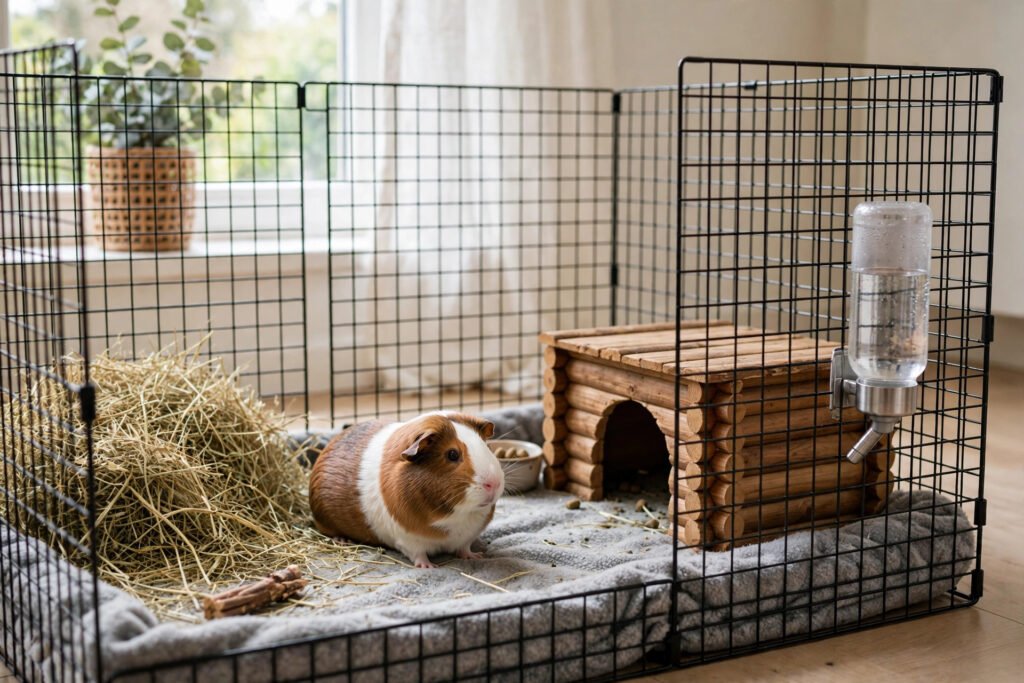
Guinea pigs are herd animals and prey animals, which explains their chattiness. In the wild, cavies live in groups where constant low-level communication keeps everyone safe — a sudden silence can mean a predator is near. A quiet guinea pig is often more worrying than a noisy one.
Context is everything. A purr during a gentle cuddle means something very different from a purr during a tense face-off between cage mates. Read the sound together with body language: relaxed posture, popcorn jumps, and curious sniffing are good signs; puffed-up fur or lunging are not.
Happy Guinea Pig Sounds
These are the noises every guinea pig owner loves to hear. If your piggies make these regularly, you’re doing things right.
Wheeking
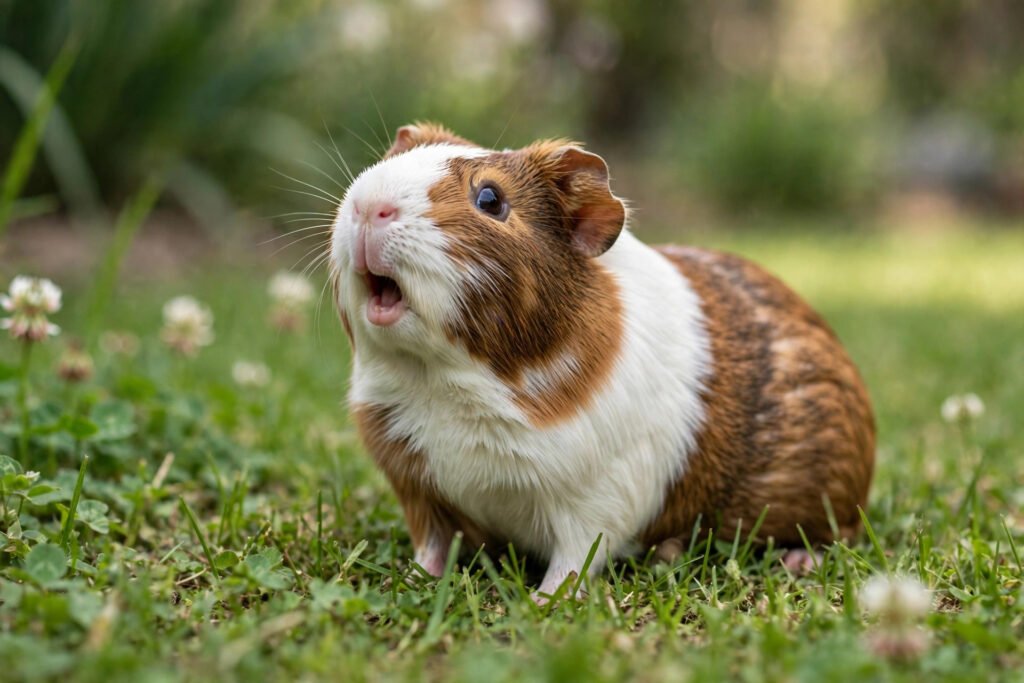
What it sounds like: A loud, high-pitched “wheek! wheek! wheek!” — sometimes sustained for a minute or more.
Wheeking is the signature guinea pig sound and it almost always means excitement, usually about food. The crinkle of a bag, the fridge door, or your footsteps at feeding time can set off a full chorus. Many owners joke their guinea pigs have trained them — and honestly, they’re not wrong. Keep mealtimes consistent with a proper guinea pig diet chart and feeding schedule so they know food is always coming.
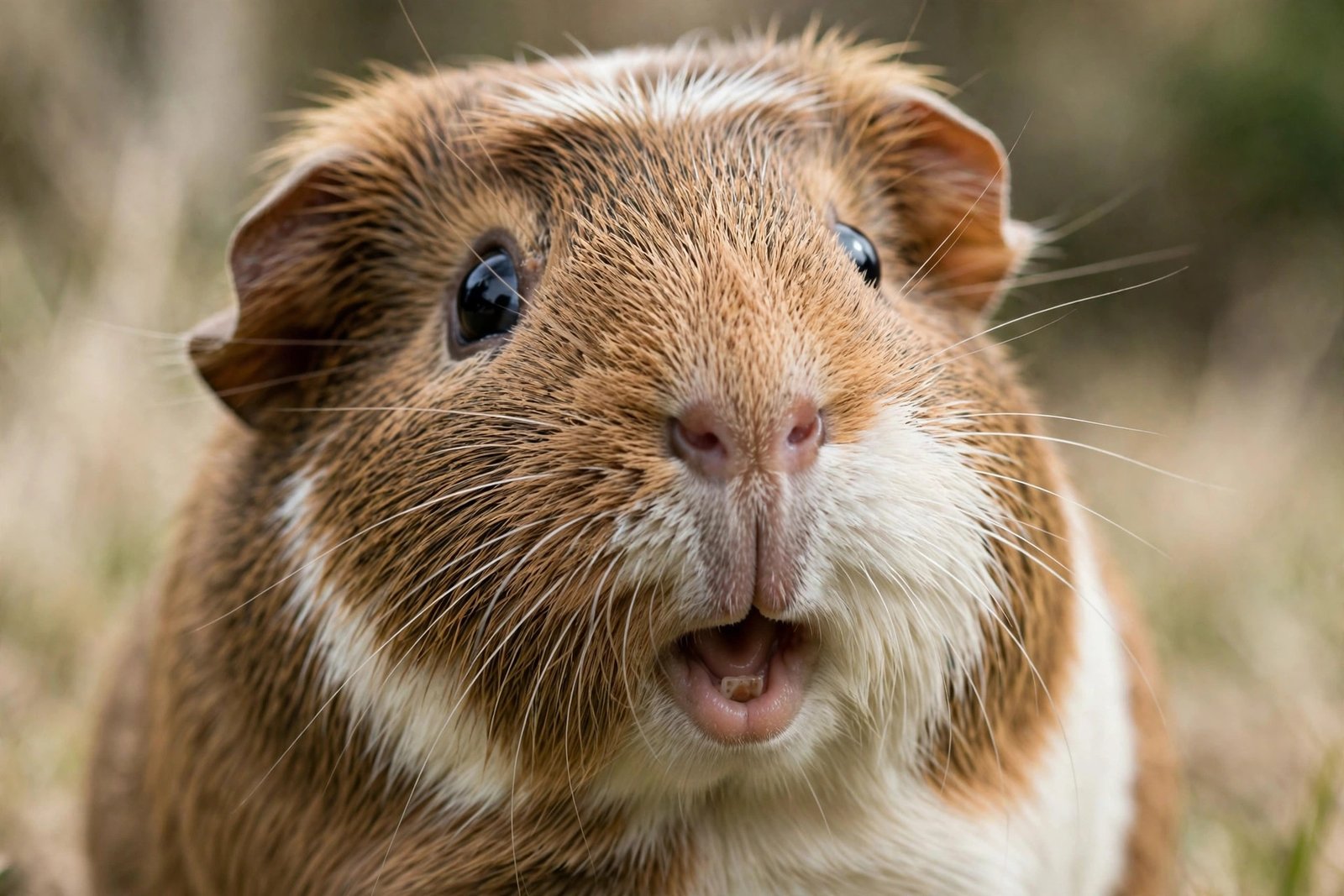
Wheeking can also mean “pay attention to me!” — a lonely or bored guinea pig may wheek simply because it wants company. Guinea pigs genuinely suffer alone, which is why keeping them in pairs or small groups matters so much.
Purring
What it sounds like: A low, steady rumble — similar to a cat’s purr but with a slightly buzzier quality.
A soft, relaxed purr usually means contentment — you’ll hear it when stroking your guinea pig in its favourite spot, or when cage mates groom each other. The body tells the truth: a content purring pig looks loose and floppy, sometimes closing its eyes.
But purring has a second meaning. A short, tense, higher-pitched purr — especially with a stiff body and puffed fur — signals irritation. If the purr starts when you touch a particular spot, take the hint and stop.
Chutting
What it sounds like: A series of short, quiet “chut-chut-chut” noises, like muttering under the breath.
Chutting is exploratory chatter. Guinea pigs do it while wandering a new space, during floor time, or sniffing a cage mate — narrating their world as they explore. You’ll also hear it during friendly nose-to-nose greetings between bonded pigs.
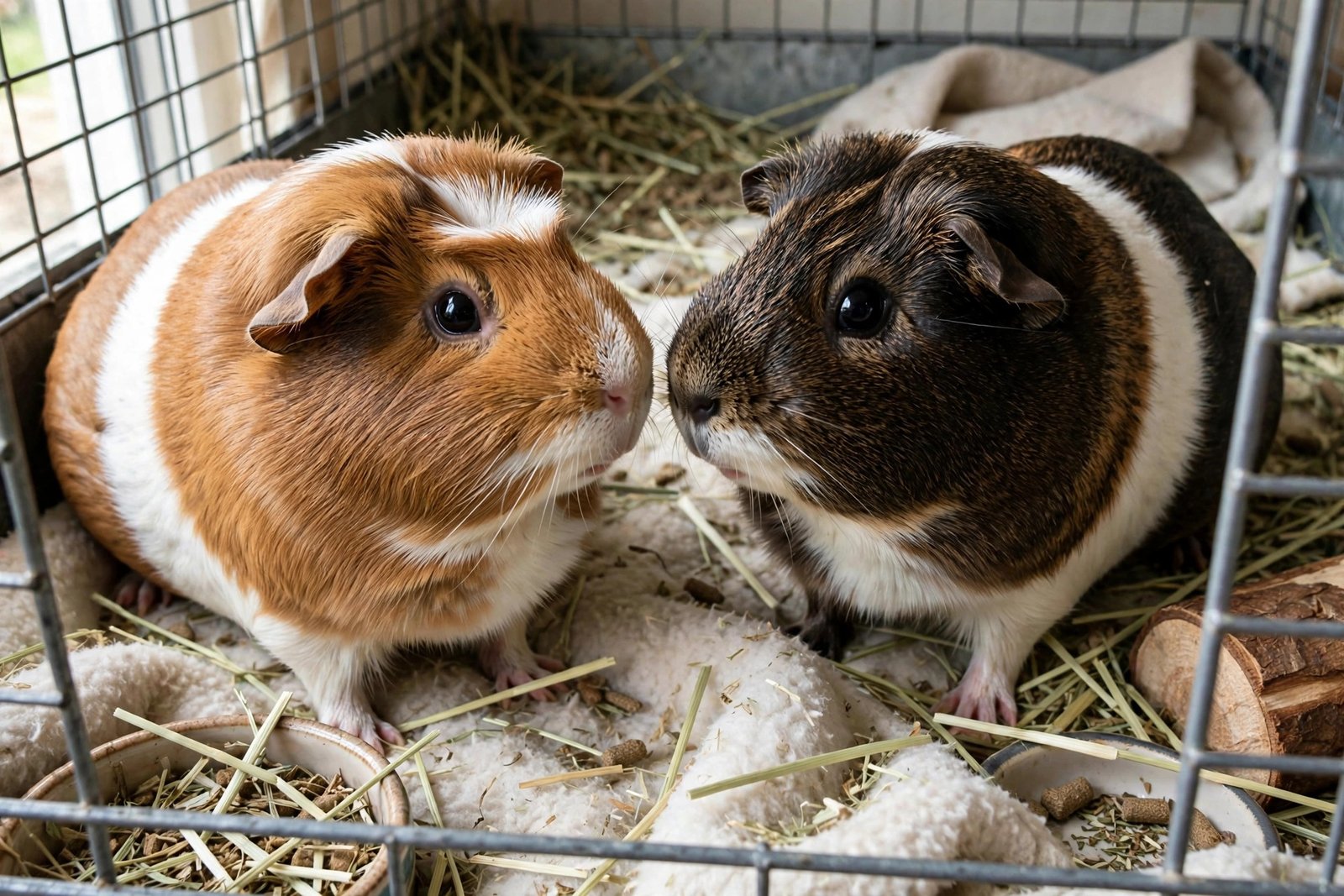
Chutting is one of the best sounds in the guinea pig repertoire — it means a curious, confident pig. A pig that chuts during floor time is comfortable and engaged, exactly what you want to see.
Guinea Pig Sounds That Mean “Back Off”
Not every noise is friendly. These sounds are warnings — your guinea pig is asking for space, and the kindest response is to give it.
Teeth Chattering
What it sounds like: Rapid, sharp clicking of the teeth — unmistakable once you’ve heard it.
Teeth chattering is a clear warning: “I’m annoyed, leave me alone.” It’s most common during introductions between unfamiliar guinea pigs, when one pig invades another’s space, or when a pig doesn’t want to be picked up. Never force interaction when you hear it — pushing past a warning can escalate to a bite.
Occasional chattering during bonding is normal and usually settles as pigs sort out their hierarchy. But constant chattering, paired with wide yawning (showing teeth) or lunging, may mean the pair needs more space or a rethink of the pairing.
Rumble Strutting
What it sounds like: A deep, vibrating rumble paired with a slow, swaying walk — often called “motorboating.”
Rumble strutting is a dominance display, most often seen in males (boars) but females do it too, especially when in season. The pig sways its hips side to side while rumbling — basically showing off. It’s normal during introductions and usually harmless posturing that ends without a fight.
Step in only if it escalates — persistent chasing, mounting that won’t stop, or one pig cornered and unable to eat. Normal rumble strutting between settled cage mates is just guinea pig politics.
Hissing
What it sounds like: A sharp, snake-like hiss.
Hissing is a defensive sound, rarer than chattering, and it means genuine fear or aggression. A hissing guinea pig feels threatened and is warning you it will defend itself. Back away slowly, give it time in a dark hide, and work out what scared it before interacting again.
Chirping
What it sounds like: Exactly like a small bird chirping — a strange, melodic sound that can last several minutes.
Chirping is the great mystery of guinea pig sounds. It’s rare, and nobody knows for certain what it means — theories range from stress or loneliness to a trance-like state. It often happens at night, and other pigs in the room may freeze and stare while one chirps. If your pig chirps occasionally but is otherwise healthy and active, don’t panic — just check nothing in the environment is stressing it.
Guinea Pig Sounds That Signal a Vet Visit
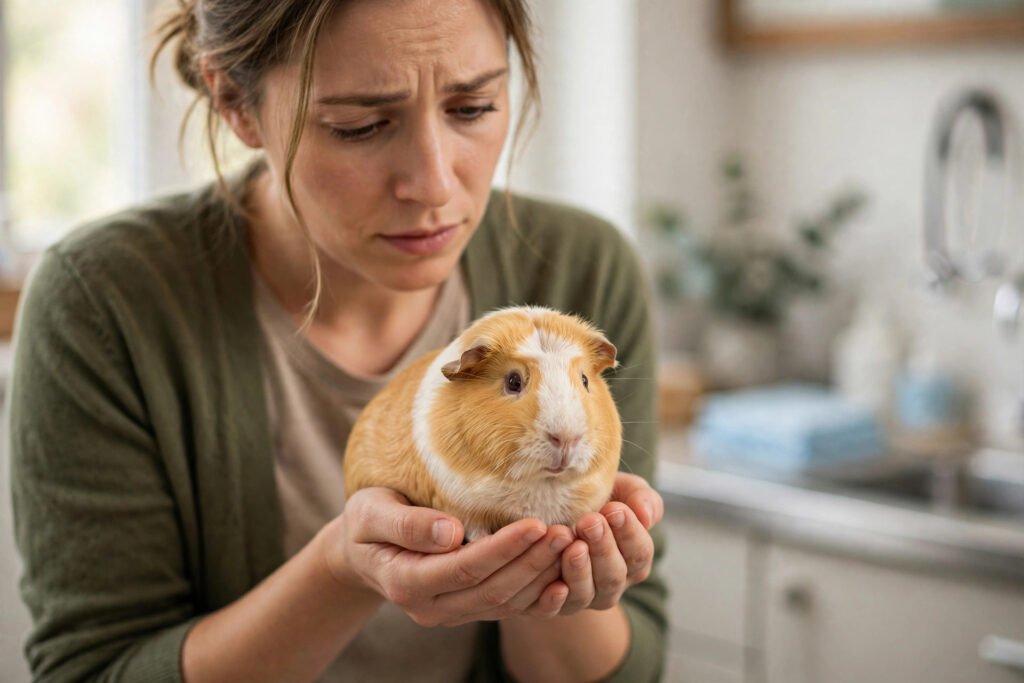
Some sounds are medical red flags. Guinea pigs hide illness instinctively, so an unusual noise can be your earliest warning sign. Take these seriously.
Squealing or Shrieking
What it sounds like: A sudden, loud, high-pitched scream — much sharper and more urgent than wheeking.
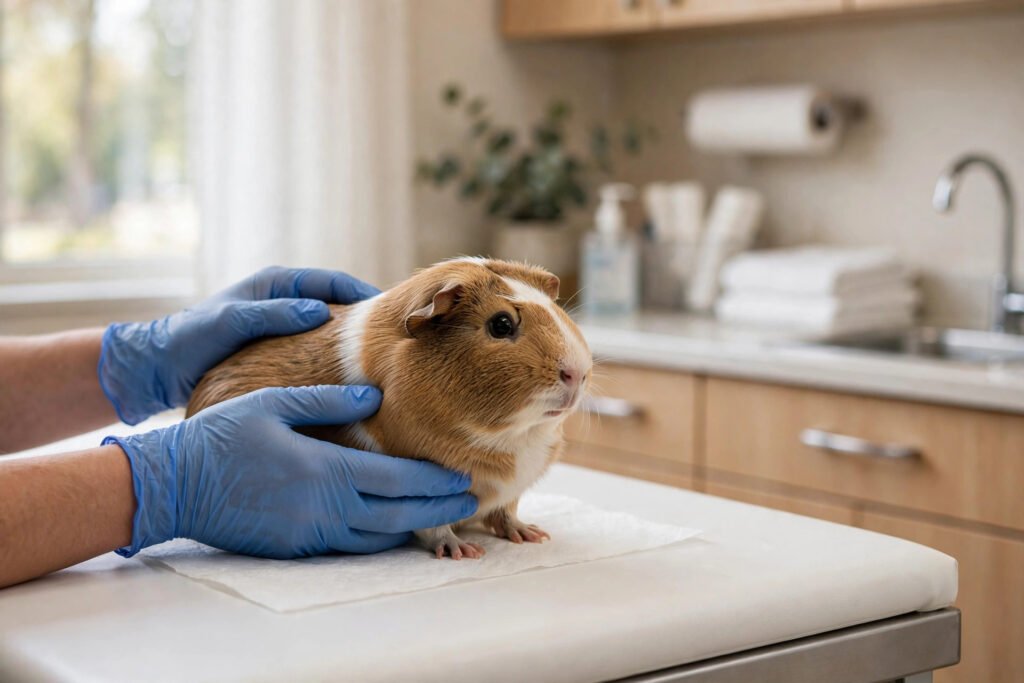
A shriek means pain or real fear. A pig may shriek if picked up roughly, bitten by a cage mate, or — most worryingly — out of nowhere. A spontaneous shriek with no obvious cause can indicate a urinary stone, bloat, or another painful internal problem. Guinea pigs deteriorate fast, so call an exotic vet the same day.
Coughing, Sneezing, and Wheezing
What it sounds like: Repeated sneezing, a wet cough, laboured breathing, or a soft “hooting” sound with each breath.
Frequent sneezing, a runny nose or crusty eyes, coughing, or any audible wheeze or click while breathing points to an upper respiratory infection — one of the most common and most dangerous guinea pig illnesses. Hooting (a soft hoot on every breath) can mean fluid around the heart or lungs and needs urgent veterinary attention.
Respiratory infections can turn fatal in days, so don’t “wait and see.” Keep the pig warm, minimise stress, and get to an exotic vet promptly. Avoid dusty bedding, and keep the cage away from draughts and strong smells.
Teeth Grinding (Bruxism)
What it sounds like: A slow, rhythmic grinding — different from the rapid clicks of chattering.
This is the sound most often confused with purring, and the difference matters. Slow teeth grinding is a classic sign of pain — dental problems, gut pain, or general discomfort. A pig that grinds its teeth while hunched, fluffed up, or refusing food needs a vet check. Unsure whether it’s a happy purr or pain grinding? Check the body: relaxed and stretchy means happy; tense and hunched means vet.
| Sound | What it usually means | How to respond |
|---|---|---|
| Wheeking | Excitement, usually about food | Feed on schedule; enjoy it |
| Soft purring | Contentment and relaxation | Keep doing what you’re doing |
| Chutting | Curiosity while exploring | Let them investigate safely |
| Cooing / bubbling | Comfort and affection | A sign of trust — lovely |
| Teeth chattering | Warning — annoyed or threatened | Give space; don’t force contact |
| Rumble strutting | Dominance display | Normal — intervene only if it escalates |
| Chirping | Unknown — possibly stress | Check environment; monitor |
| Squealing / shrieking | Pain or real fear | Call an exotic vet same day |
| Coughing / wheezing | Possible respiratory infection | Vet visit promptly |
| Slow teeth grinding | Pain signal | Vet check needed |
How to Respond to Your Guinea Pig’s Sounds
Once you know the vocabulary, responding correctly builds trust fast:
- Reward wheeking with routine, not random treats. Consistent mealtimes keep pigs calm between meals. Stick to safe favourites from our safe food list for guinea pigs, and never quiet a noisy pig with an unfamiliar snack.
- Respect warnings. When you hear chattering or hissing, back off. Forcing contact teaches your guinea pig that warnings don’t work — and the next step is a bite.
- Track changes. A pig that suddenly goes quiet, or whose sounds change character (a wheek turning hoarse, new laboured breathing), is telling you something changed. Note when it started — your vet will ask.
- Never feed random “treats” to stop noise. Some owners toss whatever’s handy to quiet a wheeking pig — but many human foods are dangerous. When unsure, check our list of foods toxic to guinea pigs first.
- Keep a vet’s number handy. Know your nearest exotic vet before an emergency — pain shrieks and breathing sounds can’t wait for a Google search.
Frequently Asked Questions
Why does my guinea pig wheek every time I open the fridge?
Your guinea pig has learned that the fridge means fresh vegetables. Wheeking is an excitement call, and guinea pigs are excellent at linking sounds and routines to food — they can even learn the rustle of a specific bag.
Is my guinea pig purring or growling?
Check the body, not just the sound. A relaxed, floppy pig with a low steady rumble is purring happily. A stiff pig with puffed-up fur making a short, tense buzz is annoyed — sometimes called “drrrr” — and means back off. Context and posture always tell you which purr you’re hearing.
Why is my guinea pig chattering its teeth at me?
Teeth chattering is a warning that your guinea pig is annoyed or feels threatened — often because it doesn’t want to be handled right then. Give it space and try again later with a calm approach and a favourite vegetable. Constant chattering between cage mates can signal a hierarchy dispute worth monitoring.
What does it mean when guinea pigs chirp like birds?
Nobody knows for sure — chirping is genuinely mysterious and quite rare. It may be linked to stress, loneliness, or a trance-like state, and it often happens at night. If your guinea pig is otherwise eating, active, and healthy, an occasional chirp isn’t an emergency — but do check for environmental stressors.
Why is my guinea pig suddenly squealing loudly?
A sudden shriek usually means pain or fright — very different from happy wheeking. Check immediately for injuries, bullying from a cage mate, or signs like bloating or limping. If there’s no obvious cause, treat it as a medical red flag and call an exotic vet the same day.
How do I know if a sound means my guinea pig is sick?
Watch for sounds that are new, persistent, or paired with behaviour changes: laboured or hooting breathing, repeated sneezing with discharge, coughing, spontaneous shrieks, or slow teeth grinding while hunched. And take silence seriously — a normally chatty pig that goes quiet, stops eating, or sits puffed up needs a vet check even without dramatic sounds.
The bottom line: learning guinea pig sounds turns you from a bystander into a fluent translator of your piggies’ needs. Celebrate the wheeks, respect the warnings, and act fast on the sounds that spell trouble.