Guinea Pig Diet Chart & Feeding Schedule (Daily & Weekly)
If you are new to guinea pig ownership, one question comes up again and again: what exactly should my guinea pig eat every single day? A clear guinea pig diet chart takes the guesswork out of feeding and helps you avoid the nutritional gaps that lead to health problems like scurvy, dental disease, and obesity. Below you will find a complete daily and weekly feeding plan, portion guidance, foods to limit, and the most common diet mistakes to steer clear of.
Why a Diet Chart Matters for Guinea Pigs
Guinea pigs are herbivores with very specific nutritional needs. Unlike most small pets, they cannot synthesize their own vitamin C, which means they rely entirely on their daily diet to get roughly 25–35 mg of it. Without a consistent supply of fresh vitamin C, they can develop scurvy within a couple of weeks — showing symptoms like lethargy, rough coat, swollen joints, and weight loss.
A daily feeding routine also keeps their digestive system moving. Guinea pigs need constant access to high-fibre food to keep their teeth worn down and their gut healthy. When feeding is inconsistent, hay intake drops, and digestive stasis or dental problems can follow. A simple, repeatable chart solves both problems at once.
The Daily Diet Breakdown: The 4 Pillars
Every healthy guinea pig diet rests on four pillars. Think of them as fixed percentages of what your pet eats each day:
1. Unlimited Hay (~80% of the Diet)
Hay is by far the most important part of your guinea pig’s diet — it should make up around 80% of everything they eat. Provide unlimited, always-available grass hay such as timothy hay or orchard grass. The long fibre strands keep the constantly growing teeth ground down and keep the digestive tract working properly.
Alfalfa hay is richer in calcium and protein, so it is best reserved for pregnant sows and babies under six months old. For healthy adult guinea pigs, stick to timothy or orchard grass hay and refill the hay rack at least twice a day so it stays fresh.
2. Fresh Vegetables (Vitamin C Powerhouses)
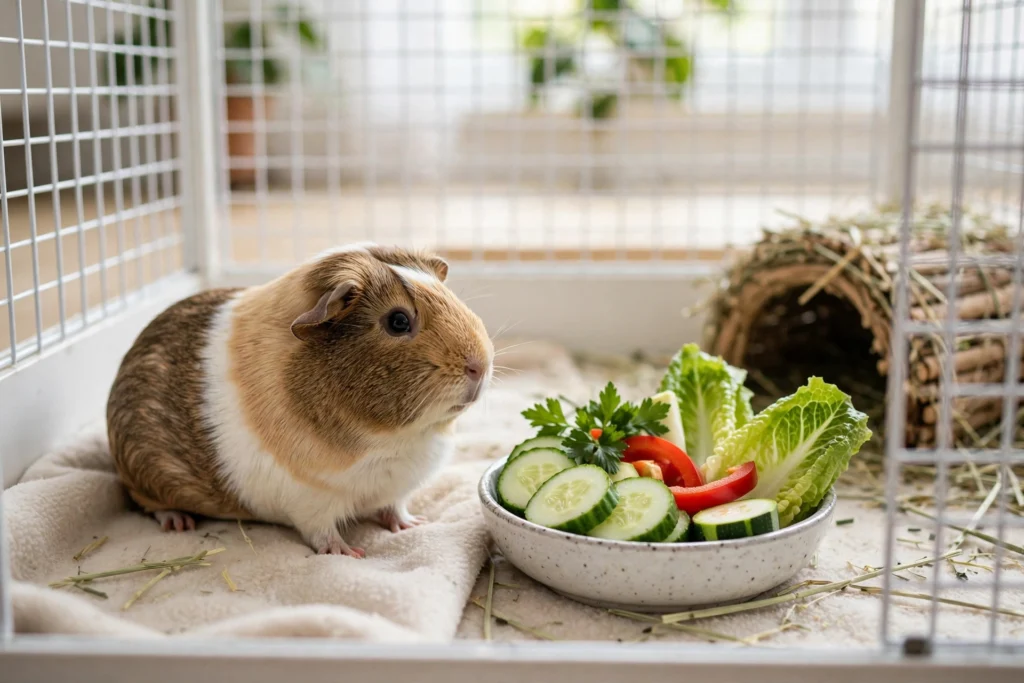
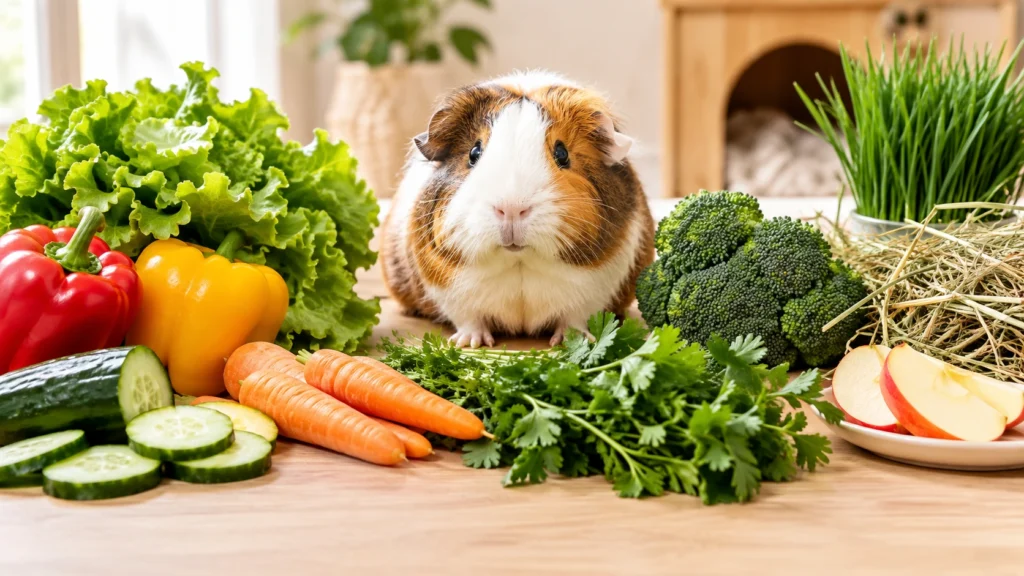
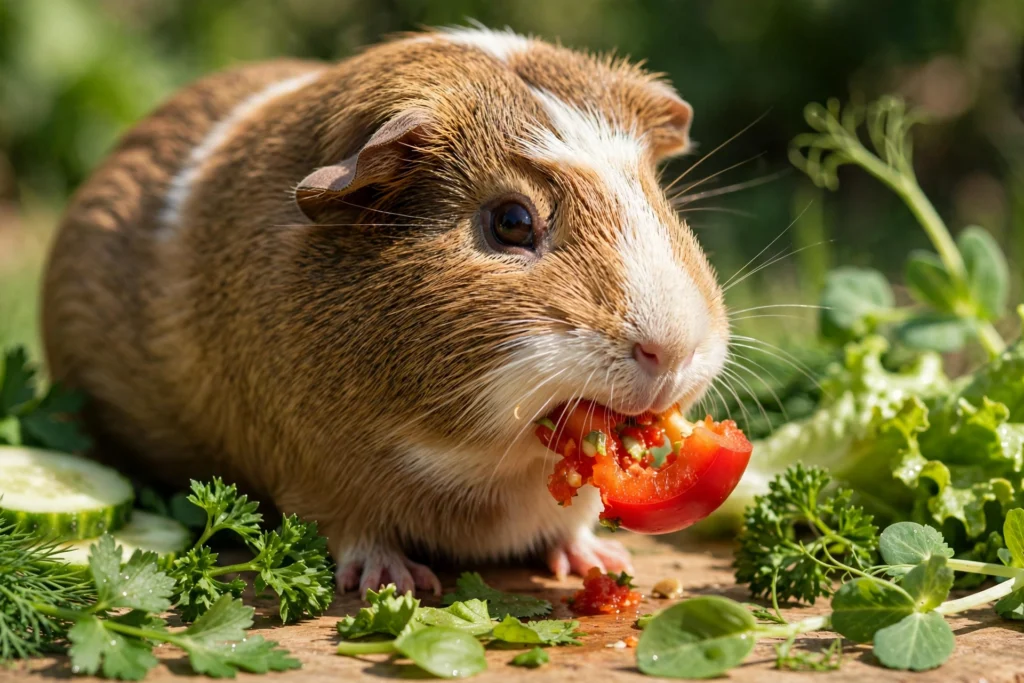
Vegetables are your guinea pig’s main vitamin C source and should be served fresh every day — roughly one cup per guinea pig. Prioritise high-vitamin-C options:
- Bell peppers (any colour): the single best daily veg — high in vitamin C, low in sugar and calcium.
- Romaine lettuce: hydrating and generally well tolerated as a daily green.
- Coriander (cilantro): a vitamin-C-rich herb most guinea pigs love.
- Broccoli (small amounts): nutritious but can cause gas, so rotate it in rather than serving daily.
- Carrot: fine a few times a week, but it is higher in sugar, so keep portions small.
- Cucumber: hydrating and low-calorie; a good warm-weather addition.
For a full breakdown of which everyday foods are safe and which are not, see our safe food list for guinea pigs. And if you want to understand exactly how much vitamin C your pet needs, read our guide to guinea pig vitamin C requirements.
3. Guinea Pig Pellets (A Small Supporting Portion)
Plain, timothy-based guinea pig pellets add concentrated nutrition — but they are a supplement, not the main event. Offer about 1/8 cup (roughly 2 tablespoons) per adult guinea pig per day. Choose a pellet made specifically for guinea pigs that is vitamin C fortified, and avoid colourful “muesli-style” mixes with seeds, nuts, or dried fruit pieces, which are high in sugar and fat.
4. Fresh Water (Always Available)
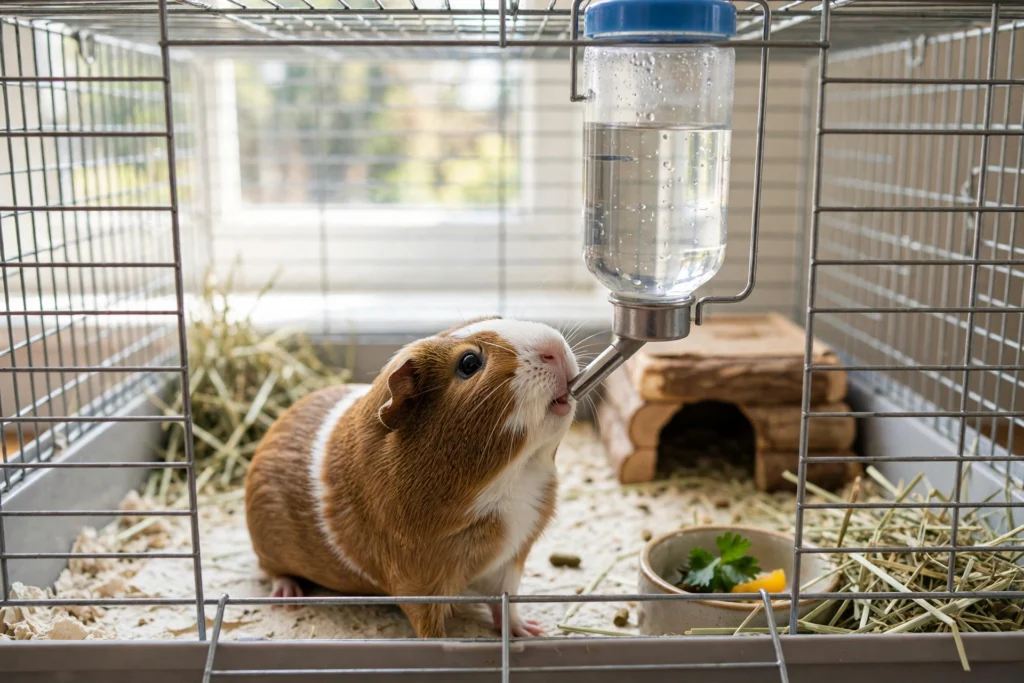
Clean, fresh water must be available around the clock. Most owners use a sipper bottle, but a heavy ceramic bowl works too (many guinea pigs actually drink more from a bowl). Whichever you use, rinse and refill it daily — guinea pigs can be surprisingly fussy about stale water.
Daily Feeding Schedule Chart
Here is a simple routine you can follow every day. Splitting vegetables into a morning and evening serving keeps food fresh and gives your guinea pig something to look forward to twice a day:
| Time | What to Serve | Portion (per guinea pig) |
|---|---|---|
| Morning (7–9 AM) | Refill hay rack with fresh timothy/orchard hay; check pellets | Unlimited hay; 1/8 cup pellets |
| Morning veggie serving | High-vitamin-C veg (e.g. bell pepper + coriander) | ~1/2 cup fresh vegetables |
| Midday | Top up hay if needed; refresh water | Unlimited hay; clean water |
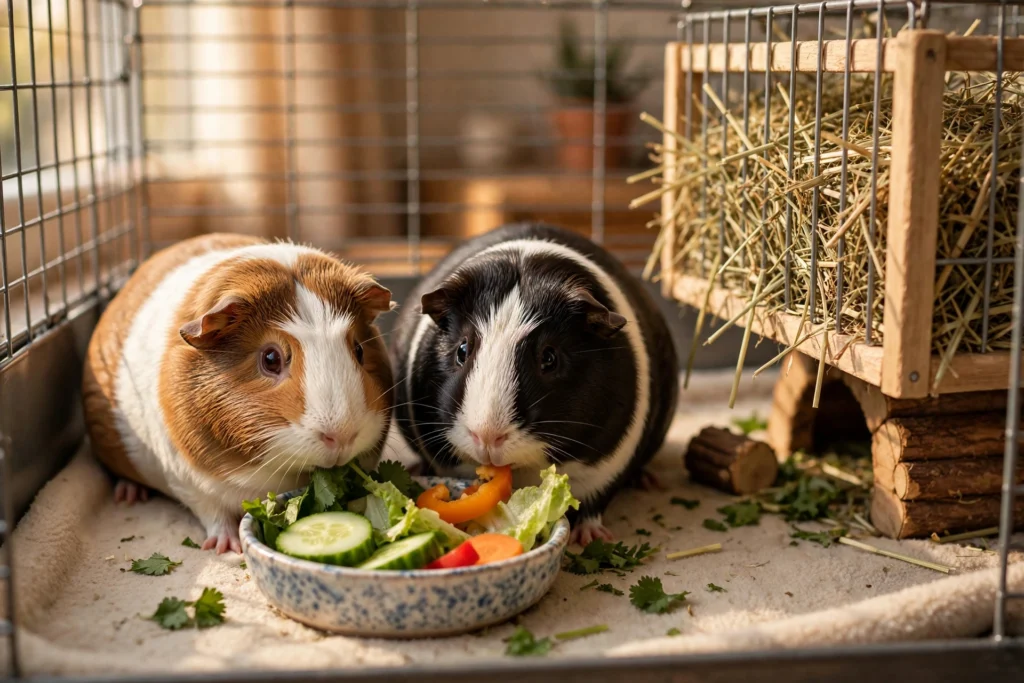
| Evening (6–8 PM) | Second veggie serving (e.g. romaine + cucumber + a small carrot piece) | ~1/2 cup fresh vegetables |
| Before bed | Final hay top-up | Unlimited hay |
Guinea pigs are crepuscular — most active at dawn and dusk — so feeding fresh veggies at those times matches their natural rhythm and encourages eager eating.
Weekly Vegetable Rotation Chart
Variety keeps mealtimes interesting and broadens the range of nutrients your guinea pig receives. Rotate the greens and extras around a daily core of bell pepper, while keeping the total at about one cup per day:
| Day | Daily core | Rotating extras (~1/2 cup total) |
|---|---|---|
| Monday | Bell pepper strips | Romaine lettuce + coriander |
| Tuesday | Bell pepper strips | Cucumber + a few broccoli florets |
| Wednesday | Bell pepper strips | Romaine lettuce + small carrot piece |
| Thursday | Bell pepper strips | Green beans + coriander |
| Friday | Bell pepper strips | Cucumber + romaine lettuce |
| Saturday | Bell pepper strips | A few broccoli florets + small carrot piece |
| Sunday | Bell pepper strips | Green beans + cucumber + a small fruit treat |
Fruit should appear no more than 1–2 times per week in tiny portions — think a thin slice of apple, a single strawberry, or a blueberry or two. Fruit is sugary, so treat it strictly as an occasional treat. For a detailed fruit rundown, check our guide to safe fruits for guinea pigs.
Foods to Limit (and Foods to Avoid Completely)
Limit these — fine in small amounts or a few times a week, but not daily staples:
- Carrots and sweet potato (higher in sugar)
- Broccoli and cabbage (can cause gas and bloating)
- Spinach and kale (high in oxalates/calcium; occasional only)
- Corn (starchy; small amounts only)
- All fruit (treat-only, as above)
Never feed these — they are toxic or dangerous for guinea pigs:
- Iceberg lettuce (very low nutrition, can cause diarrhoea)
- Onions and garlic (toxic to red blood cells)
- Potatoes — raw or cooked (contain solanine)
- Avocado (contains persin, which is toxic)
- Chocolate, sweets, and anything sugary or processed
- Dairy products (guinea pigs are lactose intolerant)
- Nuts and seeds (too high in fat; choking risk)
- Bread, crackers, and human snack foods
Portion Guidance at a Glance
- Hay: unlimited, always available — refill 2–3 times daily.
- Fresh vegetables: about 1 cup per guinea pig per day, split into two servings.
- Pellets: about 1/8 cup per adult per day (plain timothy-based, vitamin C fortified).
- Water: unlimited fresh water, changed daily.
- Fruit: 1–2 times per week maximum, small pieces only.
- Treats: commercial treats are unnecessary — a blueberry or a sprig of coriander is a better reward.
7 Common Guinea Pig Diet Mistakes
- Not enough hay. Pellets or veggies can never replace the constant grazing fibre that hay provides. If the hay rack is often empty, behaviour and digestion suffer.
- Skipping fresh vegetables. A pellets-only diet risks vitamin C deficiency and scurvy. Fresh veg every single day is non-negotiable.
- Too much fruit. Fruit sugar leads to obesity and digestive upset. Keep it to a rare treat.
- Feeding iceberg lettuce. It offers almost no nutrition and can cause diarrhoea — choose romaine or leaf lettuces instead.
- Muesli-style pellet mixes. The coloured bits, seeds, and dried fruit encourage selective feeding and obesity. Plain pellets only.
- Sudden diet changes. Introduce new vegetables gradually over several days so the gut can adjust.
- Forgetting the water check. A clogged sipper bottle or a dirty bowl can leave a guinea pig dehydrated fast — check water daily.
Frequently Asked Questions
How much should a guinea pig eat per day?
As a rule of thumb: unlimited grass hay (about 80% of intake), roughly 1 cup of fresh vegetables per day split into two servings, 1/8 cup of plain timothy-based pellets, and unlimited fresh water. Fruit is a 1–2-times-per-week treat in small pieces.
What is the best daily vegetable for guinea pigs?
Bell pepper is the standout daily vegetable — it is very high in vitamin C, low in sugar and calcium, and most guinea pigs love it. Pair it with rotating greens like romaine lettuce, coriander, and cucumber for variety.
Can guinea pigs eat vegetables every day?
Yes — fresh vegetables should be served every day, about 1 cup per guinea pig. Daily veg is the main way your pet gets vitamin C, since guinea pigs cannot make their own. Just rotate the selection through the week for balanced nutrition.
Do guinea pigs need pellets every day?
Pellets are helpful but secondary. A small daily portion (about 1/8 cup of plain, vitamin-C-fortified, timothy-based pellets per adult) rounds out the diet, but unlimited hay and fresh vegetables matter far more.
How often can guinea pigs have fruit?
Fruit should be an occasional treat only — 1 to 2 times per week in very small portions, such as a thin apple slice or a single strawberry. The sugar content is too high for daily feeding.
What foods are poisonous to guinea pigs?
Never feed onions, garlic, raw or cooked potatoes, avocado, chocolate, dairy products, nuts, seeds, or iceberg lettuce. These range from nutritionally empty to genuinely toxic, so keep them completely off the menu.
The Bottom Line
A healthy guinea pig diet is simple once you have a routine: unlimited hay, a daily cup of vitamin-C-rich vegetables in two servings, a small scoop of plain pellets, and fresh water at all times. Pin this guinea pig diet chart to your fridge, rotate the weekly veggies, and keep treats rare — your guinea pig’s teeth, digestion, and immune system will thank you for years to come.