Homemade frozen dog treats are DIY pet snacks made from dog-safe whole food ingredients — blended, layered, or frozen in molds — that provide dogs with a cooling, enriching, and nutritionally supportive alternative to commercial dog treats, giving pet owners complete control over every ingredient their dog consumes. This article gives you 15 creative, vet-friendly frozen dog treat recipes that work across every dog size, every dietary preference, and every level of kitchen skill — from a five-minute single-ingredient popsicle to a layered frozen parfait that doubles as enrichment feeding.
Picture a summer afternoon where your dog gets to lick a frozen peanut butter and banana treat from a silicone mold while you sit on the back porch together. Or a rainy day where a frozen Kong stuffed with blueberry and yogurt gives a bored border collie twenty minutes of focused, satisfying work. Homemade frozen dog treats are one of the most immediate ways to enrich a dog’s daily life — they combine the sensory pleasure of temperature and flavor, the mental stimulation of working for food, and the reassurance of knowing exactly what your dog is eating. Here are 15 recipes worth saving — and making.
Why Homemade Frozen Dog Treats Work So Well
Homemade frozen dog treats succeed as a pet care practice because they address three distinct dog welfare dimensions simultaneously — nutritional, behavioral, and emotional — in a single simple preparation. Nutritionally, they use whole food ingredients (fresh fruit, vegetables, lean proteins, plain dairy) that provide genuine dietary value rather than the fillers, artificial preservatives, and synthetic flavorings common in commercial dog treat production. Behaviorally, frozen treats extend feeding time significantly — a frozen treat that takes a dog 15–20 minutes to consume provides the same behavioral satisfaction as a standard treat consumed in three seconds, while delivering the sustained mental engagement that reduces boredom-driven destructive behavior. Emotionally, the act of receiving a special treat from their owner creates a positive association event that strengthens the human-dog bond beyond what routine feeding achieves.
The ingredients that define safe, nutritious homemade frozen dog treats are whole foods that dogs have evolved to digest and that veterinary nutritionists broadly endorse for supplemental feeding: plain Greek yogurt (probiotic benefit, protein, calcium — choose full-fat unsweetened varieties), ripe banana (potassium, natural sweetness, digestive fiber), blueberries (antioxidants, vitamin C, low calorie), peanut butter (protein, healthy fats — must be xylitol-free), unsweetened applesauce (fiber, vitamins), cooked sweet potato (beta-carotene, fiber, vitamins A and C), unsalted low-sodium chicken or beef broth (palatability, hydration), watermelon without seeds or rind (hydration, lycopene, vitamins A and C), plain cooked pumpkin — not pie filling (digestive support, fiber), and cooked carrots (beta-carotene, dental benefit). These ingredients collectively provide a nutritional range that complements rather than disrupts a balanced dog diet when used as occasional treats.
The homemade frozen dog treat practice has grown significantly alongside the broader raw feeding, whole food pet nutrition, and conscious pet parenting movements — the same cultural shift that has driven growth in human whole food and clean eating has produced a generation of pet owners who scrutinize ingredient lists on dog food packaging with the same rigor they apply to their own food purchases. The specific appeal of frozen treats within this movement is transparency: every ingredient visible, every quantity controlled, no industrial processing, no ingredient concealed behind the catch-all term “natural flavoring.”
Even the most basic frozen dog treat — a single banana blended smooth and frozen in an ice cube tray — provides more nutritional value, more behavioral enrichment, and more positive human-dog interaction than an equivalent portion of commercial dog treats. The equipment required is minimal: a blender or food processor, silicone molds or standard ice cube trays, and a freezer. Total preparation time for most recipes is under 10 minutes of active work followed by 4–6 hours of passive freezing time.
Recipe Guide at a Glance
| Element | Trait 1 | Trait 2 |
|---|---|---|
| Philosophy | Whole food ingredients for genuine nutritional benefit and complete ingredient transparency | Enrichment feeding — extending treat duration for behavioral and mental health benefit |
| Key Ingredients | Plain Greek yogurt, peanut butter (xylitol-free), banana, blueberry, cooked sweet potato | Unsalted broth, watermelon, pumpkin puree, cooked carrot, unsweetened applesauce |
| Equipment | Blender or food processor, silicone molds or ice cube trays, freezer | Kong or lick mat for stuffing, small squeeze bottle for layering, parchment-lined baking sheet |
Important Safety Note Before You Begin
Several common human foods are toxic to dogs and must never appear in homemade dog treats regardless of how small the quantity: xylitol (an artificial sweetener found in some peanut butter brands, sugar-free products, and some yogurts — always check labels), grapes and raisins (kidney failure risk even in small quantities), chocolate and cocoa, macadamia nuts, onion and garlic in any form, avocado, and alcohol. Always verify that peanut butter is xylitol-free before use — this is the most common and most dangerous ingredient error in homemade dog treat preparation. Consult your veterinarian before introducing new foods if your dog has allergies, diabetes, kidney disease, or is on a restricted diet. Treats should comprise no more than 10% of a dog’s daily caloric intake — adjust serving size according to your dog’s weight.
1. Classic Peanut Butter and Banana Pops
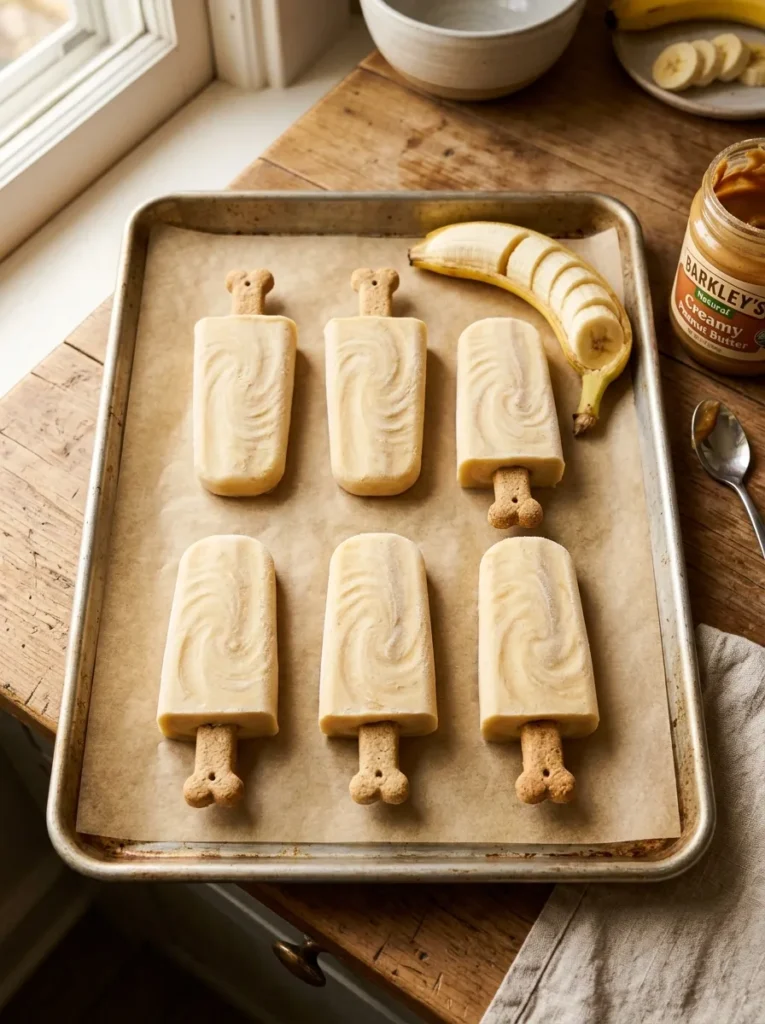
Vibe: Warm and appetizing — the frozen treat so simple it makes you wonder why you ever bought commercial ones.
Why it works: Banana and peanut butter is the foundational frozen dog treat combination because both ingredients are inherently palatable to most dogs and complement each other nutritionally — banana provides natural sweetness, potassium, vitamin B6, and digestive fiber, while xylitol-free peanut butter provides protein, healthy monounsaturated fats, and niacin. The frozen format extends the consumption time for what would otherwise be a two-second treat into a 10–15 minute licking experience, providing the behavioral enrichment of extended feeding. The dog biscuit inserted as a handle before freezing serves a dual function: it provides a grip surface for owners handing the treat to the dog and adds a textural contrast when the dog reaches the center of the pop.
How to get it: Blend 2 ripe bananas with 3 tablespoons of xylitol-free peanut butter and 2 tablespoons of plain Greek yogurt until smooth. Pour into silicone popsicle molds or small paper cups, insert a dog biscuit as a handle, and freeze for a minimum of 4 hours. Unmold by briefly running warm water over the exterior of the mold — the treat releases cleanly with 15–20 seconds of warm water contact.
Quick Win: Silicone ice cube trays in the 1.5-inch cube size produce the perfect single-serving portion for small dogs and appropriate serving sizes for large dogs at 2–3 cubes — and the small format freezes solid in 2 hours rather than the 4–6 hours required by larger molds.
Ingredients (makes 6 pops)
| Ingredient | Amount |
|---|---|
| Ripe banana | 2 medium |
| Xylitol-free peanut butter | 3 tablespoons |
| Plain Greek yogurt unsweetened | 2 tablespoons |
| Dog biscuit for handle | 6 pieces |
Also view: 15 Dog Corner Ideas That Blend with Your Decor
2. Blueberry Yogurt Frozen Drops
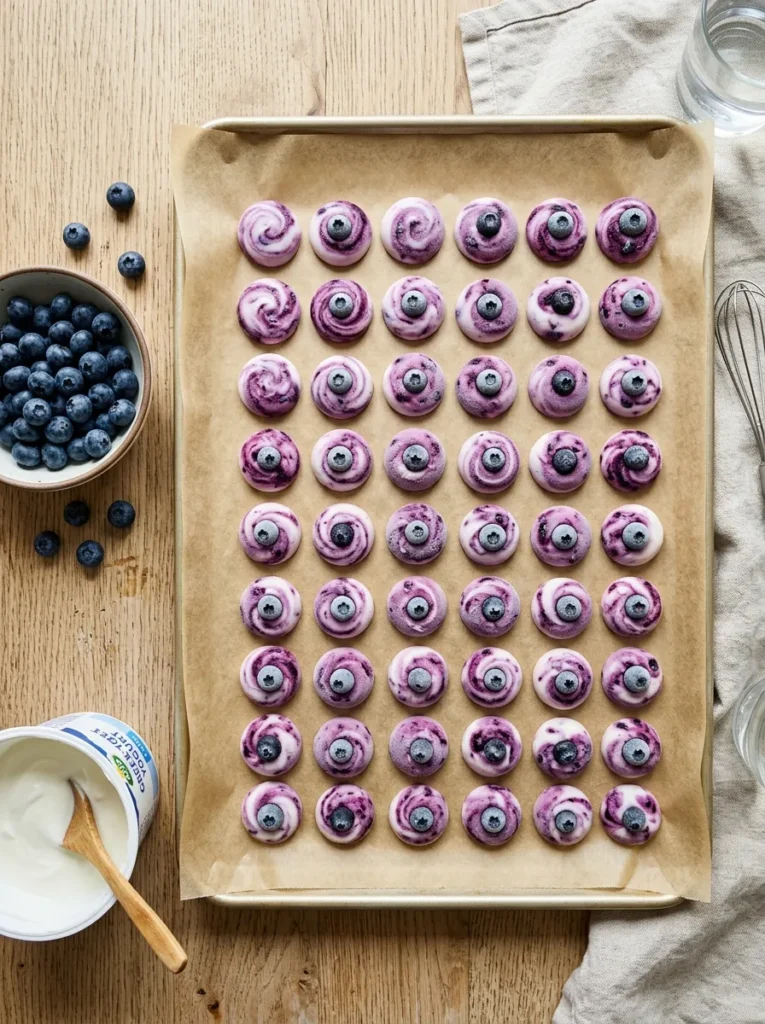
Vibe: Fresh and colorful — the frozen drop that disappears in happy seconds for a small dog and provides a full enrichment session for a large one.
Why it works: Frozen yogurt drops apply the design principle of size-appropriate treat portioning — small individual drops can be served in quantities appropriate to any dog’s size, making them one of the most versatile frozen treat formats available. Plain Greek yogurt provides probiotic cultures, protein, and calcium while being low in lactose compared to other dairy products, making it digestively well-tolerated by the majority of dogs. Blueberries are among the most nutritionally dense low-calorie foods available for dogs — their anthocyanin antioxidants, vitamin C content, and fiber make them a genuine functional food ingredient rather than purely a palatability addition.
How to get it: Blend 1 cup of plain unsweetened Greek yogurt with ½ cup of fresh blueberries until the mixture is a consistent purple-white swirl with small blueberry flecks visible. Transfer to a small squeeze bottle or piping bag. Pipe small rounds approximately 2cm in diameter onto a parchment-lined baking sheet, spacing 1cm apart. Press a whole blueberry into the center of each drop. Freeze flat for 2 hours until completely solid, then transfer to a freezer zip bag for storage. Serve 2–3 drops for small dogs, 5–8 for large dogs.
Ingredients (makes approximately 40 drops)
| Ingredient | Amount |
|---|---|
| Plain Greek yogurt unsweetened | 1 cup |
| Fresh blueberries | ½ cup plus extras for topping |
| Honey optional small dogs over 1 year | 1 teaspoon |
3. Watermelon Mint Cooling Pops
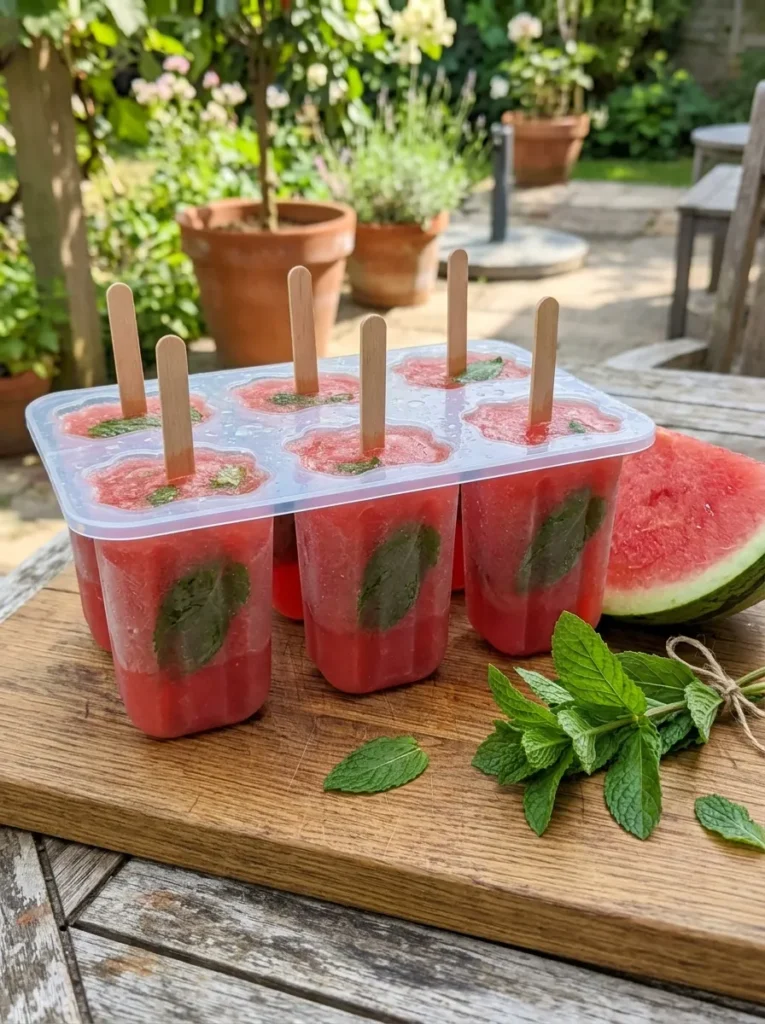
Vibe: Fresh and summery — the cooling pop that makes hot days better for both of you.
Why it works: Watermelon is the summer frozen dog treat ingredient with the highest hydration benefit — its 92% water content makes watermelon-based frozen treats a genuine functional hydration supplement for dogs who resist drinking water during hot weather, which is a meaningful health intervention in breeds prone to heat stress. The watermelon must be completely deseeded before preparation — watermelon seeds pose a digestive blockage risk in smaller dogs and should be removed individually even from “seedless” varieties that may contain immature seeds. Fresh mint is a dog-safe herb that provides a naturally cooling sensory experience through its menthol content and benefits dog dental health through its natural antimicrobial properties.
How to get it: Remove all seeds from 3 cups of fresh watermelon flesh and blend until completely smooth. Add 6 fresh mint leaves (stems removed) and blend briefly — 3 seconds of blending distributes the mint flavor without making the mixture bitter. Pour into silicone popsicle molds and freeze for 4 hours minimum. Verify seed removal is complete before pouring — hold blended mixture up to light to check for any seed fragments before freezing.
Ingredients (makes 6 pops)
| Ingredient | Amount |
|---|---|
| Seedless watermelon flesh deseeded | 3 cups |
| Fresh mint leaves stems removed | 6 leaves |
| Water to thin if needed | 2 tablespoons |
4. Sweet Potato and Chicken Broth Frozen Cubes
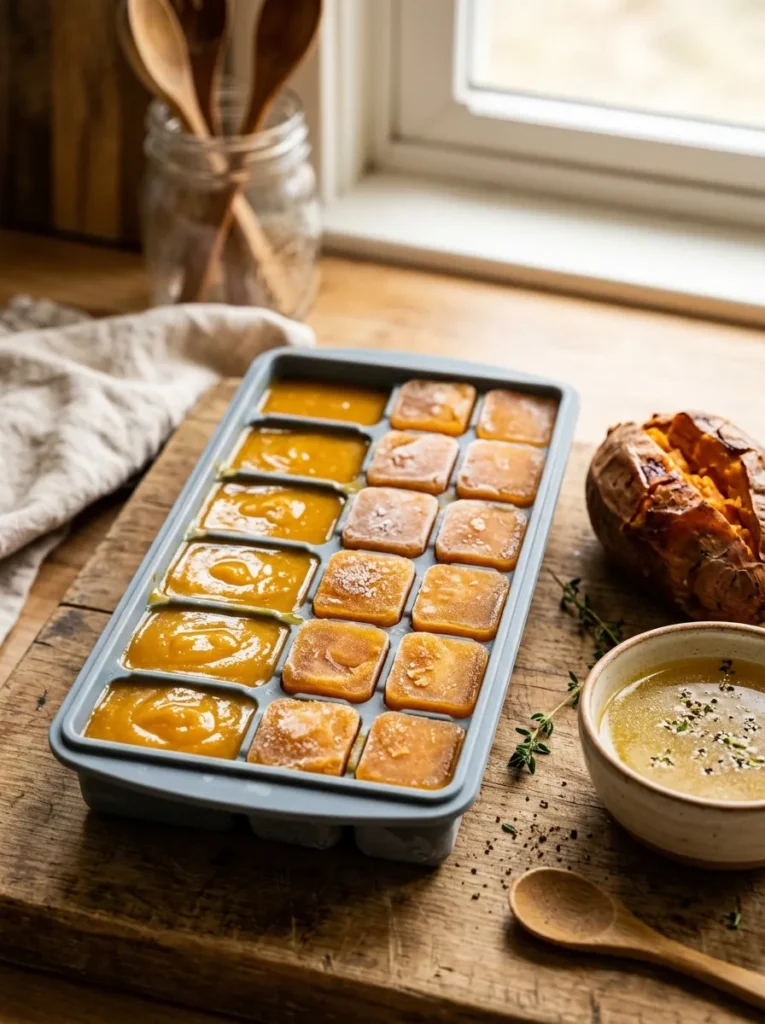
Vibe: Warm and nutritious — the savory frozen treat for the dog who turns their nose up at fruit.
Why it works: Sweet potato and chicken broth cubes are the foundational savory frozen treat for dogs with limited interest in fruit-based preparations — the combination addresses the palatability preference of dogs who respond more strongly to meat and umami flavors than to sweet fruit flavors, which is a genuine distinction in individual canine taste preference that owners sometimes overlook when selecting treat recipes. Cooked sweet potato provides beta-carotene (converted to vitamin A in the body), vitamin C, manganese, and soluble fiber that supports digestive health. The critical ingredient specification is unsalted, onion-free, garlic-free broth — standard commercial chicken broth is inappropriate because its sodium content and common flavoring additions (onion, garlic) are harmful to dogs. Prepare homemade broth or use a specifically formulated dog-safe broth product.
How to get it: Bake or steam 1 medium sweet potato until completely soft, then cool and remove the skin. Blend the cooked sweet potato flesh with 1 cup of unsalted, onion-free, garlic-free chicken broth until completely smooth. Pour into standard ice cube trays and freeze for 3 hours. Serve 1–2 cubes for small dogs, 3–4 for large dogs. These cubes can also be used to stuff a frozen Kong for extended enrichment.
Ingredients (makes approximately 24 cubes)
| Ingredient | Amount |
|---|---|
| Cooked sweet potato skinless | 1 medium |
| Unsalted garlic-free chicken broth | 1 cup |
| Plain Greek yogurt optional | 2 tablespoons |
5. Apple and Carrot Peanut Butter Popsicles
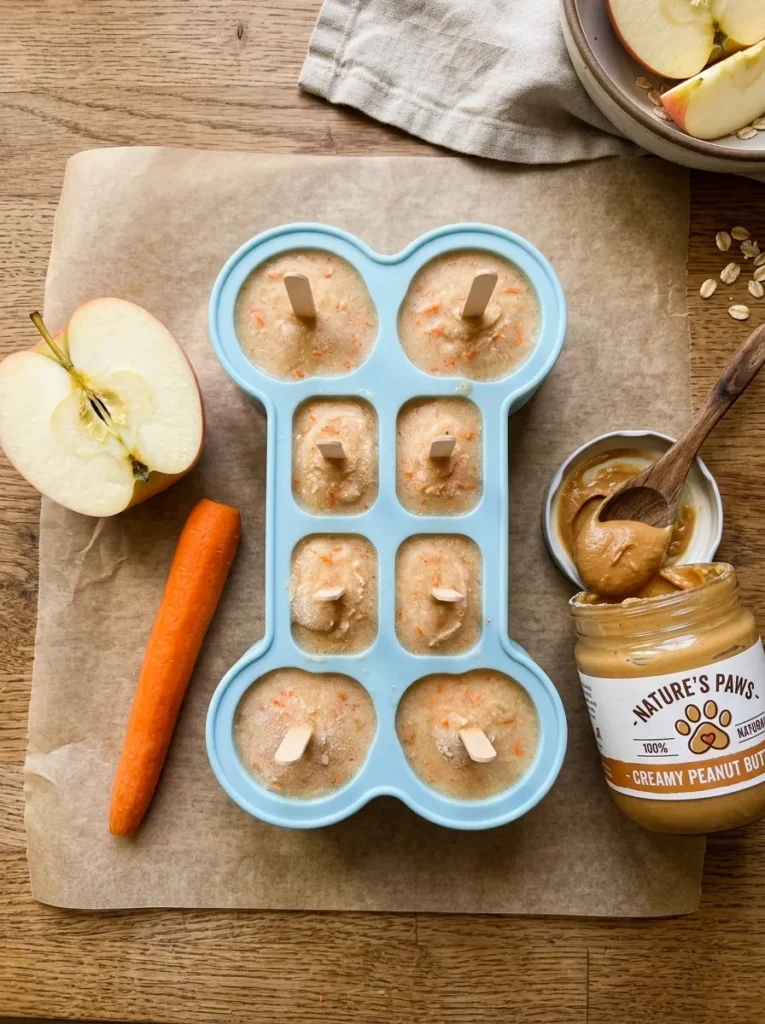
Vibe: Wholesome and colorful — the veggie-forward frozen treat that provides crunch in the preparation and comfort in the eating.
Why it works: Apple and carrot combined with peanut butter creates a frozen treat with three distinct nutritional contributions — apple provides soluble fiber (pectin), vitamin C, and natural sweetness, carrot provides beta-carotene, dental abrasion benefit in its raw form (though blended here), and crunchy texture when partially thawed, and peanut butter provides the protein, fat, and palatability that makes this combination appealing across all dog breeds and sizes. The critical apple preparation step is complete seed and core removal — apple seeds contain amygdalin, which converts to hydrogen cyanide during digestion, making them toxic to dogs. The flesh and skin of the apple are completely safe and nutritious; only the core and seeds require removal.
How to get it: Core and seed 2 medium apples completely and cut into rough chunks — skin can be left on. Peel and chop 1 large carrot into rough pieces. Blend apple chunks, carrot pieces, and 3 tablespoons of xylitol-free peanut butter with 2 tablespoons of water until smooth. Pour into bone-shaped silicone molds or standard ice cube trays. Freeze for 4 hours minimum.
Ingredients (makes 8 bone pops or 16 cubes)
| Ingredient | Amount |
|---|---|
| Apple cored and seeded | 2 medium |
| Carrot peeled | 1 large |
| Xylitol-free peanut butter | 3 tablespoons |
| Water | 2 tablespoons |
6. Frozen Pumpkin and Yogurt Layered Cups
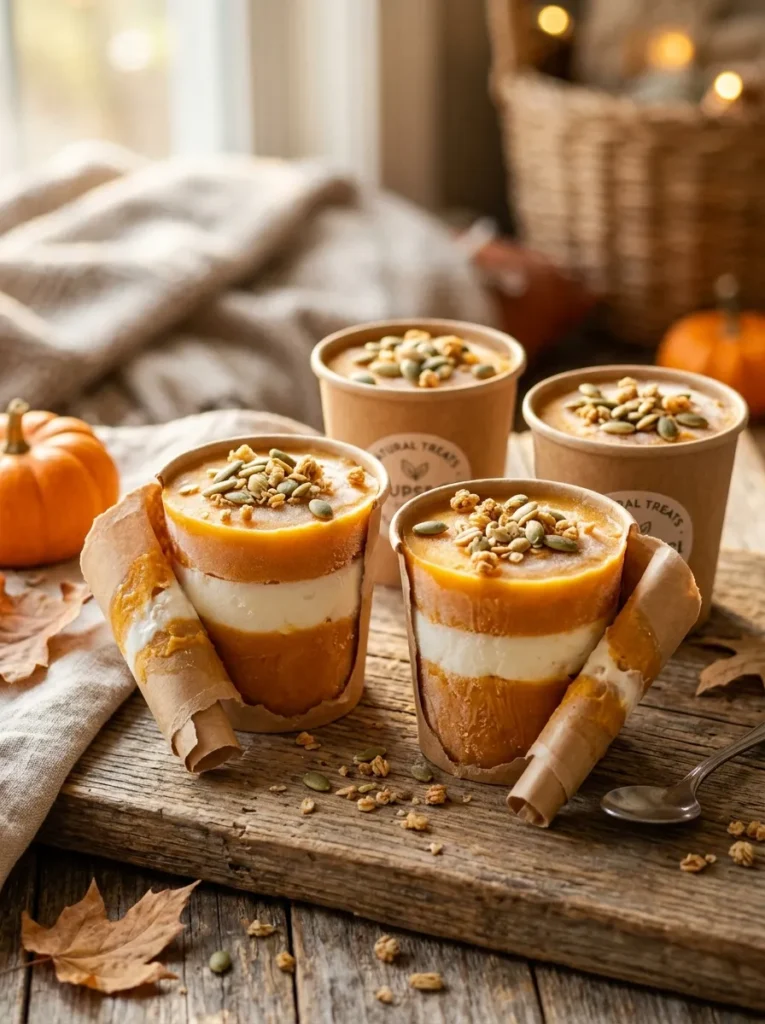
Vibe: Warm and seasonal — the layered frozen treat that looks as considered as it is beneficial.
Why it works: Layered frozen cups apply the design principle of sequential flavor release — as the dog works through the frozen layers from the outer surface inward, alternating layers of pumpkin and yogurt create a continuously changing flavor experience that maintains the dog’s engagement with the treat significantly longer than a single-flavor frozen preparation. Plain cooked pumpkin (specifically 100% pumpkin puree, not pie filling which contains spices and sweeteners harmful to dogs) is one of the most widely recommended digestive support ingredients in veterinary nutrition — its soluble fiber content regulates both diarrhea and constipation, making it a functional treat ingredient with genuine therapeutic application beyond palatability.
How to get it: Ensure the pumpkin puree is labeled as 100% pure pumpkin with no added spices, sugar, or salt — many canned pumpkin products include pie spice blends that contain nutmeg, which is toxic to dogs. Layer in small paper or silicone cups: first a layer of plain Greek yogurt (approximately 1 tablespoon), freeze for 30 minutes until firm, add a layer of pumpkin puree (approximately 1 tablespoon), freeze for 30 minutes, add a final yogurt layer and freeze for a minimum of 3 hours until completely solid.
| Product |
|---|
| 100% pure pumpkin puree can no spices |
| Plain Greek yogurt full-fat unsweetened |
| Small paper cup set 3 oz size |
| Pumpkin seed unsalted for topping optional |
| Silicone cup mold set small |
Ingredients (makes 4 cups)
| Ingredient | Amount |
|---|---|
| 100% pure pumpkin puree | ½ cup |
| Plain Greek yogurt unsweetened | ½ cup |
| Unsalted pumpkin seeds optional topping | 1 tablespoon |
7. Beef Broth and Carrot Bone Popsicles
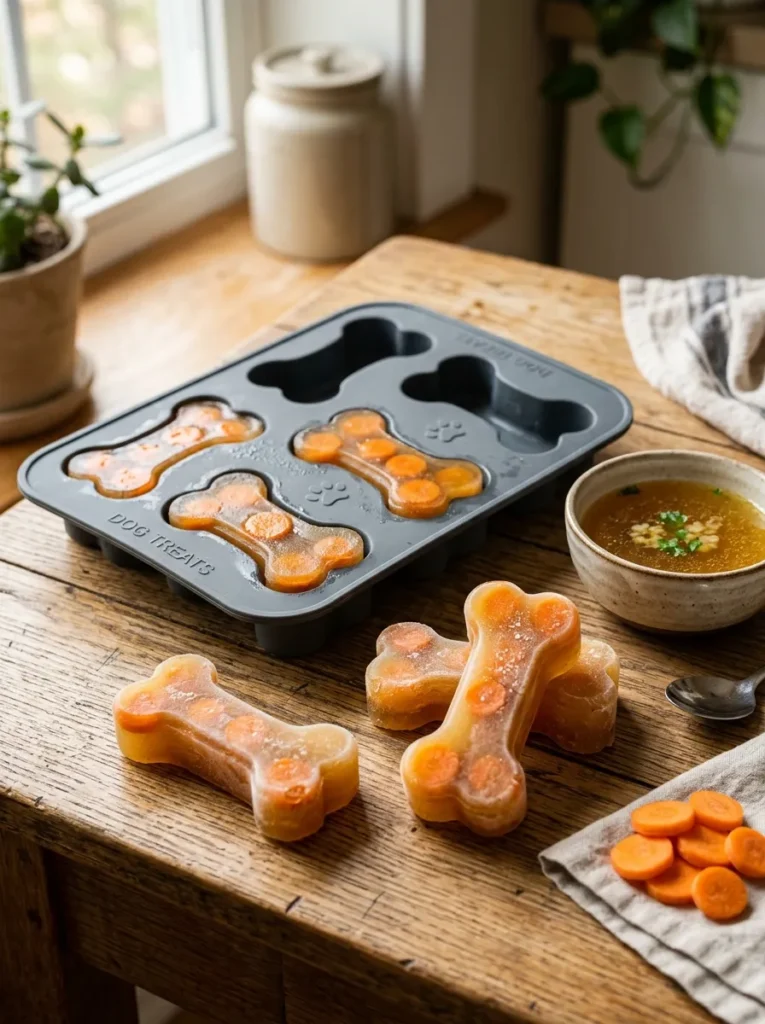
Vibe: Savory and appealing — the frozen treat for the dog who thinks fruit is beneath them.
Why it works: Beef broth and carrot bone popsicles serve the specific dietary preference of dogs oriented toward savory meat flavors — using a dog-safe beef broth base rather than fruit or dairy broadens the frozen treat option for dogs with dairy sensitivity or fruit aversion. The clear broth format also allows the embedded carrot pieces to be visible within the frozen treat, creating a visual treat quality that encourages the dog to work through the frozen block to reach the carrot pieces embedded at different depths. The embedded carrot pieces provide a textural contrast when the dog reaches them — the crunchy resistance of a partially thawed carrot piece within a frozen broth block creates the same kind of textural enrichment that makes frozen Kongs so engaging.
How to get it: Slice 1 large carrot into thin rounds approximately 5mm thick. Place 4–5 carrot rounds in each cavity of a bone-shaped silicone mold. Pour room-temperature unsalted, garlic-free, onion-free beef broth over the carrot pieces until each cavity is filled to the top. Freeze for 6 hours minimum — the broth format takes longer to freeze solid than blended preparations because of its lower sugar content. Unmold by pressing gently from the bottom of the silicone mold.
Ingredients (makes 6 bone pops)
| Ingredient | Amount |
|---|---|
| Unsalted garlic-free onion-free beef broth | 2 cups |
| Carrot peeled and sliced thin rounds | 1 large |
| Fresh parsley optional for breath benefit | 1 tablespoon chopped |
8. Frozen Kong Stuffing — PB and Banana
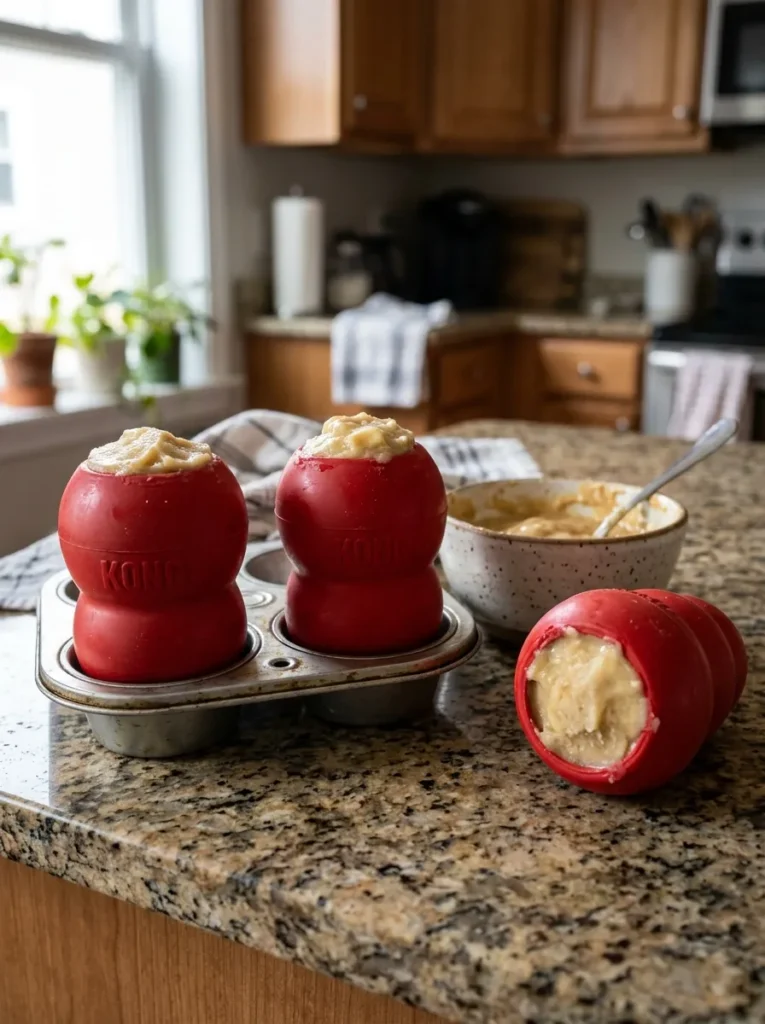
Vibe: Practical and enriching — the 10-minute preparation that gives your dog 30 minutes of focused, happy work.
Why it works: Frozen Kong stuffing is the frozen dog treat format with the highest behavioral enrichment value because the Kong’s irregular rubber shape requires the dog to use their tongue, paws, and problem-solving capacity to access the frozen filling — the treat doesn’t come to the dog, the dog must work the treat out of the toy’s hollow center. This working quality makes a frozen Kong one of the most effective boredom management and anxiety reduction tools available for dogs — the focused licking and working behavior activates the dog’s seeking system (the neurological reward pathway associated with goal-directed behavior) rather than simply delivering a flavor reward. Using a muffin tin to stand Kongs upright during freezing is the specific technique that prevents spillage and ensures the filling sets level rather than pooled at one side.
How to get it: Block the small hole at the Kong’s narrow end with a piece of banana or a small peanut butter plug — this prevents liquid mixture from draining out during preparation. Blend 1 ripe banana with 2 tablespoons of xylitol-free peanut butter and 2 tablespoons of plain Greek yogurt until smooth. Stand Kongs upright in muffin tin cups and pour blended mixture through the large opening, tapping the Kong on the counter to settle air bubbles. Freeze for 6 hours minimum — Kong walls are thick and require longer freeze times than mold-based preparations.
Ingredients (fills 2–3 medium Kongs)
| Ingredient | Amount |
|---|---|
| Ripe banana | 1 medium |
| Xylitol-free peanut butter | 2 tablespoons |
| Plain Greek yogurt unsweetened | 2 tablespoons |
| Small banana piece for base plug | 1 piece |
9. Coconut Oil and Blueberry Training Treat Bites
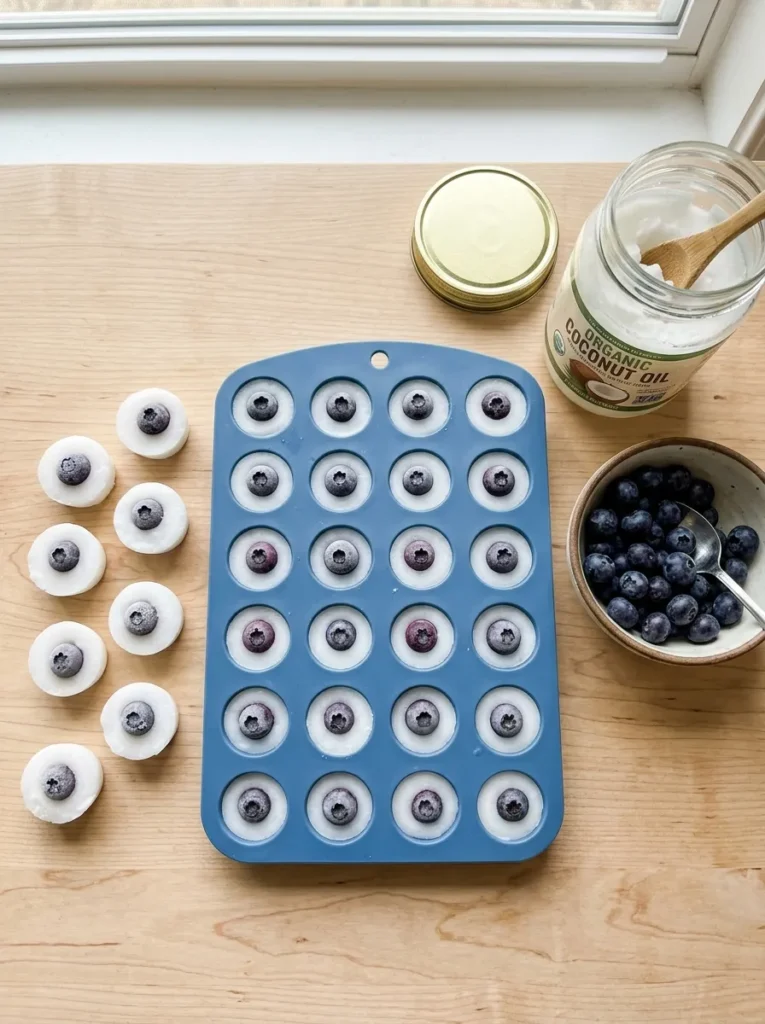
Vibe: Clean and minimal — the training treat that gives you 40 individual rewards from five minutes of preparation.
Why it works: Coconut oil and blueberry frozen bites serve the specific training treat use case — they are small enough to serve as single-reward training treats, firm enough when frozen to handle without mess during training sessions, and nutritionally dense enough per calorie to provide meaningful value even in the small quantities appropriate for training reward use. Virgin coconut oil provides medium-chain triglycerides (MCTs) that support cognitive function and coat health in dogs — research has suggested MCT supplementation may benefit cognitive function in aging dogs specifically, and the anti-inflammatory properties of lauric acid in coconut oil are broadly beneficial. The serving quantity for coconut oil treats should be limited — coconut oil is high in saturated fat, and excessive consumption causes digestive upset. One small bite per training session is the appropriate serving level.
How to get it: Melt virgin coconut oil gently until liquid — at room temperature it is solid, and melting requires only placing the jar in warm water for 5 minutes. Pour melted coconut oil into small silicone round molds to approximately half-depth. Press a single blueberry into the center of each mold. Freeze for 2 hours until solid. These bites reach a stable frozen solid state quickly and can be stored in a freezer bag for up to one month.
Ingredients (makes approximately 40 small bites)
| Ingredient | Amount |
|---|---|
| Virgin coconut oil | ½ cup melted |
| Fresh blueberries | 40 individual berries |
10. Spinach and Banana Green Smoothie Pops
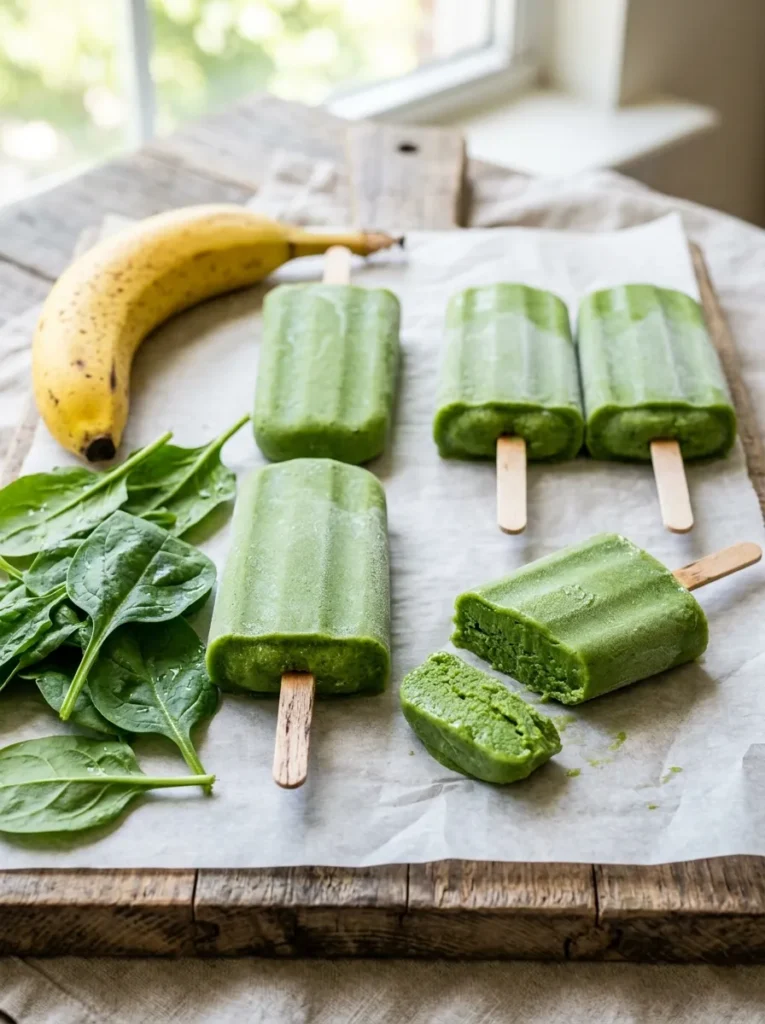
Vibe: Vibrant and fresh — the green smoothie pop for the dog whose owner believes in leafy greens for everyone in the family.
Why it works: Spinach is a dog-safe leafy green that provides iron, vitamins A, B, C, and K, and antioxidants — its folate content specifically supports healthy cell production and DNA synthesis. The combination with banana serves a dual palatability function: banana’s natural sweetness completely masks spinach’s bitter vegetal flavor, which most dogs would reject in its unmasked form, while banana’s creamy texture creates the smooth mouthfeel that makes the blended pop pleasant to lick. The vibrant green color is a visual cue to the treat’s whole-food composition and makes the pop visually distinctive from other frozen treats in the freezer. Serve spinach-based treats in moderate frequency — spinach contains oxalic acid that, in very large quantities, can affect calcium absorption and kidney function in dogs with pre-existing kidney issues.
How to get it: Blend 2 ripe bananas with 1 packed cup of fresh baby spinach and ¼ cup of plain Greek yogurt until completely smooth — the banana’s starch and the yogurt’s protein create a fully emulsified blend that maintains its smooth texture when frozen rather than separating into a layered freeze. Pour into popsicle molds and freeze for 4 hours. The green color intensifies as the pop freezes, becoming more vibrant in the frozen state than in the liquid blend.
Ingredients (makes 6 pops)
| Ingredient | Amount |
|---|---|
| Ripe banana | 2 medium |
| Fresh baby spinach packed | 1 cup |
| Plain Greek yogurt | ¼ cup |
| Water to thin if needed | 2 tablespoons |
11. Peanut Butter Yogurt Bark
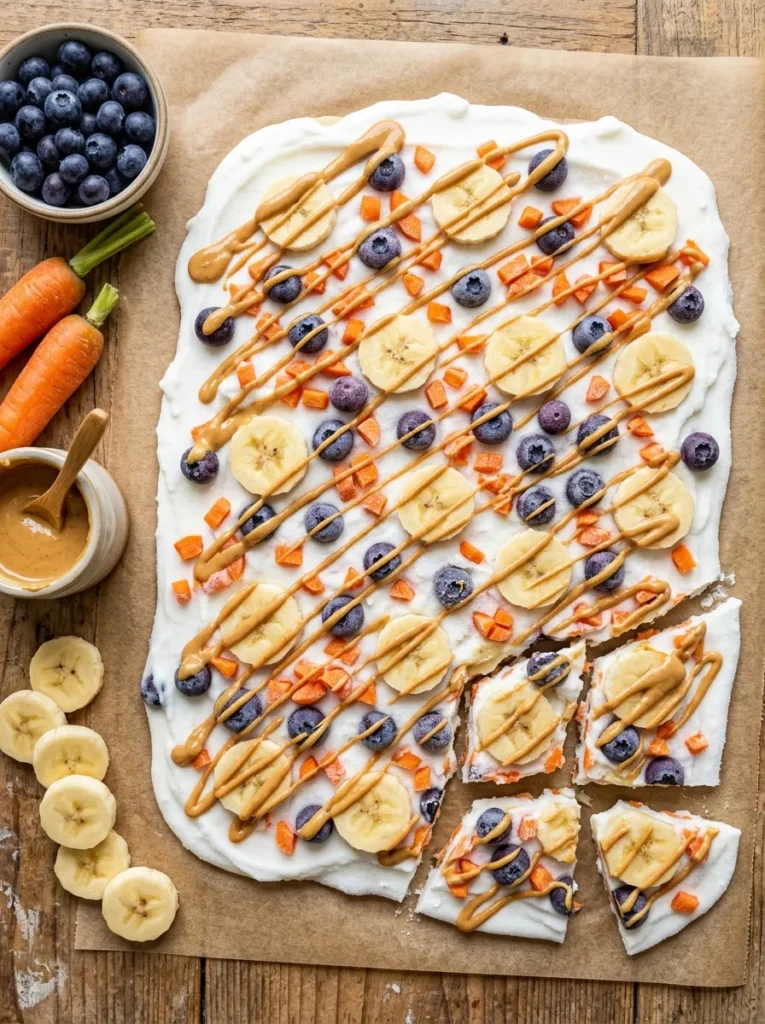
Vibe: Colorful and abundant — the frozen bark that makes treat time look like a celebration.
Why it works: Frozen yogurt bark applies the design principle of topping distribution as engagement — spreading toppings across a large flat frozen surface rather than containing them within individual molds creates a treat where the dog must work across the entire bark surface to access all the embedded toppings, extending the enrichment value of a single bark sheet to 15–20 minutes of active licking and nibbling. Breaking the bark into irregular pieces before serving also creates a foraging element — pieces of different sizes with different topping combinations mean each piece delivers a slightly different eating experience. The bark format is also the most versatile serving option for households with multiple dogs of different sizes — a large sheet broken into varied pieces allows size-appropriate serving for both a small and large dog from the same preparation.
How to get it: Line a baking sheet with parchment paper. Spread 2 cups of plain Greek yogurt in an even layer approximately 1cm thick across the parchment, extending to a rectangle approximately 25x35cm. Warm 3 tablespoons of xylitol-free peanut butter until slightly liquefied and drizzle in a zigzag pattern across the yogurt surface. Distribute toppings across the full surface: scatter ½ cup of blueberries, 1 sliced banana in rounds, and ½ cup of small carrot pieces. Freeze for 4 hours minimum until completely solid. Break into pieces and store in a freezer zip bag.
Ingredients (makes 1 large bark sheet)
| Ingredient | Amount |
|---|---|
| Plain Greek yogurt unsweetened | 2 cups |
| Xylitol-free peanut butter warmed | 3 tablespoons |
| Fresh blueberries | ½ cup |
| Banana sliced in rounds | 1 medium |
| Carrot diced small | ½ cup |
12. Sardine and Broth Frozen Cubes
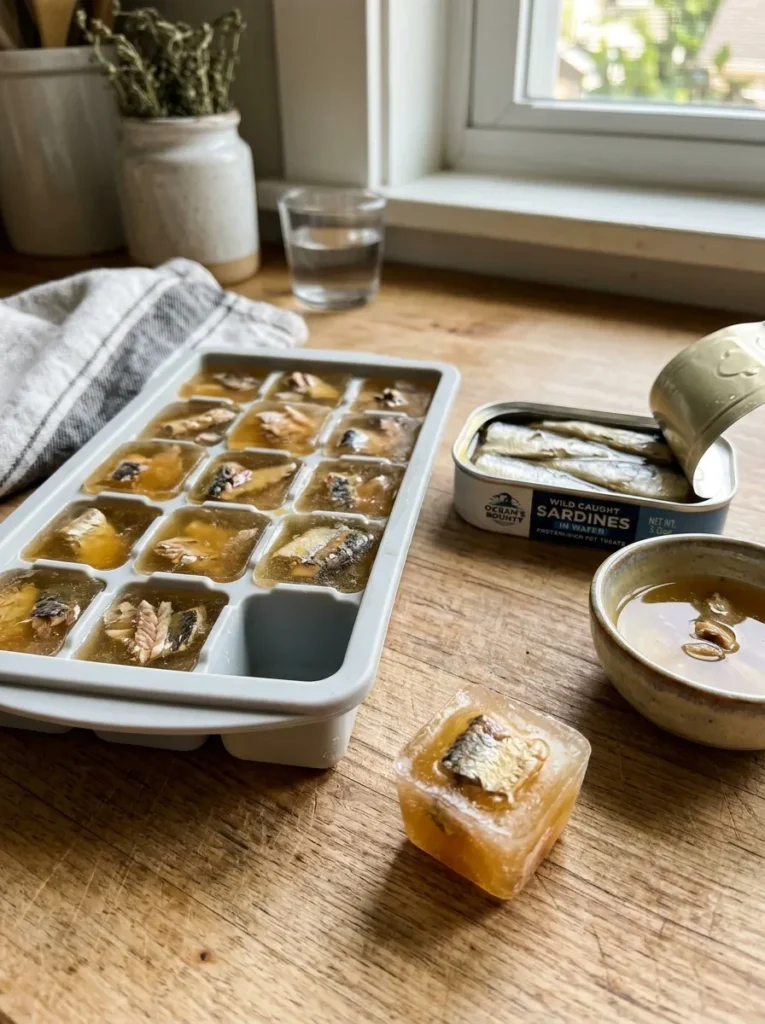
Vibe: Practical and protein-rich — the frozen treat for the dog who considers anything fruit-based beneath their carnivore dignity.
Why it works: Sardines are one of the highest-value whole food protein additions available for dogs — they provide omega-3 fatty acids (EPA and DHA) that support skin health, coat quality, joint inflammation reduction, and cognitive function at a cost and accessibility that salmon-based treats rarely achieve. Sardines packed in water (not oil, not brine) are the specific product appropriate for dog treats — oil-packed sardines add unnecessary fat load, and brine-packed sardines contain sodium levels inappropriate for regular dog consumption. The omega-3 content of sardines is particularly beneficial for senior dogs, dogs with joint conditions, and dogs with dry or itchy skin conditions, making this the frozen treat with the most specific therapeutic application potential.
How to get it: Open one tin of sardines packed in water and drain the liquid. Break the sardines into small pieces approximately 1cm in size — smaller pieces ensure even distribution across all ice cube cavities. Place 2–3 sardine pieces in each ice cube cavity. Pour unsalted, garlic-free, onion-free chicken or fish broth over the sardine pieces until each cavity is filled to the top. Freeze for 4 hours minimum. Serve 1–2 cubes for small dogs, 3–4 for large dogs. Use within 2 weeks of preparation due to the fish protein content.
Ingredients (makes approximately 16 cubes)
| Ingredient | Amount |
|---|---|
| Sardines in water no added salt | 1 tin |
| Unsalted garlic-free broth chicken or fish | 1.5 cups |
| Fresh parsley optional | 1 teaspoon chopped |
13. Mango and Coconut Tropical Pops
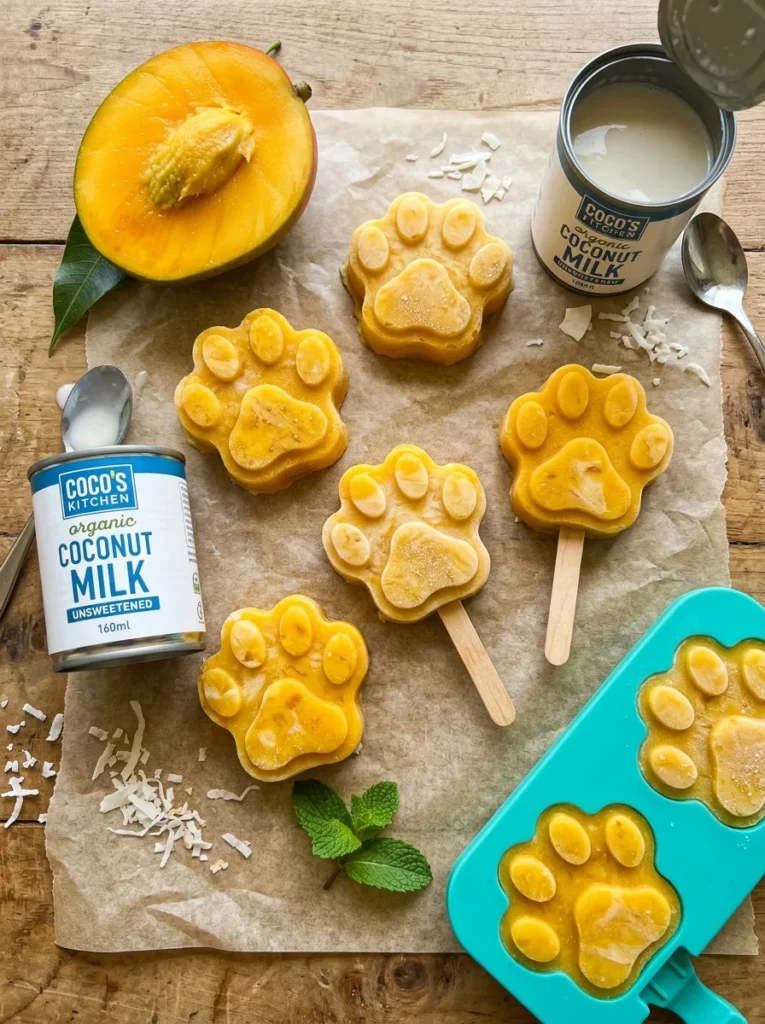
Vibe: Vibrant and tropical — the summer frozen treat that makes your dog look like they should be wearing sunglasses.
Why it works: Mango is a dog-safe tropical fruit that provides a nutrient profile particularly valuable in summer — vitamins A, B6, C, and E alongside natural digestive enzymes (bromelain in the pineapple family, though mango provides its own unique enzyme amylase) and high water content that contributes to hydration. The mango must be completely peeled and pitted before preparation — the mango pit is a choking hazard and the skin, while not toxic, is difficult for dogs to digest. Unsweetened coconut milk provides a creamy base that carries the mango flavor smoothly and adds medium-chain triglycerides (MCTs) for the cognitive and coat benefits noted in coconut oil. Use light coconut milk rather than full-fat for lower calorie density in a treat application.
How to get it: Peel and pit 2 ripe mangoes and cut into rough chunks. Blend mango chunks with ½ cup of unsweetened light coconut milk until completely smooth. Pour into paw print or standard silicone molds and freeze for 4 hours minimum. The vibrant golden color of the mango combined with the creamy texture of the coconut milk produces a pop that both looks and smells significantly more premium than its preparation time justifies.
Ingredients (makes 8 paw pops)
| Ingredient | Amount |
|---|---|
| Ripe mango peeled and pitted | 2 medium |
| Unsweetened light coconut milk | ½ cup |
| Plain Greek yogurt optional | 2 tablespoons |
14. Chicken and Vegetable Frozen Lick Mat
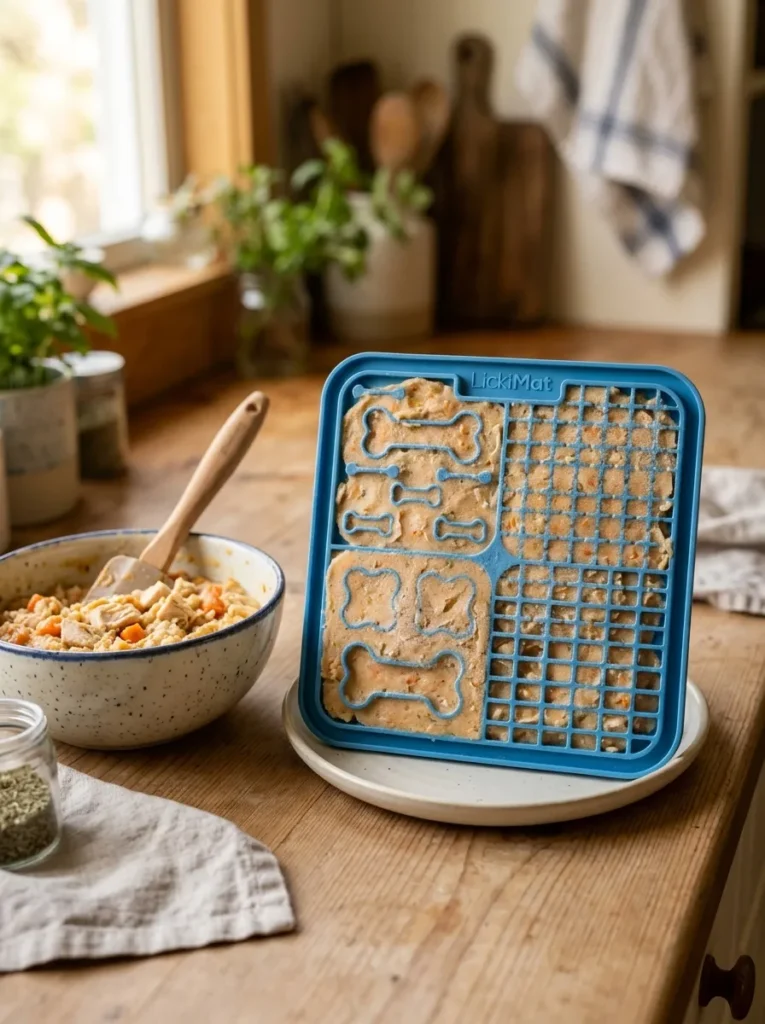
Vibe: Practical and enriching — the frozen lick mat that turns feeding time into a 20-minute sensory experience.
Why it works: A frozen chicken and vegetable lick mat represents the intersection of nutrition, behavioral enrichment, and therapeutic application — lick mats provide a textured surface that the dog’s tongue works against during licking, which has been demonstrated to activate the calming parasympathetic nervous system response through the rhythmic repetitive action. Frozen lick mats extend the licking session significantly beyond the room-temperature equivalent, providing the calming benefit for longer durations that are particularly useful during high-stress events (thunderstorms, fireworks, vet visit preparation, or separation anxiety management). The protein-based filling of cooked chicken and vegetable puree provides a savory treat option that supplements dietary protein intake rather than simply delivering palatability rewards.
How to get it: Blend ½ cup of cooked boneless, skinless chicken breast (shredded) with ½ cup of cooked sweet potato, ¼ cup of unsalted broth, and 1 tablespoon of plain Greek yogurt until reaching a spreadable but not completely smooth consistency — leaving small protein texture pieces creates more engaging licking for the dog. Spread across the full textured surface of a silicone lick mat using a spatula, pressing the blend into all texture channels and ridges. Freeze flat for 3 hours minimum. Serve on a plate or mat to contain any drips as the surface thaws.
Ingredients (fills 1 large lick mat)
| Ingredient | Amount |
|---|---|
| Cooked boneless skinless chicken breast | ½ cup shredded |
| Cooked sweet potato | ½ cup |
| Unsalted garlic-free broth | ¼ cup |
| Plain Greek yogurt | 1 tablespoon |
15. Rainbow Layered Celebration Pop
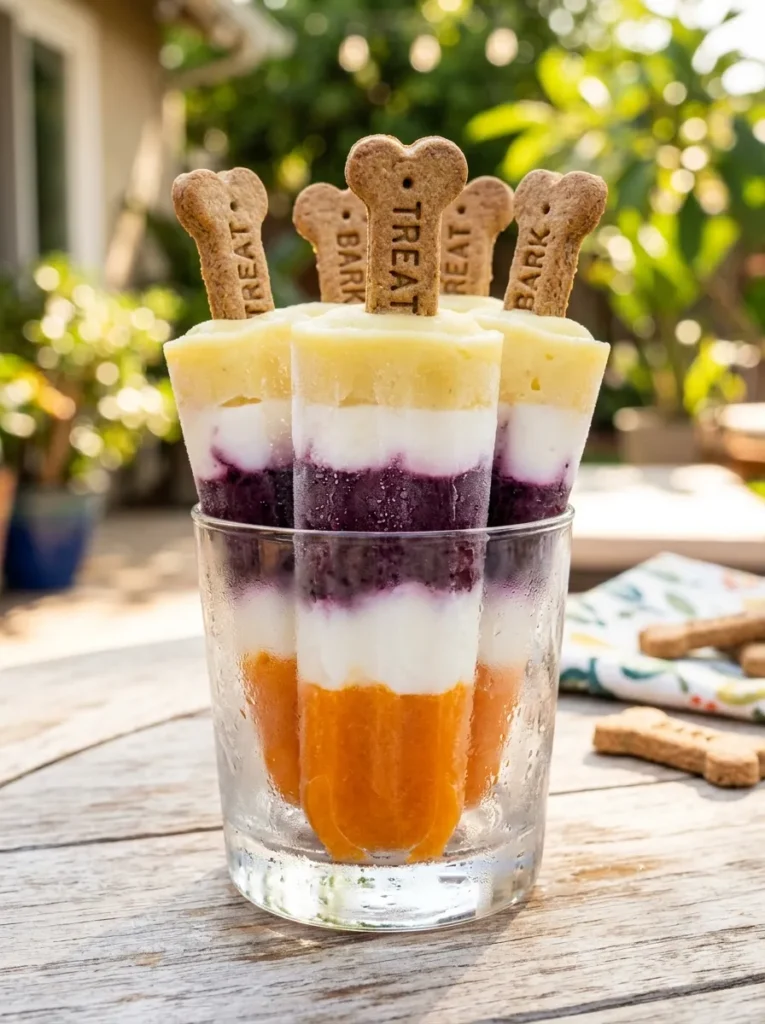
Vibe: Celebratory and colorful — the special occasion frozen treat that makes a dog’s birthday or adoption anniversary feel genuinely marked.
Why it works: The rainbow layered celebration pop applies the design principle of special occasion elevation through visual complexity — the five-layer construction (sweet potato, yogurt, blueberry, yogurt, banana) creates a frozen treat that is visually distinct from any everyday frozen dog treat, communicating through its appearance the specific specialness of a celebration moment. Each layer is frozen separately before the next is added, creating clean color separation that remains visible in the finished pop and makes the treat photograph beautifully for the social media documentation that has become a natural expression of contemporary pet care culture. The nutritional composition draws from five different whole food categories — vegetable, dairy, berry, fruit, and banana — providing the broadest single-treat nutritional profile of any recipe on this list.
How to get it: Prepare five separate ingredient blends: cooked sweet potato pureed smooth, plain Greek yogurt, blueberries blended smooth, plain Greek yogurt again, and ripe banana mashed smooth. Pour the sweet potato layer into each popsicle mold to one-fifth depth and freeze for 45 minutes until firm. Add the yogurt layer and freeze for 45 minutes. Add the blueberry layer and freeze for 45 minutes. Add the second yogurt layer and freeze for 45 minutes. Add the banana layer, insert a dog biscuit handle, and freeze for a final 2 hours minimum until completely solid throughout all layers.
Ingredients (makes 6 celebration pops)
| Ingredient | Amount |
|---|---|
| Cooked sweet potato pureed | 3 tablespoons |
| Plain Greek yogurt for two layers | 6 tablespoons total |
| Blueberries blended smooth | 3 tablespoons |
| Ripe banana mashed smooth | 3 tablespoons |
| Dog biscuit handles | 6 pieces |
How to Start Your Homemade Frozen Dog Treat Practice
Start with the blueberry yogurt frozen drops. Before purchasing silicone molds, sourcing specialty ingredients, or committing to any multi-step preparation, make a batch of blueberry yogurt drops using nothing more than a bowl, a spoon, a parchment-lined baking sheet, and ingredients already in most refrigerators. This single session — which takes under 10 minutes of active preparation and produces 40 individual dog treats — establishes the habit, demonstrates how straightforwardly frozen dog treats are made, and provides immediate evidence of your dog’s response to homemade frozen treats before any further investment. The batch of blueberry drops in the freezer becomes both the motivation and the reference point for every subsequent recipe decision.
The most common mistake homemade frozen dog treat makers make is using standard commercial chicken or beef broth in recipes without checking the ingredient list — virtually all commercial broths contain onion or garlic (either as whole ingredients or in the form of onion powder or garlic powder), both of which are toxic to dogs at levels far lower than most owners realize. A small amount of onion or garlic in a treat does not cause immediate visible distress in most dogs, but it contributes to cumulative red blood cell damage that becomes evident as anemia over time with repeated exposure. Always use unsalted, onion-free, garlic-free broth specifically produced for pet use or prepared at home from plain water and meat without any aromatics — this is the single most important ingredient verification step in homemade frozen dog treat preparation.
Three items under $30 that make an immediate impact: A silicone bone-shaped mold set ($8–$12 for a set of two molds) that produces the treat shape most immediately associated with dog treats and makes any blended recipe look intentionally crafted; an ice cube tray in the 1-inch small cube format ($6–$8) that creates the ideal single-serving portion for small dogs and training treat-size bites for large dogs; and a set of Kong toys in your dog’s size ($10–$18) that makes frozen Kong stuffing the most impactful single behavioral enrichment tool in your preparation, turning a 10-minute recipe into a 30-minute enrichment session.
Realistic expectations: A single homemade frozen dog treat recipe takes 5–15 minutes of active preparation time and 2–6 hours of passive freezing time depending on the mold depth and format. A batch of 20–40 small cubes or drops costs $3–$6 in ingredient quantities and stores in the freezer for up to 4 weeks. A full repertoire of 5–6 regularly rotated frozen treat recipes covering sweet, savory, enrichment, and training treat use cases requires an initial ingredient investment of $20–$35 and sustains a complete frozen treat practice for 2–3 weeks before replenishment. The time cost of homemade frozen dog treat preparation is genuinely lower than most owners expect — the five-minute active preparation time for most recipes is offset by the behavioral benefit of 15–30 minutes of enrichment time per serving that purchased treats do not provide.
Frequently Asked Questions About Homemade Frozen Dog Treats
How long do homemade frozen dog treats last in the freezer?
Most homemade frozen dog treats remain safe and palatable for 4–6 weeks when stored in airtight freezer zip bags or sealed containers — the same guidelines applicable to homemade human frozen food. Treats containing fish (sardine cubes) should be used within 2 weeks due to the higher fat oxidation rate of fish protein in frozen storage. Dairy-based treats (yogurt drops, bark, layered cups) last the full 4–6 weeks when properly sealed. The most reliable quality indicator is the absence of freezer burn on the treat surface — freezer burn (white, dry, crystallized surface patches) indicates moisture loss from inadequate sealing rather than spoilage, and while freeze-burned treats are safe, their texture and palatability are reduced. Always seal treats in airtight bags with excess air pressed out before returning to the freezer.
Which dogs should not have homemade frozen treats?
Dogs with specific health conditions require veterinary guidance before receiving homemade frozen treats: dogs with diabetes should avoid fruit-based treats due to their natural sugar content; dogs with kidney disease should avoid high-protein frozen treats and sardine-based preparations; dogs with pancreatitis should avoid high-fat preparations including coconut oil treats and full-fat peanut butter treats; dogs with lactose intolerance should avoid yogurt-based preparations despite yogurt’s lower lactose content; and dogs with known food allergies should avoid any recipe containing their specific allergen regardless of how minor the quantity. Puppies under 12 weeks should not receive frozen treats as their digestive systems are not yet mature enough to handle the abrupt temperature change. Always consult your veterinarian before introducing frozen treats to a dog with any diagnosed health condition.
Can I use frozen treats to help my dog during stressful events?
Yes — frozen treats, particularly frozen Kongs and frozen lick mats, are one of the most effective behavioral management tools available for specific stress contexts in dogs. The rhythmic licking action required to consume a frozen treat activates the parasympathetic nervous system response, counteracting the sympathetic (stress) response and producing a measurable calming effect. For thunderstorm and fireworks anxiety, provide a frozen Kong or lick mat at the start of the stressor and throughout its duration — the treat provides both behavioral engagement and the physiological calming benefit of sustained licking. For separation anxiety, a frozen Kong given immediately before departure creates a positive association with the departure event and extends engagement through the most difficult initial period of the owner’s absence. For veterinary visit preparation, a frozen lick mat given in the waiting room and examination area can significantly reduce examination stress in dogs with prior vet anxiety.
What is the appropriate serving size for homemade frozen dog treats?
Treats should comprise no more than 10% of a dog’s total daily caloric intake — this is the standard veterinary guideline for all treats regardless of their nutritional quality. For a small dog (5–10kg, approximately 200–400 daily calories), this means a maximum of 20–40 treat calories per day — equivalent to 2–3 small yogurt drops or 1 small ice cube. For a medium dog (15–25kg, approximately 500–800 daily calories), the treat budget is 50–80 calories — equivalent to 1–2 medium popsicles or 4–6 small cubes. For a large dog (30–45kg, approximately 1,000–1,400 daily calories), the treat budget is 100–140 calories — equivalent to 2–3 medium popsicles or a half-sheet of bark. Always reduce the size of the regular meal when providing multiple frozen treats in a single day to maintain the daily caloric balance.
How do I store homemade frozen dog treats for maximum freshness?
Store homemade frozen dog treats in airtight freezer-safe zip bags with all excess air pressed out before sealing — excess air in the bag accelerates freezer burn and reduces the storage period. Label each bag with the recipe name and preparation date using a permanent marker on masking tape — the four-week storage guideline requires knowing when the treats were made. Store different recipe types in separate labeled bags rather than combining flavors — this maintains the ability to serve specific treat types for specific purposes (training treats separately from enrichment treats) and prevents the flavor transfer that can occur between different frozen ingredients sharing the same storage bag. Store bags flat in the freezer rather than upright to maintain consistent freezing across the full bag and to minimize freezer space use when multiple recipe batches are stored simultaneously.
Ready to Create Your Dog’s Dream Frozen Treat Collection?
These 15 recipes cover the complete range of what homemade frozen dog treats can achieve — from the five-minute simplicity of blueberry yogurt drops and the savory satisfaction of beef broth bone pops, to the enrichment power of frozen Kongs and the celebration-worthy rainbow layered pop. Every frozen treat practice begins with a single batch — the blueberry yogurt drops on a parchment sheet in your freezer this afternoon — and expands naturally as you observe which flavors your specific dog responds to most enthusiastically, which formats provide the most enrichment value for their size and temperament, and which preparation rhythms fit most easily into your household’s weekly routine. Right now, check your refrigerator for plain Greek yogurt and fresh blueberries, line a baking sheet with parchment, and give your dog the first homemade frozen treat they have ever had — the expression on their face during the first lick will tell you everything you need to know about whether this practice is worth maintaining. Save the recipes that match your dog’s preferences and dietary needs, and build a frozen treat rotation that makes every warm day — and every ordinary Tuesday — a little more joyful for the both of you.