Your dog deserves a home as stylish as yours. These DIY dog house ideas turn simple wood, crates, barrels, and even old furniture into cozy, good-looking shelters that fit any yard or living room.
This article shares 15 unique projects, from a pallet cabin and a mini barn to an A-frame, an igloo dome, and a bookcase den. Each idea solves a real problem: a tight budget, a plain backyard, or a dog who needs a safe, sheltered spot. I’ve noticed that dogs use a house more when it feels snug and smells like home. In my experience, a good build starts with measuring your dog first. Scroll through, save your favorites, and start with the idea that suits your dog and your space.
Pallet Wood Cabin
- Uses free or low-cost reclaimed wood
- Fits into a single weekend build
- Warm rustic grain suits decks and gardens
- Easy to stain, paint, or leave natural
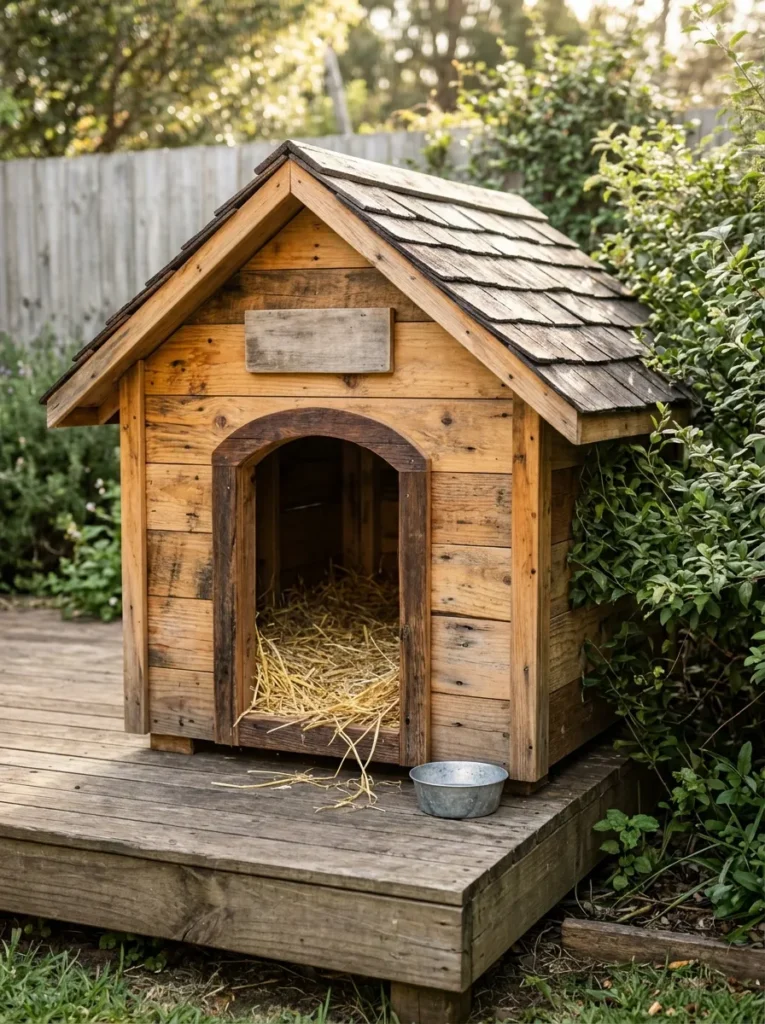
Free wood can become a real home. Reclaimed pallet boards make a sturdy cabin frame at almost no cost, which suits first-time builders. I’ve seen this work well for medium dogs who love to lounge outdoors. Cut the boards to size, sand every surface, and nail them onto a simple wooden frame. Add a sloped roof so rain slides off. The rustic grain looks warm and welcoming in any backyard, and the whole build can fit into one weekend. A little paint or stain finishes the look, turning scrap lumber into a charming, personal shelter.
Safety decides whether pallet wood works. Use only heat-treated pallets, marked HT, and avoid any stamped MB, which means chemical treatment. Check every board for nails, splinters, and stains, then sand until smooth. Raise the floor a few centimeters off the ground to keep moisture away. Seal the outside with pet-safe exterior stain and leave the inside natural. Cut the doorway about five centimeters taller than your dog’s shoulder height. Add straw or a washable cushion for comfort. The finished cabin looks rustic, sturdy, and cozy, and it blends beautifully into a garden, deck, or covered porch.
Also view: 14 Playful Dog Breeds That Make the Best Family Pets
Mini Barn House
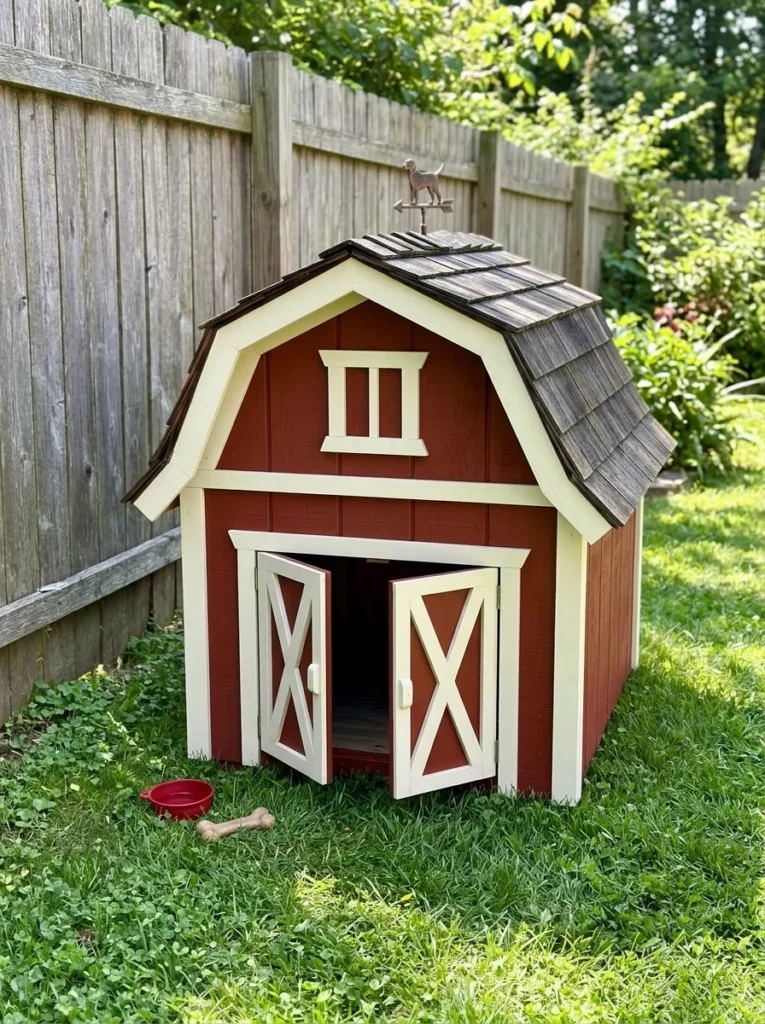
- Adds instant farmhouse charm to a plain yard
- Gambrel roof gives extra headroom inside
- Easy to paint in any color palette
- Makes a sweet focal point near a fence or garden
Barns make everything look charming. A mini barn dog house uses the classic gambrel roof, which gives your dog extra headroom for stretching and turning. I’ve seen this shape make a plain backyard feel like a tiny farm. Build the walls from plywood, then add trim boards in white to create the famous X pattern on the door. Paint the body in barn red or soft sage for a gentle look. The shape is playful and bright, and it works well for larger dogs who need a little more space to stand comfortably.
Planning the roof is the trickiest part. Cut two angled panels for each side of the gambrel, and test the fit with painter’s tape before nailing. Use exterior-grade plywood and weatherproof paint with low odor, since dogs spend hours inside. Add shingles or roofing felt to keep water out, and a small overhang over the door. Drill a few small vent holes near the top for airflow. Sand every edge so nothing snags fur. The finished barn looks cheerful, sturdy, and full of character, and it gives your dog a stylish home that guests will notice first.
A-Frame Hideaway
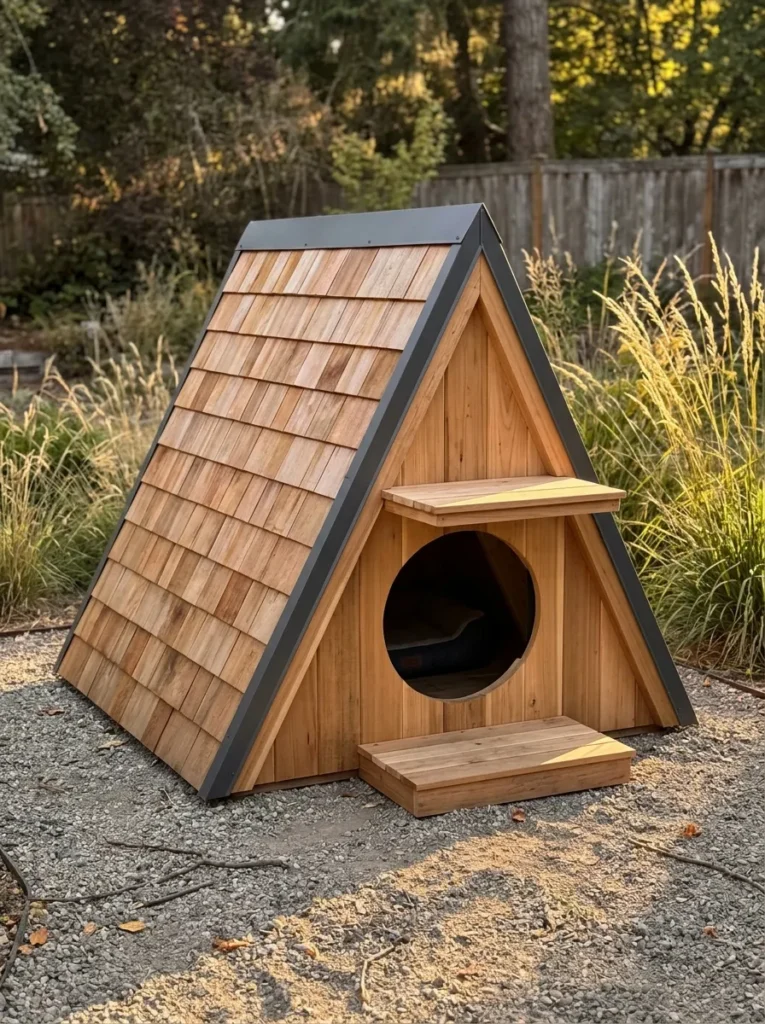
- Triangle shape sheds rain and snow naturally
- Looks like a tiny designer cabin
- Needs simple angled cuts and few materials
- Leaves a clean, modern profile in any yard
Simple shapes often look the most expensive. An A-frame dog house uses two angled panels that meet at the top, so rain and snow slide right off. I’ve noticed that this shape looks like a tiny mountain cabin, which makes it a perfect focal point in a modern yard. Cedar boards give a natural warmth and resist rot well. A round or arched opening adds a soft, friendly touch. The design needs fewer cuts than a traditional house, so beginners can finish it in one afternoon and still feel proud of the result.
Measure your dog before you cut anything. The inside should be tall enough for your dog to sit upright and wide enough to turn around easily. Use a plywood floor, and set the frame on short wooden feet to keep it dry. Angle the opening away from prevailing wind. Seal the cedar with a pet-safe oil rather than strong varnish. Place a washable cushion inside and a small mat at the door for muddy paws. The finished hideaway looks clean, calm, and architectural, and it gives your dog a snug, sheltered corner to enjoy.
Modern Flat Roof
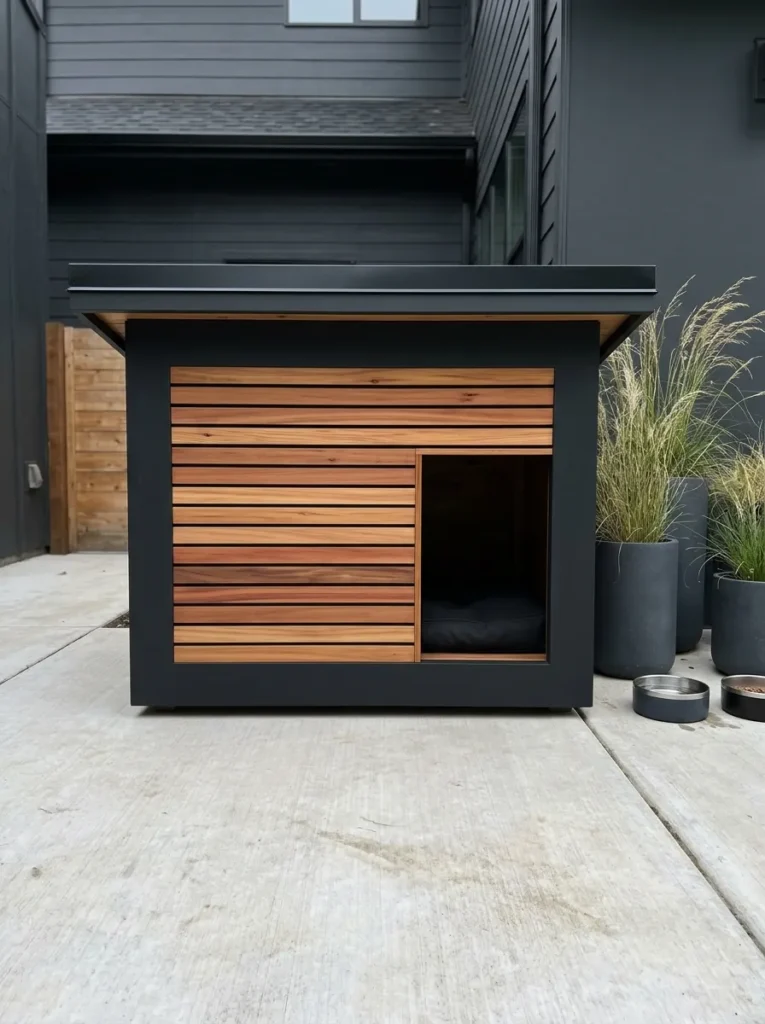
- Matches modern patios and minimalist yards
- Slat front adds texture and airflow
- Slight roof slope keeps water moving off
- Simple rectangle shape is easy to build
Clean lines suit modern homes. A flat roof dog house looks like a tiny architect-designed studio, and it matches contemporary patios beautifully. I’ve noticed that matte black paint with cedar slat details looks far more expensive than the cost of materials. The shape is a simple box, so measuring and cutting stay easy. Tilt the roof slightly toward the back so water drains away. Add a rectangular door opening and a horizontal slat front for texture. The result feels sleek, minimal, and upscale, and it keeps your dog’s space as stylish as the rest of your outdoor furniture.
Dark colors absorb heat, so plan for comfort. Use light-colored insulation under the roof, and add a small gap between the roof and walls for airflow. Place the house in shade during summer. Cover the roof with waterproof membrane or metal sheeting so puddles never form. Use water-based, pet-safe exterior paint, and let it cure fully before your dog goes inside. Add a thick washable mat for support. The finished house looks neat, modern, and well planned, and it proves that a pet home can be both practical and beautiful in any contemporary yard.
Storybook Cottage
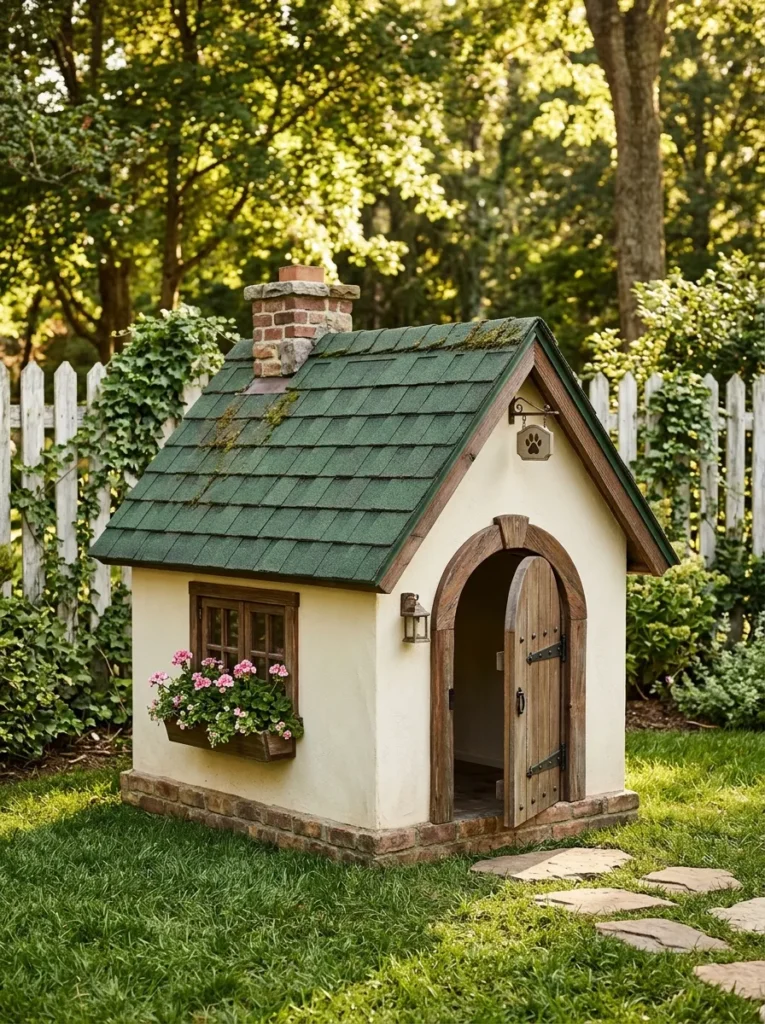
- Adds window boxes and trim for fairy-tale charm
- Turns a plain house into a garden feature
- Details can be painted instead of built
- Suits small dogs and cozy corners
Some dog houses belong in a storybook. A cottage design adds a pitched roof, a small window, and a flower box, and suddenly the whole thing looks like a tiny home. I’ve seen this style make guests smile before they even say hello. Paint the walls cream, add green shingles, and frame the door with a soft arch. Fake window panes can be painted rather than built, which keeps the project simple. The charm comes from small details, and each one adds personality without needing advanced carpentry skills or special tools.
Keep the decor safe for curious dogs. Choose flower boxes mounted high on the outside, and fill them with dog-safe plants such as pansies or snapdragons. Avoid lilies, azaleas, and sago palms, which are toxic. Use non-toxic paint and screw everything firmly in place. Add a little roof overhang above the door so rain stays out. Line the base with bricks or pavers to keep wood off damp soil. The finished cottage looks sweet, welcoming, and carefully made, and it turns a simple shelter into a garden feature your whole family will love to show off.
Plastic Barrel Den
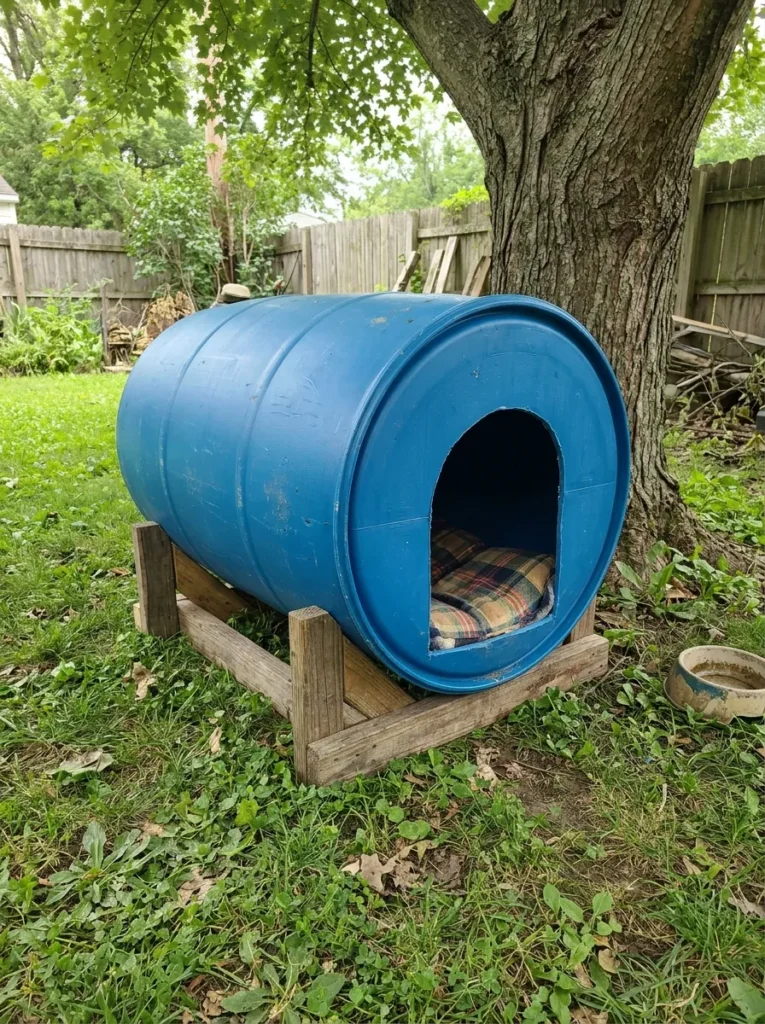
- Waterproof and easy to wipe clean
- Rounded shape resists wind
- Costs less than most lumber builds
- Wood frame raises it off damp ground
Sometimes the best home is a recycled one. A food-grade plastic barrel makes a waterproof den in under an hour, and it needs almost no building skills. I’ve noticed that dogs enjoy the rounded shape, which feels like a snug burrow. Cut a doorway in one end, sand the edges smooth, and set the barrel on a wooden frame. Because the plastic wipes clean, it suits muddy dogs and rainy climates. The material costs little and lasts for years, so it is an excellent pick for anyone who wants a practical shelter on a tight budget.
Choose the barrel carefully. Use only barrels that held food, never chemicals, and rinse them with mild soap and water. Cut the door with a jigsaw, then cover the edge with rubber trim or sand it until perfectly smooth. Drill small vent holes near the top and add wedges under the sides so it cannot roll. Plastic heats up fast, so keep it in shade and add a thick cushion. Painting the outside in a light color reflects heat. The finished den looks simple, tidy, and surprisingly cute, and it gives small and medium dogs a dry, safe retreat.
End Table Retreat
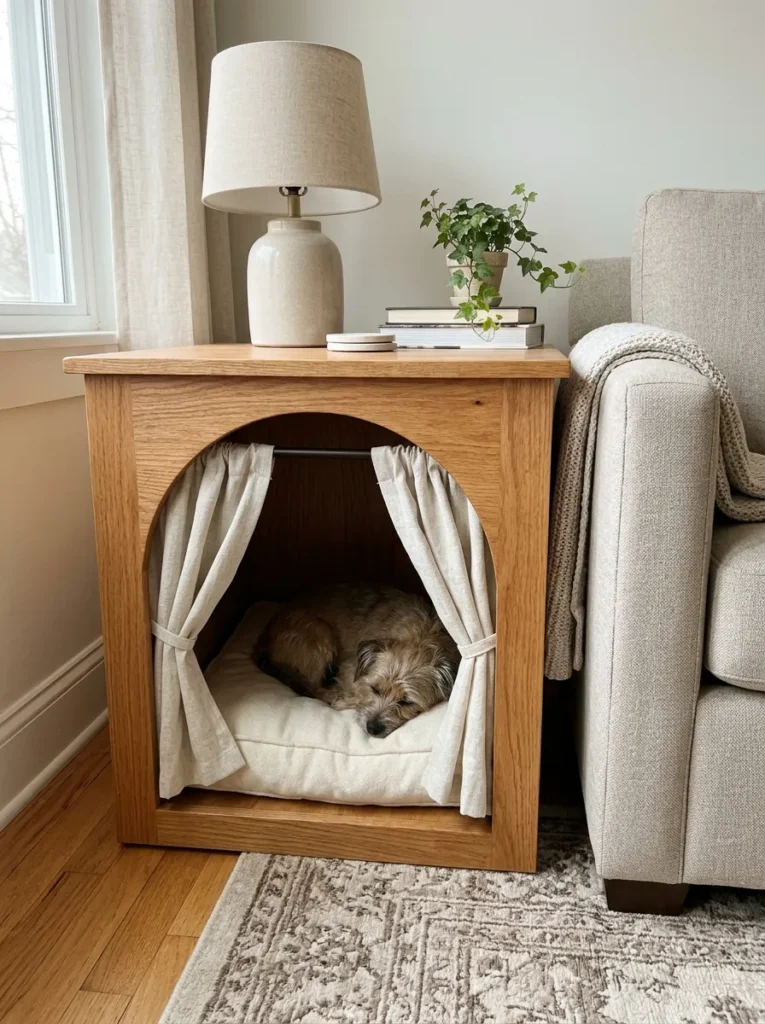
- Hides a dog bed inside real furniture
- Top surface works as a lamp or plant stand
- Blends into living rooms and bedrooms
- Gives anxious dogs a quiet den
Your dog’s bed can double as furniture. Take a sturdy wooden end table, cut an arch into the front, and add a soft cushion inside. I’ve seen this idea work wonderfully in small apartments, where every piece has to earn its space. The top still holds a lamp, a book, or a plant, so nothing is wasted. A linen curtain across the opening adds privacy and a calm look. Dogs often love covered spaces because they feel safe and quiet. The piece blends into the room, and visitors may not even notice it is a dog house.
Fit matters more than style. Measure your dog from nose to tail and from floor to shoulder, then choose a table with enough room to lie flat and turn around. Sand the arch until it feels smooth, and add felt trim along the edges. Remove any hardware that could snag fur. Keep heavy items off the top if your dog tends to jump in quickly. Wash the cushion cover weekly and air the inside. The finished retreat looks polished, quiet, and cozy, and it gives your dog a private corner without sacrificing the look of your living room.
Igloo Dome Shelter
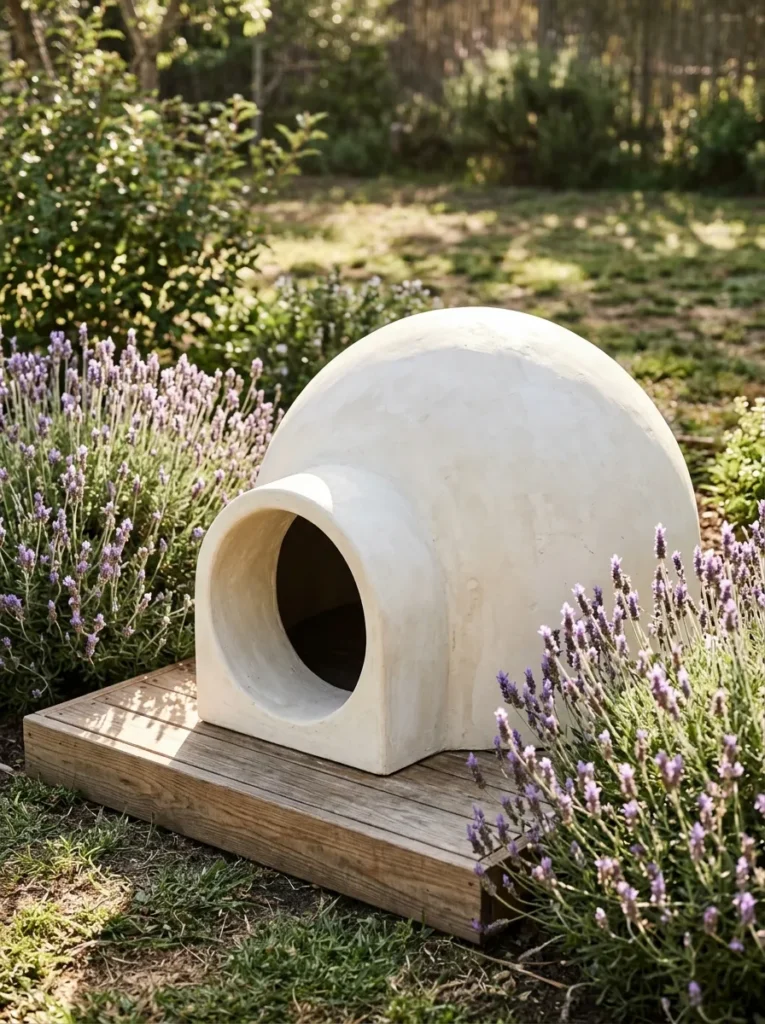
- Rounded shape holds warmth in cold weather
- Tunnel entrance blocks wind
- Soft curves look sculptural in a garden
- Insulated shell keeps temperatures steadier
Round shapes hold heat well. An igloo-style dog house uses a dome with a short tunnel entrance, which blocks wind and keeps warmth inside. I’ve noticed that dogs in cold climates often choose this kind of shelter, because the curved walls make them feel protected. Build the shell from rigid insulation foam, coat it with waterproof plaster, and finish with paint. The soft curves look sculptural against flowers and green lawns. It feels modern, calm, and a little futuristic, and it gives a small or medium dog a snug place to rest all year.
Shape and coating decide durability. Carve foam layers with a serrated knife, glue them together, and sand the surface smooth. Use a pet-safe waterproof coating, because dogs may chew exposed foam. Keep the tunnel long enough to block wind but wide enough for comfortable entry. Place the dome on a raised wooden platform so it stays dry. Add a washable cushion inside, and cut a few small vents at the top for air. Check the surface each season for cracks. The finished igloo looks smooth, tidy, and original, and it stands out as a unique centerpiece in any yard.
Elevated Deck House
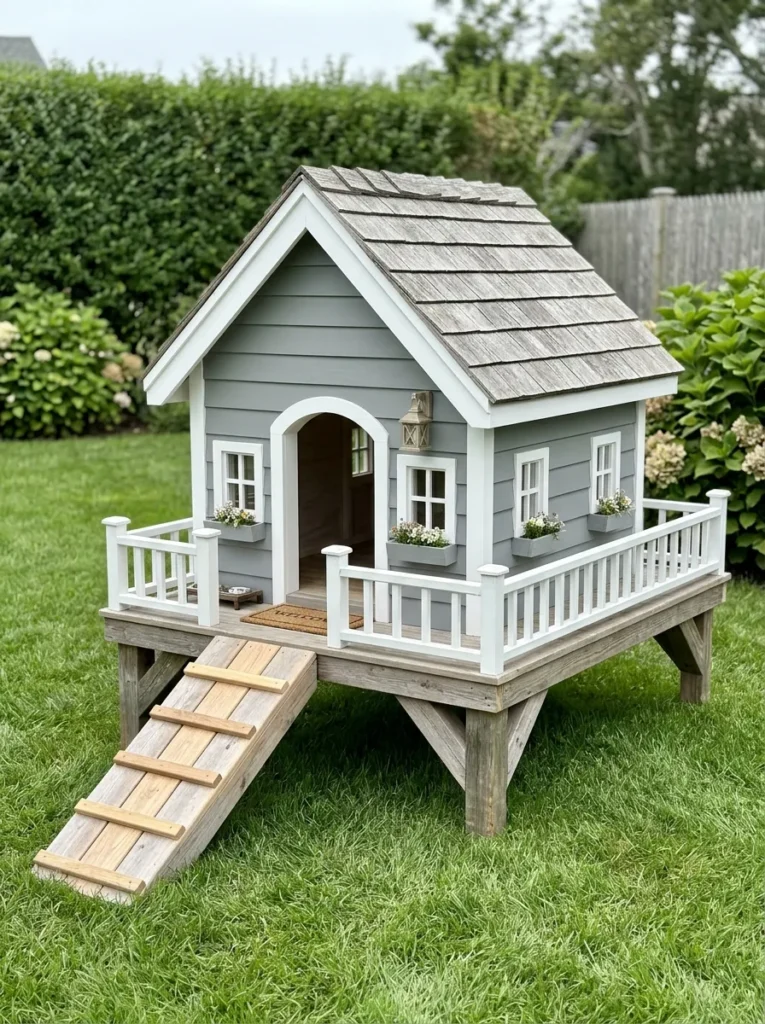
- Lifts the floor above wet or cold ground
- Front deck gives a shady lounging spot
- Ramp keeps entry easy on joints
- Coastal colors look fresh and clean
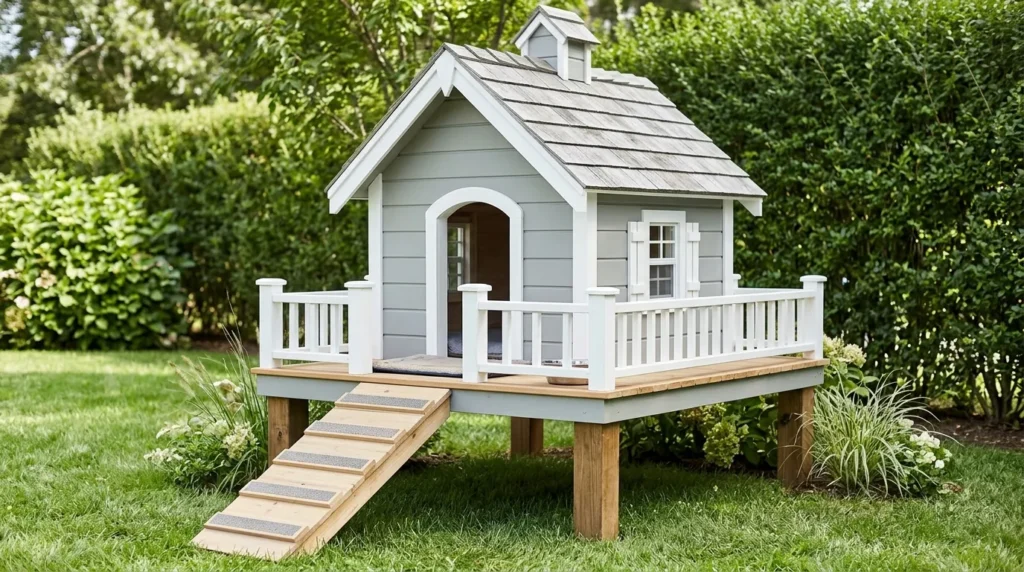
Height solves a lot of problems. Raising the house on sturdy legs keeps the floor dry, cool, and away from pests. I’ve seen this work well in rainy yards, where ground-level houses stay damp for days. Add a small front deck, and your dog gets a shady spot to lounge and watch the garden. A gentle ramp makes entry easy for older dogs. Painting the house soft grey with white trim gives it a clean, coastal feel. The setup looks like a miniature beach cottage, and it makes a plain corner of the lawn feel special.
Stability and traction come first. Build the frame from pressure-treated legs set on concrete pavers, and brace them so the house never wobbles. Keep the platform height low, about twenty centimeters, so jumping stays safe. Cover the ramp with outdoor grip tape or a rubber mat, since wet wood gets slippery. Leave a small gap between deck boards for drainage. Choose a roof with a slight overhang to protect the doorway. Check the screws every season. The finished house looks neat, sturdy, and welcoming, and it gives your dog a dry, comfortable lookout with a view.
Bookcase Conversion
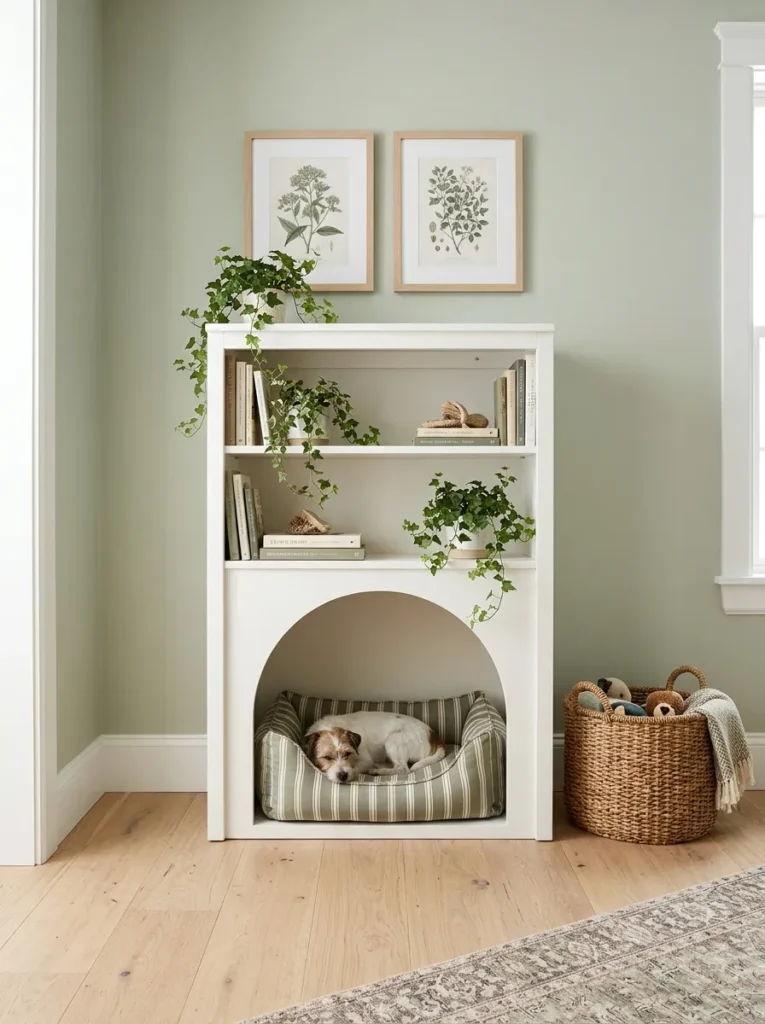
- Reuses a secondhand bookcase at low cost
- Keeps the top shelves for books and decor
- Built-in look suits hallways and living rooms
- Lower cubby gives a roomy dog bed
A bookcase hides a secret bed. Remove one or two lower shelves from a secondhand bookcase, and the empty space becomes a roomy den. I’ve tried this idea in a hallway, and it looked like built-in furniture. The upper shelves still hold books, baskets, and plants, so the piece stays useful. Paint everything in white or sage for a calm finish. Cut a soft arch into the front panel if you want a more finished look. It saves floor space, costs very little, and gives your dog a quiet nook that fits the style of your home.
Stability is non-negotiable with tall furniture. Anchor the bookcase to the wall with brackets, since a loaded shelf can tip. Remove shelf pins and sand any rough edges inside. Keep heavy books on the lower shelves above the den, and avoid placing items on top that could fall. Add a washable cushion with a non-slip base. Choose a low-VOC paint and let it air out for several days before your dog uses it. The finished piece looks tidy, clever, and calm, and it quietly hides a comfy bed inside a space that still feels like part of the room.
Stacked Crate House
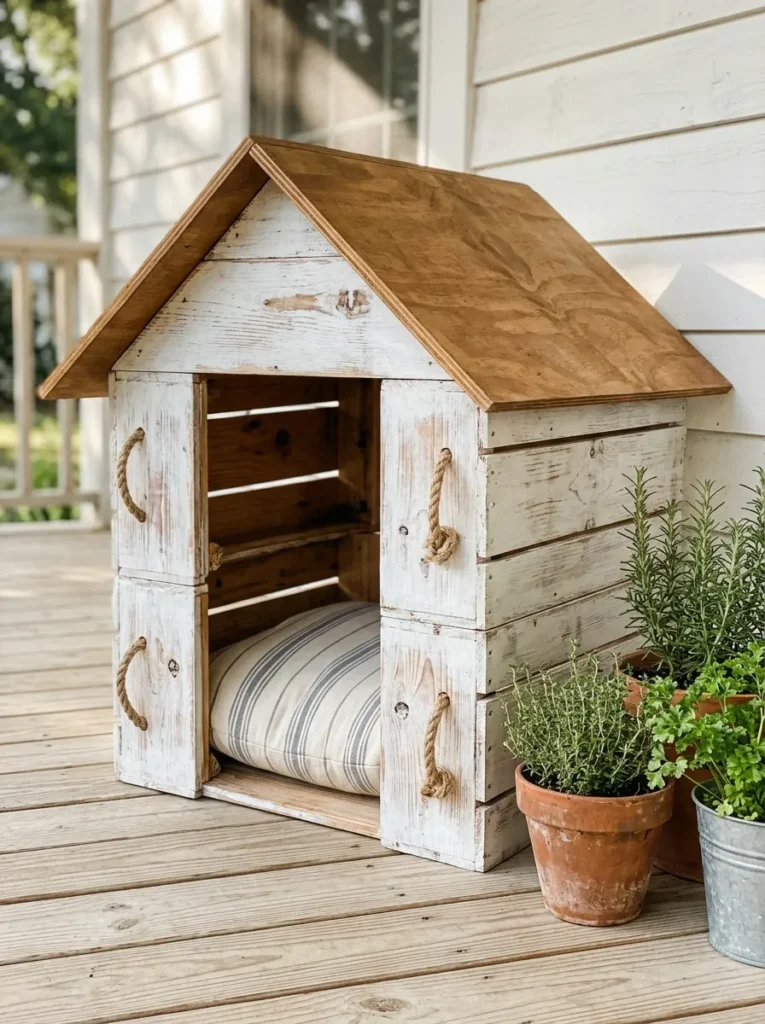
- Uses affordable wooden crates from craft stores
- Assembles with screws and basic tools
- Rope handles make it easy to move
- Light and portable for porches and patios
Crates make building feel easy. Stack two or three wooden crates, screw them together, and add a pitched roof from thin plywood. I’ve noticed that this design is the quickest build on the list, since the walls are already made. Whitewash the wood for a soft farmhouse look, then add a striped cushion inside. Rope handles let you carry the house from porch to patio. The look is relaxed, rustic, and light, and it suits small dogs and puppies. It is a smart starter project for anyone who has never picked up a drill before.
Check the crates for hazards before you start. Choose untreated wood without staples or splinters, and sand every corner until it is smooth. Fill the gaps between slats with wood trim if you want more wind protection. Use stainless screws so rust never forms. Keep the house on a covered porch, since thin wood weathers quickly. Seal the surface with pet-safe stain. Add a thick cushion or folded blanket to the floor for warmth. The finished crate house looks cute, handmade, and cozy, and it gives a small dog a light, portable shelter for sunny afternoons.
Green Roof Hut
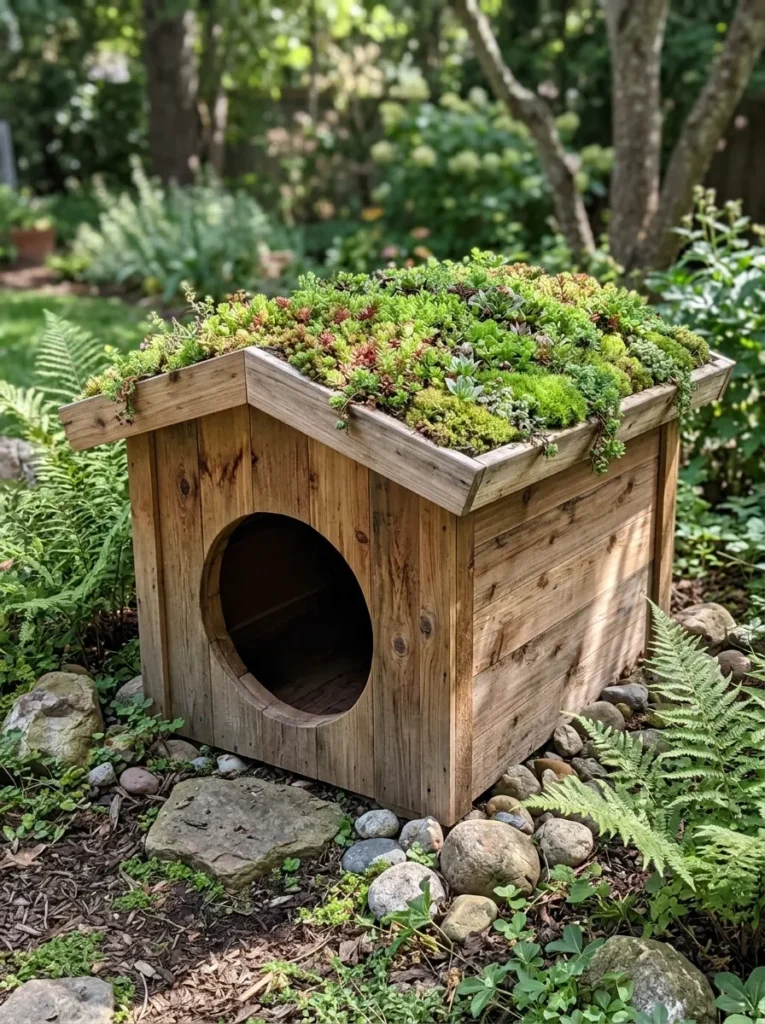
- Living roof keeps the inside cooler in summer
- Blends the house into your garden
- Plants soften the look of plain wood
- Adds greenery that changes with the seasons
A roof can be a tiny garden. Plant sedum, moss, or hardy succulents on a waterproof base, and the roof stays cooler in summer. I’ve noticed that green roofs make a dog house feel like part of the landscape. Choose low-growing, non-toxic plants, and give them a thin layer of soil over a drainage mat. Build the walls from cedar for natural rot resistance. Add a round doorway for a storybook finish. The look is soft, natural, and eco-friendly, and it turns a simple shelter into a living feature that changes beautifully with the seasons.
Waterproofing is the key to success. Lay pond liner or heavy plastic under the soil, add a small lip around the edge, and slope the roof slightly so water drains. Keep the roof light, since wet soil adds weight, and reinforce the rafters. Water the plants during dry spells, and trim them every few months. Make sure your dog cannot reach the roof, since digging could damage it. Avoid fertilizers and pesticides near pets. The finished hut looks fresh, quiet, and thoughtful, and it brings a little wild beauty into your yard while keeping your dog comfortable.
Front Porch Style
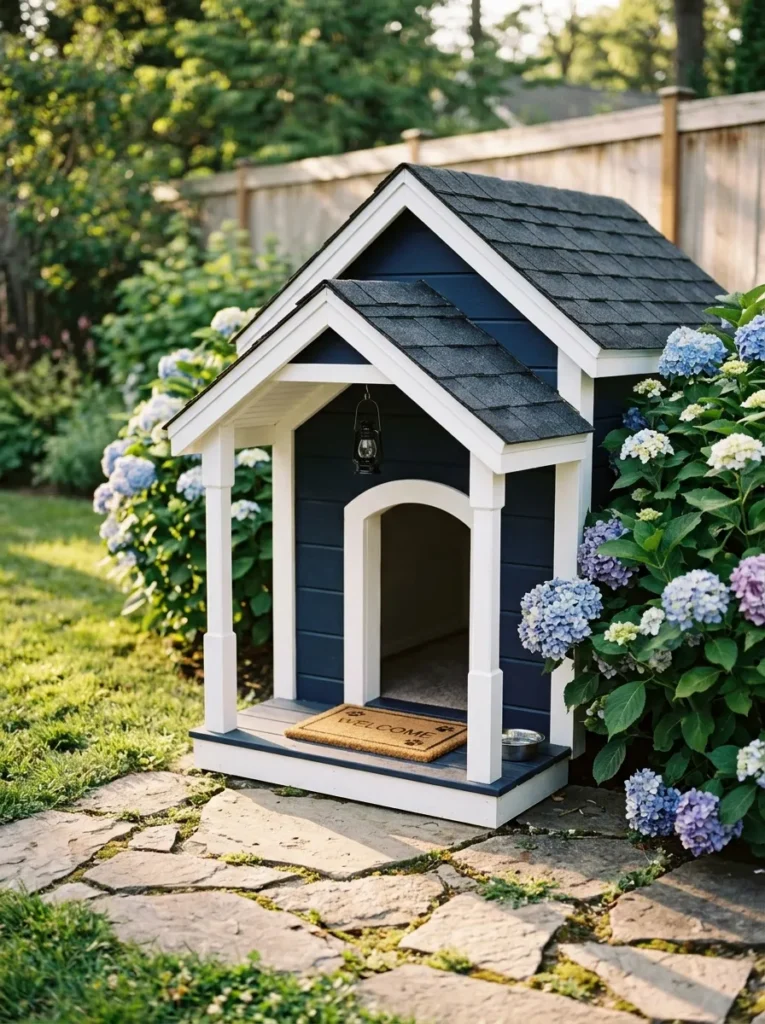
- Adds a covered entry for wet weather
- Small details make it feel like a real home
- Navy and white look crisp and classic
- Gives your dog a shady spot outside the door
Every home looks better with a porch. Extend the roof a few centimeters beyond the door, add two slim posts, and your dog gets a covered entry. I’ve seen dogs lie on these little porches for hours, watching the world go by. A welcome mat and a small lantern add personality, though keep the lantern battery-powered for safety. Paint the house navy with white trim for a classic, crisp look. The details make the house feel like part of your own home, and they give your dog a shady spot that stays dry even on rainy afternoons.
Build the porch with strength in mind. Use thicker posts than you think you need, and screw them into the base rather than relying on nails. Make the porch floor slightly sloped so water runs off. Keep the posts smooth and free of splinters, since dogs rub against them. Add a non-slip mat near the door for traction. Choose a light fixture that has no cord, and keep decor out of chewing range. The finished house looks welcoming, tidy, and full of charm, and it gives your dog a stylish entrance that feels like a real front door.
Insulated Winter Den
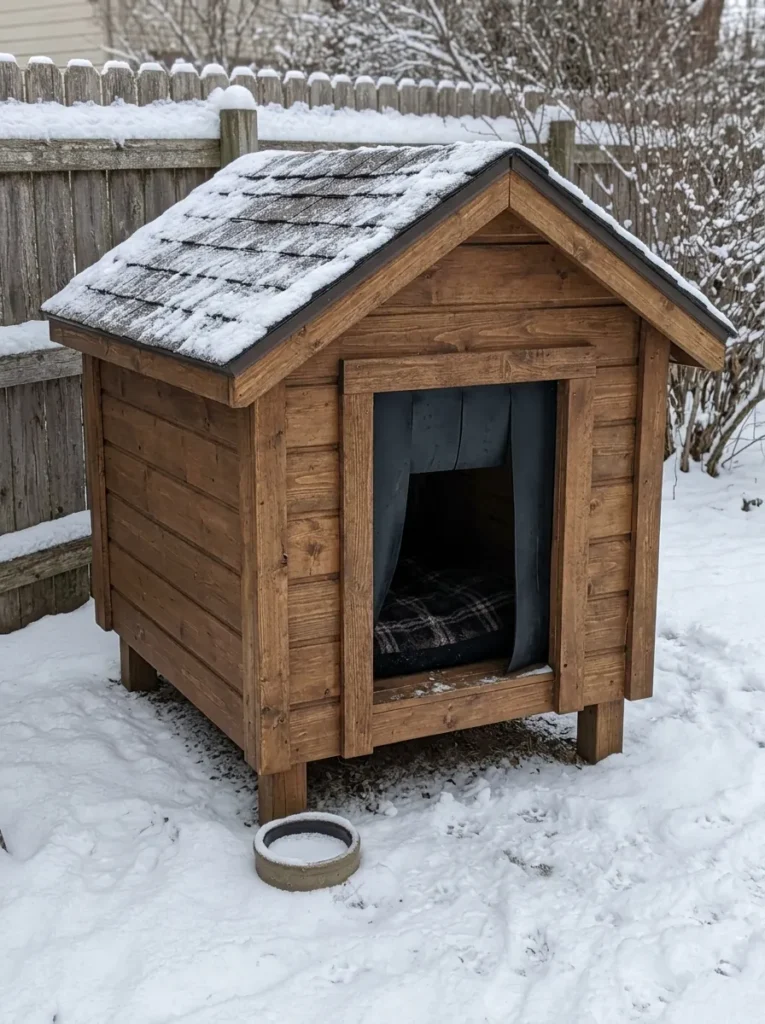
- Foam board insulation holds in body heat
- Door flap blocks cold drafts
- Raised floor keeps frost away
- Keeps dogs comfortable in cold weather
Cold weather calls for a smarter build. Line the walls, floor, and roof with rigid foam board, then cover it with thin plywood so your dog cannot chew it. I’ve seen insulated houses make a big difference for dogs who spend time outside in winter. Add a heavy rubber door flap to block drafts, and raise the floor off the ground. Keep the space snug, since a smaller house holds warmth better. The result feels like a tiny cabin, and it offers dependable comfort when the temperature drops, which gives owners peace of mind.
Use bedding that handles the cold. Fill the floor with straw or cedar shavings rather than blankets, which hold moisture and freeze. Check that the door flap opens easily, and trim it so it never traps your dog. Keep heated pads only if they are pet-rated, and place cords out of reach. Remember that no dog house replaces indoor shelter in extreme cold, so bring your dog inside when temperatures become dangerous. Clean the bedding weekly. The finished den looks cozy, sturdy, and practical, and it gives a hardy dog a warm retreat during winter days.
Pastel Paint Makeover
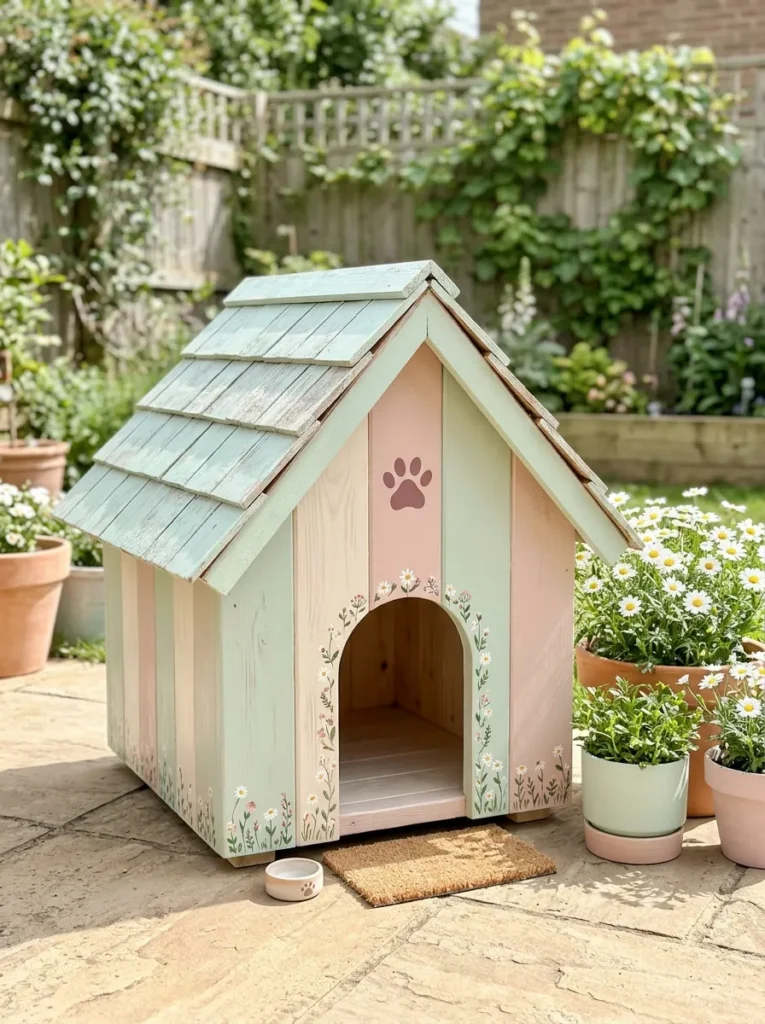
- Turns a plain house into a showpiece
- Paint is the cheapest upgrade
- Custom paw prints and names add charm
- Easy for kids to help with
Paint can change everything. Start with a plain wooden house, then brush on mint, blush, and cream stripes for a soft pastel finish. I’ve tried this on a basic secondhand house, and it looked brand new in one afternoon. Add your dog’s name above the door, or paint a paw print with a stencil. Small flower borders add a sweet, handmade touch. The upgrade costs only a few dollars in paint, and kids can help with the details. The finished house looks cheerful, personal, and joyful, and it lifts any patio or garden corner.
Choose your paint with care. Use water-based, non-toxic exterior paint labeled safe for pets, and avoid anything with strong fumes. Sand the surface lightly, apply a primer, and paint two thin coats for a smooth finish. Let everything cure for at least three days before your dog goes inside. Paint only the outside, and leave the interior raw wood. Seal with a clear, pet-safe topcoat to protect against sun and rain. Touch up chips each spring. The finished makeover looks fresh, playful, and loved, and it proves that a few coats of color can transform even the plainest dog house.
Conclusion
A great dog house doesn’t need a big budget or advanced skills. It needs a safe design, the right size, and a little style. Whether you build a pallet cabin, an A-frame hideaway, or a pastel makeover, these DIY dog house ideas help you create a shelter your dog will love. I’ve seen how small changes like these can completely shift the way a space feels. Save this post on Pinterest, try one idea this weekend, and share it with a friend who loves their dog. Your best friend’s coziest spot is waiting to be built.