Guinea Pig Vet Emergency Checklist: When to Seek Immediate Care
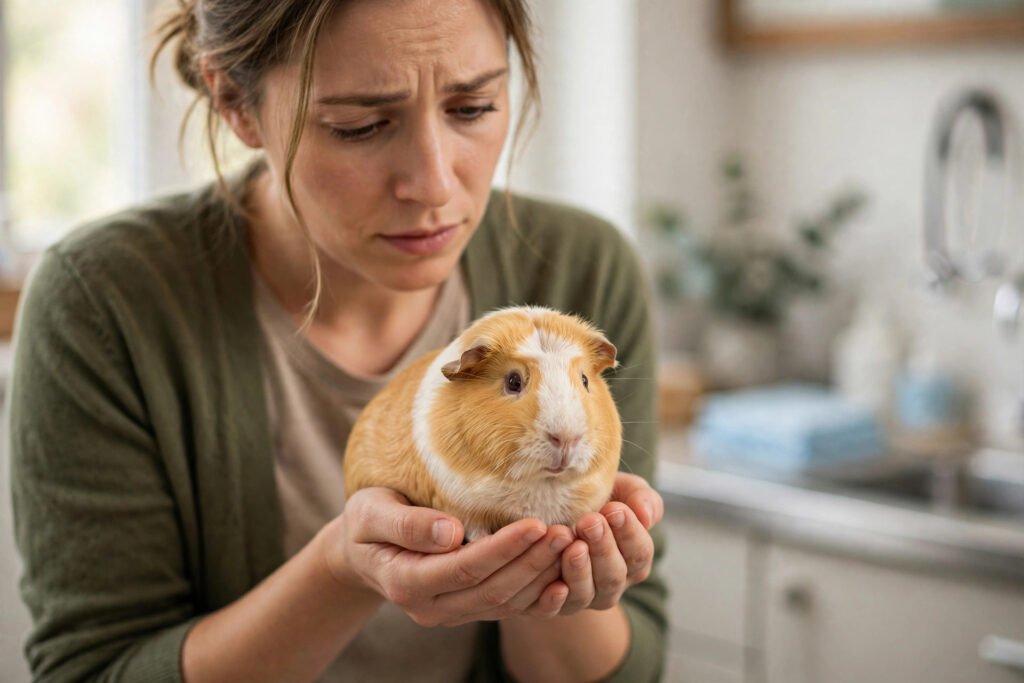
Knowing when to take a guinea pig to the vet can mean the difference between a quick recovery and a tragedy. Guinea pigs are prey animals, and their deepest instinct is to hide illness — by the time a piggy looks truly unwell, the problem is usually already serious. This guide gives you the emergency red flags, a “call now vs watch closely” table, and what to do before you reach the vet. Bookmark it now, because in a real emergency you will not want to be searching for answers.
Why “Wait and See” Is Dangerous for Guinea Pigs
Dogs and cats whimper, limp, or go dramatically off their food when they are ill. Guinea pigs do the opposite: they sit quietly, fluff up, and hope no predator notices. In the wild, a visibly sick animal is the first one caught — so your piggy is wired to act normal until it physically cannot. The window between “slightly off” and “critical” can be just hours.
The Golden Rule: If your guinea pig has stopped eating, cannot breathe normally, or is suddenly lethargic and unresponsive, do not wait until morning — call a vet immediately. A few hours of delay can turn a treatable problem into a fatal one. For the subtle early signs many owners miss, start with our guide on how to tell if your guinea pig is sick.
The 9 Emergency Red Flags — Call the Vet Now
If you spot any of these, phone your vet (or an emergency/exotic vet after hours) straight away:
1. Not eating for more than 12 hours
A healthy guinea pig eats almost constantly. If yours has not touched food for 12 hours, this is an emergency — gut slowdown can become life-threatening within a day. If your pig refuses even favourite treats, take it seriously.
2. Laboured or noisy breathing
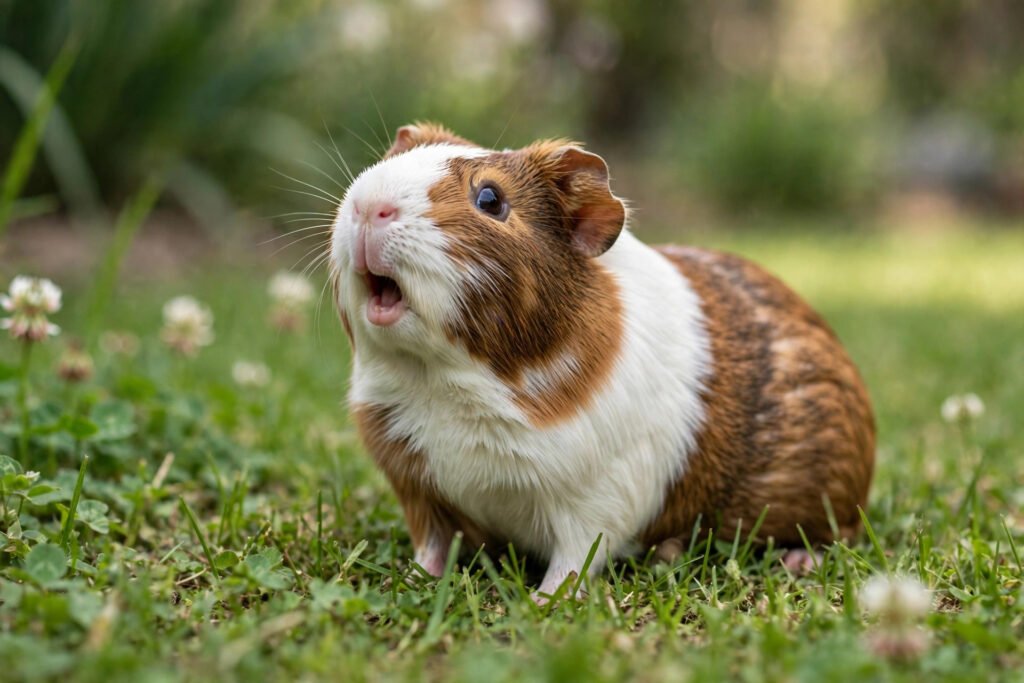
Wheezing, clicking, crackling, or open-mouth breathing are never normal. Respiratory infections progress rapidly in small animals, and breathing difficulty is one of the most urgent symptoms. A pig stretching its neck upward to breathe needs a vet immediately.
3. Bloating — a swollen, drum-tight belly
Bloat (gas buildup in the gut) is painful and can be fatal in hours. Signs: a visibly swollen, drum-tight belly, restlessness, and refusing food. Keep the pig warm and calm — and get to the vet fast.
4. Extreme lethargy or limpness
A guinea pig that will not move, lies flat on its side, or feels floppy when picked up is in serious trouble. A pig sitting hunched and puffed up, eyes half-closed, unmoved by rustling vegetable bags, is telling you: help me now.
5. Head tilt or loss of balance
A sudden head tilt, circling, or falling over often signals an inner ear infection — but it can also mean a neurological problem. Either way, it needs same-day attention. Keep the pig in a small, padded space so it cannot injure itself.
6. Bleeding that will not stop
A nicked nail during a trim that bleeds briefly is usually manageable with pressure or styptic powder. But bleeding from the mouth, nose, eyes, or bottom, blood in the urine, or any wound that keeps bleeding needs urgent care.
7. Seizures
Seizures can stem from heatstroke, poisoning, infection, or metabolic problems. Keep your hands clear of the pig’s mouth, move away anything it could hit, note the duration, and call the vet immediately. Do not confuse a seizure with ordinary shaking or trembling — that is common when cold, but a full seizure is an emergency.
8. Sudden or severe weight loss
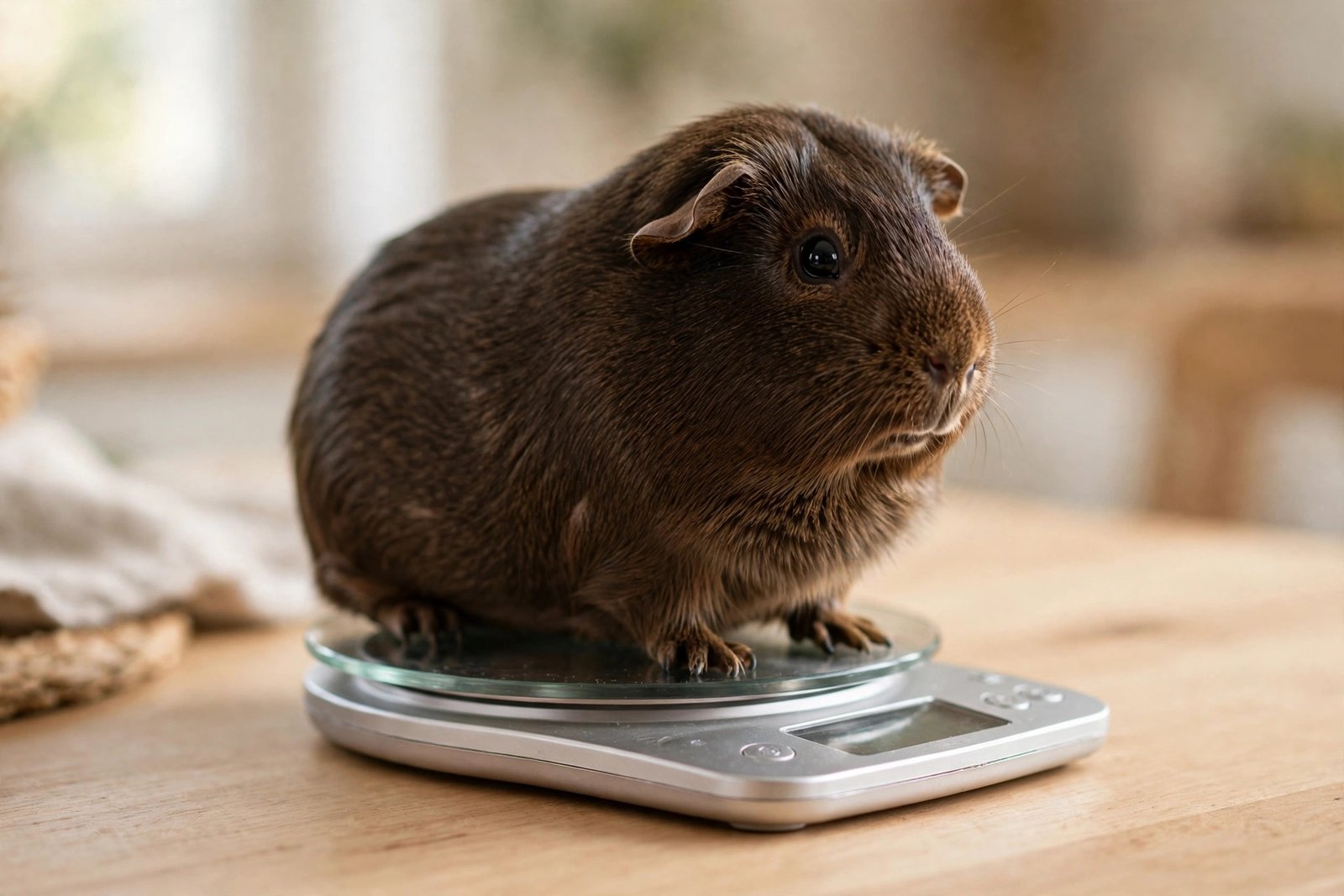
Weigh your guinea pigs weekly — it is the single best early-warning tool you have. A drop of 50–100g in a week deserves a vet visit; a sudden plunge, or a pig that feels bony along its spine, is urgent. Weight loss often flags dental disease or illness long before appetite visibly changes.
9. Discharge from eyes, nose, or bottom
Crusty or runny eyes, a snotty or clicking nose, or wetness around the rear end all point to infection that needs treatment. (Note: milky white eye fluid can occasionally be normal cleaning fluid, but yellow, green, or crusty discharge is not.)
“Call Now vs Watch Closely” — The Quick Decision Table
Not every symptom means a midnight emergency. Use this table to decide how fast to act:
| Sign | Action |
|---|---|
| Not eating for 12+ hours | Call the vet NOW |
| Noisy, laboured, or open-mouth breathing | Call the vet NOW |
| Bloated, drum-tight belly | Call the vet NOW |
| Limp, unresponsive, or unable to stand | Call the vet NOW |
| Seizure | Call the vet NOW |
| Bleeding that will not stop | Call the vet NOW |
| Head tilt, circling, falling over | Same-day vet visit |
| Sudden weight loss (50g+ in a week) | Vet visit within 24–48 hours |
| Crusty eyes or runny nose | Vet visit within 24 hours |
| Occasional sneeze, otherwise normal | Watch 24 hours; vet if it worsens |
| Slightly less active, still eating | Watch closely; vet if not normal tomorrow |
| Soft droppings but eating and drinking | Watch; vet if it persists |
Your Printable Emergency Checklist
Stick this summary on your fridge or save it to your phone for emergencies.
Call the vet immediately if you see:
- Not eating for more than 12 hours
- Laboured, noisy, or open-mouth breathing
- Swollen, tight, drum-like belly (bloat)
- Limp, floppy, or completely unresponsive
- Seizure
- Bleeding that will not stop
- Sudden collapse or inability to stand
Book a vet visit within 24 hours if you see:
- Head tilt, circling, or loss of balance
- Crusty or discharging eyes or nose
- Sudden weight loss of 50g or more in a week
- Refusing favourite foods but still nibbling hay
- Limping or bald patches and scabs
Watch closely at home (vet if it worsens):
- Occasional sneeze, otherwise eating and active
- Slightly quieter than usual for one day, still eating
- Soft droppings while eating and drinking normally
To understand the illnesses behind these symptoms, read our guide to common guinea pig illnesses — knowing what you may be dealing with helps you act faster.
What to Tell the Vet (Have This Ready)
Vets diagnose faster when you arrive prepared. Jot down:
- The main symptom and when it started — “stopped eating hay at 8 PM yesterday” beats “seems off”
- What the pig is still doing: eating, drinking, producing droppings?
- Breathing: normal, noisy, fast, or laboured?
- Recent weight: your last weekly weigh-in and any change
- Recent changes: new food, bedding, cagemate, or stress
- Current medication and the pig’s age, sex, and living arrangement
Film a short video of the concerning behaviour before you leave — it is worth a thousand words.
How to Find an Exotic Vet (Do This Before You Need One)
Not every vet treats guinea pigs well — many practices see mostly dogs and cats. Guinea pigs need a vet experienced with exotic animals, ideally one who treats rabbits and small mammals regularly. Do this homework now, while everyone is healthy:
- Find your nearest exotic vet today. Search “exotic vet near me” and call to confirm they treat guinea pigs — do not assume.
- Save two numbers: your regular vet AND the nearest 24-hour emergency clinic that accepts exotics — many do not.
- Ask about out-of-hours cover. Who do you call at 11 PM on a Saturday? Know before you need to know.
- Check costs. Exotic bills add up fast — ask about fees and consider insurance or a savings pot.
- Book a routine health check: you learn the route, meet the vet, and get a baseline check-up — without emergency panic.
What to Do While You Wait: First-Aid Basics
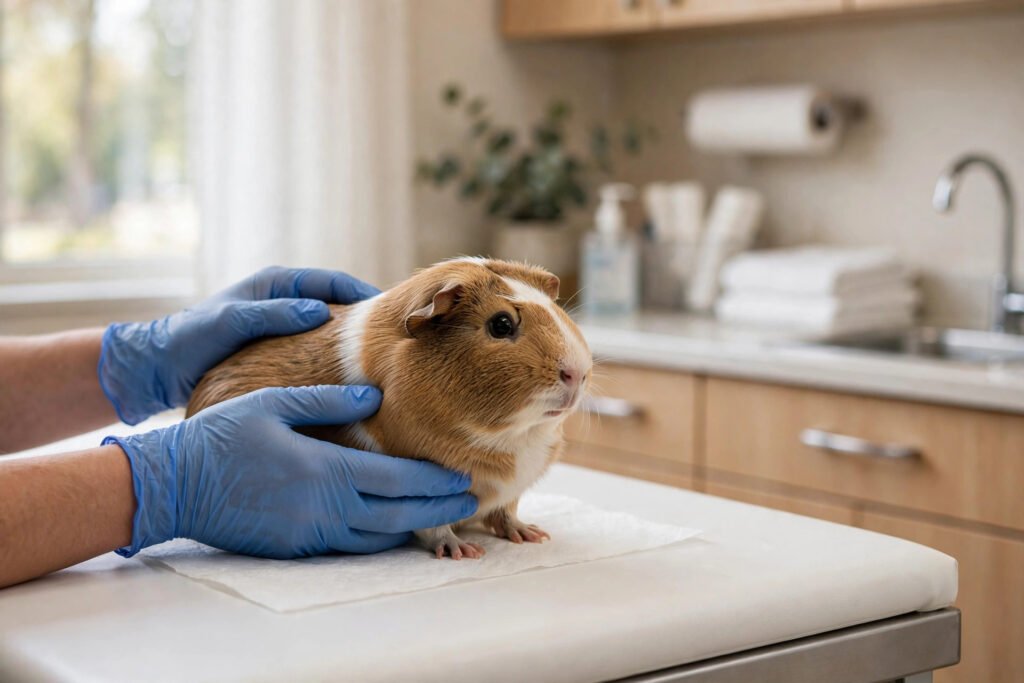
You cannot diagnose or cure your guinea pig at home — but you can keep it stable until the vet takes over.
1. Keep the pig warm
A sick guinea pig loses body heat fast. Place a warm (not hot) water bottle wrapped in a towel next to the pig — never directly on the skin, and always leave room for the pig to move away. Or hold the pig gently against your body under a blanket.
2. Syringe-feeding basics
If your pig has not eaten for hours and the vet is unavailable, syringe-feeding may be needed:
- What to feed: herbivore recovery food (keep a sachet at home), or soaked pellets blended to a thin paste. Never human food, bread, or dairy.
- How: use a 1ml syringe (no needle). Hold the pig upright, place the tip at the side of the mouth — not the front — and give 0.1–0.2ml at a time, letting the pig swallow between each bit. Go slowly: rushing causes choking.
- How much: a few millilitres every 1–2 hours until the vet advises otherwise. The gut must keep moving.
- Water too: offer water by syringe the same way if the pig is not drinking.
Ask your vet to demonstrate this at a routine visit, so you are confident before an emergency strikes.
3. Keep the pig calm and still
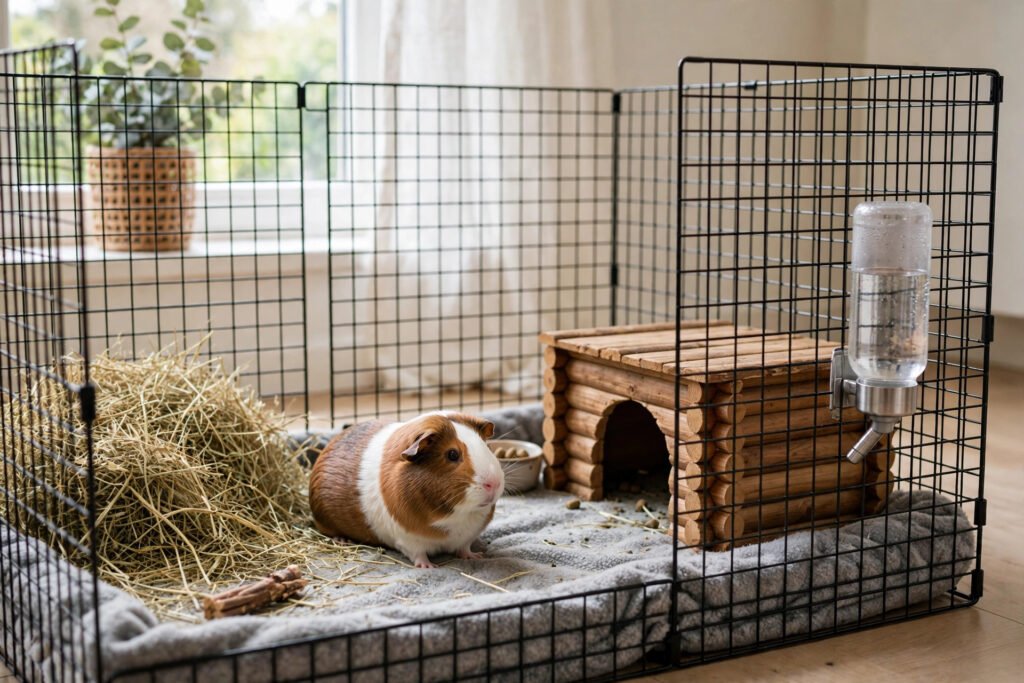
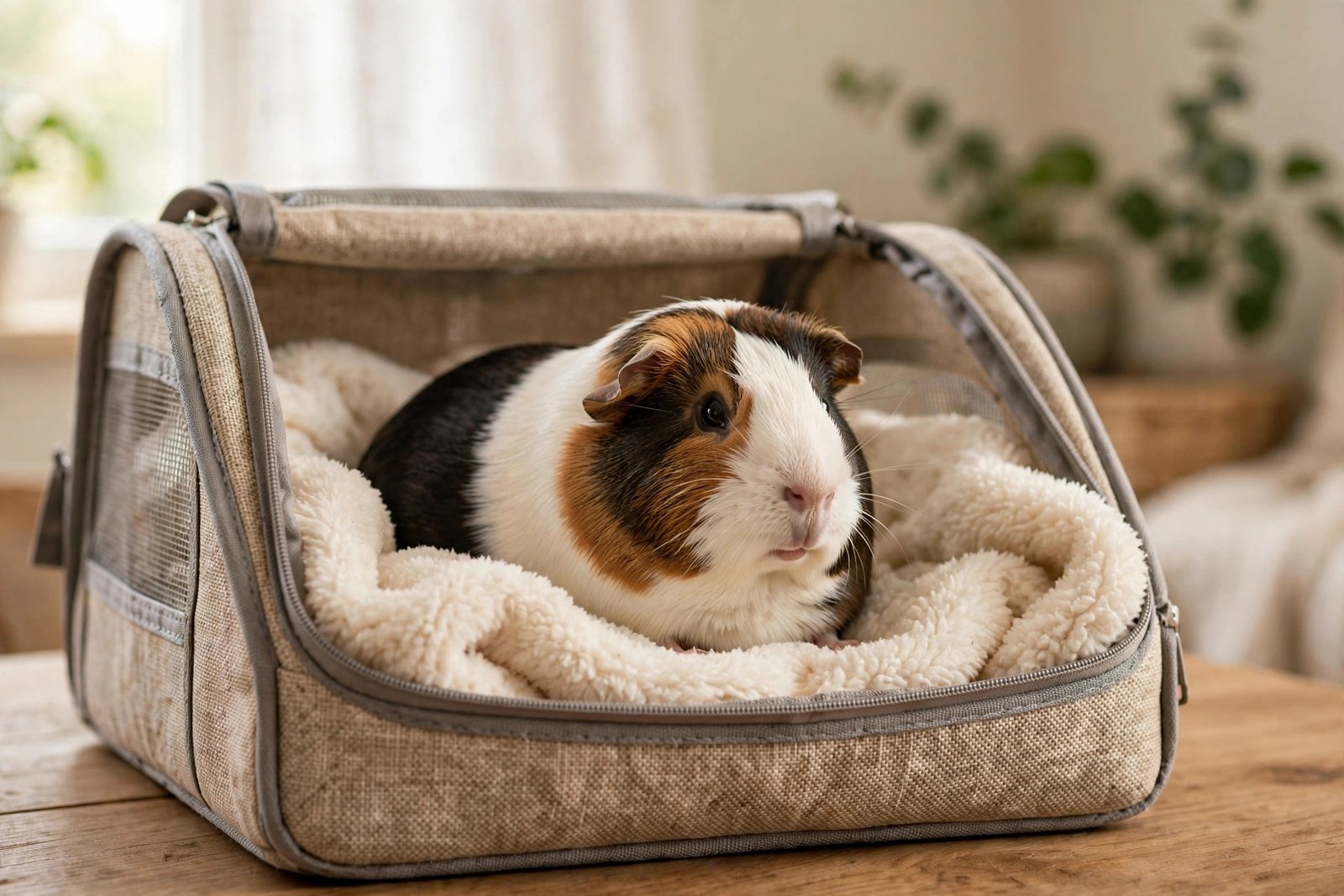
Move the sick pig to a small, quiet, dim space — a carrier lined with fleece works perfectly. Keep cagemates nearby for comfort but minimise handling: every pickup is stress for a fragile animal.
4. What NOT to do
- No human medicines — paracetamol and ibuprofen can be toxic to guinea pigs. No home pharmacy experiments, ever.
- Do not bathe a sick pig — the chill and stress can be dangerous.
- Do not force-feed large amounts quickly — food can enter the lungs.
- Do not “wait until morning” for any red-flag symptom — hours matter.
Getting to the Vet Safely
- Use a small, secure carrier lined with fleece — not the full cage.
- Add a wrapped warm water bottle on cold days, and cover the carrier with a light blanket.
- Bring hay, cucumber slices, and your symptom notes and video.
- Keep the car quiet: no loud music, no sudden braking. Talk softly.
- Bring the healthy companion along — a familiar friend reduces stress enormously.
Frequently Asked Questions
How do I know if my guinea pig is dying or just sick?
Owners should not try to make that call — a vet needs to. Act on the checklist above: any red-flag sign (not eating, laboured breathing, limpness, bloat) means urgent professional help, not a wait-and-see judgement call at home.
My guinea pig has not eaten for 6 hours but seems fine otherwise. Is that an emergency?
Not yet, but it is a warning. Offer favourite fresh foods and watch closely. If 12 hours pass with no eating — or the pig refuses even beloved treats — call the vet. If any other symptom appears, do not wait for the 12-hour mark.
Can I give my guinea pig anything for pain at home?
No — human painkillers can be toxic. If you suspect pain (hunching, teeth grinding, flinching when touched), keep the pig warm and quiet and get to the vet, who can prescribe guinea-pig-safe relief.
How much does an emergency guinea pig vet visit cost?
It varies by location, but expect an emergency consultation to cost more than a routine visit, plus treatment or medication on top. Finding your vet and understanding costs in advance — and considering exotic-pet insurance — is part of responsible ownership.
What should I keep in a guinea pig first-aid kit?
The essentials: a 1ml syringe (no needle), herbivore recovery food sachets, styptic powder for nail-trim nicks, a small digital scale for weekly weigh-ins, a warm water bottle, clean towels, and your vet’s and emergency clinic’s numbers saved in your phone.
My vet does not treat guinea pigs. What should I do?
Find an exotic vet using the steps above. In a true emergency, call your regular vet anyway and ask directly — many will stabilise an exotic animal and refer you on. But for ongoing care, a vet experienced with guinea pigs is strongly recommended.
The Bottom Line
Deciding when to take a guinea pig to the vet comes down to one instinct you should trust: if something feels wrong, act. Guinea pigs hide illness until they cannot, so “not eating,” “breathing oddly,” or “suddenly lifeless” are always emergencies — never things to sleep on. Keep this checklist handy, find your exotic vet before you need one, learn syringe-feeding, and weigh your pigs weekly. Most emergencies are survivable when caught early — and early starts with you noticing, and acting, in time.