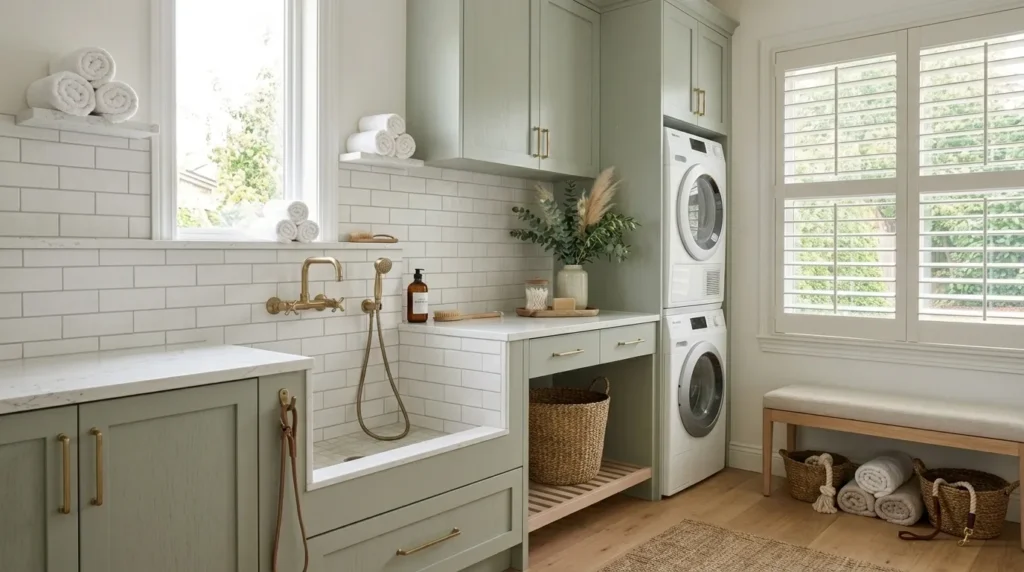
Dog shop design ideas combine the visual warmth of specialty retail — natural materials, considered lighting, botanical accents, a clear brand identity expressed through every surface — with the specific functional demands of a pet retail environment: durable surfaces, easy-clean materials, sensory-friendly layouts that work for dogs as well as their owners, and a merchandising system that communicates care and expertise rather than commodity. This article gives you exactly 21 ideas spanning interior design, display systems, lighting, flooring, branding, and customer experience so every dog shop finds the design language that fits its identity.
A dog shop done right feels like walking into someone’s very considered home — warm, specific, unhurried, full of things that were chosen rather than stocked. The dog is comfortable. The owner is comfortable. The products make sense in the space. That particular retail quality — where the environment itself communicates the values of the business — is what separates a dog shop that people return to from one they simply visit once. Here are 21 ideas worth saving — and building.
Why Trendy Dog Shop Design Ideas Work So Well
The specialty pet retail sector has undergone a fundamental design transformation since approximately 2015, when the first wave of boutique dog shops began applying the visual language of third-wave coffee bars and independent bookshops to pet retail — replacing the fluorescent-lit, wire-caged, product-density model of big-box pet retail with warm timber, curated product edits, botanical displays, and brand identities strong enough to carry merchandise, social media content, and community events simultaneously. This shift was driven by the documented premiumization of the pet industry: the American Pet Products Association reported pet industry spending exceeding $136 billion in 2022, with the fastest growth in premium and specialty categories — natural food, artisan treats, designer accessories, and behavioral wellness products — that both require and reward a retail environment capable of communicating their value.
The core material palette of contemporary dog shop design draws from the same sources as Scandinavian home retail, specialty food, and wellness-oriented hospitality: white oak and warm birch for shelving and fixture frames, exposed concrete or warm terrazzo for flooring, handmade ceramic for display vessels and signage accents, linen and natural canvas for softening fixtures and displaying textile products, matte black or warm brass for hardware and signage frames, and living plants — pothos, monstera, olive trees — as mandatory atmospheric elements rather than optional decoration. Color palette centers on warm neutrals (cream, oat, warm white, aged linen) with accent colors drawn from the brand identity rather than from generic retail convention — a dog shop’s accent color is a branding decision as much as a design one.
The design-forward dog shop model has proven commercially significant: independent pet retailers with intentional, Instagram-worthy interiors consistently report higher average transaction values, stronger customer loyalty, and greater word-of-mouth acquisition than generic pet stores of equivalent size and product range. The mechanism is well-documented in retail psychology — environments that communicate care, expertise, and aesthetic intentionality trigger a halo effect that extends to the products sold within them, increasing perceived product quality and willingness to pay premium prices. A natural treat displayed on a warm oak shelf beside a botanical accent reads differently than the same treat displayed in a wire basket under fluorescent light.
Small dog shop spaces — under 500 square feet, which describes the majority of independent pet boutiques — benefit particularly from intentional design because their limited floor area means every surface, fixture, and display works harder than in a large format store. The honest constraint: small spaces cannot support large-scale display systems, extensive in-store events, or grooming facilities without careful zoning. The ideas in this list include specific small-space adaptations and a scaling note for each concept where relevant.
Style at a Glance
| Element | Retail Function | Design Edge |
|---|---|---|
| Philosophy | Every detail communicates expertise | The shop earns its premium positioning |
| Materials | Oak, concrete, ceramic, linen | Brass hardware, botanical, handmade signage |
| Color Palette | Warm white, oat, warm charcoal | Brand accent, terracotta, sage green |
1. Warm White Oak Shelving System with Modular Display Bays

Vibe: The shelving feels authoritative — the rolling ladder alone communicates that this shop takes its curation seriously.
Why it works: A modular white oak shelving system with adjustable shelf heights applies the retail display principle of flexible density — shelves can be repositioned to accommodate seasonal product changes, new product categories, and varying package sizes without replacing the fixture system. The rolling brass library ladder is simultaneously functional (providing safe access to upper shelf product) and powerfully atmospheric — it references independent bookshops, apothecaries, and specialist retailers whose visual language communicates depth of knowledge and product range. White oak’s warm grain reads as premium and natural, which aligns with the natural food and wellness product categories that drive boutique dog shop revenues.
How to get it: Source white oak modular shelving from commercial shelving suppliers specializing in retail fixtures (Stylmark, Econoco, or similar) or commission bespoke wall-mounted oak shelving from a local joiner using a standard shelf pin system. Install a brass library ladder track at ceiling height using heavy-duty wall anchors into structural blocking — the track must support both the ladder weight and a climbing staff member. Aim for shelf spacing of 10–14 inches for most pet product packaging, with one deep lower shelf at 18-inch spacing for large-format bags.
Quick Win: A single rolling brass library ladder ($180–350) on an existing shelving system transforms the perceived character of the entire shop — it signals curation, depth, and expertise before a customer reads a single product label.
Shop The Look
| Product |
|---|
| White oak modular wall shelving retail fixture |
| Brass library ladder track system ceiling mount |
| Rolling library ladder retail wood |
| Adjustable shelf pin set commercial |
| Small olive tree potted indoor retail |
Also view: 13 Cheap Dog Run Ideas for Any Backyard
2. Exposed Concrete Floor with Warm Timber Inlay Zones

Vibe: The floor feels architectural — the kind of surface detail that tells customers the shop was designed, not just fitted out.
Why it works: Polished concrete flooring with timber inlay zones applies the retail design principle of material zoning — different floor materials subconsciously communicate different zones of the shop (entrance, food section, accessory section, grooming consultation area) without requiring signage. For a dog shop specifically, polished concrete is the most practical premium flooring available — it is seamless (no grout lines where waste can collect), completely waterproof, easy to clean, slip-resistant when sealed with a satin finish, and durable enough to withstand dog claws indefinitely. The timber inlay sections add warmth and define display areas without introducing the maintenance complications of full timber flooring in a wet environment.
How to get it: Commission a concrete microtopping or polished concrete finish from a specialist flooring contractor — microtopping (a thin cementitious coating applied over existing concrete or timber subfloor) is the most cost-effective route for a retrofit installation. Inlay timber sections by routing a 15 mm deep recess in the microtopping before it fully cures and pressing pre-finished oak plank sections into the recess. Seal the full floor with a non-slip commercial polyurethane sealer in satin finish rated for retail foot traffic.
Shop The Look
| Product |
|---|
| Concrete microtopping overlay retail floor |
| Oak plank flooring inlay section retail |
| Non-slip commercial floor sealer satin |
| Brass floor sign holder stand retail |
| Low display platform natural wood retail |
3. Botanical Living Wall Behind the Sales Counter

Vibe: The counter backdrop feels alive — a living brand statement that photographs beautifully and grows more impressive over time.
Why it works: A living plant wall behind the sales counter applies the retail design principle of focal point branding — the sales counter is the highest-dwell-time location in any retail space (every purchase passes through it), making its backdrop the most viewed and most photographed surface in the shop. A living plant wall at this location communicates the shop’s natural, wellness-oriented positioning through an environmental rather than a verbal statement — it shows rather than tells. Plant walls are also the most consistently shared retail interior element on social media, generating organic marketing content with every customer photograph taken at or near the counter.
How to get it: Install a modular felt pocket planter system (Woolly Pockets, LiveWall, or equivalent) on the counter backdrop wall, with an irrigation drip line built into the top row for semi-automatic watering. Plant with non-toxic-to-dogs species only — pothos (Epipremnum aureum), spider plant, Boston fern, and most succulents are safe and robust enough for an indoor retail plant wall. Mount the shop logo on a 6 mm clear acrylic panel centered in the planting for a floating branded element within the botanical backdrop.
Shop The Look
| Product |
|---|
| Modular felt pocket planter wall system retail |
| Drip irrigation kit indoor wall garden |
| Trailing pothos plant set retail installation |
| Clear acrylic panel 6mm sign mount custom |
| Spider plant set retail living wall |
4. Handmade Ceramic Treat Display Jars on Countertop

Vibe: The counter display feels artisanal — a market stall aesthetic that makes dog treats look like they belong in a deli.
Why it works: Displaying artisan dog treats in handmade ceramic jars applies the retail principle of material upgrade — the same treat displayed in plastic packaging and displayed in a handmade ceramic jar are perceived as significantly different products at significantly different price points, despite being identical. This is one of the most well-documented effects in premium retail design: the quality of the display vessel transfers to the perceived quality of the product within. Handmade ceramic’s natural glaze variation and matte finish also reads as genuinely artisanal (not mass-produced), which reinforces the boutique dog shop’s positioning as a curated, quality-focused alternative to the big-box pet store.
How to get it: Source handmade ceramic storage jars from independent potters (Etsy, local craft fairs, pottery studio open sales) in a consistent color palette — oat, sage, and warm charcoal create a cohesive counter display without identical matching. Write price and product cards in a consistent hand-lettered style using a fine Tombow brush pen on kraft card stock. Arrange on a single warm oak serving tray to contain the display and make it easily relocatable for counter cleaning.
Shop The Look
| Product |
|---|
| Handmade ceramic storage jar set cork lid |
| Oak wood serving tray large retail counter |
| Kraft card stock price card set |
| Fine brush pen black calligraphy retail |
| Dried botanical sprig display accent |
5. Matte Black Grid Wall Display System for Accessories

Vibe: The accessory wall feels organized and graphic — the matte black grid gives every product equal visual weight and makes the wall readable from across the shop.
Why it works: A matte black steel grid wall panel system applies the retail principle of maximum display flexibility at minimum fixture cost — the grid accepts any hook, shelf, basket, or clip-on display accessory, allowing the wall layout to be reconfigured in minutes as product range changes, seasonal displays rotate, or new accessory categories are introduced. The matte black finish creates the strongest possible contrast backdrop for products in any color, making accessories more visible and legible from a distance than they would be on a white or natural wood background. Grid systems are also the most cost-effective retail display option per square foot of wall coverage.
How to get it: Source matte black steel grid panels from retail display suppliers (available in standard 2×4 foot or 4×4 foot panels) and mount on studs using heavy-duty screws rated for the anticipated product load. Space panels 1 inch from the wall to allow hook depth clearance. Build a collection of display accessories (S-hooks, J-hooks, shelf brackets, wire baskets, clip-on sign holders) all in matte black for visual consistency. Label category zones with hand-lettered signs on kraft card clipped to the grid.
Shop The Look
| Product |
|---|
| Matte black steel grid wall panel retail display |
| Matte black display hook set retail |
| Wire basket set matte black grid display |
| Clip sign holder set matte black retail |
| Kraft card category sign set retail |
6. Sage Green Accent Wall with Gold Leaf Brand Lettering

Vibe: The brand wall feels earned — like the shop has existed long enough to warrant this level of permanence.
Why it works: A sage green accent wall with gold leaf brand lettering applies the interior retail design principle of the destination wall — a single wall in the shop designed as a photographic backdrop and brand statement that every customer engages with, consciously or unconsciously, during their visit. Dusty sage is among the most photographically flattering wall colors available, reading as warm and sophisticated in both natural and artificial light without color-shifting dramatically between the two. Genuine gold leaf (or high-quality imitation gold leaf) has a texture and luminosity that vinyl lettering and painted signs cannot replicate — it catches directional light and appears to shift between matt and luminous as the viewer moves, creating the premium material quality that supports a boutique positioning.
How to get it: Paint the accent wall in Benjamin Moore Saybrook Sage HC-114 or Sherwin-Williams Escape Gray SW 6185 in eggshell finish. Apply the shop name lettering using genuine imitation gold leaf (transfer gold leaf, not spray gold) — have a sign writer create the letter outlines in adhesive sizing, then apply gold leaf and burnish. A professional sign writer application runs $200–500 for a standard shop name; a skilled DIY application with transfer gold leaf and a sizing pen runs $40–80 in materials.
Shop The Look
| Product |
|---|
| Dusty sage interior paint eggshell quart |
| Transfer gold leaf sheet set imitation |
| Gold leaf adhesive sizing pen craft |
| Aged brass wall sconce set of 2 retail |
| Thin brass wall shelf display retail |
7. Dog-Height Welcome Zone with Water Station and Treat Bar

Vibe: The welcome zone feels genuinely dog-first — a shop that designed the entry for the actual customer.
Why it works: A dog-height welcome zone at the shop entrance applies the retail experience design principle of immediate value delivery — providing a tangible, memorable benefit (fresh water, a complimentary treat) within the first 30 seconds of a dog’s visit establishes an immediately positive association with the shop environment for the dog, which translates directly into calmer, more comfortable in-store behavior and a more relaxed shopping experience for the owner. It also signals unmistakably that this is not a shop that tolerates dogs but one that was designed around them — a fundamental positioning differentiation from general retail.
How to get it: Build the cedar welcome platform from 2×6 cedar decking boards on a 2×4 frame at 8 inches from floor level — the raised platform keeps the water station visible from across the shop and prevents the water bowl from being knocked by shopping foot traffic. Install a brass wall-mounted water bowl holder (equestrian or kitchen rail-style) at the platform back edge. Stock the treat bar with complimentary single-ingredient treats (freeze-dried chicken, dehydrated sweet potato) in the handmade ceramic jars from Idea 4.
Shop The Look
| Product |
|---|
| Cedar decking board 2×6 outdoor shop platform |
| Brass wall-mounted water bowl holder |
| Ceramic dog water bowl medium |
| Branded wooden welcome sign custom retail |
| Natural sisal linen floor mat retail entrance |
8. Warm Pendant Cluster Lighting Over Product Tables

Vibe: The product table feels gallery-like — the pendant cluster makes the display an event rather than a shelf.
Why it works: A pendant light cluster over a central product table applies the retail lighting principle of hero zone illumination — concentrating the warmest and most atmospheric light over the highest-margin or most curated product display transforms that table into the shop’s focal point and ensures it receives proportionally more customer attention than surrounding shelved products. Rattan pendant clusters specifically create a warm, hospitality-register light quality that is associated with premium café and restaurant environments, transferring that quality of experience to the retail context. Varied pendant heights within the cluster create visual movement that draws the eye upward and then back down to the products below.
How to get it: Install a ceiling canopy plate (a single electrical junction box cover with multiple cord exits, available from lighting suppliers) and hang five individual rattan pendants at varied heights — the tallest at 36 inches below ceiling, the shortest at 24 inches, with the three others distributed between. All on a single dimmer circuit so the cluster operates as a single adjustable lighting zone. Choose pendant cords in twisted black or natural jute for the most atmospheric finish.
Shop The Look
| Product |
|---|
| Rattan pendant light set 5 varied retail |
| Multi-cord canopy ceiling plate pendant |
| Dimmer switch retail lighting single circuit |
| Oak display table central island retail |
| Wooden riser set product display retail |
9. Reclaimed Wood Feature Wall with Brand Story Signage

Vibe: The feature wall feels storied — the material history of the reclaimed wood reinforces the narrative content of the brand story text.
Why it works: A reclaimed timber feature wall with brand story text panels applies the retail principle of environmental storytelling — using the physical environment to communicate the brand’s values, history, and purpose in a way that product labels and counter conversations cannot sustain. Reclaimed timber’s inherent visual narrative (weathered, used, repurposed) amplifies the authenticity of whatever text is mounted on it, making brand story claims about quality, sustainability, and care more credible than the same text on a printed poster. Warm directional spotlights raking across the uneven timber surface create dramatic texture shadows that make the wall visually compelling from every point in the shop.
How to get it: Source reclaimed timber planks from an architectural salvage yard or demolition material supplier — barn wood, scaffold boards, and reclaimed pine flooring all work well for feature walls. Install horizontally on a timber batten framework using cut nails for authentic character (not screws, which read as too precise against reclaimed material). Mount brand story text on 3 mm MDF panels painted to match the wall depth and attached with brass standoff fixings for a floating effect.
Shop The Look
| Product |
|---|
| Reclaimed timber plank set feature wall |
| Brass standoff wall mount sign hardware |
| MDF panel thin 3mm painted sign board |
| Directional spotlight retail track mount |
| Vintage dog breed illustration framed print |
10. Grooming Consultation Corner with Linen Curtain Privacy

Vibe: The consultation corner feels considered and personal — a shop that understands not every purchase decision is made in five minutes.
Why it works: A curtained grooming consultation zone applies the retail experience principle of private consideration — providing a defined, semi-private area for customers making significant grooming or care product decisions reduces the social pressure of public browsing and increases the likelihood of a considered, higher-value purchase. A ceiling-mounted curved track allows the curtain to define or open the space instantly, making the zone multifunctional (consultation, small events, staff briefings, product demonstrations). Linen curtain material maintains the shop’s warm, natural material palette while providing the soft visual separation that a partition wall would achieve far less elegantly.
How to get it: Install a curved ceiling track (hospital privacy curtain track in brushed nickel or matte black) in a corner configuration covering approximately 8×8 feet. Hang full-height linen panels in oat or undyed natural on the track using ring clips. Inside the zone, position a simple oak table (a standard dining table in 90×60 cm works well) and two upholstered chairs. Install a pendant light on a separate circuit inside the zone so it can be illuminated while the main retail floor light remains at its standard level.
Shop The Look
| Product |
|---|
| Curved ceiling curtain track privacy retail |
| Oat linen curtain panel full height |
| Ring clip curtain set retail |
| Small oak table retail consultation |
| Upholstered chair set retail consultation |
11. Chalkboard Menu Wall for Rotating Treat and Food Specials

Vibe: The chalkboard feels alive — a menu that changes tells customers something new happens here every week.
Why it works: A rotating chalkboard treat and food menu applies the retail principle of live discovery — giving customers a reason to look at the same wall surface on every visit because the content changes. Chalkboard menus communicate freshness and seasonality in the food-adjacent product categories (treats, raw food, baked goods) that drive repeat purchase behavior in boutique dog shops. The hand-lettered quality of a well-executed chalkboard is also a brand communication tool — the time investment in quality chalk lettering signals that the shop takes presentation seriously at every level, which transfers to how customers perceive the care taken in product selection.
How to get it: Apply chalkboard paint (three coats with a short-nap roller for a smooth writing surface) to a defined wall section framed by a simple timber border in the shop’s primary material. Season the board before first use and use chalk markers rather than stick chalk for weather-resistant, smear-proof lettering. Commission a local calligrapher or hand-lettering artist to create the initial menu layout and style guide, then train staff to maintain it weekly.
Shop The Look
| Product |
|---|
| Chalkboard paint quart matte black retail |
| Chalk marker set white fine and broad tip |
| Timber frame board border retail wall |
| Wall sconce light above chalkboard display |
| Fresh herb bunch display botanical retail |
12. Branded Paper Bag and Packaging Display as Visual Merchandising

Vibe: The packaging display feels proud — bags beautiful enough to display become a passive brand statement for every purchase carried out of the shop.
Why it works: Displaying branded packaging as a visual merchandising element applies the retail principle of walking advertising — every customer who carries a well-designed branded bag from the shop becomes a mobile brand ambassador within their community. For boutique dog shops specifically, where word-of-mouth and neighborhood visibility are primary acquisition channels, a distinctive, design-led bag that people want to carry (and photograph) generates disproportionate brand awareness relative to its cost. Displaying the bags openly at the counter also signals abundance and preparedness — a shop that displays its packaging has high transaction confidence.
How to get it: Commission branded kraft paper bags in three sizes (small, medium, large) from a print supplier offering minimum orders of 250 units per size — total cost typically $180–350 for a full set across sizes. Design the logo in two colors only (forest green and kraft-natural, or matte black and gold) for maximum print economy and visual impact. Display the bags in a simple tiered wooden rack (a wine rack or custom-built ladder rack) beside the POS terminal, open-topped with tissue paper visible in the top two sizes.
Shop The Look
| Product |
|---|
| Branded kraft paper bag set custom print |
| Tiered wooden display rack counter retail |
| Tissue paper set brand color retail |
| Branded sticker roll logo retail |
| POS display counter wood retail |
13. Breed Portrait Gallery Wall as Decor and Conversation Starter

Vibe: The gallery wall feels personal and collected — customers find their breed and feel seen, which is exactly the emotional register a great dog shop should create.
Why it works: A breed portrait gallery wall applies the retail customer experience principle of personal recognition — customers who find their dog’s breed illustrated on the wall experience a moment of personal connection with the shop that generic retail environments cannot produce. This connection generates dwell time (customers spend longer in shops where they feel personally acknowledged), repeat visits (customers bring friends and family to show them “their” portrait), and social media content (customers photograph their breed portrait with their dog). The vintage botanical illustration style is the most commercially versatile aesthetic for breed portraits — it reads as warm, expert, and classically authoritative rather than cute or novelty.
How to get it: Commission a set of breed portrait illustrations in a consistent vintage botanical style from an illustrator (budget $40–80 per illustration; a set of 20 popular breeds runs $800–1,600) or source a consistent existing illustration set from a stock illustration provider. Print at 8×10 or 10×12 inches on heavyweight matte fine art paper and frame in identical warm oak frames. Arrange in an organic grouping starting from one anchor (the largest portrait, centrally placed) and building outward, leaving 2–3 inches between frames.
Shop The Look
| Product |
|---|
| Dog breed illustration portrait print set |
| Warm oak picture frame set assorted sizes |
| Brass nameplate set small engraved |
| Fine art matte paper print set |
| Thin brass wall rod display connector |
14. Natural Wood Product Risers and Tiered Display Platforms

Vibe: The display feels composed — the risers do what a good photographer does, making every product the star of its own moment.
Why it works: Natural wood product risers apply the visual merchandising principle of display landscape — creating varied heights within a single shelf or table display ensures that products at the back are visible above products at the front, that no product is hidden behind another, and that the eye travels across the entire display rather than fixating only on the front row. Solid wood risers (not hollow MDF, which feels lightweight and cheap when customers touch them) communicate the same premium material quality as the shelving system, extending the shop’s material language into the display accessories. The natural finish allows the risers to recede visually and let the products advance.
How to get it: Turn solid wood risers from standard lumber on a lathe (cylindrical risers) or cut and sand from 4×4 or 6×6 lumber (rectangular risers) in a set of four heights: 3, 5, 8, and 12 inches. Sand to 220 grit and finish with raw linseed oil for a natural, food-adjacent safe surface. Build a set of at least 8 risers in the two forms for maximum display flexibility across the shop’s shelf and table surfaces.
Shop The Look
| Product |
|---|
| Solid wood riser set display retail natural |
| Raw linseed oil finish wood natural |
| Cylindrical wood riser set retail display |
| Rectangular wood block riser set retail |
| Small dried botanical stem display accent |
15. Custom Scent Branding with Diffuser in Retail Entrance

Vibe: The entrance feels sensory and specific — a shop that has a smell is a shop that has a memory.
Why it works: A custom scent diffuser at the shop entrance applies the retail sensory marketing principle of olfactory branding — scent is processed by the limbic system (the brain’s emotional center) faster than any other sensory input, and a consistent, distinctive shop scent creates a more reliable emotional memory anchor than visual branding elements alone. Research by retail sensory marketing specialists including the Sense of Smell Institute has consistently found that a pleasant, appropriate scent in a retail environment increases dwell time, perceived product quality, and purchase intent. For a dog shop specifically, the scent should be clean and botanical (lavender, cedar, citrus) rather than food-based (which can over-stimulate dogs) or floral (which may be off-putting to dogs with sensitive noses).
How to get it: Commission a custom scent blend from a specialist fragrance house — describe the shop’s brand values (natural, warm, trustworthy, premium) and request a blend in the clean botanical register. Standard fragrance house minimum orders for bespoke blends start at $200–400. Use a passive ceramic diffuser (reed or stone) rather than an ultrasonic diffuser in a dog-frequented environment — ultrasonic diffusers release fine water particles that some dogs find irritating, and essential oils at high concentration can be toxic to dogs. Position the diffuser at human nose height (approximately 4–5 feet from the floor) rather than dog nose height.
Shop The Look
| Product |
|---|
| Handmade ceramic diffuser reed set matte |
| Brass shelf bracket small wall mount |
| Custom scent blend botanical clean retail |
| Branded scent card set retail |
| Dried lavender bundle display botanical |
16. Dog Photo Wall — Customer Pet Portrait Installation

Vibe: The photo wall feels communal — proof that this shop has regulars who love it enough to become part of it.
Why it works: A customer dog photo wall applies the retail community-building principle of social proof through participation — a wall covered in photographs of regular customers’ dogs communicates more powerfully than any marketing claim that this is a shop with a genuine, loyal community. New customers see the wall and want their dog to be on it; existing customers bring friends to show them their dog’s photograph; the wall generates social media content every time a customer photographs their dog’s portrait. The Polaroid format (either a genuine Instax Polaroid camera available in-store, or Polaroid-format printed photos from digital images) maintains the warm, analog quality that aligns with the boutique dog shop aesthetic.
How to get it: Install a Fujifilm Instax Wide camera and a supply of film at the counter, and offer to take a photograph of every new regular customer’s dog on their second visit (the first visit establishes the relationship; the second confirms regularity). Print the photograph, write the dog’s name, and pin to the wall with a brass map pin. The wall starts empty and grows organically — the active, growing quality of the display is as important as its eventual fullness.
Shop The Look
| Product |
|---|
| Fujifilm Instax Wide camera retail counter |
| Instax Wide film pack retail |
| Brass map pin set photo wall |
| Hand lettered sign “our regulars” retail |
| Small shelf display retail wall mount |
17. Small-Space Dog Shop Design Using Vertical Merchandising

Vibe: The small shop feels abundant — every inch considered, the ceiling itself part of the merchandising.
Why it works: A small dog shop (under 400 square feet) applying vertical merchandising — using the full wall height from floor to ceiling and the ceiling plane itself for hanging displays — applies the retail principle of perceived abundance through vertical expansion. Customers in a well-merchandised small shop rarely feel the space is inadequate; they feel it is curated and concentrated. Keeping the floor area clear (only one central island, no floor-standing display units) maximizes the usable floor space for customer and dog circulation, which is the primary functional requirement of a dog-welcoming retail space. Track lighting on the ceiling allows directional spots to be aimed at any shelf zone and repositioned as the display layout changes.
How to get it: Install shelving to ceiling height on all available walls using a floor-to-ceiling shelving system with a single rolling ladder on a brass track that can be moved to any bay. Use the ceiling for lightweight hanging displays — macramé product hangers, rope nets displaying bandanas and collars, and pendant lights — mounted from ceiling hooks installed into structural joists. Keep the central floor area completely clear except for one oak island table, which can be repositioned or removed for events.
Shop The Look
| Product |
|---|
| Floor-to-ceiling retail shelving system wall |
| Track lighting retail ceiling adjustable |
| Macramé product display hanger ceiling retail |
| Rope net display hanging retail ceiling |
| Ceiling hook heavy duty structural joist |
18. Seasonal Window Display with Botanical and Lifestyle Styling

Vibe: The window feels curated and seasonal — a shop that changes its window tells the street something new is always happening inside.
Why it works: A seasonally rotated botanical lifestyle window display applies the retail principle of active brand presence on the street — a window display is a shop’s most public communication tool, visible to everyone passing regardless of whether they intend to enter. A lifestyle-styled window (products arranged with botanical and contextual props that tell a story rather than simply displaying items) communicates brand sophistication and product curation in the 3–5 seconds of attention a passing pedestrian typically grants a shop window. Rotating the display seasonally gives regular passers-by a new reason to look each season, and the botanical quality of the styling reads as premium and natural from the street.
How to get it: Plan seasonal window displays four times per year (spring, summer, autumn, winter) with a consistent visual formula: one hero product, two supporting products, a botanical prop arrangement, a lighting element (fairy lights, a single Edison bulb), and one text element (a handwritten “new in” or seasonal message card). Budget $40–80 per seasonal window in prop materials; the products on display are part of the inventory. Photograph every window display for social media content — a well-styled window generates 3–5 posts of content per seasonal installation.
Shop The Look
| Product |
|---|
| Dried grass bundle display botanical retail |
| Dried rose hip branch display autumn |
| Battery fairy light set warm white retail |
| Framed new arrivals sign retail display |
| Small pumpkin set display autumn prop |
19. Natural Rope and Macramé Product Display for Accessories

Vibe: The accessory display feels handmade — as if the display and the products share the same material philosophy.
Why it works: A macramé and natural rope accessory display applies the retail principle of material philosophy alignment — when the display method shares the material language (natural fiber, handmade, organic texture) of the products displayed within it, the display amplifies rather than contradicts the product’s positioning. A bandana displayed on a chrome wire rack reads as one kind of product; the same bandana draped from a natural macramé hanging reads as something more considered and worth wearing. The handmade quality of macramé also creates a visual focal point that customers photograph, generating social media content from the display itself rather than only from the products.
How to get it: Commission a macramé ceiling display structure from a local fiber artist — a ceiling-hung macramé display approximately 60×80 cm with 8–10 knotted sections for draping accessories runs $80–150 from an independent maker. Incorporate small wooden dowels or copper rings as hanging points for leash coils. Mount from the ceiling using heavy-duty hooks into structural joists rated for the weight of the structure plus loaded accessories.
Shop The Look
| Product |
|---|
| Natural macramé hanging display structure custom |
| Copper ring set display hanging accessory |
| Natural cotton rope display hanger |
| Cotton twine price tag tie retail |
| Trailing pothos plant small pot retail |
20. Interactive Treat Tasting Station for Dogs

Vibe: The tasting station feels generous and playful — a shop confident enough in its products to let the dog decide.
Why it works: An interactive dog treat tasting station applies the retail principle of experiential purchase confidence — allowing dogs to taste treats before their owners purchase converts a skeptical consideration into a confident sale, particularly for premium-priced natural treats where the purchase barrier is primarily price rather than awareness. The tasting station also serves as a guaranteed dwell-time generator — a dog engaged with a tasting station stays in the shop longer, which gives the owner more time to browse, discover, and purchase. The low counter height (24 inches) is the critical design specification — the station must be at dog-accessible height to function as an interactive feature.
How to get it: Build the tasting counter from a solid oak butcher block section (90×45 cm) on a simple steel base frame at 24-inch height. Install five individual shallow ceramic dishes (saucers, small tapas dishes) on a tray, each with a different complimentary treat sample. Position directly adjacent to the treat and food shelving so that the transition from tasting to purchasing is immediate and uninterrupted. Rotate the featured treats weekly to give regular customers a new discovery experience on each visit.
Shop The Look
| Product |
|---|
| Oak butcher block counter section retail |
| Small ceramic sample dish set 5 piece |
| Handwritten product card set retail |
| Branded “today’s tasters” sign retail |
| Small herb plant pot retail counter |
21. Loyalty Card and Membership Experience at the Counter

Vibe: The loyalty display feels analog and intentional — a physical card in a wallet is a daily brand presence that a digital app never quite replicates.
Why it works: A beautifully designed physical loyalty card program applies the retail principle of tangible brand continuity — a well-designed loyalty card that customers carry in their wallet is a daily reminder of the shop’s existence and their relationship with it. For boutique dog shops where repeat purchase is the primary revenue model (food, treats, grooming products purchased monthly or more frequently), loyalty program conversion is among the highest-return marketing investments available. The physical card format, particularly when the card itself is designed as a beautiful object (heavy kraft stock, embossed logo, quality printing), communicates the same premium brand values as every other material choice in the shop.
How to get it: Print loyalty cards on 350 gsm natural kraft card stock with embossed logo (minimum order 500 cards, typically $80–150 from a specialty print supplier). Use a traditional ink stamp rather than a digital scanning system — the physical stamping ritual creates a micro-engagement moment at every purchase that digital systems eliminate. Display in a simple oak card holder beside the POS with a handwritten loyalty program explanation card. Reward every tenth purchase with a defined free product (a treat bag or a bandana) rather than a discount, which maintains margin while delivering a tangible reward.
Shop The Look
| Product |
|---|
| Kraft card stock loyalty card print set |
| Wooden card holder display retail counter |
| Brass stamp stand retail desk |
| Ink stamp custom logo retail |
| Branded cotton tote bag retail shop |
How to Start Your Dog Shop Design Transformation
The single best first move is replacing existing overhead fluorescent lighting with warm-toned pendant lights or track lighting before changing any display, material, or color element in the shop. Lighting is the atmosphere that everything else operates within — the same products, the same shelving, and the same botanical accents look completely different under warm amber pendant light (2700K) than under cool-white fluorescent (4000K or higher). This single change, achievable in a day with an electrician and a pendant cluster or track system, transforms the entire retail environment’s emotional register and is the prerequisite for every other design improvement being visible and effective.
The most common dog shop design mistake is using too many accent colors in an attempt to appear friendly and playful — a wall of branded colors (a blue section here, an orange section there, a red display over there) produces a visual noise that reads as budget retail rather than premium boutique, regardless of the quality of the products. The fix is rigorous color limitation: one wall color for the main space, one accent color for the brand wall, natural materials (oak, cork, linen, concrete) for all other surfaces. The brand’s accent color appears in signage, packaging, and small accessories — not on walls, shelving, or flooring.
Three specific items under $50 that immediately elevate any dog shop’s visual quality: a set of four handmade ceramic jars for the treat counter display ($28–45 from a local potter or Etsy); a roll of natural kraft card stock and a Tombow brush pen ($15–22) for consistent hand-lettered price cards throughout the shop; and a bag of dried botanicals in the warm neutral range (dried grasses, rose hips, chamomile) ($12–18) for accent decorations across shelving and displays.
A complete visual refresh of an existing dog shop — new lighting, consistent signage, natural accessory upgrades, and a botanical program — is achievable over one weekend (lighting and signage) extended by one further month (plant program establishment and full display reset) for $800–2,500 in materials and contractor costs. A full new-build dog shop fit-out including custom joinery, polished concrete flooring, living plant wall, and complete brand material program represents a $15,000–45,000 investment depending on size and specification. The lighting change and the handmade ceramic treat counter can be done for under $200 this week and will generate visible results on the same day they are installed.
Frequently Asked Questions About Dog Shop Design Ideas
What design style works best for a boutique dog shop interior?
The most commercially successful boutique dog shop aesthetic is warm Scandinavian-influenced natural retail — white oak shelving, warm pendant lighting, botanical accents, handmade ceramics, and a restrained palette of warm neutrals with one brand accent color. This aesthetic communicates natural product values, premium positioning, and genuine care simultaneously, which aligns with the purchasing motivations of boutique dog shop customers (quality, naturalness, community, and expertise). Japanese-influenced minimalism works for very high-end positioning but can read as cold in a dog-welcoming environment where warmth and comfort are functional requirements. Industrial loft aesthetics work well as a secondary influence (exposed concrete, matte black grid walls) but should be warmed with natural materials to avoid reading as pet supply warehouse rather than pet boutique.
How much does a boutique dog shop interior fit-out cost?
A minimum viable boutique dog shop fit-out — modular shelving, warm lighting, a custom counter, basic signage, and a botanical program — runs $8,000–18,000 for a 300–500 square foot space, depending on material quality and whether joinery is custom or modular. A mid-range boutique fit-out with custom joinery, polished concrete flooring, a living plant wall, and professional brand implementation runs $20,000–40,000. A premium fit-out with bespoke furniture, specialist lighting design, custom scent branding, and architectural features (arched display niches, feature ceilings) runs $45,000–90,000. The highest-return investments across all budget levels are lighting (immediate atmosphere impact), the treat display counter (immediate transaction value impact), and the brand wall (immediate social media content generation).
What flooring is best for a dog-welcoming shop?
Polished or sealed concrete is the best flooring for a dog-welcoming retail environment because it is seamless, fully waterproof, easy to clean, slip-resistant when properly sealed, and durable against dog claws. Luxury vinyl tile (LVT) in a warm oak or concrete-look finish is the most cost-effective alternative — fully waterproof, scratch-resistant, comfortable underfoot for dogs, and available in formats that closely approximate natural material aesthetics. Avoid unsealed natural timber (scratches, moisture damage, difficult to clean), ceramic tile with grout lines (waste accumulates in grout, difficult to fully sanitize), and carpet (unhygienic in any pet retail environment). Whatever flooring is chosen, ensure the surface sealer or finish achieves at least R9 slip resistance rating — dogs and wet paws on a slippery floor are both a safety hazard and a liability.
How do you design a dog shop that works for both the dog and the owner?
A dog-friendly shop design addresses four simultaneous requirements: the dog’s sensory comfort (no high-pitched electronic noise, no strongly fragrant products near the entrance, non-slip flooring, water available), the dog’s spatial comfort (clear circulation paths of at least 36 inches width, no low-hanging displays at dog head height, a designated settling area with a mat), the owner’s shopping comfort (clear sight lines across the shop floor to monitor the dog while browsing, product information at eye height, a counter height that allows securing a leash while completing a transaction), and the product presentation standards of premium retail (warm lighting, natural materials, curated display). These requirements are not in tension — a shop designed well for the dog (calm, uncluttered, navigable) is identical to a shop designed well for a focused adult shopper.
What are the most important small-space dog shop design principles?
In a dog shop under 400 square feet, four design principles are most critical: vertical merchandising (use full wall height to ceiling; keep the floor as clear as possible for dog and customer circulation); material concentration (fewer materials used consistently produce a more premium result than many materials used across small areas — choose oak, white, and one accent color and apply them everywhere); lighting intimacy (warm pendant or track lighting that creates zones rather than flat overhead illumination makes small spaces feel considered and warm rather than cramped); and one hero moment (every successful small shop has one feature that customers mention when describing it to friends — a rolling brass ladder, a living plant wall, a breed portrait gallery — invest in one outstanding feature rather than distributing budget evenly across many adequate ones).
Ready to Build Your Dream Dog Shop Design?
These 21 ideas move through every dimension of what makes a dog shop design genuinely work — from the foundational material choices of white oak shelving and polished concrete flooring, to the atmospheric power of warm pendant clusters and custom scent branding, to the community-building magic of a customer dog photo wall and an interactive treat tasting station, to the small-space intelligence of vertical merchandising and a curtained consultation corner. Starting with the lighting is not a compromise beginning — it is the single change that makes every other element immediately more effective, because warmth is not a quality of the products or the shelving but of the light that falls across them. Replace the overhead fluorescent fixtures with warm pendant lights this week, and the shop will feel different before the weekend. Pin the ideas that match your shop’s identity and your customers’ expectations, and return to the larger investments — the living plant wall, the custom joinery, the rolling brass ladder — as each season brings new reasons to invest in a space that your customers, and their dogs, genuinely love to return to.