
Safe fruits for guinea pigs make wonderful occasional treats. Guinea pigs are cute little pets who love snacking on fresh food. But when it comes to fruits, not everything is safe. Some fruits are healthy, while others can cause health problems. If you’re wondering what fruits your guinea pig can eat safely, here’s a simple and complete guide.
Why Fruits Matter for Guinea Pigs
Fruits are full of natural vitamins, minerals, and hydration that keep guinea pigs healthy. Especially vitamin C, which they can’t produce on their own. Without it, guinea pigs can get weak or sick. Adding small pieces of fresh fruit helps improve their immunity and digestion while keeping their meals fun and tasty.
Safe Fruits for Guinea Pigs
Let’s look at some fruits your guinea pig can enjoy without worry — but always in small amounts.
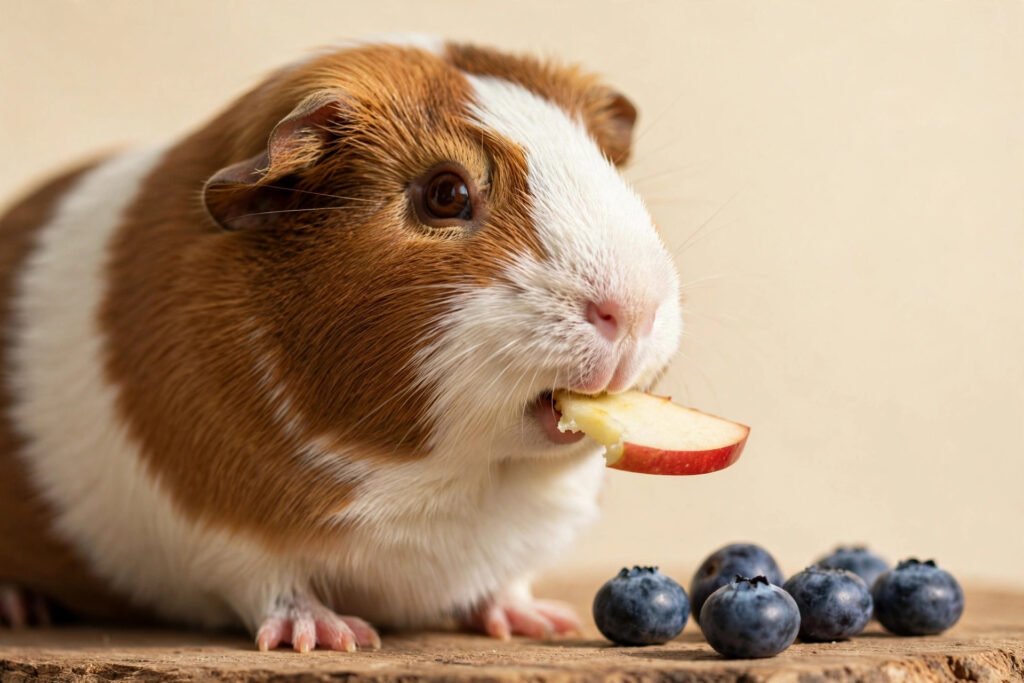
Apples (without seeds) – Crunchy and full of fiber. Just make sure to remove the seeds.
Strawberries – Soft, sweet, and rich in vitamin C. Give one or two slices once or twice a week.
Blueberries – Low in sugar and high in antioxidants. Great for occasional treats.
Oranges – Contain vitamin C but are acidic, so offer just a small segment.
Papaya – Helps with digestion and supports immunity. A small cube is enough.
Kiwi – Tasty and full of nutrients but feed only a thin slice.
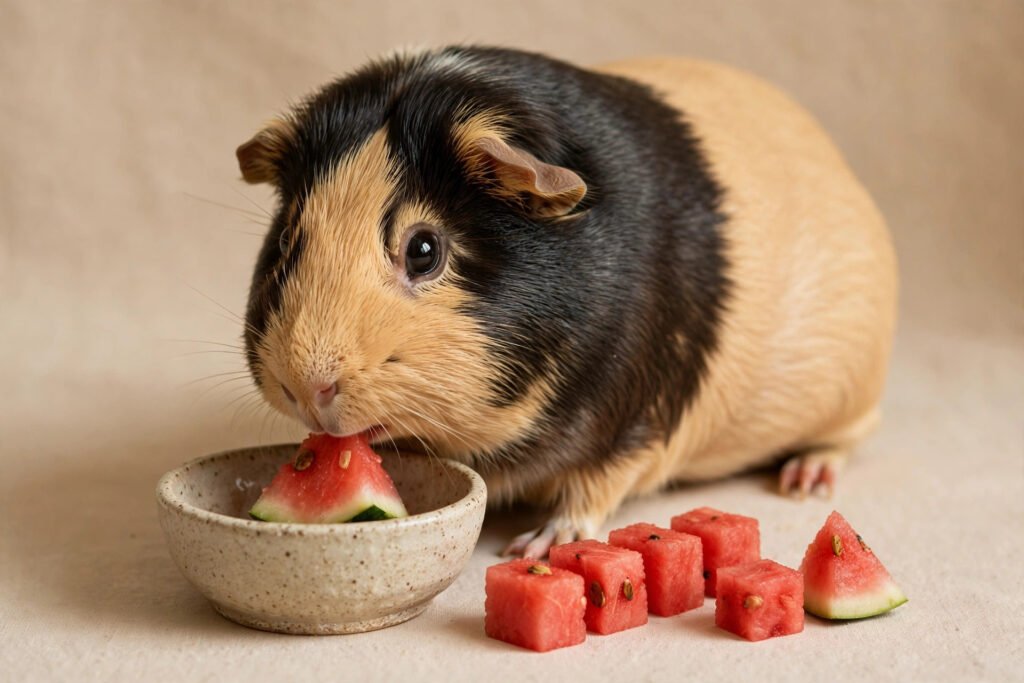
Watermelon – Refreshing and hydrating for hot days. Give the red part only.
These fruits are safe when given in moderation and can be part of a balanced guinea pig diet.
Fruits You Should Avoid
Some fruits may seem harmless but can actually be harmful to guinea pigs.
Avoid feeding:
- Grapes and raisins (can upset digestion)
- Mango (too much sugar)
- Pineapple (too acidic)
- Cherries (seeds are dangerous)
Too much sugar or acid can cause gas, bloating, or obesity. Always stay cautious when introducing new fruits.
How Often to Feed Fruits
Fruits should not be a daily part of your guinea pig’s diet. Their main food should be fresh hay, vegetables, and water. Offer fruits two to three times a week as a special treat. Small bites are enough — their tiny stomachs can’t handle too much fruit at once.
Tips for Feeding Fruits Safely
To make sure your guinea pig stays healthy:
- Wash fruits properly before feeding.
- Remove all seeds, stems, and tough skins.
- Start with small portions and see how your pet reacts.
- Never feed fruits from cans or those with added sugar.
Fresh and clean fruit in small amounts is always the safest choice.
Final Thoughts
Fruits make great treats for guinea pigs when given carefully. Apples, strawberries, and papaya are some of the safest and most loved options. Always remember — balance is key. A good diet with hay, veggies, and the right amount of fruit will keep your guinea pig active, healthy, and happy every single day.
FAQs: Safe Fruits for Guinea Pigs
Can guinea pigs eat apples? Yes, apples are among the safest fruits for guinea pigs. Remove all seeds and the core, then offer a thin slice once or twice a week. The fibre and vitamin C make apples a healthy occasional treat.
What is the safest fruit for guinea pigs? Strawberries and blueberries top the list of safe fruits for guinea pigs. They are low in sugar, rich in vitamin C, and most guinea pigs love them. Serve one or two berries a couple of times per week.
Can guinea pigs eat bananas? Yes, but only rarely and in tiny amounts. Bananas are very high in sugar, so a small coin-sized piece once a week is plenty. Too much banana can cause digestive upset and weight gain.
Which fruits are dangerous for guinea pigs? Avoid grapes, raisins, cherries (seeds are toxic), and citrus in large amounts. Also skip canned or dried fruits with added sugar. When in doubt, stick to the safe fruits for guinea pigs listed above.
Want more expert guinea pig diet advice? Check the RSPCA’s guinea pig welfare guide, our complete safe foods list, and the best bedding guide for a clean, healthy cage.

2 Responses