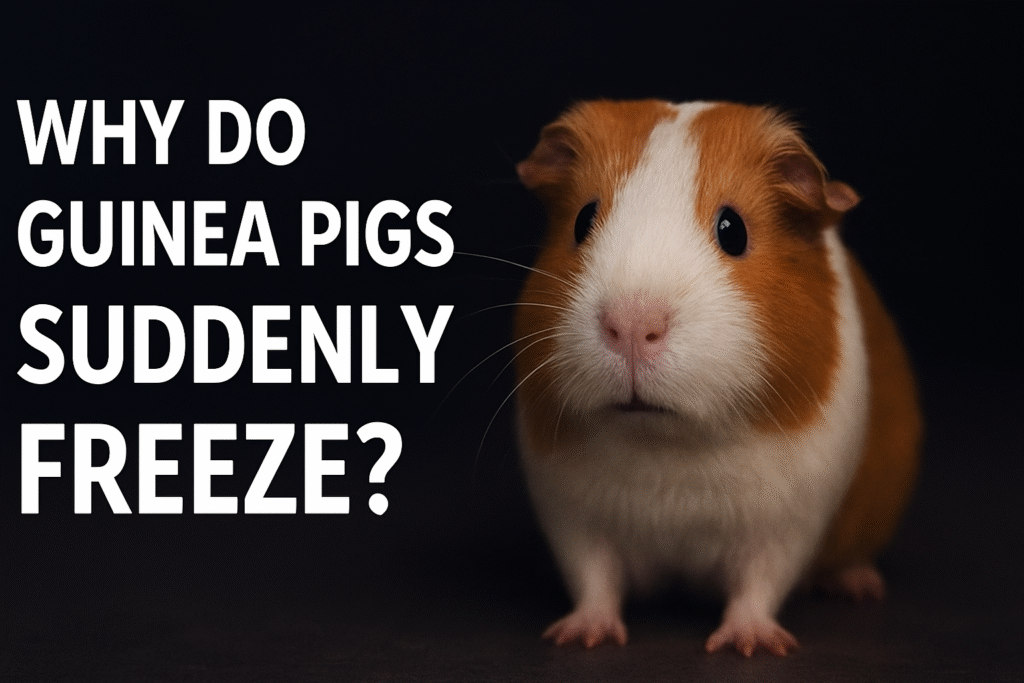
If you’ve ever seen your guinea pig suddenly stop moving, stand still, and stare without blinking, you’re not alone.
Guinea pigs “freeze” more often than you think — and it can look scary to new owners. But in most cases, it’s a totally normal instinct.
In this guide, you’ll learn exact reasons why guinea pigs freeze, what each freezing moment means, and exactly what you should (and shouldn’t) do.
Let’s begin.
1. Freezing Is a Natural Survival Instinct
In the wild, guinea pigs are prey animals.
When they sense danger, they don’t run immediately — they freeze first.
Freezing helps them:
- avoid being noticed
- listen for danger
- decide whether to run or stay
Your guinea pig may freeze even if there is no danger. Their survival instinct is simply always active.
2. They Heard a Sudden or Unfamiliar Sound
A small sound that humans ignore can feel huge for guinea pigs.
They may freeze if they hear:
- keys jangling
- footsteps
- door closing
- kids shouting
- phone ringing
- TV or music bass
- water tap opening
Freezing helps them figure out whether the sound is safe or not.
What to do:
Stay quiet for a few seconds and let them relax. Don’t touch or pick them up during the freeze moment.
3. They Smell Something New
Guinea pigs have a sensitive nose.
A new smell in the room — perfume, cleaning spray, food aroma, another pet — may trigger freezing.
They freeze to identify the scent and check if it’s safe.
4. They Saw a Sudden Movement
Fast movement can scare them instantly:
- someone walking quickly
- you waving your hand
- phone suddenly lifted
- another guinea pig running
They freeze to stay unnoticed.
Tip: Always approach guinea pigs slowly from the front, never from above.
5. They’re Observing You Carefully
Sometimes freezing is not fear — it’s curiosity.
Your guinea pig may freeze to:
- study your movement
- wait for food
- understand what you’re doing
If you see their ears forward and eyes wide but not scared, they’re simply “checking things out” like a tiny detective.
6. They’re Trying to Blend Into Their Environment
Guinea pigs think that staying still makes them invisible.
So if they sense anything uncertain, they freeze to “camouflage” themselves.
This usually happens when:
- you enter the room suddenly
- they are outside the cage
- a new item is placed in their cage
7. They’re Nervous in a New Environment
New cage, new bedding, new hideout, or even rearranged cage layout can make them freeze more often.
Change = confusion.
Give them 24–48 hours to adapt.
8. They Feel Your Presence but Don’t Trust Fully Yet
If your guinea pig is not fully bonded with you, freezing is common.
This is a sign of:
- insecurity
- lack of confidence
- need for more bonding time
What helps:
- offering treats gently
- sitting near the cage quietly
- talking softly
With time, freezing decreases as trust grows.
9. They Sense Another Pet Around
Even if your dog or cat doesn’t touch them, guinea pigs will freeze if they sense a predator nearby.
They detect:
- smell
- movement
- footsteps
- breathing
Keep other pets away from their cage area.
10. They’re Listening Carefully For Danger
Sometimes freezing is not fear — it’s deep listening.
Guinea pigs stop everything to focus on distant sounds like:
- birds
- cars
- wind
- insects
- outside voices
Their hearing is extremely sharp.
How Long Is Freezing Normal?
A few seconds to 1 minute is completely normal.
If they freeze for several minutes regularly, it may mean:
- they’re too scared
- environment is too loud
- they need more hiding spots
What You Should Never Do When a Guinea Pig Freezes
Don’t pick them up
Don’t shake their cage
Don’t make loud noises
Don’t move fast in front of them
During freezing, they’re in survival mode. Sudden interaction can increase stress.
When Freezing Is NOT Normal
If they freeze AND show these signs, something is wrong:
- heavy breathing
- teeth grinding
- shaking
- refusing to move for long
- hiding all day
This can mean stress or illness. Observe carefully or consult a small-pet vet.
Conclusion
Guinea pigs freeze because it’s their natural way of detecting danger and staying safe.
Most freezing moments last only a few seconds and are completely normal.
With a calm environment, slow movements, gentle bonding, and hiding spaces, your guinea pig will feel safer and freeze less over time.