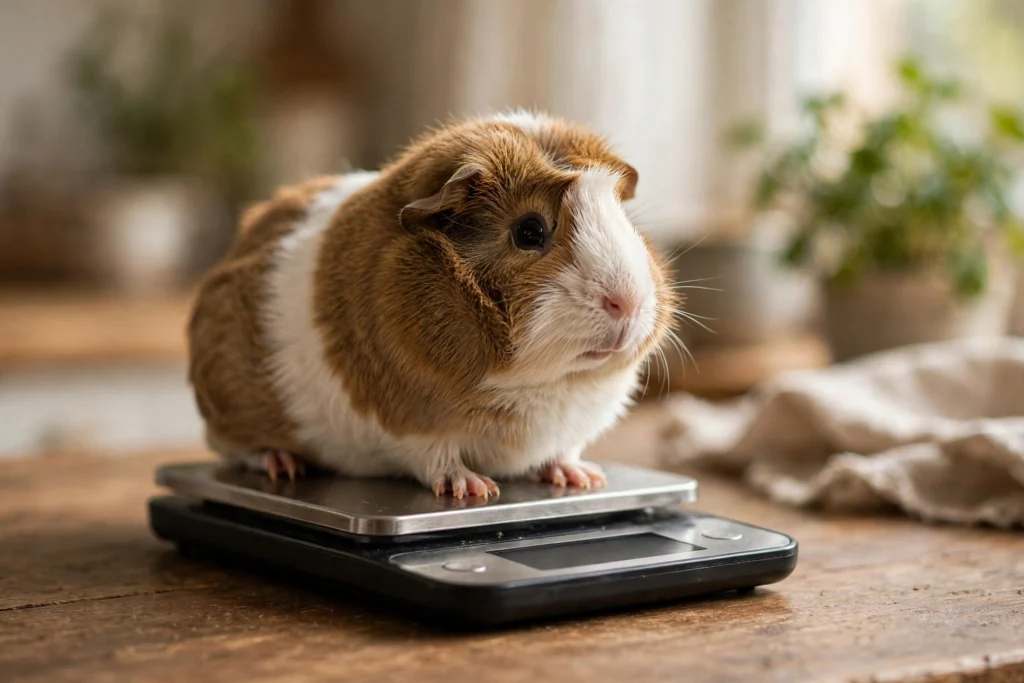
If you’re wondering how much should a guinea pig weigh, you’re not alone.
One of the simplest — and most overlooked — things you can do for your guinea pig is weigh them regularly. Weight is one of the earliest indicators of health in guinea pigs, and a change on the scale can alert you to illness days before any other symptom appears. This guide covers healthy weight ranges for boars, sows, and pups, a simple weight chart by age, how to weigh your pig at home, and the warning signs that mean it’s time to call the vet.
Why Your Guinea Pig’s Weight Matters
Guinea pigs are prey animals, which means they are hardwired to hide signs of illness. By the time a guinea pig looks obviously sick — sitting puffed up, refusing food — a problem may already be advanced. Weight loss, however, doesn’t lie. A pig that is eating normally but quietly losing grams is often the first sign of dental disease, a urinary infection, or another hidden issue. Regular weigh-ins give you a baseline. Once you know what your pig’s normal, stable weight is, any drift up or down becomes easy to spot — and that’s information your vet will genuinely thank you for.
How Much Should a Guinea Pig Weigh? The Healthy Ranges
Healthy adult guinea pig weight depends mainly on sex and frame size, but these are the widely accepted veterinary ranges:
- Adult boars (males): 900–1200g (roughly 2–2.6 lb)
- Adult sows (females): 700–900g (roughly 1.5–2 lb)
- Newborn pups: 70–100g at birth (the normal range spans about 60–115g)
- Weaning age (~3 weeks): around 180g
Some larger boars can reach 1.3kg or more and still be perfectly healthy — frame size matters.
Guinea Pig Weight Chart by Age
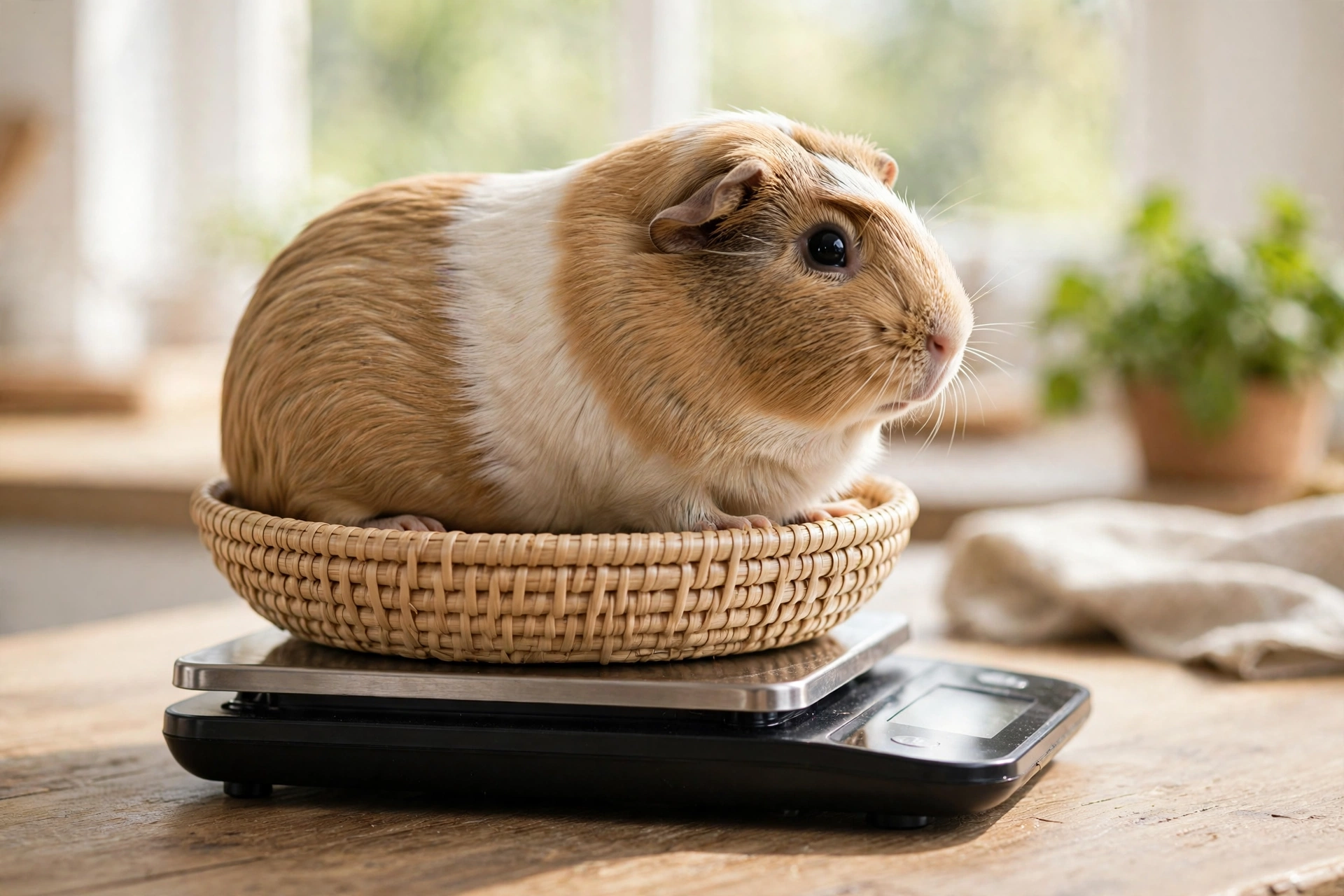
Guinea pigs grow fast in their first months and typically reach adult size between 12 and 15 months. Birth: 70–100g. 3 weeks (weaning): ~150–200g. 2 months: 400–700g. 4 months: 600–900g. 6 months: 700–1000g. 12 months (adult): 700–1200g (sows 700–900g, boars 900–1200g). What matters most is the trend: your pig’s own weight curve should rise steadily through the first year and then stay stable as an adult.
The 50g Rule: When Weight Loss Means a Vet Visit
Here is the single most important number in this guide: a weight loss of 50g (about 2oz) or more is a red flag. Call your vet if you notice: a loss of 50g or more over a week; weight loss alongside any change in eating, drinking, or droppings; a pig that feels bony along the spine or ribs; rapid weight gain, a swollen belly, or difficulty moving. Many common health problems first show up on the scales. Our guide to common guinea pig illnesses explains the symptoms to watch for alongside weight changes.
How to Weigh Your Guinea Pig Correctly
You don’t need special equipment — a basic digital kitchen scale that measures in grams is perfect.
- Use a digital kitchen scale that reads in 1-gram increments.
- Weigh at the same time of day, ideally before the morning feed.
- Place a small bowl or tray on the scale, press tare (zero), then set your pig inside.
- Keep it calm — a familiar fleece in the bowl helps.
- Record every reading. Weigh adult guinea pigs once a week; weigh pups, pregnant sows, and recovering pigs every few days.

What If My Guinea Pig Is Underweight or Overweight?
Underweight: if your pig is below the healthy range and continues to drop, see your vet first — underweight is often a symptom (dental pain, parasites, illness), not the problem. Then review diet with our guinea pig diet chart.
Overweight: cut back on fruit and commercial treats, keep pellets measured, ensure room to run. Never crash-diet a guinea pig. For safe everyday foods, check our safe food list for guinea pigs.
The Takeaway
Weighing your guinea pig takes one minute a week and is one of the most powerful health habits you can build. Know your pig’s normal weight, watch the trend, act on the 50g rule. For more vet-backed reference, see the RSPCA’s guinea pig care advice.
Frequently Asked Questions
How much should a guinea pig weigh in pounds?
Adult boars 900–1200g (about 2–2.6 lb), sows 700–900g (about 1.5–2 lb). Newborn pups roughly 70–100g.
How often should I weigh my guinea pig?
Healthy adults once a week at the same time of day; pups, pregnant sows, and recovering pigs every few days.
My guinea pig lost 50g in a week — is that serious?
Yes. A sudden 50g loss is the widely used threshold for concern. Check eating, drinking, and droppings, and call your vet.
Do male guinea pigs weigh more than females?
Yes — boars average 900–1200g, sows 700–900g.
What is the best scale for weighing a guinea pig?
A digital kitchen scale measuring in 1-gram increments.
Can a guinea pig be too fat?
Yes — overweight pigs are prone to bumblefoot, joint strain, and heart issues. Reduce treats gradually, keep hay unlimited.