Guinea pigs are adorable pets, but sometimes their strange noises can confuse even experienced owners. From high-pitched squeaks to soft purrs, guinea pigs communicate constantly. Each sound has a meaning, and understanding them can help you take better care of your furry friend, keep them happy, and strengthen your bond.
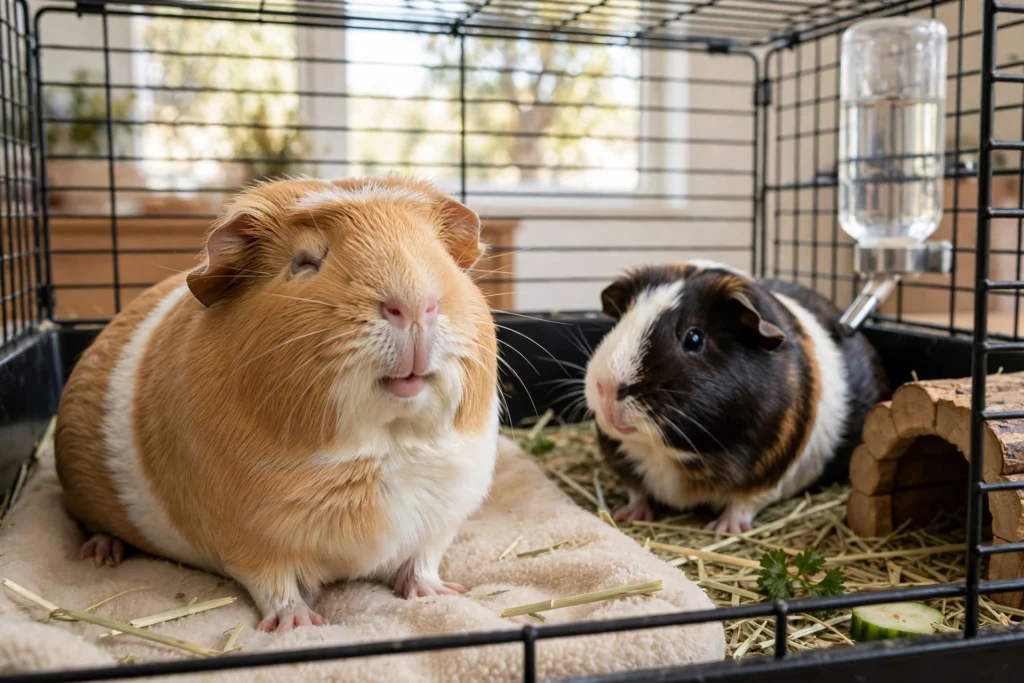
1. High-Pitched Squeaks: Excitement or Hunger
A common sound you’ll hear is a high-pitched squeak. This usually happens when your guinea pig is hungry or excited, especially when they see you carrying food. Guinea pig squeaking is their way of saying, “I want attention or treats!”
Tips:
- Offer small treats like carrot sticks, apple slices, or leafy greens.
- Respond calmly to their squeaks to reassure them.
2. Wheeking: Calling for Food or Interaction
“Wheeking” is a loud, repetitive sound that guinea pigs often make during feeding times. It’s a clear way to get your attention and ask for food. Many guinea pig owners notice this sound daily because their pets learn routines.
Tips:
- Feed your guinea pig at regular times to reduce stress.
- Use the opportunity to interact, but avoid giving too many treats.
3. Purring: Happiness or Mild Discomfort
A soft, low purr usually means your guinea pig is relaxed and content, especially if you’re petting them gently. But a high-pitched or vibrating purr may indicate mild discomfort or annoyance.
Tips:
- Watch your guinea pig’s body language alongside the purr.
- Make sure they have enough space and comfort to avoid stress.
4. Chutting and Rumbling: Social Communication
Guinea pigs often make chutting or rumbling noises when exploring, playing, or interacting with other guinea pigs. These sounds can show curiosity, playfulness, or even mild dominance.
Tips:
- Observe carefully if you have multiple guinea pigs to avoid fights.
- Provide enough space for social interactions and safe play.
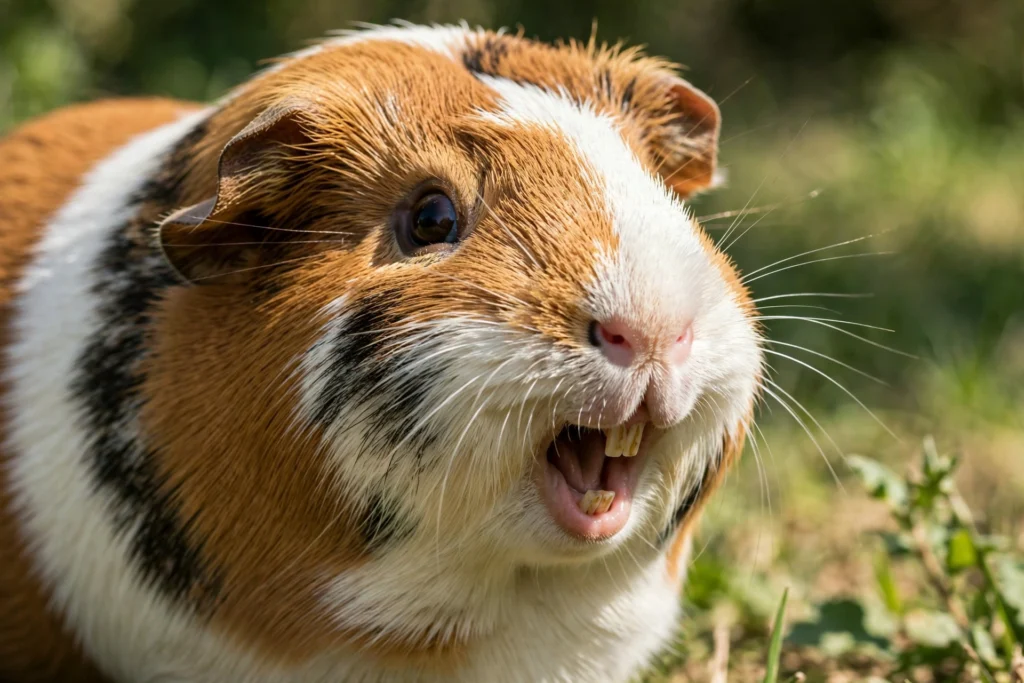
5. Teeth Chattering: Warning or Threat
Teeth chattering is a serious warning sound. It usually means your guinea pig feels threatened, scared, or annoyed. Ignoring this can increase stress or aggression.
Tips:
- Give your guinea pig space immediately.
- Avoid sudden movements or loud noises nearby.
6. Squealing or Screaming: Extreme Fear or Pain
A sudden squeal or scream signals extreme fear, pain, or discomfort. If you hear this noise, check for injuries, illness, or unsafe conditions. It’s important to act quickly.
Tips:
- Handle your guinea pig gently and calmly.
- Consult a veterinarian if the sound continues or your guinea pig seems unwell.
Bonus: Reading Body Language Alongside Sounds
Sounds are important, but body language tells you even more about your guinea pig’s mood:
- Raised fur can indicate fear or aggression.
- Relaxed posture shows contentment.
- Tail movements and ear positions help express emotions subtly.
By combining sounds like squeaking, wheeking, purring, and teeth chattering with body language, you can understand your guinea pig fully.
Conclusion
Guinea pigs use weird noises to communicate, not just randomly. Learning the meaning behind squeaks, wheeks, purrs, chutting, rumbling, and teeth chattering helps you respond correctly, reduce stress, and keep your pet happy. Observing both sound and body language ensures a healthy and joyful pet.
Check out 10 Fun Facts About Guinea Pigs You’ll Love to learn more about your furry friends.